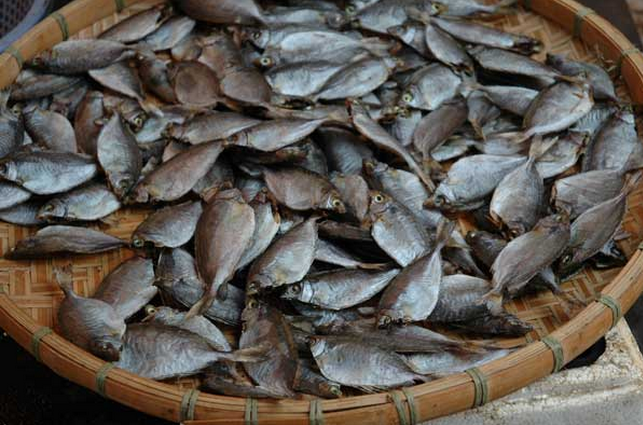
Aquaculture is found world-wide but one irony of the industry is that often wild caught fish are used as feed for their farm raised cousins, which is both counter-productive and environmentally unsustainable. A recent breakthrough by scientists at the University of Maryland Center for Environmental Science’s Institute for Marine and Environmental Technology will make that vicious cycle a thing of the past.
“Aquaculture cannot sustainably grow and expand to meet growing global population and protein demand without developing and evaluating alternative ingredients to reduce fishmeal and fish oil use,” said the study’s lead author, Dr. Aaron Watson.
Supported by another paper published in the Journal of Fisheries and Aquaculture, the team has proven that a completely plant-based food combination can support fast-growing marine carnivores like cobia and gilthead sea bream in reaching maturity just as well as—and sometimes better than—conventional diets of fish meal and fish oil made from wild-caught fish.
Nearly half of the world’s fish and shellfish supply is supplied by aquaculture—growing fish in tanks or ponds instead of catching them from the oceans or streams—and scientists have been trying to figure out how to make growing fish sustainable. Many high-value fish such as cobia, sea bream, and striped bass are predators and eat other fish to survive and grow. As a result, their food in captivity is made of a combination of fishmeal and fish oil, and must be caught from the wild to feed them. This is expensive (for example, it can take 5 pounds of wild fish to produce one pound of fish), and it further depletes the world’s fisheries.
“This makes aquaculture completely sustainable,” said Dr. Allen Place. “The pressure on natural fisheries in terms of food fish can be relieved. We can now sustain a good protein source without harvesting fish to feed fish.”
Read the full story here.
 Organikos