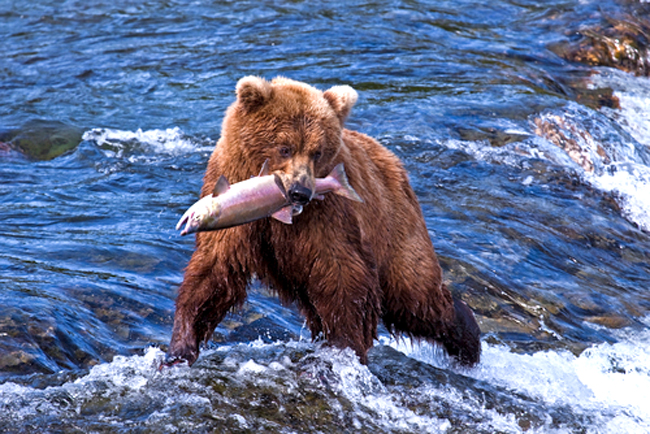
Grizzlies once roamed much of North America, from Mexico to the Yukon and from the West Coast through the prairies. Habitat loss and overhunting have since shrunk their range by more than half. Photo credit: Shutterstock
We are not opposed to hunting, when it is well regulated. With nature increasingly imbalanced due to habitat loss/change imposed by man, there are times when animal herds are in need of culling, or certain species experience overpopulation relative to their ecosystem carrying capacity. Hunting permits generate much-needed revenues for conservation. Our favorite case study is one you can read on this site. But we cannot support hunting the largest animals on the planet. We generally do not believe that licenses to kill the most charismatic of the “big game” will lead to their conservation. Read David Suzuki’s opinion piece and follow the trail where it leads you:
Watching grizzly bears catch and eat salmon as they swim upstream to spawn is an unforgettable experience. Many people love to view the wild drama. Some record it with photos or video. But a few want to kill the iconic animals—not to eat, just to put their heads on a wall or coats on a floor.
The spring grizzly kill starts April 1 and extends for several weeks, followed by a second fall season. By year’s end, several hundred will have died at the hands of humans, close to 90 percent shot by trophy hunters—many of them foreign license-holders, as the B.C. government plans to enact new regulations to allow hunters from outside B.C. to take 40 percent of grizzlies slated for killing. The government also plans to allow foreign interests and corporations to buy and run guide-outfitting territories previously run only by B.C. residents. Local hunting organizations say the new rules put them at a disadvantage.
According to the Vancouver Observer, hunting guide associations donated $84,800 to B.C. political parties from 2005 to 2013, 84 percent to the B.C. Liberals.
In the controversy over regulatory changes, we’ve lost touch with the fact that the grizzly trophy hunt is horrific, regardless of whether bears are killed by resident hunters or big-game hunters who pay thousands of dollars for the chance to kill a bear here—often because it’s illegal in their home countries.
Grizzlies once roamed much of North America, from Mexico to the Yukon and from the West Coast through the prairies. Habitat loss and overhunting have since shrunk their range by more than half. In Canada, 16 subgroups are on the brink of extinction, including nine in south-central B.C. and Alberta’s entire grizzly population.
Just how many bears reside in B.C. is in dispute. The government claims more than 15,000 grizzlies live here, but Raincoast Conservation Foundation science director Chris Darimont, a University of Victoria conservation biologist, puts the number closer to the government’s earlier estimate of 6,600—before it doubled that in 1990 based on a single study in southeastern B.C.’s Flathead area.
Read the rest of the editorial at Ecowatch.
 Organikos
Reblogged this on Sherlockian's Blog.