Who Are You in the Wild?

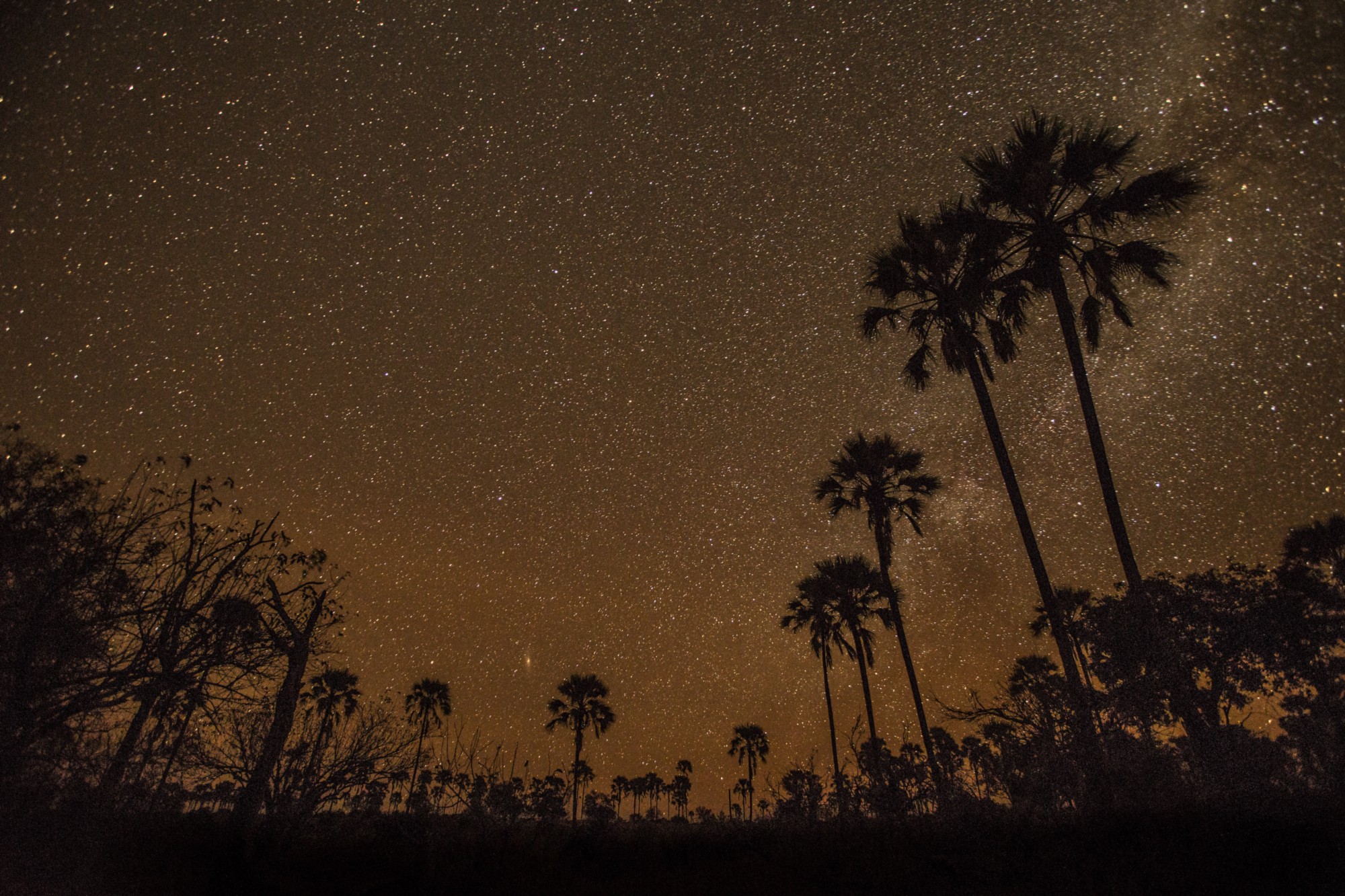
The Okavango Delta is home to the largest-remaining elephant population and keystone populations of lion, hyena, giraffe and lechwe antelopes. It’s the size of Texas, and visible from space. PHOTO: James Kydd

The Okavango Delta is home to the largest-remaining elephant population and keystone populations of lion, hyena, giraffe and lechwe antelopes. It’s the size of Texas, and visible from space. PHOTO: James Kydd

What can one man do towards protecting the wild? For starters, your efforts could center around saving Africa’s last remaining wetland wilderness. Then, you could be so relentless in your mission that UNESCO includes your ‘battleground’ in its World Heritage List. Then, you keep at your preservation project until you meet the Minister of Environment and get him to sign a pact on protecting the river system. If that all sounds good to you, allow us to introduce explorer Steve Boyes who has done all of the above and pledged his life to the conservation of the Okavango River Delta.

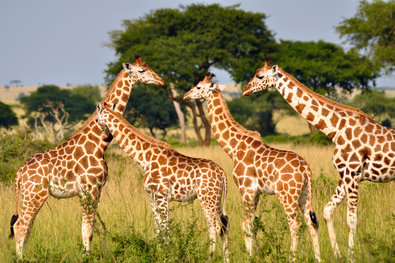
Located in northern Botswana, this untouched 18,000 square kilometer alluvial fan is the largest of its kind, and is supplied by the world’s largest undeveloped river catchment — the mighty Kavango Basin. The Okavango Delta is home to the largest-remaining elephant population and keystone populations of lion, hyena, giraffe and lechwe antelopes. It’s the size of Texas, and visible from space.
Continue reading

Dad, I Dirtied the Nest!

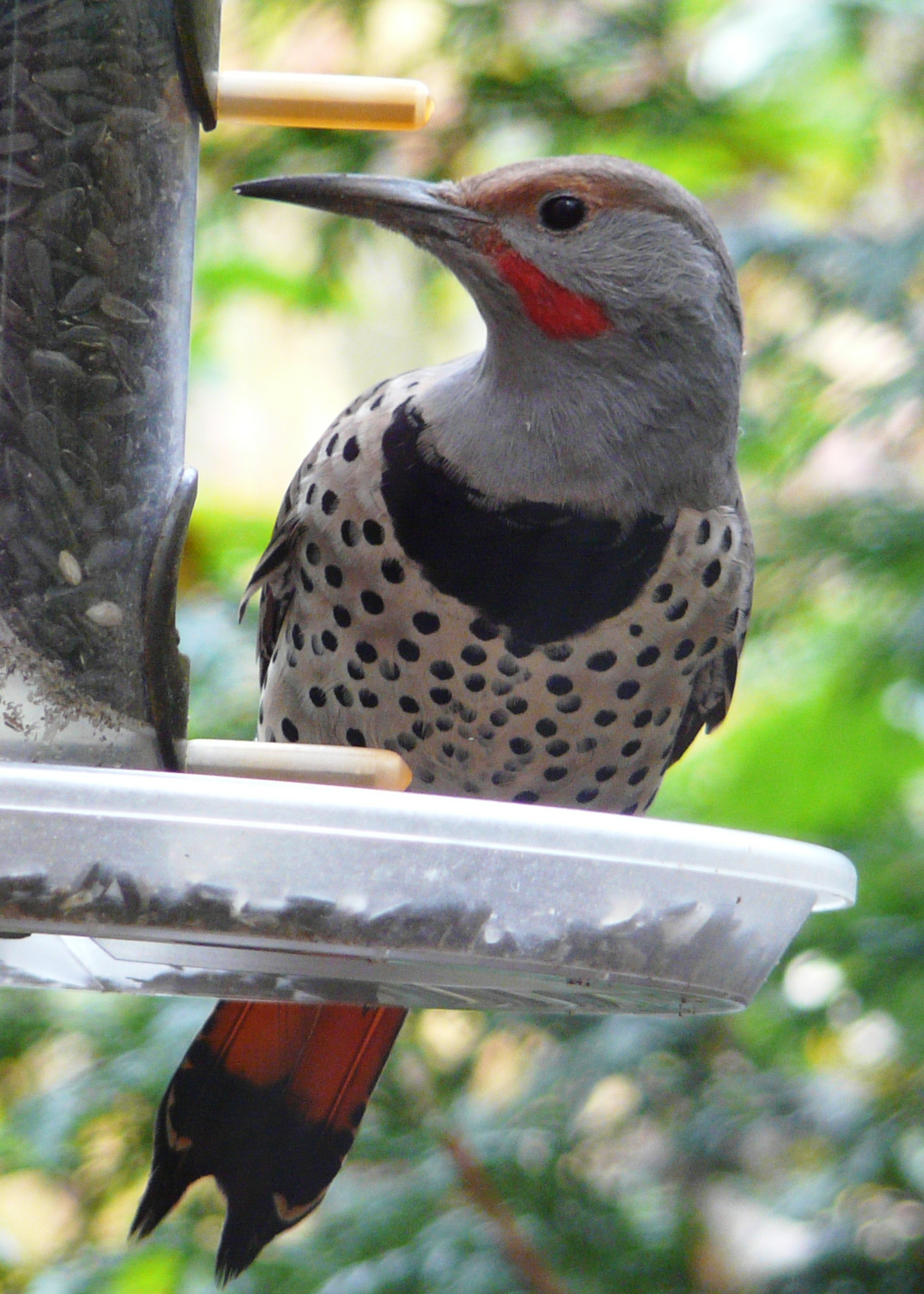
Animal sanitation studies — the exploration of how, why and under what conditions different species will seek to stay clean, stave off decay and disrepair, and formally dispose of the excreted and expired. PHOTO: John Rakestraw (Northern Flicker - male)

Animal sanitation studies — the exploration of how, why and under what conditions different species will seek to stay clean, stave off decay and disrepair, and formally dispose of the excreted and expired. PHOTO: John Rakestraw (Northern Flicker – male)

Nature may be wild, but that doesn’t mean anything goes anywhere, and many animals follow strict rules for separating metabolic ingress and egress, and avoiding sources of contamination. Want examples? Take the Northern Flicker. According to a new report in the journal Animal Behaviour on the sanitation habits of these tawny, 12-inch woodpeckers with downcurving bills, male flickers are more industrious housekeepers than their mates.

Researchers already knew that flickers, like many woodpeckers, are a so-called sex role reversed species, the fathers spending comparatively more time incubating the eggs and feeding the young than do the mothers. Now scientists have found that the males’ parental zeal also extends to the less sentimental realm of nest hygiene: When a chick makes waste, Dad, more readily than Mom, is the one who makes haste, plucking up the unwanted presentation and disposing of it far from home.

Continue reading

Plastic Aplenty

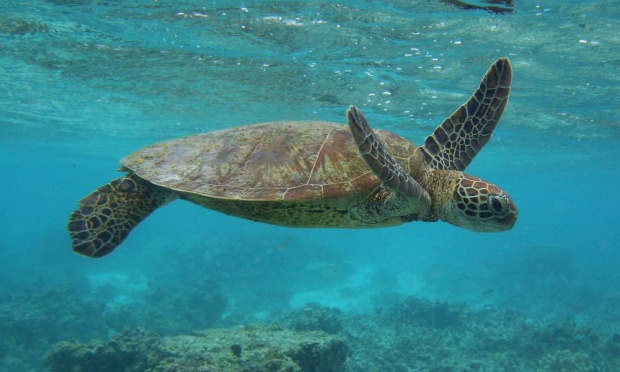
Forty per cent of the small turtles travelling through Moreton bay were recently found to have consumed plastics and more than two-thirds of the endangered loggerhead turtle, too. PHOTO: Mark Kolbe/Getty Images

Forty per cent of the small turtles travelling through Moreton bay were recently found to have consumed plastics and more than two-thirds of the endangered loggerhead turtle, too. PHOTO: Mark Kolbe/Getty Images

Queensland – said to be Australia’s dirtiest state (discarded rubbish recorded at levels almost 40 per cent above the national average). Also home to Moreton Bay, the only place in the country where dugongs gather in herds and which has a significant population of the endangered loggerhead sea turtle. Over celebrating its coastal flora and fauna on World Oceans Day, the state and its leaders found themselves mulling a ban on single-use plastic in the area. Here’s why.

Continue reading

Happy Birthday, Carolus Linnaeus!

Remember Carolus Linnaeus? Go back to high school where you probably heard of taxonomy first; yes, it’s his invention. Well, it was his 308th birthday last week (May 23) and each year, it is celebrated with a list. Of new species discovered the previous year. Scientists found 18,000 new species in 2014, but the top 10 are in a league of their own. How about a spider that cartwheels to escape danger or a frog that gives birth to live tadpoles?

Continue reading

A Case for the Wildebeest

According to the UNEP, wildebeest populations have declined in areas of southern and eastern Africa. PHOTO: Natural Habitat Adventures

The Great Migration of Serengeti National Park, designated a World Heritage Site, is legendary. The stars of this 1,200-mile odyssey are the wildebeest – 1.5 million of them – accompanied by 200,000 zebras. Every year is an endless journey for them, chasing the rains across 150,000 square miles of woodlands, hills and open plains. With them having firmly established their caliber as a species built literally for the long run, the migration spectacle should probably be the only space where the wildebeest find a mention. But conservation debates are hovering over these beasts – categorized as non-threatened by the IUCN – and looking at them as a keystone species.

Continue reading

Invasive Species, Animated Variety

Our promise to not participate in the cute kitten economy remains steadfast. This is different. Really. It fits into this category, sort of, or perhaps this one.  Hopefully not this one. We like what we see here. Nicolas Deveaux‘s variety are certainly welcome on our pages, one of the many places they were intended to be:

Jane Goodall, Journey On

Michael Christopher Brown/Magnum, for The New York Times. Jane Goodall on Lake Tanganyika, offshore from Gombe Stream National Park in Tanzania.

Michael Christopher Brown/Magnum, for The New York Times. Jane Goodall on Lake Tanganyika, offshore from Gombe Stream National Park in Tanzania.

A journey to Greece in 1969 planted a seed in me that grew into my life’s ambition. Another in 1983 led to meeting Amie, and fusing our life’s ambitions together. Together we went to Costa Rica in 1995, which led to continuing our joint life’s journey abroad.

Jane Goodall Is Still Wild at Heart

Half a century ago, she journeyed into the Tanzanian jungle to change how the world saw chimpanzees. Today the world’s most famous conservationist is on a mission to save their lives.

I believe in the power of a journey to change one’s life path. In the story that follows, this woman’s singular life’s journey is just one more example, albeit an extreme and heroic one, of why we believe in the power of a journey. She visited Cornell while I was a graduate student, and Amie and I were deeply moved by what she came to say. Seth was a one year old and Milo was not yet a “twinkle in the eye.”

The child-sized t-shirt we bought to support the Jane Goodall Institute with our limited graduate student funds was passed from older brother to younger until neither of them could fit into it any more, by which time we were well into our new lives in the emerging field of entrepreneurial conservation in Costa Rica.  In no small part, our family’s dedication to conservation is an unexpected outcome of a short journey across campus that Amie and I made to listen to Jane Goodall talk about her long life’s journey. Continue reading

Old Primate, New Name

Captive lesula from the DRC. Photograph: Maurice Emetshu/AFP/Getty Images

Captive lesula from the DRC. Photograph: Maurice Emetshu/AFP/Getty Images

Thanks to the Guardian for this article on the discovery that there is a primate that had not yet been named:

It all started with Georgette’s pet monkey. Deep in the Democratic Republic of Congo (DRC) rainforest, in the remote village of Opala, a team of researchers noticed a little girl with a strange-looking monkey on a leash in 2007. The girl, Georgette, told the scientists it was called ‘lesula,’ but no one had heard of it nor did the animal look like anything found in the DRC. They snapped a photo. Continue reading

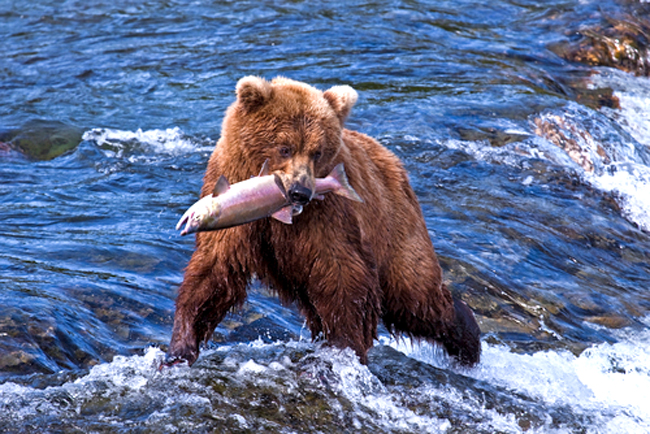
Leave The Grizzlies Be, And Just Watch

Grizzlies once roamed much of North America, from Mexico to the Yukon and from the West Coast through the prairies. Habitat loss and overhunting have since shrunk their range by more than half. Photo credit: Shutterstock

Grizzlies once roamed much of North America, from Mexico to the Yukon and from the West Coast through the prairies. Habitat loss and overhunting have since shrunk their range by more than half. Photo credit: Shutterstock

We are not opposed to hunting, when it is well regulated. With nature increasingly imbalanced due to habitat loss/change imposed by man, there are times when animal herds are in need of culling, or certain species experience overpopulation relative to their ecosystem carrying capacity. Hunting permits generate much-needed revenues for conservation.  Our favorite case study is one you can read on this site. But we cannot support hunting the largest animals on the planet.  We generally do not believe that licenses to kill the most charismatic of the “big game” will lead to their conservation. Read David Suzuki’s opinion piece and follow the trail where it leads you:

Watching grizzly bears catch and eat salmon as they swim upstream to spawn is an unforgettable experience. Many people love to view the wild drama. Some record it with photos or video. But a few want to kill the iconic animals—not to eat, just to put their heads on a wall or coats on a floor. Continue reading

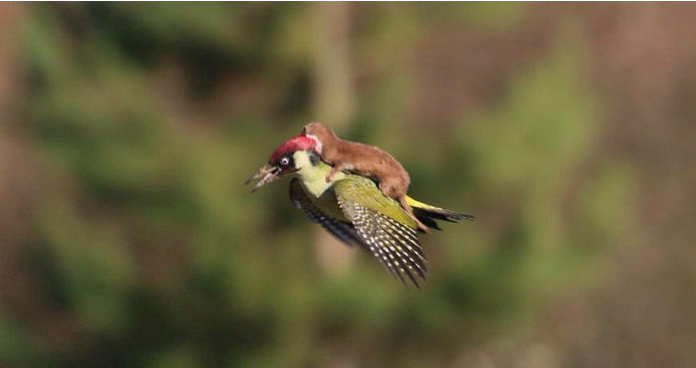
Can Weasles Fly?

Photograph: Martin Le-May Twitter;

Weasel clutching on the back of a European green woodpecker; Photograph: Martin Le-May Twitter

According to Martin Le-May’s recent photograph that went viral a couple days ago, they can when they’re riding a woodpecker. I remember scrolling through Facebook and seeing the picture, but I didn’t take it seriously. There are many posts on Facebook that shouldn’t be taken seriously. We all have those friends who post everything and anything on the internet and swear it’s true. But how about National Geographic Magazine, is that credible enough? After reading the full article, and the research that went into proving it true, I am now a firm believer that it is, indeed, possible. And you?

Is the Photo Real?

As the viral video of the pig rescuing the baby goat taught us, just because something is cute doesn’t mean it’s real. But is the photo now known on Twitter as #WeaselPecker a fake? Continue reading

Green turtle links Costa Rica’s Cocos Island with Ecuador’s Galapagos

Sanjay

Sanjay the green sea turtle is equipped with satellite tags before being released into the ocean. (Courtesy of PRETOMA)

To this day, scientists have tracked three different turtles that have traveled between two of the most fragile and important island ecosystems: The Galapagos Islands in Ecuador and The Cocos Island in Costa Rica. We are just starting to understand the importance of these breeding grounds and their interconnectivity with turtle migration and reproduction.

One normal migration for turtles, one giant discovery for humankind.

With his 14-day journey from the waters of Costa Rica’s Cocos Island National Park to the Galapagos Marine Reserve in Ecuador, “Sanjay,” an endangered green sea turtle, established the first direct migration link between the two protected areas.

Sanjay was one of three green sea turtles tagged by scientists from the marine conservation groups Turtle Island Restoration Network and PRETOMA during a 10-day research expedition. Using a $4,000 satellite tag, biologists from the organizations were able to map Sanjay’s exact migration.

“It’s truly remarkable. Sanjay knew where he was headed, Continue reading

Expeditions In The Interest Of Science, Nature And Conservation

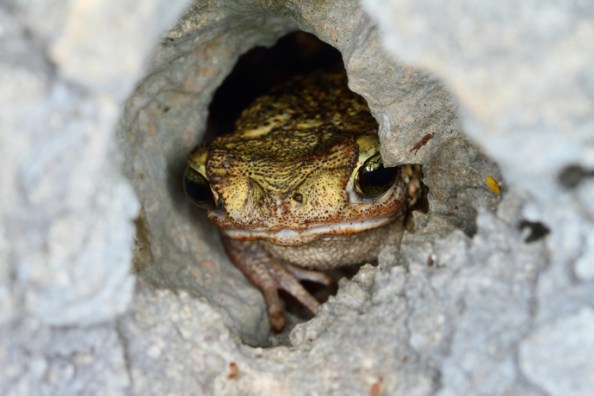
A male toad of an undescribed species hides in the limestone of the southwestern Dominican Republic. CREDIT PHOTOGRAPH COURTESY MIGUEL A. LANDESTOY

A male toad of an undescribed species hides in the limestone of the southwestern Dominican Republic. CREDIT PHOTOGRAPH COURTESY MIGUEL A. LANDESTOY

There is a reason why we highlight birds every single day. They are spectacular in many diverse ways, as well as beautiful in more ways than can be counted, and sometimes smile-inducingly odd; always exceptional ambassadors to the human world from their natural habitats, which are under constant pressure and threat. Birds may seem more charismatic than amphibians but from an ecologist’s point of view they are both extremely valuable indicators of ecosystem health. If you have been following Seth’s posts about the preparation for the Smithsonian expedition he is about to embark on, you will likely agree they would enjoy crossing paths with the team described in this story:

The southernmost corner of the Dominican Republic is dominated by limestone karst, a landscape with the look and feel of a petrified giant sponge. Snakes, small mammals, and fat, furry tarantulas live in the fissures and holes in the karst, as do toads, including one species that is not yet fully known to science. I met this new toad at three o’clock one late-fall morning, in a karst forest off a mining road near the town of Pedernales. I was with Miguel Landestoy and Robert Ortiz, a pair of freelance field biologists who have been friends since their youth, and who still spend much of their time looking for amphibians. Continue reading

The Differences Between Rabbits and Hares

A female European hare (right) boxes with a male in Wales. PHOTOGRAPH BY ANDY ROUSE, 2020VISION/NATURE PICTURE LIBRARY/CORBIS. Via National Geographic.

Thank you to Liz Langley from National Geographic for highlighting differences that we have always been curious about but never thought about looking into until they were laid out so clearly in a single place. And with cute photos and a couple puns to boot. The article below comes from Nat Geo’s “Weird Animal Question of the Week,” which we will be sure to visit in the future.

Hares and rabbits are in the same family, Leporidae, but they’re “different species, like sheep and goats are different species,” Steven Lukefahr, a geneticist at Texas A&M University in Kingsville, said via email.

Hares are also larger, have longer ears, and are less social than rabbits. The “most profound difference” is seen in baby hares versus baby bunnies, said Philip Stott, a wildlife ecologist at the University of Adelaide in Australia. (See National Geographic’s pictures of baby animals.)

First off, a hare’s pregnancy lasts 42 days, compared with rabbits’ 30-31 days with a bun(ny) in the oven.

Continue reading

Sloths’ and Armadillos’ Sight Stinks

Photo credit: Mwcolgan8. Via National Geographic.

Watching the pair of nine-banded armadillos in this video root around the forest floor looking for food, you’d think that in addition to their snuffling and sensitive noses, the armored mammals would also be using their eyes to spot scurrying insects or the white flash of a grub in the dirt. And a three-toed sloth like the one in this other video should definitely be able to scan the skies for predatory birds when it is taking care of its vulnerable young, right? Well actually, as NatGeo contributor Ed Yong reports, scientists at UC Riverside believe the genes that build color-detecting cone cells in eyes are broken in sloths, armadillos, and several other mammal species descended from the same burrowing ancestor:

Armadillos have terrible vision. In 1913, American zoologists Horatio H. Newman and J. Thomas Patterson wrote, “The eyes [of the nine-banded armadillo] are rudimentary and practically useless. If disturbed an armadillo will charge off in a straight line and is as apt to run into a tree trunk as to avoid it.”

The three-toed sloth isn’t much better. “If an infant sloth is placed five feet away from its mother on a horizontal branch at the same level, at once the young sloth begins to cry, the mother shows that she heard it calling and turns her head in all directions. Many times she looks straight in the direction of her offspring but neither sight, hearing nor smell apparently avail anything,” wrote Michel Goffart in 1971. And more comically: “Infuriated male [sloths] try to hit each other when they are still distant by more than a metre and a half.”

Continue reading

Goats, Sheep, Dairy

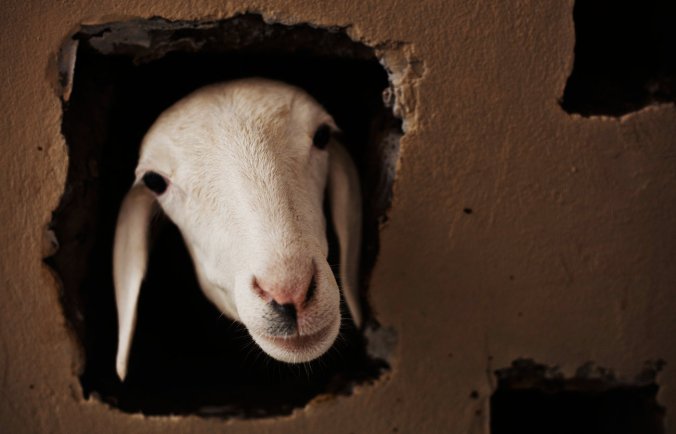
The photographer thought it was a goat. The photo editor thought it was a goat. Sure looked like a goat to the author of this post. It turns out to be a sheep, in Dakar, Senegal. Claire Harbage for NPR

The photographer thought it was a goat. The photo editor thought it was a goat. Sure looked like a goat to the author of this post. It turns out to be a sheep, in Dakar, Senegal. Claire Harbage for NPR

From a strictly culinary vantage point, those of us at Raxa Collective who are not vegetarian are at least slightly more inclined to lamb than to mutton (though this dish is a favorite); but we find ourselves in goat territory more often than in sheep territory. And in goat territory, from a productive agriculture vantage point, we are focused on dairy rather than meat. From the time we started paying close attention to goats we have also been wondering whether sheep might be adaptive to the same territory, and this post got us thinking further along those lines:

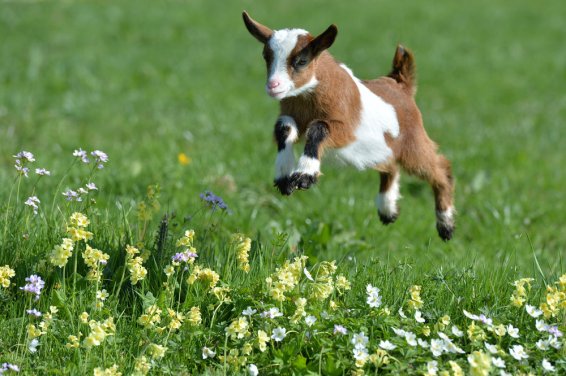
So perhaps you noticed a post I wrote last weekend about how you know if your goat is happy. Yes, scientists do study that.

The story had a cute picture of a goat at the top, taken by a photographer in Dakar, Senegal. The farmer told the photographer that the animal was his “goatie.” And to our untutored eyes, it looked like a goat.

And then NPR’s ruminant-wise Africa correspondent, Ofeibea Quist-Arcton, send me an e-mail with the subject: “MARC, THAT’S A PIC OF A SHEEP, NOT A GOAT!”… Continue reading

Understanding Gleeful Goats

Farmers raise millions of goats, but little has been known about whether their ruminants are happy. Now we know better. Kerstin Joensson/AP

Farmers raise millions of goats, but little has been known about whether their ruminants are happy. Now we know better. Kerstin Joensson/AP

Thanks to National Public Radio (USA) for this story on their blog with a funny name, which covers a subject much on our mind as our farm-to-table program at Kayal Villa prepares to supply 51 with dairy from our happy herd:

Goats are having a moment, and we’re not just saying that because our blog is called Goats and Soda.

There are nearly 900 million goats in the world today, up from 600 million in 1990. The reason for this goat spurt is the growing popularity of goat cheese, goat milk and goat meat.

For goat farmers to do a good job, they need to understand their goats. And that’s where Alan McElligott comes in. He’s a senior lecturer in animal behavior at the Queen Mary University of London. And he says that goats are “underrepresented” in animal welfare studies. Continue reading

Pachyderm Prowess

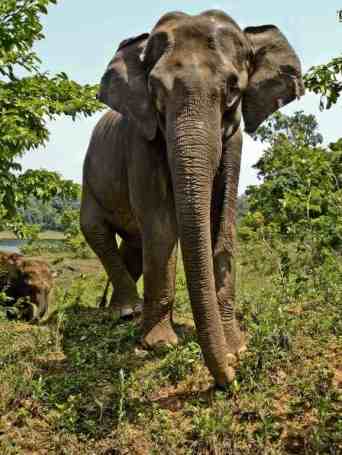
Mother and baby Asian Elephant, Periyar Tiger Reserve. Photo credit: Milo Inman

Mother and baby Asian Elephant, Periyar Tiger Reserve.
Photo credit: Milo Inman

Quite a few La Paz Group contributors are life-long elephant lovers, and we never tire of learning about these amazing members of the animal kingdom. Thanks to TED Ed for giving us more to remember…

It’s a common saying that elephants never forget. But the more we learn about elephants, the more it appears that their impressive memory is only one aspect of an incredible intelligence that makes them some of the most social, creative, and benevolent creatures on Earth… Continue reading

End The Exotic Pet Trade

31salamander-1-thumbStandard

Thanks to the New York Times‘ weekly Science section for a reminder of all the reasons why wild animals should not be traded as pets across regions of the world:

Infection That Devastates Amphibians, Already in Europe, Could Spread to U.S.

Fire-bellied newts imported from Asia through the pet trade may be spreading a fungal disease that is killing off fire salamanders in Europe, according to researchers.

Jaguar, Conservation, Book Time

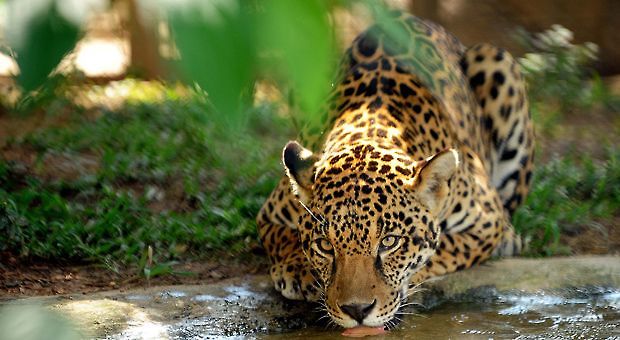
A captive jaguar drinks water in an enclosure at Petro Velho Farm, a refuge of the non-governmental organization NEX in Corumba de Goias, about 80 km from Brasilia, on January 11, 2013. EVARISTO SA/AFP/Getty Images

A captive jaguar drinks water in an enclosure at Petro Velho Farm, a refuge of the non-governmental organization NEX in Corumba de Goias, about 80 km from Brasilia, on January 11, 2013. EVARISTO SA/AFP/Getty Images

Listening to this interview it is just enough to clue you in to how Alan Rabinowitz has touched the lives of so many with the work he has done on behalf of jaguars and particularly conservation of their habitat:

Jaguars are the world’s third-largest wild cat – after tigers and lions. They have distinctive black rosettes on their fur and can weigh up to 250 pounds. Jaguars have been eradicated from 40 percent of their historic range. Today they live along a corridor from Argentina to Mexico. Their future is threatened by illegal hunting, deforestation and a loss of prey. One of the world’s leading big cat experts is responsible for creating a jaguar preserve in Central America, the first of its kind. In a new book, he shares why he’s committed to giving a voice to jaguars and how they helped him find his own voice.

Continue reading

Giraffes Deserve Science As Much We Need Good Science Writers

Julian Fennessy. Giraffes are the “forgotten megafauna,” said the  executive director of the Giraffe Conservation Foundation.

Julian Fennessy. Giraffes are the “forgotten megafauna,” said the executive director of the Giraffe Conservation Foundation.

We have been highlighting science writers since our outset as a blog, following a longstanding respect from our contributors for their particular talent, which has made us richer by reaching fruit that is sometimes too high on a tree to reach and bringing it where we can reach it.

From the current New York Times weekly section highlighting and explaining scientific matters of interest to us with one of the greatest writers in the genre, we now turn our attention to giraffes for the first time in our several years sharing (and as pointed out in the article we can only wonder why we have not paid more attention to such a creature prior to now):

SCIENCE TIMES: OCT. 7, 2014

Our Understanding of Giraffes Does Not Measure Up

By NATALIE ANGIER

Giraffes may be popular — a staple of zoos, corporate logos and the plush toy industry — but until recently almost nobody studied giraffes in the field so there is much we don’t know about them.