From Perfume Research to Eco-friendly Pesticides

Jim White's Anti-Pest-O grew out of ill effects of working with chemicals as a botanist. PHOTO: Gordon Chibroski

Jim White’s Anti-Pest-O grew out of ill effects of working with chemicals as a botanist. PHOTO: Gordon Chibroski

Are the beanstalks over your heads and the Japanese beetles in your garden driving you into a murderous rage? Then meet Jim White, creator of an eco-friendly insect repellent called Anti-Pest-O. Talk to him about bugs and find how we can dispense with them in the garden without relying on hard-core chemicals. The Portland resident came up with the formula for his product in the late 1990s as a form of self-defense when he was working as a botanist; every time he sprayed his plants with pesticides he broke out in a rash and/or developed a cough.

Continue reading

When Fishermen Turn Scientists

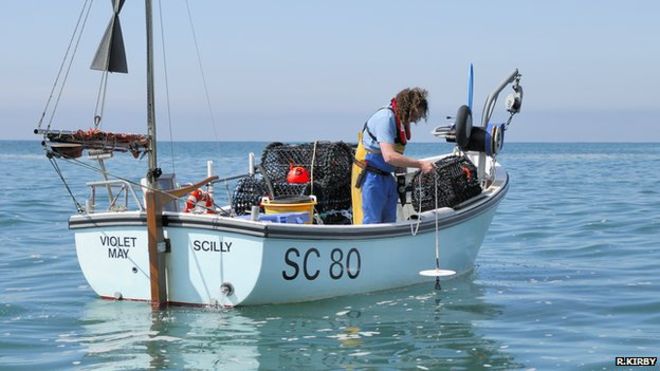
Fishermen in South Devon, UK, have turned their boats into "massive data platforms" for a citizen science study.

A research programme aims to encourage partnerships between commercial fishermen and scientists

Fishermen in South Devon, UK, have turned their boats into “massive data platforms” for a citizen science study. They have become the first commercial fishers to gather data for the Secchi Disk Study, which is gathering data on the state of the oceans’ phytoplankton. To date, there is little scientific information on the health of the tiny marine plants that form the basis of global food chains. The data will also help fishermen manage stocks.

Continue reading

The Ice Man of India

Ladakh’s beautiful mountains might be a paradise for tourists, but ask the locals who struggle to meet their basic water needs every year. PHOTO: Wikimedia Commons

Ladakh’s beautiful mountains might be a paradise for tourists, but ask the locals who struggle to meet their basic water needs every year. PHOTO: Wikimedia Commons

Rain is scarce in the snow-peaked Himalayas of northern India, and summers bring dust storms that whip across craggy brown slopes and sun-chapped faces. Glaciers are the sole source of fresh water for the Buddhist farmers who make up more than 70% of the population in this rugged range between Pakistan and China. But rising temperatures have seen the icy snow retreat by dozens of feet each year. To find evidence of global warming, the farmers simply have to glance up from their fields and see the rising patches of brown where, once, all was white. Knowing no alternative, they pray harder for rain and snow. But Chewang Norphel had the answer: artificial glaciers.

Continue reading

The ‘E’ word – E-waste

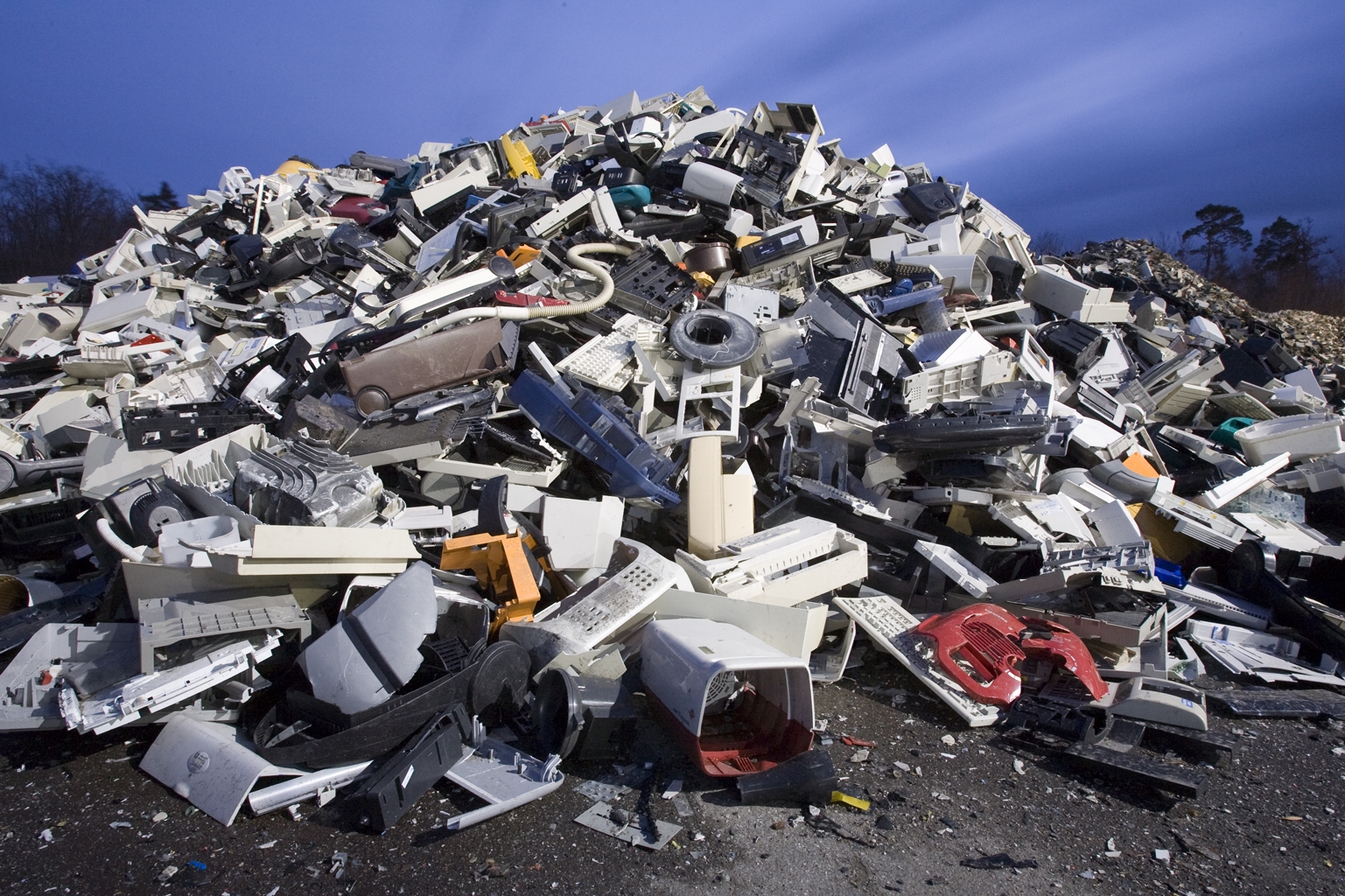
The StEP Initiative forecasts that by 2017, the world will produce about 33 percent more e-waste, or 72 million tons (65 million metric tons). That amount weighs about 11 times as much as the Great Pyramid of Giza.

The StEP Initiative forecasts that by 2017, the world will produce about 33 percent more e-waste, or 72 million tons (65 million metric tons). That amount weighs about 11 times as much as the Great Pyramid of Giza.

By 2017, the global volume of discarded refrigerators, TVs, cellphones, computers, monitors and other electronic waste will weigh almost as much as 200 Empire State Buildings, a new report predicts.The forecast, based on data gathered by United Nations organizations, governments, and non-government and science organizations in a partnership known as the “Solving the E-Waste Problem (StEP) Initiative,” predicts e-waste generation will swell by a third in the next five years, led by the United States and China. The StEP Initiative created a map of the world’s e-waste, which is available online. [Infographic: Tracking the World’s E-Waste]

Continue reading

Over Bullets and Blood Trails

No, this is no story of gore or of violence that have come to be a mainstay of sentences framed around Karachi and Pakistan. No, sir, no. But, this is still a story of a battle – one where paint brushes and colors are the arms for the cause of reclaiming a city. For a city whose walls are spattered with political slogans, hate graffiti and dubious advertisements of faith healers, a group of artists have a makeover in mind. They don’t talk about the healing power of art for nothing.

According to Wajiha Naqvi, the ‘I Am Karachi’ campaign manager, the consortium is trying to create a counter-narrative to promote tolerance, peace and diversity through reclaiming public spaces in the city. For her, the idea behind ‘Reimagining the Walls of Karachi’ is to evoke a sense of civic activism, unity and interest among the residents of Karachi, inspiring individuals and communities to take ownership by protecting their walls, their spaces and, ultimately, their city.

Continue reading

Put a Face to Litter

Every day in Hong Kong, more than 16,000 tons of waste is dumped in the streets and public spaces. PHOTO: hkcleanup.org

Every day in Hong Kong, more than 16,000 tons of waste is dumped in the streets and public spaces. PHOTO: hkcleanup.org

Going by Hong Kong’s Cleanup Challenge, your DNA can rat you out the next time you toss as little as a candy wrapper on the beach or in the park. The country is taking its trash problem seriously, with an entire week in June dedicated to cleaning urban spaces and its coastline. In fact it generates 6 million tonnes of trash a year – the weight of 350 blue whales. Clearly, this is not sustainable. And that’s precisely why one of the country’s NGOs and the advertising firm Ogilvy & Mather came up with the Face of Litter campaign.

Continue reading

Meet the ‘Water Man’ of India

The 2015 Stockholm Water Prize has been awarded to Rajendra Singh for his consistent attempts to improve the country's water security  PHOTO: SIWI

The 2015 Stockholm Water Prize has been awarded to Rajendra Singh for his consistent attempts to improve the country’s water security PHOTO: SIWI

Twenty years ago, when 28-year-old Rajendra Singh arrived in an arid village in Rajasthan, he came with degrees in Ayurveda and Hindi and a plan to set up clinics. That’s when he was told the greatest need was not medical help but clean drinking water. Groundwater had been sucked dry by farmers, and as water disappeared, crops failed, rivers, forests and wildlife disappeared and people left for the towns. In 2008, The Guardian listed him as one of its “50 people who could save the planet”. In March 2015, he was awarded the Stockholm Water Prize, known as the Nobel Prize for water.

Continue reading

Lichens: Unlikely Citizen Science Subjects

Photo via gmilburn.ca

We’re avid fans of citizen science, in part because of its breadth of possibilities. People can study historical documents, look for birds, record phenologies in forests, hunt lionfish, count butterflies, and perform dozens of other activities to help discover more about the world around and before us. One thing we didn’t expect to ever see was a citizen science initiative covering something as seemingly — but obviously looks can be deceiving — as lichens. Lisa Feldkamp reports for The Nature Conservancy’s science blog, Cool Green Science, excerpted in parts below:

Welcome to the exciting world of lichens. And no, that’s not oxymoronic.

A lichen is actually a composite organism: algae or cyanobacteria living with a fungus symbiotically. That definition, admittedly, doesn’t help their charisma factor.

But look at them closely and you’ll see a wonderful, colorful tapestry.

Get out a hand lens or microscope and an even more amazing world is revealed.

“One of the cool things about lichens is their ability to survive extremes,” says Tiffany Beachy of Great Smoky Mountains Institute at Tremont. “When it’s dry they shrivel and look like they’ve dried out, but with a drop of water they turn green.”

One of the most unique inhabitants of lichen is the tardigrade (a.k.a. water bear) is the first life-form with a proven ability to survive in the vacuum of space.

However, lichens have an Achilles’ heel: air pollution.

Continue reading

Merlin App Recognized in 2015 NSF Showcase

Prairie Warbler © Gerrit Vyn

Last week, an online video event was held to celebrate and showcase work funded by the National Science Foundation, called the NSF 2015 Teaching and Learning Video Showcase: Improving Science, Math, Engineering, and Computer Science Education. 112 videos featuring innovative work in these fields were shared on the website, and 21 were recognized as Facilitators’ Choice, Presenters’ Choice, and/or Public Choice projects.

From the Showcase website’s About page, here are the criteria for recognition in each category:

During the event, facilitators from each resource center will select a few videos, which will recognize extraordinary creativity in the use of video to share innovative work to determine the “Facilitators’ Choice.” In addition, all presenters will have the opportunity to vote for their favorite videos to determine “Presenters’ Choice.” Finally, all public visitors to the event will be asked to select those videos that they find most compelling. Those with the greatest number of public votes will receive “Public Choice” recognition.

The Cornell Lab of Ornithology’s Merlin Bird ID app was one of only 3 projects to Continue reading

A Brief Global Big Day Summary

Bush Thick-Knee, Brisbane, AU. Photo by Brian Sullivan, via eBird.

On Saturday, while visiting Chicago, I was only able to get a very short amount of time birding for a total of seven species. In the meantime, over twelve-thousand people around the world, across about 110 countries, saw 5,892 species (reported so far, and including the paltry seven I saw).

The photo on the left is of a Bush Thick-Knee, an Australian species that was the first seen during the Global Big Day. In Panama, the Lab’s Team Sapsucker got 320 species, and in New Jersey, at the World Series of Birding, the Cornell Redheads defended their championship title from last year.

One of the species I saw on Saturday was the Chimney Swift, a bird I hadn’t seen before, so that was exciting! If you want to follow more about the Global Big Day, check out eBird’s page!

Global Big Day

Word bird map artwork by Team Redhead member Luke Seitz, a Bartels Science Illustration Intern at the Cornell Lab.

Team Sapsucker, the Cornell Lab of Ornithology’s competitive birding team, has participated in the World Series of Birding for quite some time. We’ve even had a couple of the Lab’s student participants, Team Redhead, as contributors to the blog. Over the last several years, Team Sapsucker has been breaking or coming very close to the US record for a Big Day — the most bird species seen or heard in 24 hours — but this year, ten days from now in fact, the team will be in Panama instead of staying in the southwestern US! Here’s what Chris Wood, captain of Team Sapsucker and eBird’s project leader, has to say:

The time of year has come when migratory birds cross continents and even hemispheres to return home to their nesting grounds. Because long-distance migrants face many hazards during their journeys, Team Sapsucker, the Cornell Lab of Ornithology’s top birding team, has chosen to spend 24 hours of non-stop birding in Panama, a region critical to the travels of migratory birds in the Western Hemisphere.

Continue reading

If You Happen To Be In Ithaca: But You Don’t Have To Be

One of the many reasons we highlight the Cornell Lab of Ornithology on the pages of this site is the vastness of their offerings to both students and the general community (actual and virtual) sharing current studies in the field of ornithology. Continue reading

UK Birders Unite

Voting for a National Bird seems like the perfect example of a ornithologically related Citizen Science activity.

Two amazing things happened in the mid 60′s. The Robin was voted Britain’s national bird and…

The surprising thing is neither has happened since.

Well, all that is about to change. David Lindo (AKA The Urban Birder) feels the Robin’s many decades in power needs to be challenged, so he is fronting a campaign to help find Britain’s new national bird. Running alongside this year’s General Election will be this alternative Election, which we’d love you to take part in. Continue reading

10 Generations Of Citizen Science Yields Important Findings On Forest Life Cycles

shutterstock_256111780-680x450

Thanks to Conservation generally, and in this specific case to Jason G. Goldman, for their continued provision of these summaries of important scientific research findings:

Robert Marsham was an English naturalist who lived on an estate in Norfolk, UK until 1797. For sixty-one years, the researcher carefully noted the timing of both plant and animal species in the gardens surrounding his home, Stratton Strawless Hall. That included the first leafing dates of thirteen trees, flowering dates for a variety of other plants, as well as the records of animal occurrences on his property. It was for his painstaking attention to detail that he eventually became known as the “father of phenology,” the scientific study of the ways in which the passing of the seasons affects plants and animals.

Continue reading

Can Weasles Fly?

Photograph: Martin Le-May Twitter;

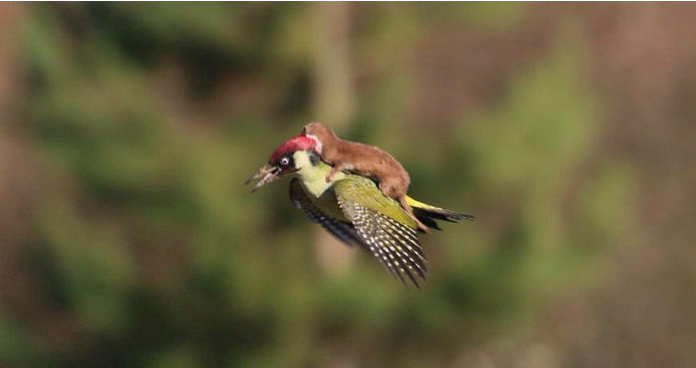
Weasel clutching on the back of a European green woodpecker; Photograph: Martin Le-May Twitter

According to Martin Le-May’s recent photograph that went viral a couple days ago, they can when they’re riding a woodpecker. I remember scrolling through Facebook and seeing the picture, but I didn’t take it seriously. There are many posts on Facebook that shouldn’t be taken seriously. We all have those friends who post everything and anything on the internet and swear it’s true. But how about National Geographic Magazine, is that credible enough? After reading the full article, and the research that went into proving it true, I am now a firm believer that it is, indeed, possible. And you?

Is the Photo Real?

As the viral video of the pig rescuing the baby goat taught us, just because something is cute doesn’t mean it’s real. But is the photo now known on Twitter as #WeaselPecker a fake? Continue reading

Marine Reserves, Unexpected Effects

fish-680x450

Marine reserves have been of interest since the first months of this blog in 2011 and are still a mainstay of our incoming and outgoing newsfeeds. Much of our recent interest in the intersection between marine biology and conservation has been focused on invasive species since 2013, due to the super series penned by Phil Karp, most recently added to last week. Thanks to Jason G. Goldman and Conservation for this summary of a special topic within this intersection:

Most marine reserves are optimized for reef fish. These are fish that are born, live, reproduce, and ultimately die in a small area – sometimes on just a single reef. Where there is connectivity across a large area, it’s usually while the fish is in its larval stage. Once it matures, it stays put.

It’s a fitting strategy for conserving fish that live on coral reefs, rocky reefs, or in kelp forests, but does it do much to help those species that are more migratory? These are animals, like the Gulf of Mexico’s gag grouper, that spend their childhoods in one place, a nursery habitat like a mangrove, estuary, or kelp forest, and then migrate to live out their adult years in an adult habitat, like a reef or along the continental shelf. Continue reading

Fighting Invasive Lionfish – Update

I’ve posted previously about the lionfish invasion that is threatening coral reef and other marine ecosystems throughout the Caribbean, Gulf of Mexico, and Southern Atlantic Seaboard of the United States. Availability and dissemination of information about the invasion was recently given a big boost through launch of the Invasive Lionfish Web Portal The portal is a collaborative effort of a number of partners, led by the Gulf and Caribbean Fisheries Institute. It is a great resource, providing links to a range of information about the invasion, including journal articles, videos, photos, recipes, a Twitter feed, etc..

Another recent development has been the release of a draft United States National Invasive Lionfish Prevention and Management Plan. Developed by the U.S. Government’s Aquatic Nuisance Species Task Force, the plan is intended to help coordinate the actions of the various government agencies and other stakeholders involved in dealing with the invasion. While such a plan is long overdue, and in that sense is welcome, I’m quite disappointed that the plan largely ignores, and indeed implicitly discourages, an important element of an effective strategy for addressing the invasion – namely the use of market-based approaches.

As I’ve indicated in my previous posts, the Atlantic lionfish invasion is a unique problem that requires innovative solutions. Continue reading

Citizen Science, Decades In Development

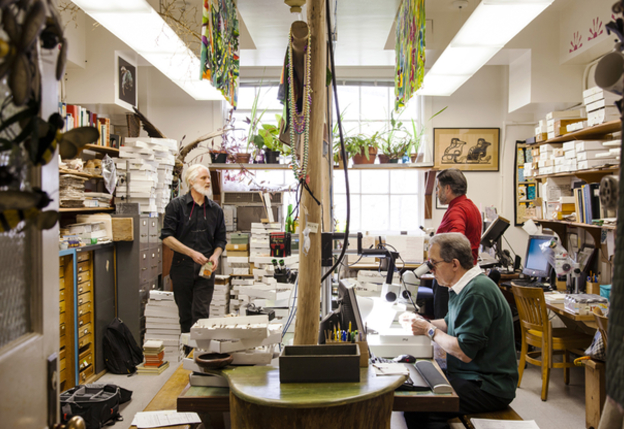
In Droege's lab at the Patuxent Wildlife Research Center, pizza boxes provide storage to thousands of pinned bee specimens. Volunteers Gene Scarpulla (in green) and Tim McMahon peer through microscopes to ID the insects.  Credit: Robert Wright

In Droege’s lab at the Patuxent Wildlife Research Center, pizza boxes provide storage to thousands of pinned bee specimens. Volunteers Gene Scarpulla (in green) and Tim McMahon peer through microscopes to ID the insects. Credit: Robert Wright

We started, before even knowing the terminology, paying attention to citizen science on this blog when we began to understand the parallels with entrepreneurial conservation. And now we link to stories whenever we can that help us better understand it:

Three Generations of Citizen Science: The Incubator

Once Sam Droege gets a research project up and running, he dreams up a new one–and builds it.

BY ANDY ISAACSON

It was a bright, breezy day in late April, the flowering azaleas having finally shrugged off the winter that overstayed its welcome, when Sam Droege sailed onto the grounds of the U.S. National Arboretum in Washington, D.C., behind the wheel of a pterodactyl. It was actually a ’98 forest-green Saturn, which Droege had painted with yellow wings and a red-and-yellow beak that tapered to a point down the center of the hood. A piece of wood, lined with a rusty crosscut saw, had been bolted to the roof: the crest. Little jingle bells, inspired by richly adorned buses in Pakistan, dangled from chains screwed into the rear bumper. Droege still had designs for neon undercarriage lights, and a mosaic of mirror shards to line the car’s ceiling–“but why stop there?” he wondered. It was a work in progress.

Continue reading

Counting Monarchs

Creating Breeding Habitat for Monarchs: To reverse the breeding habitat loss in the U.S., the Monarch Joint Venture promotes the inclusion of native milkweed and nectar plants in restoration efforts across the country ranging from small gardens to natural areas and corporate landscapes. (Photo by Giuseppina Croce)

We’ve seen some information on how much people value monarch butterflies. Now we’re learning that the beautiful orange lepidopterans have their own citizen science Thanksgiving count and might soon be labeled as a threatened species under the Endangered Species Act if a petition has any effect.

Beloved by tattoo parlors and fantasy princess landscapes, the king of butterflies is in decline. During their annual migration, monarch butterflies are famous for gathering in innumerable flutters as they fly from summer breeding grounds in the U.S. and Canada to warmer sites in Mexico and California. At one time, there were over a billion monarchs making this journey. Now, less than 4% are left.

Over the years, human behaviors, particularly agricultural practices have contributed to the monarch’s decline. In a petition to protect monarchs scientists point to habitat loss as grassland is converted to farmland and overwintering sites are deforested as a major factor. On top of that, the cultivation of certain genetically engineered crops enable farmers to apply broad-spectrum herbicides killing weeds such as milkweed, the monarch caterpillar’s sole food source.

Continue reading

The Sophie’s Choices Of Conservation

Screen Shot 2014-11-21 at 5.53.37 PM

Life is not fair.  Sometimes it is really unfair, especially when it comes to entire lifeforms disappearing, or not disappearing, subject to choices we humans make, with all our inherent biases. Thanks to Nautilus for bringing this research to our attention:

Which Endangered Species Would You Save?

Conservation is in the eye of the beholder.

BY CARRIE ARNOLD

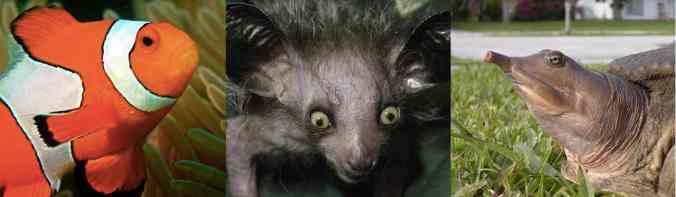
You have just been appointed Conservation Czar. But there is a catch. You can only save three animals. Look at the 12 animals below and click on the three that you would save. After you make your choices, you will learn about the endangered status of each animal.

Continue reading