Model Mad, National Monument Protection Coalition

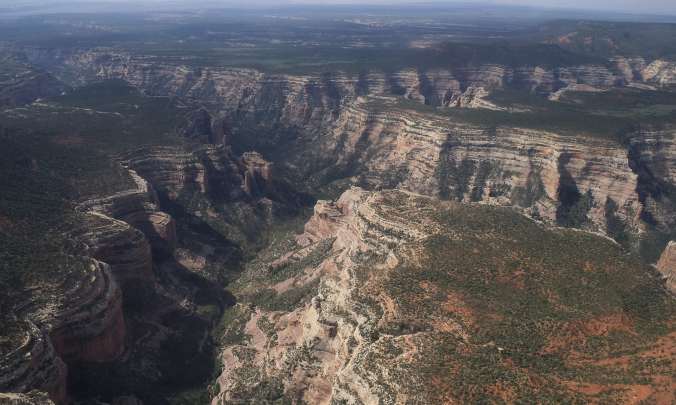
Arch Canyon, within Bears Ears national monument in Utah. Bears Ears is under threat from the Trump administration. Photograph: Francisco Kjolseth/AP

More examples of corporate social responsibility and activist collaboration taking the higher ground position over flawed public policy.

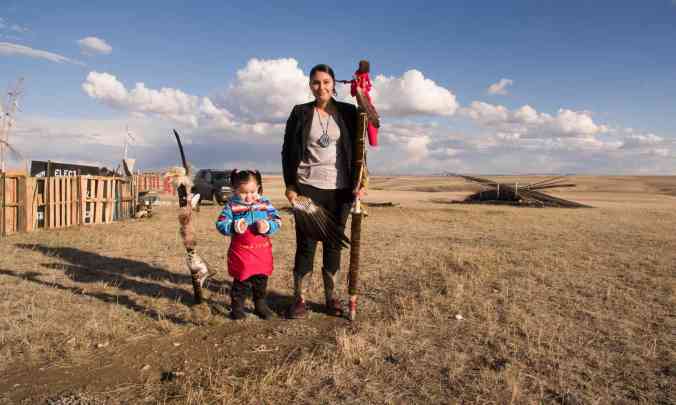
Native Americans and environmental advocates get help from outdoor retailers as they battle proposal to change monuments’ boundaries

Environmental activists, Native American groups and a coalition of outdoor retailers have vowed to redouble their efforts to protect public lands, after the US interior secretary, Ryan Zinke, recommended on Thursday that Donald Trump change the boundaries of a “handful” of national monuments.

“Secretary Zinke’s recommendation is an insult to tribes,” said Carleton Bowekaty, co-chairman of the Inter-Tribal Coalition, which asked Barack Obama to create the Bears Ears monument in Utah in 2015, citing increasing thefts and vandalism at more than 100,000 native cultural sites in the area.

Millions of petitioners have joined an urgently assembled advocacy effort to dissuade the Trump administration from moving against the monuments. On Friday, the outdoor retailer Patagonia, which spearheaded the industry initiative, said the group would continue its efforts. Continue reading

Ensuring Public Access To Climate Science

640

Sterling Library at Yale University in New Haven Connecticut, US. Photograph: Alamy

Thanks to John Abraham, and the Guardian’s team focused on the Environment, for shining the light on the good works of those who work to ensure our access to essential environmental science at a time when there are efforts to silence the science:

Yale Climate Connections: America’s beacon of climate science awareness

Stellar work by group led by Anthony Leiserowitz on putting climate change research into public domain is empowering citizens and institutions Continue reading

Conservationists And Public Servants Collaborate In South Texas

14butterfly4-master675

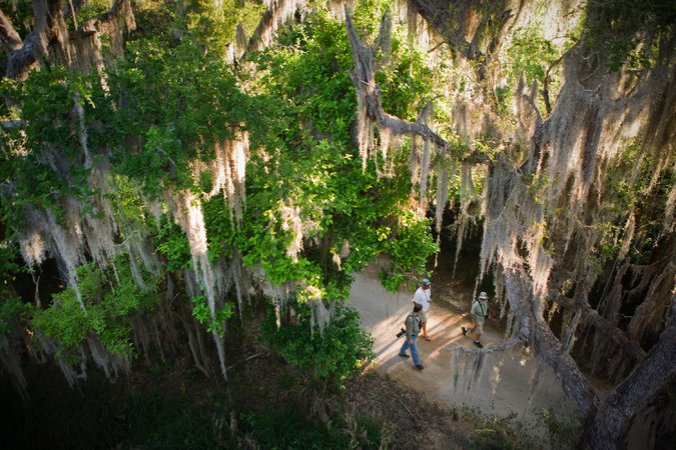
Birders walking under trees draped in Spanish moss in the Santa Ana National Wildlife Refuge near Alamo, Tex. The border wall would traverse the refuge. Credit Michael Stravato for The New York Times

Thanks to Michael Hardy and the New York Times for this coverage of an unwanted, disruptive intruder:

MISSION, Tex. — Last month, Marianna Wright, the executive director of the privately owned National Butterfly Center here, discovered survey stakes on the property marking out a 150-foot-wide swath of land.

Ms. Wright later encountered a work crew cutting down trees and brush along a road through the center. The workers said they had been hired by United States Customs and Border Protection to clear the land.

“You mean my land?” Ms. Wright asked, before kicking them out. Continue reading

Have Cause Will Travel

Ring-Your-Rep-Phone-Night

We have found that when travelers can support a cause they believe in while traveling, they will go out of their way to do so. When our hotelier colleagues make it easier for a traveler to support a cause, we can only celebrate it:

The Standard Telephone Co. Wants YOU to Ring Your Rep

Over the past few months, we’ve been thinking a lot at The Standard about what we can do to support positive, productive activism. As we’ve gone out and talked to people who are engaged in this very thing, one piece of advice we’ve heard again and again is this: speak up! There are lots of ways to take action, lots of ways to make a difference, but there is no substitute for the simple act of making your voice heard. Continue reading

“Arks of the Apocalypse”

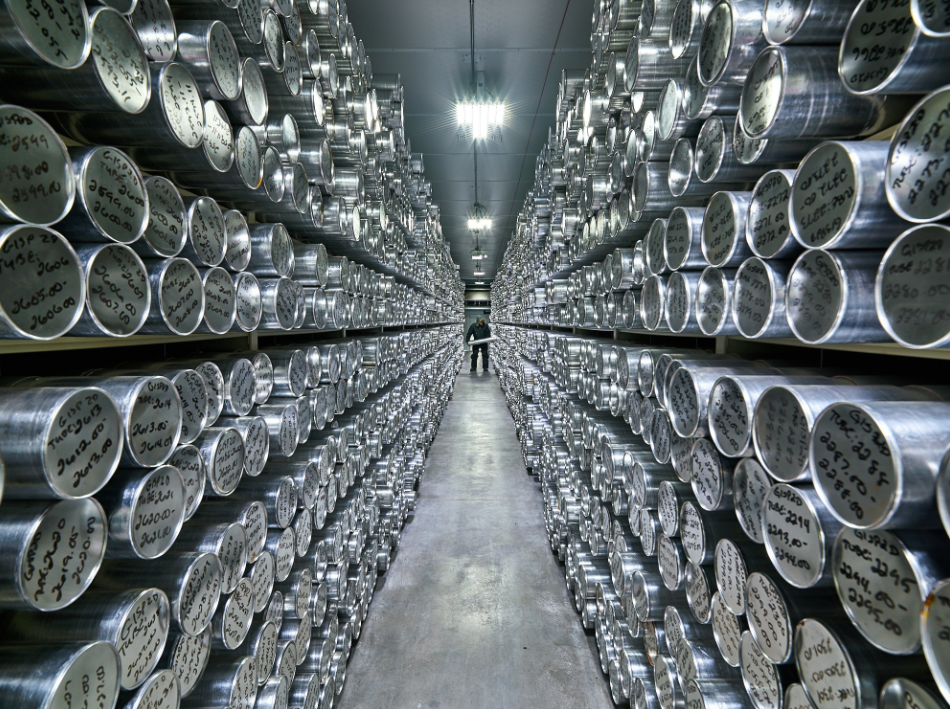
U.S. National Ice Core Laboratory, Lakewood, Colo. photo credit: Spencer Lowell for The New York Times

Thanks again to the New York Times for highlighting the global nature of this scientific “call to arms” to save not only data, but genetic and organic material as a back-up plan for future generations. From the Svalbard Global Seed bank in Norway, to sperm banks for coral, endangered wildlife, and even glacial ice – these archives are meant to provide both a life line to the future and answers about the past.

The fragility of each project is evident as Science itself has come under attack from current public policy, which doesn’t appear to see the irony of their denial in the face of facts about climate change.

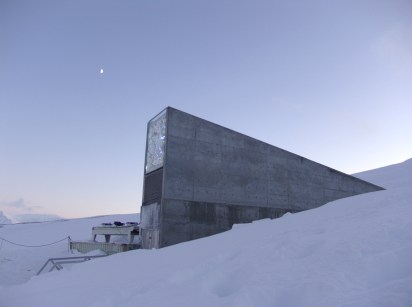
It was a freakishly warm evening last October when a maintenance worker first discovered the water — torrents of it, rushing into the entrance tunnel of the Svalbard Global Seed Vault, a storage facility dug some 400 feet into the side of a mountain on a Norwegian island near the North Pole. A storm was dumping rain at a time of year when the temperature was usually well below freezing; because the water had short-circuited the electrical system, the electric pumps on site were useless. This subterranean safe house holds more than 5,000 species of essential food crops, including hundreds of thousands of varieties of wheat and rice. It was supposed to be an impenetrable, modern-day Noah’s ark for plants, a life raft against climate change and catastrophe.

A few Norwegian radio stations and newspapers reported the incident at the time, but it received little international attention until May, when it was becoming clear that President Trump was likely to pull the United States out of the Paris climate agreement. Suddenly the tidings from Svalbard were everywhere, in multiple languages, with headlines like “World’s ‘Doomsday’ Seed Vault Has Been Breached by Climate Change.” It didn’t matter that the flood happened seven months earlier, or that the seeds remained safe and dry. We had just lived through the third consecutive year of the highest global temperatures on record and the lowest levels of Arctic ice; vast swaths of permafrost were melting; scientists had recently announced that some 60 percent of primate species were threatened with extinction. All these facts felt like signposts to an increasingly hopeless future for the planet. And now, here was a minifable suggesting that our attempts to preserve even mere traces of the bounty around us might fall apart, too.

Continue reading

Pines, Beetles & Grizzlies

15mcnamee-master768

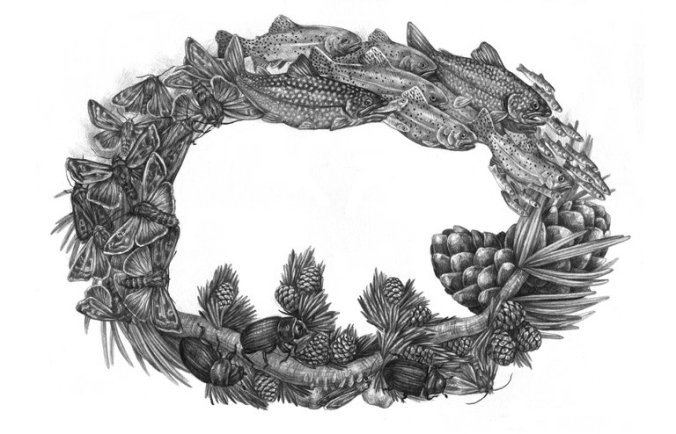
Zoe Keller

Thanks to Thomas McNamee for his opinion on these matters:

The Government Is Now the Yellowstone Grizzly’s Biggest Threat

In March 2016, the United States Fish and Wildlife Service proposed removing the Yellowstone grizzly bear population from the list of threatened species. The uproar was ferocious. Conservationists, scientists, 125 Indian tribes and some 650,000 citizens expressed concern about the move.

Now the government has gone and done it anyway. Continue reading

Spaceship Earth

We recently encountered Parley for the Oceans when Doug Aitken’s water pavilion installation came onto our radar.

Both the collaborative ethos and the focus of the cause are dear to our hearts.

Parley is the Space Where Creators, Thinkers, and Leaders come together to raise awareness for the beauty and fragility of our oceans and collaborate on projects that can end their destruction.

Parley for the Oceans addresses major threats towards our oceans, the most important ecosystem of our planet.

We believe the power for change lies in the hands of the consumer – given he has a choice – and the power to shape this new consumer mindset lies in the hands of the creative industries.

Artists, musicians, actors, filmmakers, fashion designers, journalists, architects, product inventors, and scientists have the tools to mold the reality we live in and to develop alternative business models and ecologically sensible products to give us earthlings an alternative choice, an everyday option to change something.

Continue reading

Model Mad, Mayors

07pedutoWeb-1496845647065-master315.jpg

Mayor Bill Peduto of Pittsburgh, left, and Mayor Ann Hidalgo, of Paris, are outspoken supporters of the Paris climate accord. Credit Justin Merriman for The New York Times (Peduto); Christophe Ena/Associated Press

She has been featured in these pages due to her creative approach to governance more than once. We are happy to see Ann Hidalgo again, this time providing another example of the “don’t just get angry–do something with creative ferocity” ethos implied in these constant observations of model mad. And we are especially grateful for the joint commentary with Pittsburgh Mayor Bill Peduto, who we hope to see more of:

…Though separated by an ocean and a language, we share a desire to do what is best for our citizens and our planet. That means putting aside parochial politics and embracing the global challenge of fighting climate change. In doing so, we can create a cleaner, healthier, more prosperous world for Parisians, Pittsburghers and everyone else on the planet. Continue reading

Leadership On Climate Change Is Alive And Well

California Gov. Jerry Brown talks with Sharon Dijksma, Netherlands Minister for the Environment, during the joint Netherlands and California Environmental Protection Agency conference called, “Climate is Big Business,” at the Presidio Wednesday, May 24, 2017, in San Francisco; Photo: Eric Risberg, Associated Press

The news yesterday that the USA is exiting the Paris climate accord was in a font size the New York Times only uses at times of true tragedy–i.e. big news. Editorials accompanying that headline on the front page were proportionately big with invective:

Our Disgraceful Exit

Trump’s Stupid and Reckless Climate Decision

Brooks: Trump Poisons the World

Krugman: Trump Gratuitously Rejects the Paris Accord

All consistent with the implications of the news. There is no discounting the scale of that tragedy, so it is possibly not the right moment to look for silver linings. But that is what we do here, so here goes. In the model mad series we linked to a story about California Governor Jerry Brown, who has been making a stand during decades of public service, and he clearly has no intention of slowing down. The governors of California, New York and Washington on Thursday announced a new “alliance of states dedicated to fighting global warming and urged others to join them”.

“California will resist,” Brown told journalists on a conference call, going on to say that  the administration may well create the exact opposite of what is intended –

an aroused citizenry — and an aroused international community — who will not tolerate this kind of deviant behavior from the highest office in the land.”

Brown and his counterparts, Jay Inslee of Washington and Andrew Cuomo of New York, announced that they would join forces in a United States Climate Alliance, a coalition of states committed to upholding the goals of the Paris agreement.

The three states, combined, represent more than 20 percent of the U.S. population and at least 10 percent of the country’s greenhouse-gas emissions, according to the governors. Continue reading

Svalbard Improvements

4186766563_7bab19f5c2_b.jpg

The Svalbard Global Seed Vault in Norway. (Credit: Mari Tefre/Svalbard Globale frøhvelv)

Our favorite doomsday machine, which we never tire of hearing about and sharing on this platform each time it has demonstrated its visionary worthiness, is back in the news. Discover Magazine brought this to our attention today: Continue reading

Dams, Development & Destruction

3500 (2).jpg

Munduruku people demonstrate in front of the Brazilian Ministry of Mines and Energy, calling for the suspension of construction of the Belo Monte hydroelectric plant. Photograph: Lunae Parracho/Reuters

Thanks to John Vidal and the Guardian for this coverage in Latin America:

The rains had been monumental throughout April 2014. By early May, the operators of the 219 MW Cachoeira Caldeirão dam being built in Brazil’s remote Amapá state knew that levels on the Araguari river were dangerously high. If some water was not released fast, the whole thing might collapse. There would be no danger to people because any run-off would be absorbed by two other dams downstream, the hydropower company thought.

But communications failed and no one warned the small town of Ferreira Gomes, nestled on the banks of the Araguari nearly 50km away. Continue reading

Model Mad, Mechanism

gettyimages-671595622_wide-3b228004a6ccebbd2b6b9901d8a92f181b3643b1-s1400-c85

In this era, when saying no in creative manner has been raised to an art form, we remain on the lookout for model mad; but it does not have to be creative or novel. If there is an established machinery to utilize, utilize it! Here is an example. We are not surprised that, when asked, people say they want their environment protected, nonetheless we are pleasantly surprised that the “system” such as it is continues to even ask:

Public To EPA On Cutting Regulations: ‘No!’

As part of President Trump’s executive order to review “job-killing regulations,” the Environmental Protection Agency last month asked for the public’s input on what to streamline or cut. It held a series of open-mic meetings and set up a website that has received more than 28,000 comments, many of which urge the agency not to roll back environmental protections. Continue reading

Model Mad, Down Under

John Church in Hobart in September 2010. He is known internationally for helping to bring statistical and analytical rigor to longstanding questions about sea level rise. Credit Peter Boyer

We continue to keep our eyes open for stories that offer inspiration even in the face of apparent adversity.

A Parable From Down Under for U.S. Climate Scientists

HOBART, TASMANIA — John A. Church, a climate scientist, did not look or sound like a man who had recently been shoved out of a job.

Speaking softly and downing coffee at an outdoor cafe in this old port city, he sounded more like a fellow fresh off a jousting match. “I think we had a win — a bigger win than I ever anticipated,” Dr. Church said in an interview last month.

Australian climate science went through an upheaval last year, one that engaged the press and the public in defending the importance of basic research. In the end, Dr. Church did indeed lose his job, but scores of his colleagues who had been marked for layoffs did not. Some of them view him as having sacrificed his career to save theirs.

What happened in Australia shows the power of an informed citizenry keeping watch on its government. And it may turn out to be a precursor to an attack on fundamental climate research in the United States.

Continue reading

Welcome News From Brazil

Thanks to Anthropocene for a moment of relief:

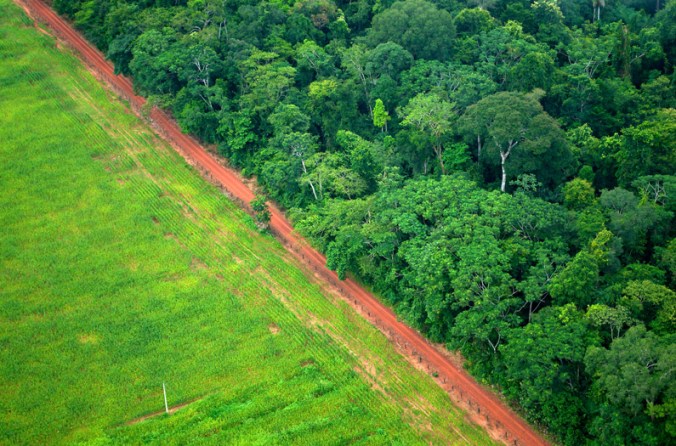
In Brazil, signs that a soy moratorium is slowing down deforestation

Keystone Continues Calling

3733.jpg

Thanks to the Guardian for keeping attention where it is due:

Life on the Keystone XL route: where opponents fear the ‘black snake’

Part one: In Montana, Native Americans fear a leak could destroy their way of life, but local politicians worry about the threat of protesters above all else

Words by Oliver Laughland, photos and video by Laurence Mathieu-Léger

“)ur people call it the black snake because it is evil,” says Tressa Welch, as thunder clouds steamroll the blue sky over the plains of Wolf Point. “And like snakes they come out of nowhere, they slither and strike unknown.” Continue reading

Osage Nation’s Reign Of Terror

20253bbcb2dd6c45dd81207b5472e853c352bbd3Many of our links to the too many stories of injustice perpetrated against Native Americans in the last year had to do with pipelines.  Some stories focus on the positive, but there remains plenty of negative. The only time we have noted the Osage Nation in these pages, it was under the happier circumstances of someone doing the right thing by them.

David Grann’s new book is being reviewed, and he is being interviewed, just as one of his earlier articles has become a powerhouse cinematic experience. He is our kind of sleuth, and so it is strange that we have not linked to his work before. Thanks to Theodore Ross in the New Republic for bringing this to our attention:

…In the early 1900s, the Osage were among the wealthiest people in the United States, after a large oil reservoir was discovered beneath the barren Oklahoma scrubland they had been driven to by white settlers and the federal government. Then tragedy: a string of murders, each following close on the heels of the next, as a bloody plot to separate the Osage from their money and land unfolded.

Grann tells the story of these murders, the conspirators, and the new breed of lawmen from the FBI who hunted them down. He also reveals a far worse scheme, one that encompasses America’s institutional racism and violence, and the exploitation of Native Americans… Continue reading

If You Happen to Be at the Smithsonian – But You Don’t Have to Be

Science, entrepreneurship, conservation and innovation converge at this amazing open source summit with events in multiple Smithsonian locations ranging from New York City, Washington DC and Panama City.

Frequent contributor to this site Phil Karp, will participate in a forum on Restoring Nature. The synergy of forum subjects with our interest in wild foods and our work in conservation focused hospitality makes us wish we were there.

What’s Working in Conservation

Earth Optimism celebrates a change in focus from problem to solution in the area of global conservation with an unprecedented gathering of thought leaders, scientists, environmentalists, artists, civic leaders and international media.

The global conservation movement has reached a turning point. Continue reading

If You Eat Canned Tuna, Consider This

TunaRank.jpg

We check in with EcoWatch regularly, and from time to time Greenpeace has a surprising piece of content featured, like this 20 Canned Tuna Brands Ranked: How Sustainable Is Your Brand?

StarkistWarn.jpgWhat is surprising to me is this pop up call to action, which echoes back at least three decades for me to the first time I heard of Greenpeace, which was also the first time I heard of any issues related to canned tuna, which was also the first time I looked on a map to see where the Gulf of California, and Baja California Sur were situated. It is surprising because on the ranking above, this same tuna is not the absolute worst of the worst. Even more surprising, in its own way, is that Trader Joe’s is even worse in this ranking. Go figure. Anyway, thanks to David Pinsky, Greenpeace, and EcoWatch for this: Continue reading

The Honeymoon Is Over

4865

‘But when it comes to the defining issue of our day, climate change, he’s a brother to the fat old guy in DC.’ Photograph: Sean Kilpatrick/AP

Bill McKibben, tireless fighter for causes we believe in, editorializes with no affection for the man who not long ago seemed to be the embodiment of all that was better about the North American neighbor of the country that elected a man who effectively campaigned against environmental protection. We thought this one was different; we were wrong. We avoid political news, but we do not hide from, nor hide, a clear argument calling out horrific policy:

Stop swooning over Justin Trudeau. The man is a disaster for the planet

Donald Trump is a creep and unpleasant to look at, but at least he’s not a stunning hypocrite when it comes to climate change Continue reading

Dismantling Protection, Effectively & Efficiently

Kolbert-earth-day-trump-1200.jpg

How is it that an Administration as disorganized as Donald Trump’s has been so methodical when it comes to attacking the environment? PHOTOGRAPH BY JOE RAEDLE / GETTY

I committed myself to not name the name, because it adds fuel to a flame that is already out of control. But if you have read any of the posts in our model mad series the name is clearly implied.  Plenty of others name so well that it is best just to link their work. One of the best namer of names when it comes to our environment, and failure to protect it, is Elizabeth Kolbert. She occasionally points out that we do not simply fail to protect, but willingly allow the named to dismantle critical protections. We are sadly impressed that Dame Doomsday doesn’t disappoint with her latest contribution:

Next week, millions of Americans will celebrate Earth Day, even though, three months into Donald Trump’s Presidency, there sure isn’t much to celebrate. A White House characterized by flaming incompetence has nevertheless managed to do one thing effectively: it has trashed years’ worth of work to protect the planet. As David Horsey put it recently, in the Los Angeles Times, “Donald Trump’s foreign policy and legislative agenda may be a confused mess,” but “his administration’s attack on the environment is operating with the focus and zeal of the Spanish Inquisition.” Continue reading