Agricultural Origin Story

leaf-cutter-ants_wide-6b7093087f0ce34d72d51f5eebb34ebc9db81df7-s1100-c85

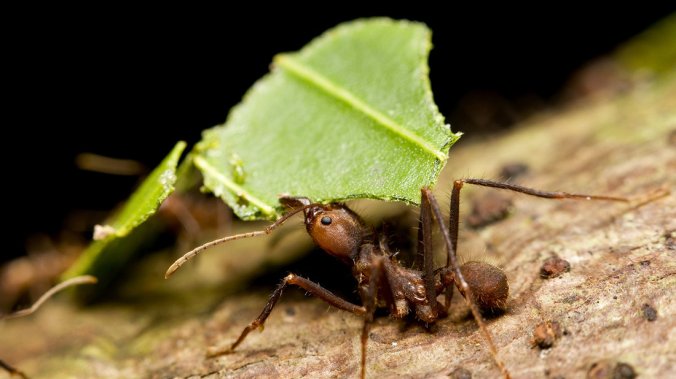
Various species of ants engage in some kind of agriculture. Here, a leaf-cutter ant gathers food for its fungus farm. Mark Bowler/Science Source

Thanks to National Public Radio (USA):

Who Invented Agriculture First? It Sure Wasn’t Humans

Ants in Fiji farm plants and fertilize them with their poop. And they’ve been doing this for 3 million years, much longer than humans, who began experimenting with farming about 12,000 years ago. Continue reading

Some Ants Fight Fungus with Fungus

Leaf-cutter ants carrying leafy loot back to their underground colony in Carara National Park, Costa Rica

I’ve covered some ants in the past, discussing their fungal friends that provide them food, as well as their foes that turn them into zombies. A recent article by a team of researchers that included members of the Smithsonian Tropical Research Institute has found that most species of leaf-cutter ants have a practice that helps defend their young against parasitic fungi: wrapping them in the same fungi that they use to digest the leaves they bring underground!

Sarah Puschmann reports:

In the dark recesses of an underground fungus garden, a Panamanian leaf-cutting ant plucks a tuft of mycelia, the wispy part of the basidiomycete fungus these ants grow and eat, and carries it to a nearby ant pupa. The ant licks the pupa’s body before patting the fungus into place, continuing until it appears, when viewed under a powerful microscope, as though the pupa is webbed in short strands of spaghetti.

Continue reading

Camouflage by Debris

Specimens preserved in amber. © Wang et al. in Science Advances, 2016.

We’ve featured posts here concerning camouflage plenty of times, whether in birds and their eggs, in beach-dwelling crabs, plant-mimicking insects, or strange caterpillars. That last example is the closest to the subject matter of Ed Yong’s latest post on Nat Geo’s Phenomenon blog, where he writes about insects that cover themselves in debris to hide from predators or prey alike:

Every year, in northern Myanmar, thousands of farmers pull tonnes of Cretaceous amber out of the ground, and send the glistening nuggets to local markets. For six years, Bo Wang from the Chinese Academy of Sciences and his colleagues have visited the markets and sifted through 300,000 of the glistening nuggets. It was a lot of work. Then again, it takes a lot of work to find animals that spent their whole lives trying not to be found.

Continue reading

The King of Sting

I’ve heard about the Schmidt Pain Scale before, having lived and worked in the tropics for long enough to have seen first-hand, and countless times, two of the insects with the most painful stings on his index: the bullet ant and the tarantula hawk. Of course, I haven’t sought out their stings and will actively avoid the two hymenopterans as much as possible, but Justin Schmidt has been doing the opposite with insects around the world for years. From the TNC Cool Green Science blog:

A yellow jacket just stung you. You jump, scream and shout expletives.

Or, if you’re Justin Schmidt, you describe the sting as such: “Hot and smoky, almost irreverent. Imagine W.C. Fields extinguishing a cigar on your tongue.”

Schmidt might be called the King of Sting: He’s spent much of his career researching bees, wasps and ants, including the chemical make-up of their venom. He’s traveled to six continents to track down stinging insects.

Continue reading

The American Burying Beetle

American burying beetles. Photo © St. Louis Zoo via Cool Green Science

Beetles, apart from being the most numerous type of insect in the world, comprise the largest group of animals in general, with somewhere between three- and four-hundred thousand species described; and that doesn’t even count the presumably undiscovered ones hiding out in some unexplored corner somewhere. We’ve covered dung beetles before, but also mycokleptic species, and now we’re learning about a very important carrion beetle in North America known as the American burying beetle from Ted Williams at The Nature Conservancy’s Cool Green Science blog:

The shiny black, orange-spotted adults can approach two inches in length. Offspring beg both parents for food, inducing regurgitation by stroking their jaws like wolf pups. They’re federally endangered American burying beetles, largest of the 31 species of North American carrion beetles.

Riding on the adults like oxpeckers are orange mites that keep them and their larval food supply free of fly eggs and microbes.

Continue reading

Hydropeaking Dams = Fewer Insects

Hoover Dam, photo © US Bureau of Reclamation

Although we’ve heard of dams causing environmental and community problems before, we’ve also seen how they can be beneficial to society, and it’s clear that they’re a double-edged sword. Most recently on the topic, we learned that with proper planning and design, hydropower can be less of an enemy to conservation. Now, research highlighted in Conservation Magazine displays the possibility of helping native river-reliant insect populations by adjusting how dams “hydropeak,” or change river flow to compensate for electricity demand. Sarah DeWeerdt reports:

Scientists know that hydropower dams often decrease the abundance and diversity of aquatic insects downstream. But until now it wasn’t clear why—after all, dams cause a range of environmental stressors such as alterations in water flow, temperature, and sedimentation.

A massive new study led by the U.S. Geological Survey lays much of the blame on hydropeaking, the practice of varying river flows below a dam depending on electricity demand. Because of hydropeaking, the amount of water released from a dam can vary by as much as ten-fold throughout the day, creating an artificial intertidal zone that propagates for hundreds of kilometers downstream.

Continue reading

Macroentomotography

Composite image by Levon Biss via ThisIsColossal

About five years ago we featured a piece that coined the term “entomotography,” and we’ve been sharing stories about insects frequently since then; one was even closely related to this post and could have shared the title, of bees photographed close-up. The specimens shown below, however, are not single photos but actually composite images of thousands of shots in the best lighting for each angle, stitched together to create amazing results. Kate Sierzputowski writes for ThisIsColossal:

Commercial photographer Levon Biss typically shoots portraits of world-class athletes—sports players caught in motion. His new series however, catches subjects that have already been paused, insect specimens found at the Oxford Museum of Natural History. The series originally started as a side-project capturing the detail of bugs that his son would catch at home, and is now displayed at the museum in an exhibition titled Microsculpture.

Composite image by Levon Biss via ThisIsColossal

Continue reading

Plants Attracting Pest Predators

Illustration by Dr. Otto Wilhelm Thomé via Wikimedia Commons

We’ve discussed ants living with plants in the past, actually in the context of acacia trees like Ed Yong mentions in his post. And there’s proof of plants sending pheromonal signals to wasps that will parasitize the caterpillars eating the plant’s leaves; this article in the NatGeo Phenomena blog reminds us of that:

Six years ago, Anke Steppuhn noticed that the bittersweet nightshade, when attacked by slugs and insects in a greenhouse, would bleed. Small droplets would exude from the wounds of its part-eaten leaves. At the same time, Steppuhn and her colleagues saw that the wild plants were often covered in ants.

These facts are connected. Steppuhn’s team from the Free University of Berlin, including student Tobias Lortzing, have since discovered that the droplets are a kind of sugary nectar, which the beleagured nightshade uses to summon ants. The ants, in return for their sweet meals, attack the pests that are destroying the plant. And this discovery provides important clues about the evolution of more intimate partnerships between ants and plants.

Continue reading

An Orchidean Cryptid

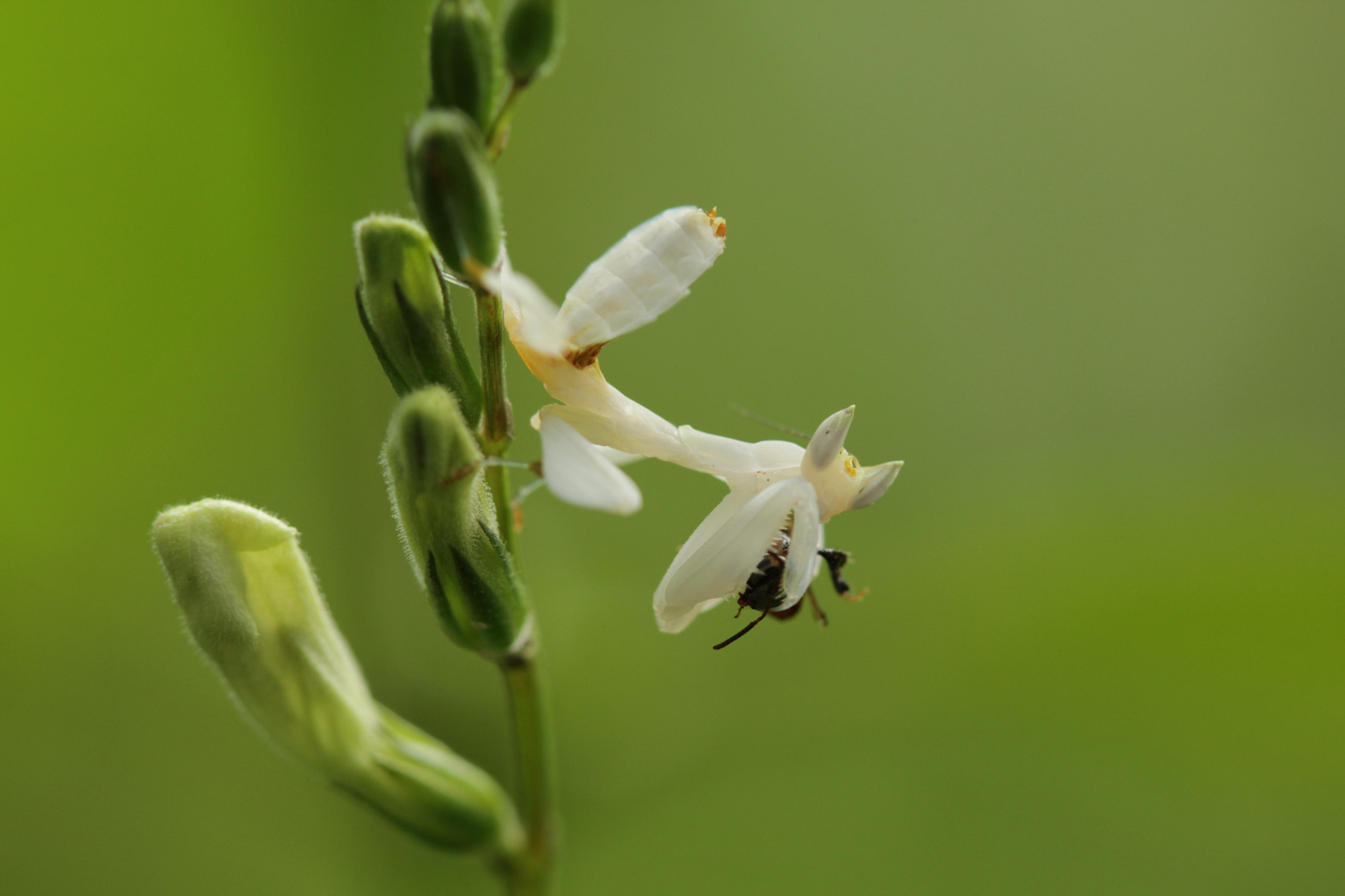
A female juvenile orchid mantis chows down. Photo courtesy of James O’Hanlon via Science Friday

A few days ago we shared about the clade of flowers known as orchids, and how people in the UK can become citizen scientists regarding them. Now, Science Friday writer Julie Liebach (who also edits the site’s content online) explores the research of an entomologist studying a type of “praying” mantis that, as a juvenile, mimics the general feeling of the average orchid – but not a particular species or genus of the flowers, interestingly enough:

They’re predominantly white with pink or yellow accents, similar to some orchids and other flowers, and their four hind legs are lobed, like petals. But if you search for an exact floral counterpart, as behavioral ecologist James O’Hanlon did, you probably won’t find one. “I spent forever looking for a flower that they look just like,” he says, to no avail.

As it turns out, rather than mimicking one floral species, the insect instead may embody a “generic or an average type of flower” in order to attract bees and other pollinating insects as prey.

Continue reading

Interview with a Jurassic Park Paleobiologist

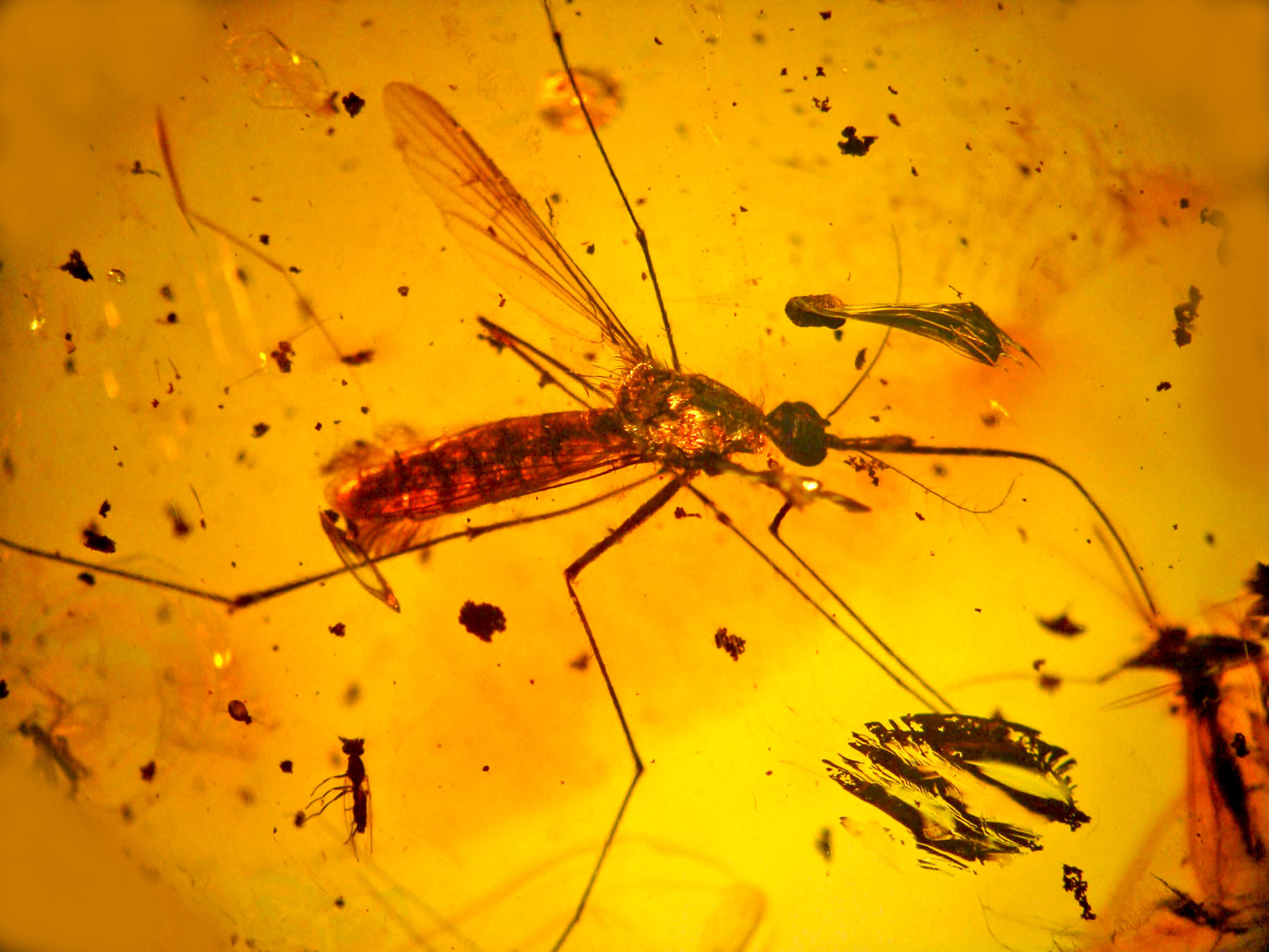
An elephant mosquito from Poinar’s collection. Photo by George Poinar, Jr. via Science Friday.

Many of our readers have likely read or watched Jurassic Park, or one of the sequels of the film, and know that the DNA for the fictionally first-recreated dinosaur came from the blood sample within a giant mosquito trapped inside prehistoric amber. Well, Michael Crichton actually got this idea from a true scientific discovery, although it didn’t revolve around dinosaurs. We’ve discussed de-extinction on the blog before, and actually featured the paleobiologist referred to in this post’s title a couple months ago. Now, Chau Tu at Science Friday has interviewed the scientist, George Poinar, Jr., regarding his experience working with amber-clad specimens from millions of years ago, his thoughts on de-extinction, and more:

Poinar would find, among other specimens, the oldest known bee, the first known bat fly fossil, and the most complete flower from the Cretaceous Period. And just this past February, he co-authored a paper in Nature Plants describing a new species of neotropical flower found in amber from the mid-Tertiary Period.

Science Friday recently spoke with Poinar, 79, now a courtesy professor in the Department of Integrative Biology at Oregon State University, about what led him to investigate specimens trapped in amber, his thoughts on de-extinction, and his inspirations.

Continue reading

Threats to Monarch Butterflies and How We Can Help

A Monarch butterfly caterpillar feeding on the leaves of a milkweed plant. Photographed at the Grapevine Botanical Gardens. Photo © TexasEagle/Flickr through a Creative Commons license, via TNC

We’ve covered monarch butterflies plenty of times in the past, whether it was reporting survey results showing that many households in the US would pay to help create habitat for the species, showcasing a citizen science project by the Xerces Society to count the winged invertebrates during their migration, or simply highlighting the needs of the orange butterfly in general and how to become involved. Now, given increased media coverage of the Monarch, the Cool Green Science blog for The Nature Conservancy is summarizing hazards and helpers of the species:

Twenty years ago, monarch butterflies occupied so much area in Mexico during the winter you could see it from space. It totaled about 20 hectares, or almost 50 acres, with millions if not billions of butterflies clinging to trunks and branches of trees.

Today, that area is around 4 hectares. The previous year had 1.1 hectares, says Brice Semmens, Assistant Professor at the Scripps Institution of Oceanography at the University of California San Diego.

Semmens was the lead author on “Quasi-extinction risk and population targets for the Eastern, migratory population of monarch butterflies” published recently in the journal Scientific Reports. It is one paper in a long line of sobering butterfly news.

Continue reading

The Mad Hatterpillar

The Mad Hatterpillar, Uraba lugens, larval stage of an Australian moth. Image © Nuytsia@Tas via WIRED Magazine.

The image above may seem a little gruesome if you hear that the pictured caterpillar has a collection of old skulls attached to the top of its own its spiky, irritating-to-the-touch hairs. But the larval insect isn’t a true headhunter, since the eery tower above the caterpillar’s crown is in fact made of its own exoskeleton pieces from previous moltings of its skin. Ed Yong reports on new research regarding a caterpillar that has been known for many decades but is still being studied for explanations on the strange cranium-collecting behavior:

Some caterpillars defend themselves from predators using toxic chemicals, repugnant smells, or stinging hairs. Some camouflage themselves. Some mimic snakes. Some recruit ant bodyguards. Some create protective fortresses, or make warning clicks, or vomit up their guts.

And then there’s Uraba lugens, an Australian moth colloquially known as the gum-leaf skeletoniser, and even more colloquially known as the Mad Hatterpillar. Like all caterpillars, it grows by shedding its hard outer shell before expanding the soft body beneath.

Continue reading

Notes from a Natural History Museum

Harvard Natural History Museum

I recently had the chance to visit the Harvard Natural History Museum. Despite having lived in Cambridge for nearly a year, and having often thought about visiting the museum when I passed by going to and from my apartment, I had not stopped in until now. What a treat! The collections are full, diverse, and well curated. On this occasion, I spent most of my time in the animal wing, but I plan to return soon to take in the flora and minerals, and spend much more time in choice display rooms (e.g. the absolutely gorgeous Mammals/Birds of the World permanent exhibit: see below for pictures).

A ground sloth skeleton. It is hard to get an idea of the size of this creature from this photo, but it probably weighed several tons while alive!

Continue reading

The Gears in Planthopper Nymph Legs

Igor Siwanowicz’s image of planthopper nymph gears won 9th place in the Olympus BioScapes International Digital Imaging Competition. Photo by Igor Siwanowicz, HHMI Janelia Research Campus, Ashburn, Virginia. Via Science Friday.

In September of 2013, Science published a paper by Malcolm Burrows and Gregory Sutton titled, “Interacting Gears Synchronize Propulsive Leg Movements in a Jumping Insect.” The two British biologists were discussing the fascinating structures they had found in the legs of small insects called planthoppers. At the top joints of each pair of legs, the tiny jumping insects had gears with interlocking teeth that synchronized the kicking motion between the two appendages, so that the planthoppers could jump straight rather than slightly to the left or right if one leg had acted even slightly before the other.

Covering the story back in September, Joseph Stromberg wrote for Smithsonian Magazine that:

To the best of our knowledge, the mechanical gear—evenly-sized teeth cut into two different rotating surfaces to lock them together as they turn—was invented sometime around 300 B.C.E. by Greek mechanics who lived in Alexandria. In the centuries since, the simple concept has become a keystone of modern technology, enabling all sorts of machinery and vehicles, including cars and bicycles.

Continue reading

Breakthroughs In Nutrition Via Entrepreneurial Conservation

Exo's peanut butter-and-jelly bar contains about 40 ground-up crickets and has a familiar nutty, sweet flavor. Meredith Rizzo/NPR

Exo’s peanut butter-and-jelly bar contains about 40 ground-up crickets and has a familiar nutty, sweet flavor. Meredith Rizzo/NPR

Thanks to National Public Radio (USA)’s food-focused program, The Salt, for another story on unexpected breakthroughs in nutrition:

…”Insects are probably the most sustainable form of protein we have on Earth,” Bitty Foods founder Megan Miller, who spoke passionately about eating bugs at a TEDx Manhattan event earlier this year, tells The Salt. “The only real barrier to Americans eating insects is a cultural taboo.” Continue reading

Creative Writing, Antidote To Entomophobia?

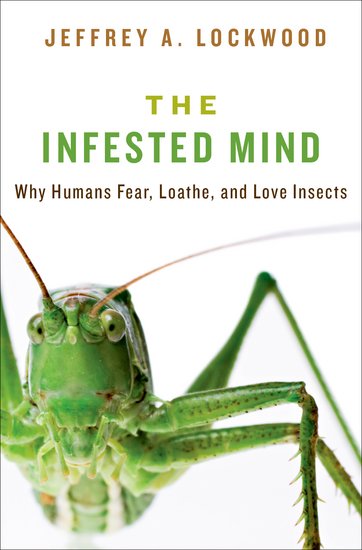
Jeffrey Lockwood, the director of the creative writing program at the University of Wyoming, has received the Pushcart Prize and a John Burroughs Award for his essays. His most recent book, to the right, was brought to our attention while reading his recent essay in one of our favorite online publications. The description of his book, provided by Oxford University Press:

The human reaction to insects is neither purely biological nor simply cultural. And no one reacts to insects with indifference. Insects frighten, disgust and fascinate us. Jeff Lockwood explores this phenomenon through evolutionary science, human history, and contemporary psychology, as well as  Continue reading

Throwback Thursday: IPM

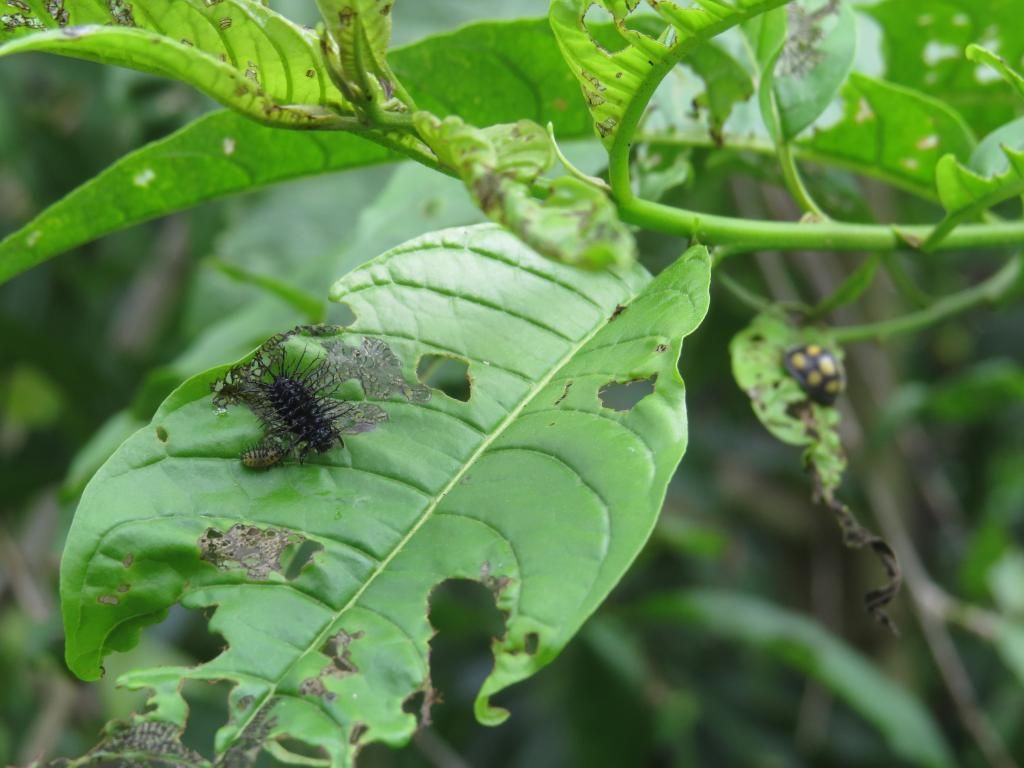
A ladybug relative nymph in the foreground and a mature individual in the background. The tiny thing next to the nymph might be a larvae.

Yesterday, as James and I were on one of our birding walks around Xandari, we ran into José Luis, who had a couple new things to show us about the gardens and orchard that he runs. At first, it looked like a ragged young tree, its leaves half-devoured and its trunk stained black. But we quickly learned Continue reading

Xandari Insects

We have a history of interest in entomology here, and in the past couple days alone I’ve spotted insects in a couple different families that are worth checking out below!

Continue reading

Gift-Giving Across Species

David Plunkert …Gift-giving has been seen in spiders, birds, mammals and the land snail, which shoots darts at its intended.

If you think humans are unique as gift-givers, think again, and read Natalie Angier’s current article in The New York Times:

…The drive to exchange presents is ancient, transcultural and by no means limited to Homo sapiens. Researchers have found striking examples of gift-giving across the phyletic landscape, in insects, spiders, mollusks, birds and mammals. Many of these donations fall under the rubric of nuptial gifts, items or services offered up during the elaborate haggle of animal courtship to Continue reading

Ants, Wasps And That Nagging Question

Mr. Zimmer’s the one to finally comment on the suspicious similarities between ants and wasps, in blurb form here and in full form linked below to his New York Times column:

Growing up on a small farm, I was able to get to know the insects that lived on the property pretty well. Some I liked, and some I hated. Continue reading