Prime Directive, Reconsidered

Global climate change will soon be changing ecosystems around the world to such an extent that many species will no longer have proper habitats to survive and reproduce in. Over the past several years, the scientific community has been discussing the possibility of moving such species to new ranges in order to conserve biodiversity and reduce potential for extinction. This controversial process, known as assisted colonization or managed relocation, might be able to save some species from their current state of risk, but it may also prove dangerous for the natives of whatever area the “colonizers” are moved to. By diligently evaluating the perils and uncertainties of relocation and carefully considering the repercussions of leaving species to their shrinking habitats, The Nature Conservancy (TNC), given its mission and vision statements, should determine that in most cases, the costs of assisted colonization outweigh the benefits.

Patagonian mountains

By assisting the colonization of species with limited ability to adapt or relocate, the annual number of species gone extinct might be lowered in the coming decades. There are, however, disagreements as to whether or not humans should meddle with species movement. Continue reading

Eight Year Echo Of Hope

When I described, a couple weeks ago, the echo of hope emanating from the Gulf of California it is fair to say I was pleasantly surprised.  That may be putting it too mildly, especially in hindsight now that I have seen a major new entrepreneurial initiative come to life there.  I will be writing more about that in the coming days.

But for now, I am in the Galapagos Islands and another echo is resonating.  In this case, for me, the echo is an eight year feedback.  As mentioned in this earlier post I had worked here on and off over several years, and the last time I was here there were some challenges that seemed intractable.  Today, upon arrival and for the remainder of the day, I had the opposite feeling of the last time I was here.  The photos below show the first thing I did with Reyna and Roberto after leaving the airport.  In the first photo you can see, as I did, just a simple conversation between them and one of the workers; then slowly a parade of otherworldly creatures crept into the photos…

This slideshow requires JavaScript.

Continue reading

Mission-Driven Development in Baja California Sur

In the first third of the 17th Century the Spanish crown sent Jesuit priests to establish missions in what is now Baja California Sur.  The fourth of these–Misión San Francisco Javier Vigge Biaundó–was active from 1699-1817.  What is amazing is that the installation has remained intact even centuries after its last priest left (abandoning the missions at the gun-pointing insistence of the crown as independence movements fomented, which is a story worthy of your further investigation).  Having found this particular oasis in the last third of the 17th Century, the priests cultivated grapes, dates, olives and other produce which, remarkably, still grow here today.

This slideshow requires JavaScript.

It is visually and olfactorally stunning to be in a place with the cactus and other desert flora native to the region Continue reading

Gulf Of California

I had not been exposed to the corridor known as La Giganta, which you can see in the background of the above photo, when I carried out my work on behalf of WWF several years ago.  Now that I have, over the last week, I can only say that it had such an impact on me that I am still processing it.  It is partially the geology of this portion of the peninsula known as Baja California Sur.  It is partially how that geology intersects with the marine ecosystem. But it is mostly–and here I refer to the impressions I am still processing–the intersection of local people with those two natural wonders that really got to me.  The photo above looks from the back of a panga (the type of boat local fishermen use) as we departed a property that is best described as an oasis. Continue reading

Bambouzle

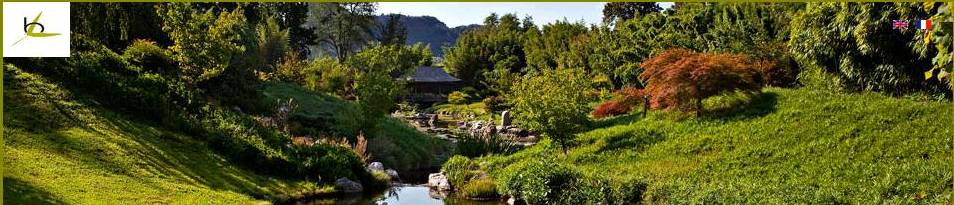
France has a horticultural history that goes back centuries, from the forested hunting grounds to the formal gardens of kings.  But “Liberté, égalité, fraternité” leads to parks for the people, offering countless opportunities for visitors to fulfill their desires to commune with nature.

Continue reading

Le Vélo Bambou? Le Wow!

Bicycles are ubiquitous forms of transportation in my part of the world.  Previously I’ve posted how they can mean more than the sum of their parts, or in the urban art example, they can represent only their parts!

So what happens when form and function converge with sustainability, balance and simplicity? Continue reading

Biodiverde

I live in a very green land. Especially post monsoon the landscape of Kerala is dotted with all shades of green like a pointillistic painting.

There’s the chartreuse of new growth tea. The Chromium oxide green of the lower, more mature leaves. The olive green of coconut fronds or the sage of the pineapple top. The celadon of bamboo, the sap green of buffalo grass or the emerald of the banyan tree….all the greens that blend when you squint into this verdant landscape.

The word green is closely related to the Old English verb growan, “to grow”.  It makes us think of nature, of biology, of ecology, of prosperity, even of innocence.

Do I need to mention that green happens to be my favorite color?

But I also spent many years of my life in parts of the world where the Autumnal Equinox means crisp air and changing leaves. And when the chlorophyll levels drop the spectrum changes to include the colors of spice– of turmeric, cinnamon, nutmeg and mace, with a healthy dose of dried capsicum thrown in with the help of the maple trees.

Unless someone from another part of the world sends me photos of this annual metamorphosis I have only the poignancy of memories. But Christophe Niemann is always a good choice to add levity to longing.

Live an Example

Lullwater at Emory

Do you respect your friends? Unless you have very strange relationships, I’m guessing you can say that your friends’ ideals and opinions are meaningful to you. If you know that a buddy doesn’t enjoy country music, you’re probably not going to blast Keith Urban when he’s around. If your best friend can’t stand whistling, maybe you’ll refrain from providing your most rousing rendition of the Star Wars theme song. If she’s not so into politics, perhaps that’s not the person you’ll run to and inform of Glenn Beck’s latest revelation.

The point is, what matters to your friends usually matters to you, and vice versa. If you’re mindful of this Continue reading

Let Us Give Thanks

The Kerala Harvest Festival Onam transcends religion and region, making it one of the most important festivals of the state. All signs of abundance and prosperity are incorporated into the celebrations: Elaborate pookalams (mandalas made of flowers and leaves, shown below) adorn the courtyards of homes and business; and elaborate multicourse meals called Onamsadya are served on banana leaves.

This slideshow requires JavaScript.

The festival celebrates a story, not unlike the Greek myth of Persephone when she was kidnapped to the underworld but allowed to return once a year for the spirit of rebirth in spring.  The Kerala story is about a beloved king during a time of great prosperity who sacrificed himself, saving the earth from an avatar of Vishnu.  For his devotion he is granted the boon of being able to return to his country once a year to visit his people, who prepare for his coming with an abundant harvest to assure their King that the land still flows with milk and honey. Continue reading

K-12 Growth

Last month I wrote about the Dunwoody Community Garden, and commented on my surprise at its seemingly exponential rate of growth and improvement. I also promised to check out Dunwoody High School’s (DHS) current involvement with the community garden, and I can finally deliver on that one:

Grow Dunwoody is a community enterprise designed to bring gardens directly to Dunwoody’s schools. According to Danny Kanso, a senior at DHS, the purpose of the program is

to integrate hands-on learning into science, wellness, and special education, to produce renewable classroom and community resources, and to instill sustainable practices and values within our student body.

Continue reading

Honey, Hope & Future Cod

Milo’s post yesterday is of special interest to various initiatives we support related to food.  We will have much more to say on bees (and honey), but for now, it gets us thinking. Combined with Seth’s recent post, touching on the subject of overfishing (do read Mark Kurlansky’s books related to food, in addition to Cod), provide a reminder to stop and take a breath.  In a world full of challenges that daunting, how do we keep our wits about us?  How do we remain, fundamentally, hopeful?  An answer, but not necessarily with explanation, can be found sometimes in art (defined as you choose).  If we do not solve the tragedy of the commons with fisheries, might we still hope for a beautiful future for marine life that looks something like this?

Colombia & Kerala, South-South Cousins

In another superb field note, Paula Pedraza echoes sentiments seen in several posts by our own Contributors:

Everyday life for these people is like a lifetime of adventures for us. Working here really has been an illuminating, inspiring and humbling experience.

Michael’s reflections on the Tiger Trail comes to mind.  So does the follow up to that.  Speaking of Michael, we are certain that when he is back in the swing of things at Amherst College, and with a bit of encouragement from his fan base, he will be gracing these pages again soon.