Making The Most Of The Golden Years

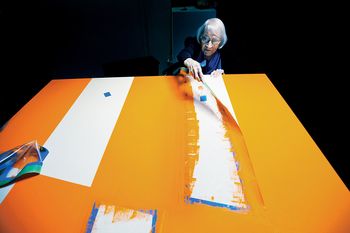
Carmen Herrera, painter, 99, in her Manhattan studio. Herrera sold her first painting at age 89. Today her work is in the permanent collections at the Museum of Modern Art and the Tate Modern.

Carmen Herrera, painter, 99, in her Manhattan studio. Herrera sold her first painting at age 89. Today her work is in the permanent collections at the Museum of Modern Art and the Tate Modern.

David Bowie sang of golden years, but we did not think of those this way. Many of us are already there, and all of us are on our way there, to the golden years; the question is what we make of those years. Thanks to Lewis Lapham for his inspirational report in the New York Times:

…The portraits here are of men and women in their 80s and 90s, rich in the rewards of substantial and celebrated careers, and although I know none of them except by name and reputation, I’m asked why their love’s labor is not lost but still to be found. Why do they persist, the old masters? To what end the unceasing effort to discover or create something new? Why not rest on the laurels and the oars? Continue reading
Classics On The Upswing

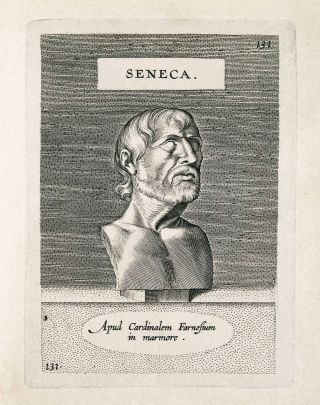
Seneca was venerated as a moral thinker; he was also one of Nero’s closest advisers. CREDIT PHOTOGRAPH FROM AISA / EVERETT So

Seneca was venerated as a moral thinker; he was also one of Nero’s closest advisers. CREDIT PHOTOGRAPH FROM AISA / EVERETT

This book review reminds us (for example where, in the middle of the review, the reviewer irresistibly, simply, says: “These days, Seneca is again on the upswing.”) of James, now firmly planted in the green fields of Harvard University taking his classics education to the ultimate level.

James, for his part, reminds us of our many reasons for paying attention to the classics, having little directly to do with the day to day activities of Raxa Collective except that the classics help us keep it all in perspective:

…If poets and philosophers dream of influencing those in power, Seneca was uniquely positioned to do so. He was a celebrated rhetorician, a satirist, the author of several books of natural history, and a playwright. He was also what today might be called an ethicist. Among his many works of moral philosophy are “De Ira” (“On Anger”), “De Providentia” (“On Providence”), and “De Brevitate Vitae” (“On the Shortness of Life”). Seneca had been Nero’s tutor since the younger man was twelve or thirteen, and he remained one of his closest advisers. Continue reading

Urban Homesteading, Inspiration For Kayal Villa & 51

This urban homestead produces 6,000 pounds of food a year.

This urban homestead produces 6,000 pounds of food a year.

When Kayleigh completed her internship, she left in place a great banana genome initiative as part of the edible gardens landscape at Marari Pearl; ditto for the farm-to-table initiative at Kayal Villa, supplying organic produce and dairy to 51, the restaurant at Spice Harbour. Reading the article below, as always with such stories, we are glad to be part of this particular corner of the green revolution with goals akin to those of a family in Pasadena, California, USA:

Think you can’t grow much food in an urban area? Think again. One family’s 4,000 square foot farm in Pasadena, California “not only feeds a family but revolutionizes the idea of what can be done in a very unlikely place—the middle of a city.” KCET reporter Val Zavala gives us a glimpse into the Dervaes family’s Path to Freedom Urban Homestead. “I brought the country to the city rather than having to go out to the country,” said Jules Dervaes, who created the farm with his three adult children, Justin, Anais and Jordanne.

Continue reading

More Reasons To Disconnect

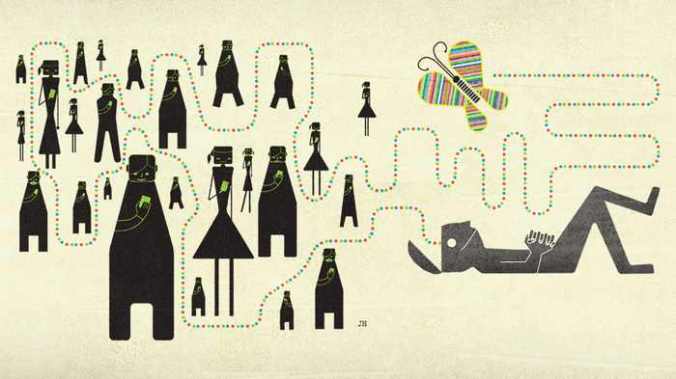
Illustration by John Hersey/Courtesy of WNYC

Illustration by John Hersey/Courtesy of WNYC

Desire to drop everything and release yourself from the constant ringing, pinging distraction? We’ve suggested disconnection before. We have suggestions on where to do it too, some offering pure relaxation and others offering immersion in culture. But why do it? Plenty of reasons, and you do not need us to explain. Nonetheless, from National Public Radio (USA) a fun, unconventional reason:

Bored … And Brilliant? A Challenge To Disconnect From Your Phone

Studies suggest we get our most original ideas when we stop the constant stimulation and let ourselves get bored. The podcast New Tech City is challenging you to disconnect — and see what happens.

Screen Shot 2015-01-13 at 3.55.58 AM

Continue reading

Geckos, A 10th Latitude Lovely

science-take-gecko-sfSpan-v3

Geckos are in most of our favorite places–Kerala, Costa Rica, Ghana–which share some 10th Latitude commonalities in different continents.  They are one tiny example of the commonalities, but one that most of us love, for reasons we cannot begin to explain. So for us this story is a welcome puzzle solver for mysteries we did not know needed explaining, yet enjoy the answers:

SCIENCETAKE

Climbing a Glass Building? Try a Gecko’s Sticky Pads

By JAMES GORMAN

The lizard and, well, Spider-Man, have ideal tools for scaling slippery surfaces. Engineers have copied the gecko’s clingy foot pads.

Starry Night Bike Path

Artist Dan Roosegaarde pays tribute to Vincent Van Gogh's painting Starry Night by creating this bike path in Van Gogh's hometown of Eindhoven. Courtesy of Studio Roosegaarde

Artist Dan Roosegaarde pays tribute to Vincent Van Gogh’s painting Starry Night by creating this bike path in Van Gogh’s hometown of Eindhoven. Courtesy of Studio Roosegaarde

Thanks to National Public Radio (USA) for this follow up to another recent story from Holland about bike path innovations:

In the Dutch town of Eindhoven, artist Daan Roosegaarde has paid homage to its most famous resident, Vincent Van Gogh, by creating a glowing bike path that relies on solar-powered LED lights and interprets his classic painting Starry Night.

Roosegaarde says he wants his work, illuminated by thousands of twinkling blue and green lights, to speak to everyone. Continue reading

Reasons Not To Eat Certain Things

PHOTOGRAPH FROM PIEPENBURG / LAIF / REDUX

PHOTOGRAPH FROM PIEPENBURG / LAIF / REDUX

For those of us on a recent reconnaissance mission in Greece, this post from the Elements section of the New Yorker‘s website seems just a bit late, but nonetheless an excellent thought exercise:

Ben Lerner’s new novel, “10:04,” opens with a meditation on a decadent and expensive lunch in Chelsea, prominently featuring baby octopus. The narrator is supposed to be celebrating the six-figure sale of his book, but instead he focusses on the absurdity of the meal: “the impossibly tender things” had been “literally massaged to death.” He wonders about eating “an animal that decorates its lair, has been observed at complicated play.” Afterward, he and his agent walk out onto the High Line to watch the traffic on Tenth Avenue, and he experiences an empathic response to the once sentient octopuses now curdling within him:

I intuited an alien intelligence, felt subject to a succession of images, sensations, memories, and affects that did not, properly speaking, belong to me: the ability to perceive polarized light; a conflation of taste and touch as salt was rubbed into the suction cups; a terror localized in my extremities, bypassing the brain completely. Continue reading

Bird Fun (…and Aristotle?) around Tacacorí

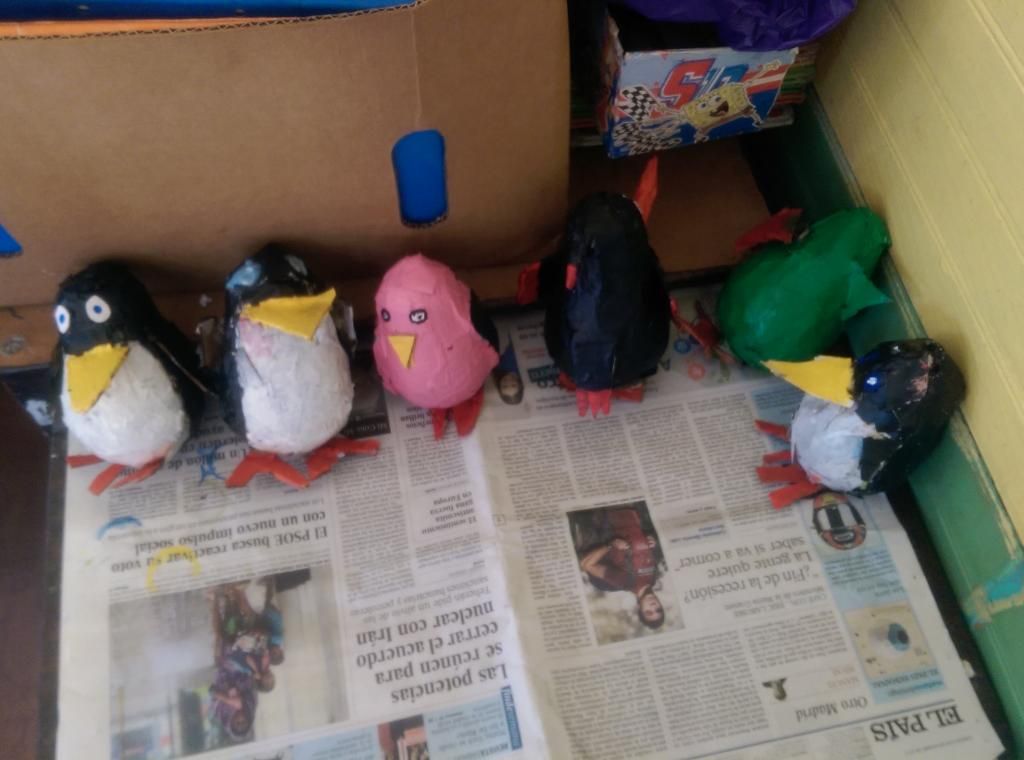
Papier-mâché penguins and other birds from the fourth grade class

In his recent post on our work at the local school in Tacacorí, Seth outlined our papier-mâché and painting ambitions with the third and fourth grades there. The second half of the week, Seth and I were split up because of the kids’ conflicting class schedules. I took fourth grade on the last few days, and he worked with third grade.

In his Poetics, Aristotle elaborates an aesthetic theory partly on the basis of μίμησις (mimēsis), or “imitation.” According to Aristotle, humans are “mimetic” beings, that is, disposed to imitate nature and other human beings. Art’s basis is precisely in Continue reading

“It’s Like A Travel Book”

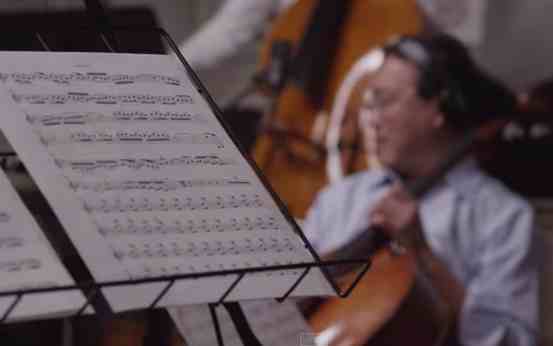
Music forms a type of universal memory the crosses cultures and continents, and Yo-Yo Ma’s Silk Road Ensemble that brings together musicians and composers from more than 20 countries is a lyrical example of what we hold dear at RAXA Collective. The 2,000 year old history of the Silk Road also coincides with the Spice Road, which is also a subject we take very personally.

The extent of exchange of art, ideas and innovations between cultural groups trading on the routes is illustrated by the eighth-century Shôsôin collection of artifacts. Culled by a Japanese emperor, it contains luxury goods from the Mediterranean, Persia, India, Central Asia, China, Korea and Japan…

Continue reading

Become Ocean Is The Water Music Of Our Times

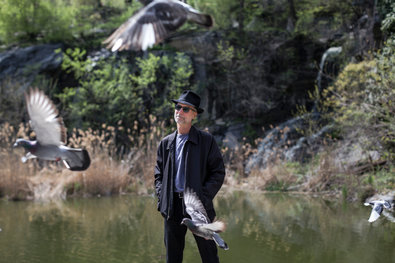
Chad Batka for The New York Times. “It’s impossible for us to separate who we are from where we are”: John Luther Adams, the composer of “Become Ocean,” in Morningside Park in Manhattan.

Chad Batka for The New York Times. “It’s impossible for us to separate who we are from where we are”: John Luther Adams, the composer of “Become Ocean,” in Morningside Park in Manhattan.

Thanks to Corinna da Fonseca-Wollheim for A Composer Attuned to the Earth’s Swirling Motion, in which John Luther Adams discusses “Become Ocean,” which will be performed on Tuesday at Carnegie Hall, and his other environmentally themed works. Their discussion rings true to us. Where we are is a large part of who we are.

That resonates with La Paz Group’s ethos. If we are not sensitive to where we are, who are we? We wonder that every day, so we recommend the article in today’s New York Times Arts section that offers a well-deserved review and praise of the work of an environmentally-inspired/concerned composer who we first heard about last July when the New Yorker‘s music critic wrote the following:

The hundredth anniversary of Stravinsky’s formerly scandalous Rite of Spring, on May 29th, raised the question of whether a twenty-first-century composer can produce a comparable shock. Perhaps not: the twentieth century elicited such a numbing array of shocks, both in art and in reality, that the game of “Astonish me”—Diaghilev’s famous command to Cocteau—may be temporarily played out. Still, astonishment comes in many forms. There are shocks of beauty, shocks of feeling, shocks of insight. Such were the virtues of John Luther Adams’s Become Ocean, a forty-two-minute piece for large orchestra, which had its première at the Seattle Symphony on June 20th. Like the sea at dawn, it presents a gorgeous surface, yet its heaving motion conveys overwhelming force. Whether orchestras will be playing it a century hence is impossible to say, but I went away reeling. Continue reading

Innovation In Humanities, Essential To Our Future

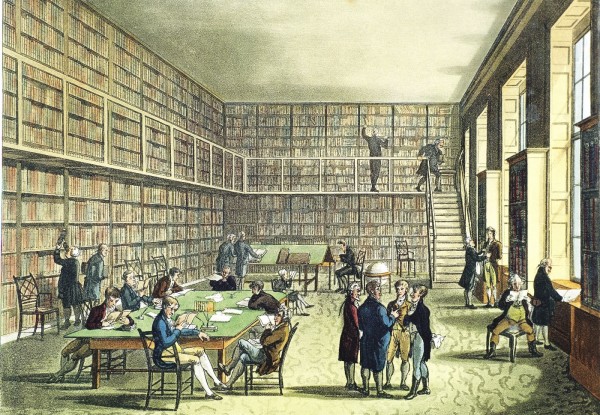
Image by Corbis Images.  Thomas Rowlandson’s view of the library of the Royal Institution in London, circa 1810

Image by Corbis Images.
Thomas Rowlandson’s view of the library of the Royal Institution in London, circa 1810

We have been monitoring Harvard Magazine and some of its kindred publications since the early days of this blog, as constant sources of interesting articles relevant to our interests; and now this:

Toward Cultural Citizenship

New gateways into the humanities for students “still fully molten as human beings” by Jonathan Shaw  May-June 2014

Continue reading

Add Cello To The Trinity Of C-Words


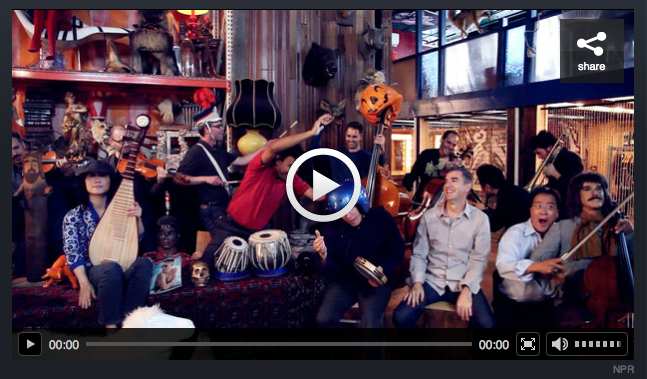
Welcome To Yo-Yo’s Playhouse…Watch the superstar cellist Yo-Yo Ma and many of his close friends from all over the world in action at a theatrical props warehouse in Brooklyn.

Ever on the lookout for stories that have one or more connections to our primary interests–community, collaboration, conservation–we are particularly fond of bifectas and trifectas, double-dips and triple plays. Versatility and eclecticism are signatures of Yo-Yo Ma, so no surprise that today we see a bit of all our interests combined in this story on the National Public Radio (a USA radio network funded by listeners, corporate/foundation donors, and taxpayers) website:

by ANASTASIA TSIOULCAS

When you’re lucky enough to have cellist Yo-Yo Ma and members of the Silk Road Ensemble, some of the world’s premiere instrumentalists and composers, gather for an afternoon of offstage music making, you’ve got to think long and hard about where to put them. And we decided that the perfect match would be ACME Studio, a theatrical props warehouse in Brooklyn.

Continue reading

Holi, 2014 Edition

This slideshow requires JavaScript.

Each year, we in the south of India wish to be in the north of India for this celebration that marks the end of winter. We have linked to some great photo spreads in other publications, and this year choose the Reuters photojournalists’ snapshots to mark this year’s Holi.

Indians In Jamaican Territory

Photograph by Alex Livesey/Getty.

Photograph by Alex Livesey/Getty.

Samanth Subramanian–an author we hope will pay us a visit in Kerala one day soon, considering how much of his authorship overlaps with our own interests, especially this book–has posted on the New Yorker‘s website a blog post about a remarkable young man, and two fellow countrymen from India, very much worth the read. The Jamaican bobsled team gets all the attention, and it is well deserved, but they are, rather surprisingly, in good company. We excerpt from the second half of the post because the first half is a too-familiar “dirty laundry” story which we would rather not repeat, but what follows is inspirational:

…The thirty-two-year-old Keshavan will be participating in his fifth Winter Games. He set a speed record for Asia in 2012 and won the Asian Luge Cup in 2011 and 2012, but he has not been so dominant on the world stage; his best Olympic performance remains a twenty-fifth-place finish at Turin, in 2006. Continue reading

The Cornell Lab Of Ornithology’s Student Innovators, Dreamers, and Leaders

After you watch the video above you might recognize some faces from the Cornell expedition to Borneo that we featured about a month ago, and be introduced to the faces of other friends that I made in ornithology class several years ago and have kept up with through soccer, squash, and biology classes we’ve taken together.  Continue reading

Self-Sufficiency Taken To The Outer Extremes

Before the lights go out on the last New Yorker issue of 2013, one more of several articles we found worth the read, and relevant to our common themes of interest–community-building, innovation, environmentalism, farming, etc.–on this blog, even if we tend to incremental change rather than the radicalism on display here:

Marcin Jakubowski, the owner of a small farm in northwestern Missouri, is an agrarian romantic for high-tech times. A forty-one-year-old Polish-American, he has spent the past five years building industrial machines from scratch, in a demonstration of radical self-sufficiency that he intends as a model for human society everywhere. He believes that freedom and prosperity lie within the reach of anyone willing to return to the land and make the tools necessary to erect civilization on top of it. His project, the Global Village Construction Set, has attracted a following, but among the obstacles he has faced is a dearth of skilled acolytes: the people who show up at his farm typically display more enthusiasm for his ideas than expertise with a lathe or a band saw. Continue reading

Then And There, Here And Now

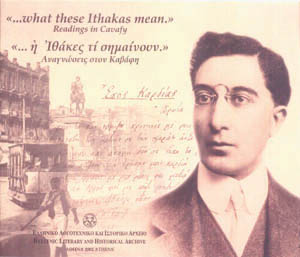
Orhan Pamuk says that “C. P. Cavafy makes no explicit reference to himself in his best and most stirring work; and yet, with every poem we read, we cannot help thinking of him.”

Does it take an Istanbulian to know one? Does it take a great writer to know one? You do not need to be a fan of poetry, nor of this particular poet, to appreciate the observations of one of the great observers of our time, with regard to living here and there but neither here nor there, and with regard to the idea of universality in art:

Cavafy was born in Alexandria, Egypt, in 1863, to a Greek family of wealthy drapers and cloth merchants. (The word kavaf, now forgotten even by Turks themselves, is Ottoman Turkish for a maker of  Continue reading

A Different Kind Of Travelogue

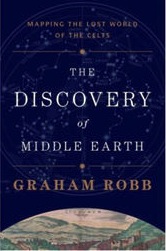
10-08discovery_full_380We are unabashedly in favor of reading, thinking and decision-making in advance of travel, during travel, and after travel. We are also in favor, when the fancy strikes, of just hitting the road without knowing why, where to, or for how long. On our pages you will find posts for either end of the spectrum from meticulously planned to wanderlust journeys.  It is about  discovery.  So this book caught our attention. Nothing to do with hobbits, as reviewed by the Monitor (click the book image to the left to go to the source) it sounds like the perfect prelude, accompaniment or postscript for travel in a part of the world we have not been covering in our pages as much as we maybe should:

…In “The Discovery of Middle Earth,” Robb sets out to establish the momentous contributions made to the arts of cartography and communication by the once-great Celtic peoples, who at various points in history spread all the way from modern-day Turkey to Ireland. In the process, he consults old documents, interviews experts, examines artifacts, and bicycles more than 26,000 kilometers across France, taking his readers along with him… Continue reading

Reading, Libraries & Good Citizenship

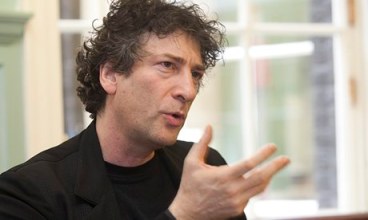
'We have an obligation to imagine' … Neil Gaiman gives The Reading Agency annual lecture on the future of reading and libraries. Photograph: Robin Mayes

‘We have an obligation to imagine’ … Neil Gaiman gives The Reading Agency annual lecture on the future of reading and libraries. Photograph: Robin Mayes

Libraries still have enough friends that we do not yet count them out, but the challenges they face are undeniable. Thanks to the Guardian‘s coverage of one prominent writer’s address on this important topic:

Neil Gaiman: Why our future depends on libraries, reading and daydreaming

A lecture explaining why using our imaginations, and providing for others to use theirs, is an obligation for all citizens

It’s important for people to tell you what side they are on and why, and whether they might be biased. A declaration of members’ interests, of a sort. So, I am going to be talking to you about reading. I’m going to tell you that libraries are important. I’m going to suggest that reading fiction, that reading for pleasure, is one of the most important things one can do. I’m going to make an impassioned plea for people to understand what libraries and librarians are, and to preserve both of these things. Continue reading