Via The Guardian
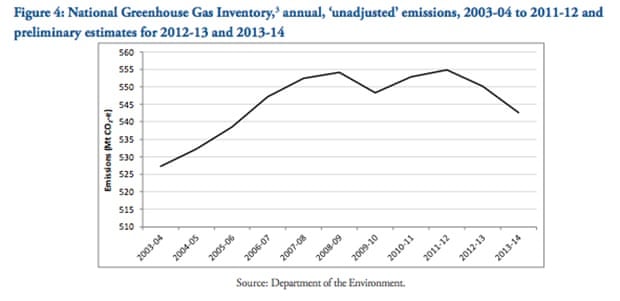
In 2012, Australia introduced a carbon tax, or carbon “price,” with the goal of reducing the country’s greenhouse gas emissions. Then, this July, the Australian government — under a different party than in 2012 — abolished the carbon tax to fulfill an election promise, since they argued that the tax was too much of a burden on homeowners and also discouraging industry. But data released this month by the Department of the Environment shows that Australia’s emissions dropped 1.4% during 2013 (the second year of the tax), which is the highest annual decrease in the country’s emissions within the last decade. Oliver Milman reports for The Guardian:
The latest greenhouse gas inventory showed emissions from the electricity sector, the industry most affected by carbon pricing, fell 4% in the year to June.
Electricity emissions account for a third of Australia’s emissions output, which stood at 542.6m tonnes in the year to June, down from 550.2m tonnes in the previous 12 months.
Emissions from transport dropped 0.4% in the year to June, with gases released by the agriculture industry decreasing by 2.6%. Industrial processes emitted 1.3% less greenhouse gas during the year, although fugitive emissions, such as those from mining, rose 5.1%.
Electricity emissions peaked in 2008 and have steadily decreased ever since, driven by a number of factors such as the winding down of parts of Australia’s manufacturing base and energy efficiency initiatives.
 Organikos