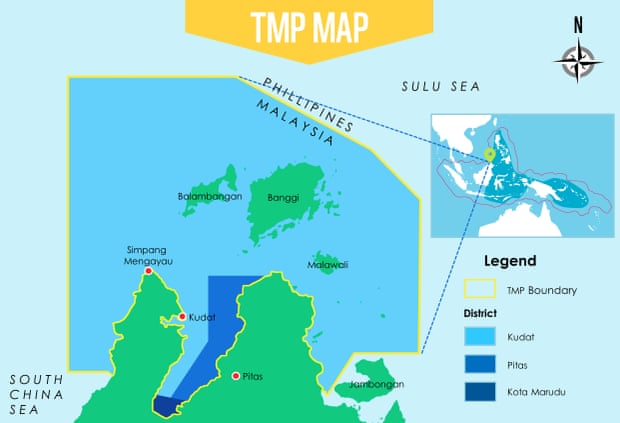
A map of the new Tun Mustapha marine protected area, which occupies just under one million hectares of seascape, including more than 50 islands. Illustration: WWF Malaysia
The more protected areas for wildlife in the world the better, in our book. So we’re happy to hear that Malaysia has created a new marine park, the largest of its kind in the country, that covers a million hectares, or around two million football fields. With so many coral and fish species in the region, it’s a great step forward for conservation in an area at risk for over-fishing or poor practices like blast or cyanide fishing. Johnny Langenheim reports:
Malaysia has just established the biggest marine protected area (MPA) in the country. The Tun Mustapha park (TMP) occupies 1m hectares (2.47m acres) of seascape off the northern tip of Sabah province in Borneo, a region containing the second largest concentration of coral reefs in Malaysia as well as other important habitats like mangroves, sea grass beds and productive fishing grounds.
It is also home to scores of thousands of people who depend on its resources – from artisanal fishing communities to the commercial fisheries sector – making it in many ways a microcosm of the entire Coral Triangle bioregion, where environmental protection must be balanced with the needs of growing coastal populations.
Continue reading →
 We appreciate Anthropocene’s ongoing efforts to summarize important scientific findings related to the environment, conservation and related topics. Earlier this week Emma Bryce offered “The invisible boundaries of ocean refuges protect even wide-roaming creatures” — a worthy read about these spaces providing more benefit than expected:
 Organikos