Senegal’s Plastic Recycling Entrepreneurship

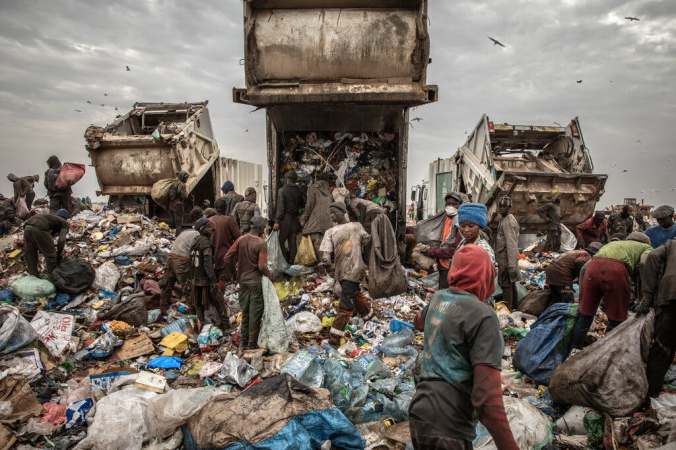
Waste pickers searching for plastics at the main dump in Dakar, Senegal.

The article below, written by Ruth Maclean and accompanied with photographs by Finbarr O’Reilly, is a portrait in developing world green opportunism. It is not a pretty picture, per se, but it is a sight to behold after the market for recycled plastic seemed to implode in recent years. The photo above shows the gritty reality of the work. The photos below show some of the prettier, and more entrepreneurial downstream opportunities from that work:
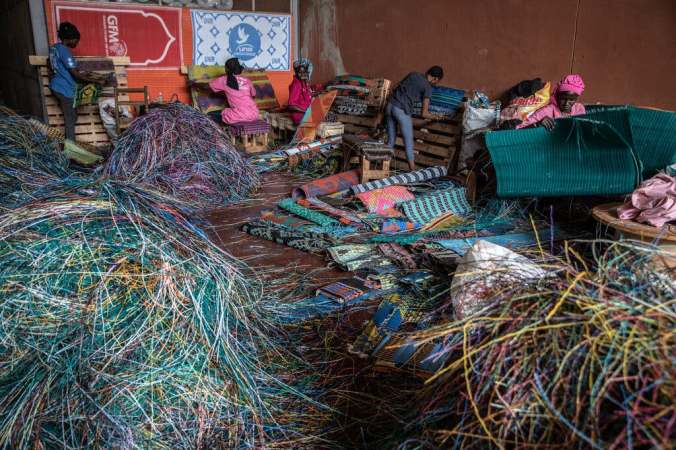
Workers stripping reusable plastic from mats at the Sosenap factory, which recycles plastic to make mats and carpets in Diamniadio, on the outskirts of Dakar.

‘Everyone’s Looking for Plastic.’ As Waste Rises, So Does Recycling.

Plagued by plastic pollution, Senegal wants to replace pickers at the garbage dump with a formal recycling system that takes advantage of the new market for plastics.

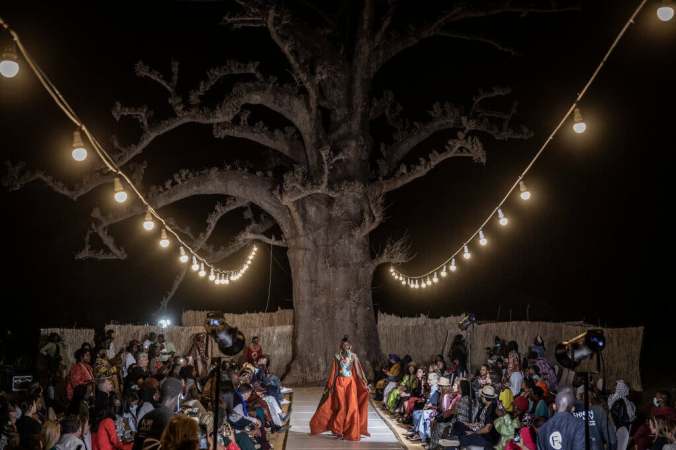
The main event at the outdoor venue for Dakar Fashion Week in December, which had a theme of sustainability.

DAKAR, Senegal — A crowd of people holding curved metal spikes jumped on trash spilling out of a dump truck in Senegal’s biggest landfill, hacking at the garbage to find valuable plastic. Continue reading
For The Love Of Baobab!

merlin_142358673_6ed9ddd5-d873-47cb-8191-7a0ab1b3f9b7-jumbo

Selbe Dione and her sister harvesting baobab leaves to cook with couscous in the countryside of western Senegal.CreditCreditTomas Munita for The New York Times

Thanks to Dionne Searcey for reminding me of the first time I encountered one of these trees, which happened to be in Senegal (so why have we not featured Senegal more in these pages?) and was the location for the first field course I taught for Cornell focused on sustainable development. For the love of baobab, so to speak, I am more sensitive than ever to the ravages of palm oil plantations:

Across Senegal, the Beloved Baobab Tree Is the ‘Pride of the Neighborhood’

Baobabs have endured for centuries as essential cultural symbols. But increasingly, they are threatened by climate change, urbanization and a growing population.

merlin_142358517_50b1c5e5-ca69-478d-92ae-9cc754930e3d-jumbo

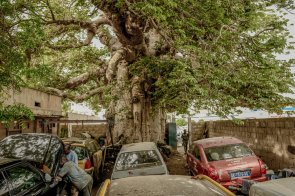
In Dakar, baobabs blend into the cityscape, like this one in the center of a taxi garage near a freeway on ramp. Credit Tomas Munita for The New York Times

DAKAR, Senegal — Wide, awkward baobab trees blend into the cityscape of Dakar, the busy capital of Senegal, almost without notice.

Drivers wash a fleet of taxis parked beneath one giant tree near a freeway on ramp. Rusting cars with open hoods are parked in a mechanic’s shop under the shade of another. A leathery trunk is a community billboard, with ads nailed to it for a plumber and an apartment for rent.

Aliou Ndour stood on a crowded corner, pulled out his phone and scrolled past the pictures of friends and family to another precious photo: the baobab in his home village.

merlin_142358277_052946e4-1f8f-4fe7-a85c-de8ec38cdb23-jumbo.jpg

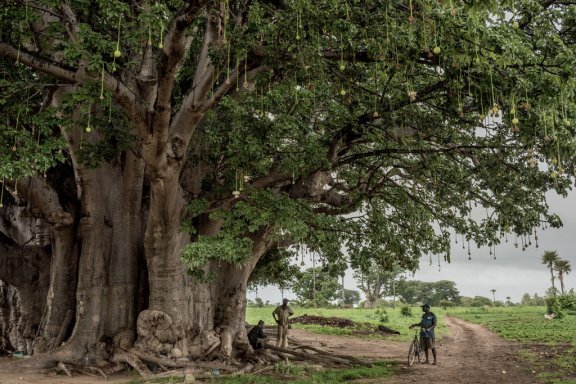
One of the largest baobab trees in Senegal is in the Fatick region, southwest of the capital. Credit Tomas Munita for The New York Times

Fat baobabs, some more than half a millennium old, have endured across Senegal, passed over for lumber largely because their wood is too brittle and spongy for use in furniture. Baobab leaves are mixed with couscous and eaten, the trees’ bark stripped to make rope, their fruit and seeds used for drinks and oils.

Something else has helped preserve these giants: They are beloved.

“This,” said Adama Dieme, craning his neck to look up at the spread of branches of the baobab on his block, “is the pride of the neighborhood.”

merlin_142358064_adba030f-b0fd-4d1f-bf7e-501cb141f23c-jumbo.jpg

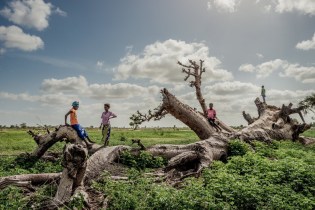
Children playing over a fallen baobab in southwestern Senegal. Credit Tomas Munita for The New York Times

But baobabs, like many of the region’s trees, are in jeopardy, threatened by the same forces upending numerous facets of society — climate change, urbanization and population growth.

West Africa has lost much of the natural resources once tied so closely to its cultural identity. Poaching has stolen most of its wildlife; lions, giraffes and desert elephants are sorely endangered.

Huge swaths of forest are being razed to clear space for palm oil and cocoa plantations. Mangroves are being killed off by pollution. Even wispy acacias are hacked away for use in cooking fires to feed growing families. Continue reading