
LUISA RIVERA / YALE E360
We have been on watch for citizen science stories since the early days of this platform. Seth had just accepted an offer to work at the Cornell Lab of Ornithology, and typical of him, did his homework on what he had committed to. Since then, dozens of first person and linked-to citizen science stories from other members of our community have appeared in these pages. Thanks to Yale e360 and Jessica Leber for this story about how far and wide the practice has spread, and a few of its more amazing discoveries:
Species Sleuths: Amateur Naturalists Spark a New Wave of Discovery
Scientists have not kept pace with the work of discovering new species. Now, a growing number of committed hobbyists – ranging from a Belgian bus driver to a California cybersecurity expert – are out in the field, igniting a boom in documenting the world’s biodiversity.
COURTESY OF TERRI CLEMENTS
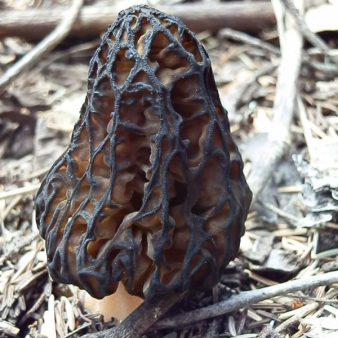
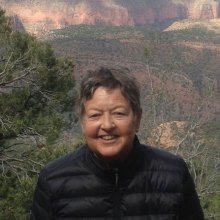
When mushroom hunter Terri Clements found a unique specimen near her home in Arizona, she couldn’t be certain by its appearance that she’d stumbled across a new species. She tracked down a commercial lab that would process DNA from samples she collected and studied the resulting sequences. Only later did she cold email a mycological scientist, who confirmed her work. As a result, this December, she became part of a team publishing a scientific paper describing her new mushroom species, Morchella kaibabensis, along with three others.
Mushroom hunter Terri Clements used DNA sequencing to confirm a new species of black morel, Morchella kaibabensis, she found near her home in Arizona.
A former restauranteur and real estate executive who retired in 2012, Clements has no formal scientific training beyond her college microbiology minor. But using a combination of traditional taxonomy — the science of describing, naming, and classifying life on earth — and increasingly accessible DNA classification tools, she’s now hooked on documenting fungi either previously unknown in her region, or, just as often, new to science. “I spend hours and hours on it,” she says. “It’s like a full-time job for which I don’t get paid.”
Her work puts her in the ranks of an increasingly vibrant group of hobbyists busy documenting unexplored species on the planet, ranging from a chemical engineer in France, to a cybersecurity specialist in California, to retirees like Clements. Many study organisms from specific groups of fungi, insects, and other invertebrates that are less charismatic and surveyed than the orchids, birds, and butterflies that have long attracted the public’s interest. Continue reading
 Organikos