When rain seems like only a dream, taps are turned and water begins to flow from sprinklers onto family lawns across the U.S. In many areas, water has not been given the value it deserves making this precious resource easy to take for granted. As the global population and industrialization and urbanization increase, the rising demand for water will only cause more harm to the environment.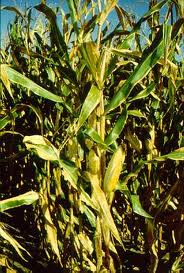
The UN estimates by 2025, a combined population of 2.8 billion people across the world will face freshwater drought or “scarcity,” and according to water.org, about 70 percent of all freshwater withdrawals go to irrigated agriculture; with these statistics, turning the water tap on to quench the backyard will soon no longer be an option.
Water is important to just about every natural phenomenon and artificial activity. The more I think about water the more I realize the countless times I use it throughout my day. I mean it is my drink of choice…and the main ingredient of many other favorites.
So, as water conservation becomes increasingly more urgent, I began to research some efforts geared to the alleviation of the largest use of freshwater—agriculture. The media is saturated with advertisements of drought-resistant and other GMo and hybrid plants. And in response to the ever-changing climate, chemical-producing companies are racing to release the first species of drought-tolerant corn. They claim these genetically modified and hybrid plants may be the answer to a potential food crisis, but they also seem to have an ulterior motive of extorting millions of already economically drained farmers.
While these developing drought-tolerant plants may be one aspect of reducing the stress of water conservation, another solution has already been proven and researched that farmers can do instantly without paying for special seeds from these mega producers.
The Rodale Institute’s Farming Systems Trial (FST) has been comparing the performance of organically grown soybean and corn crops and synthetic, conventional crops for the past 30 years. As “America’s longest running, side-by-side comparison” of these farming systems, the FST has proven that organically grown crops are hardier and healthier in the long run and better able to adjust to extreme weather changes than conventional crops. Yields over the 27-year trial were roughly the same between the organic and conventional crops despite claims that say organic farming uses more resources to produce less food. Additionally, in years of drought the yields of the organic crops were significantly higher than the conventional. Also, the organic system tolerated more weed competition than its conventional complements.
So why do organic crops outperform the conventional crops? It seems to most likely be due to a soil-carbon factor; carbon-rich soil tends to retain water more efficiently.
“Water volumes percolating through each system were 15-20% higher in the organic systems than the conventional system, indicating increased groundwater recharge and reduced runoff under organic management.”
This can also translate to better crops AND contribution to our drinking water reserves!
Also, many conventional approaches kill the soil with pesticides, herbicides, and inorganic fertilizers. And, as Rodale’s chief scientist, Elaine Ingham, said, “They are destroying the support system, developed by nature over the last 4 billion years, that grows healthy plants.”
This natural support system also contributes to the performance of the organic crops during extreme droughts. A more stable environment results from fertile soils, rich in organic matter and natural microbes. When times get stressful, organic crops do not fail, but rather they seek from the soil to provide what the weather cannot.
Overall, a no fail approach to ensure our food supply and alleviate tension from our water resources is summarized in two words: organic farming. Mulches, composts, and cover crops produce a well-proportioned, fruitful soil that can absorb much more water protecting plants from the stress of drought. Soil that has not been contaminated with toxic pesticides and herbicides and artificial fertilizers keep the community of tiny microbes happily processing more rich, organic matter.
Thirty years of research proves that organic farming is more successful than its conventional counterpart in extreme weather conditions. Hopefully, as our future gets drier and warmer and as organic food begins to be more widely accepted, we can rely on our soil to come to our garden’s rescue in times of drought instead of our sprinkler systems.
 Organikos