The José Dolores Estrada School, named after one of the military heroes who fought against William Walker’s army in the mid-1800s, is located only five or six kilometers away from Morgan’s Rock. JDE is a small public school with three teachers and around sixty to seventy students (the numbers vary widely each year or even by semester) that sit in mixed-grade classrooms to learn from whatever textbooks become available. On the walls, hand-made posters read, “What is a fable?” or give the definition of “traba-lenguas” (tongue-twisters) along with several examples. Cut-outs of volcanoes, whales, and ducks rest above a student’s project on “The Land of Lakes and Volcanoes.”
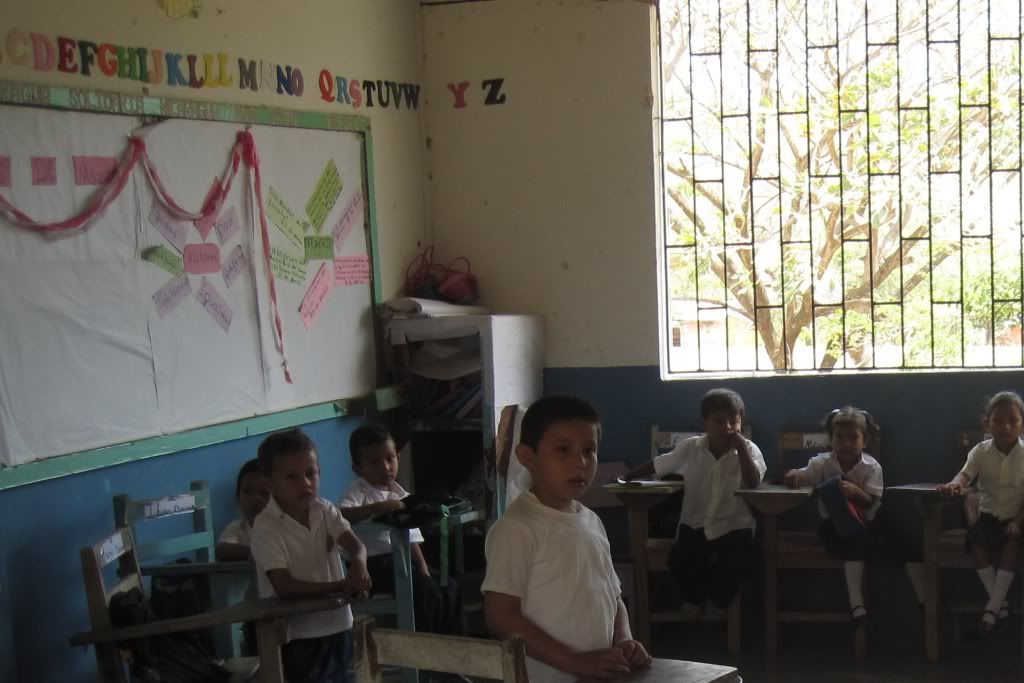
The three teachers responsible for the colorful and educational decorations came with José Tomás Gómez Valdivia (Nicafrance Foundation) and other teachers from La Cumplida for three days in Managua to attend the congress. I joined the delegation in their final day of sharing and learning and took notes on the conferences.
“The Situation of Reading in Nicaragua and Initiatives for Improvement” was the title of the first talk that José Tomás and I attended (the teachers went to whatever conference or workshop was most interesting or valuable to them). It was given by Vanessa Castro, a PhD from the Harvard Graduate School of Education. Dr. Castro has worked alongside the World Bank, IADB, UNESCO, and AED, and is now one of the leading investigators for the Nicaraguan group CIASES (Centro de Investigación y Acción Educativa).

Nicaragua faces high grade repetition, even as early as first grade. Since early elementary is the best period to learn to read, one of the initial goals of the first grade is to achieve at least some portion of fluency in reading. Second grade is then ideal to build vocabulary. Research Triangle Institute (RTI) International and USAID helped the Nicaraguan Ministry of Education (MINED) and CIASES conduct two studies (2008-2009 and 2009-2010) of 2nd-4th grade students from 126 randomly selected private and public schools that would represent the whole country. Nicaragua was the pioneer of using the Early Grade Reading Assessment (EGRA) in Latin America.
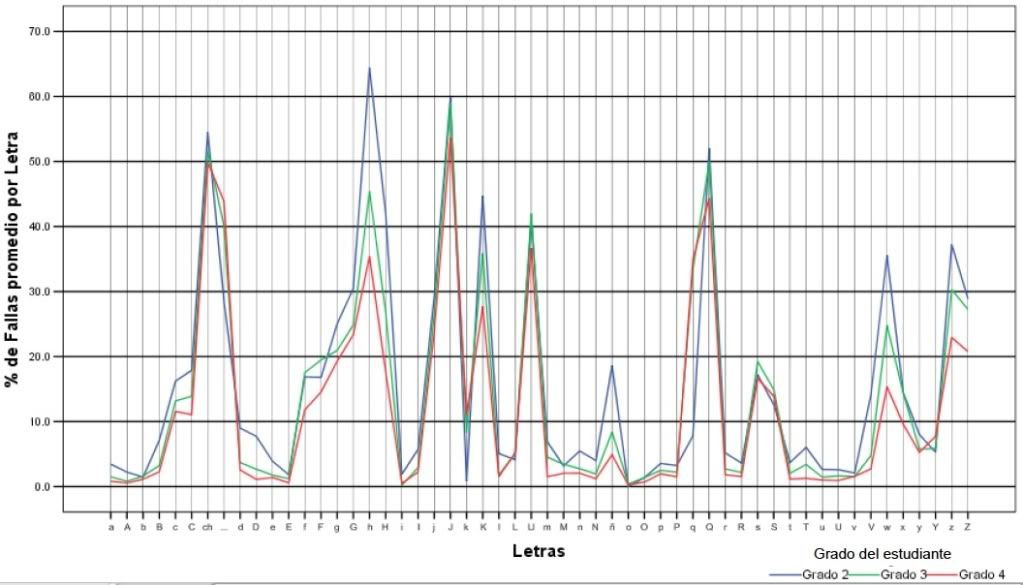
The evaluation by CIASES is advantageous for schools, because it is useful in determining what changes are most necessary to increase reading fluency. For instance, the letters ch, j, h, q, and ll were found to be the most difficult for Nicaraguan children to pronounce, which signals teachers to spend more time on these characters. Factors that have very significant effects on a child’s reading fluency are their parents’ literacy, the child’s work status (many children try to sell candy or fruit on the street to supplement family income), and whether or not the child went to preschool.
Other important considerations are teachers’ experience and education level and their pedagogical leadership from directors. Teaching conditions such as texts, infrastructure, and absenteeism are also very influential. Hygienic infrastructure (50% of schools don’t have adequate plumbing for potable water or toilets) forces many children and teachers to lug heavy bottles of water for several miles on their way to school, or go to the bathroom in the fields where they are at risk of contamination or snake bites. Therefore, proper plumbing has a clear relationship with absenteeism by both students and instructors. Giving homework, smiles, and congratulations are easy and simple things that can help motivate small children to study better and keep going to school.
On a more national level, CIASES is trying to motivate children with their campaign to encourage reading with fluidity and comprehension. Joined by several sponsor foundations, CIASES has created a contest accepting first-grade classes from all around the country that wish to participate. Any class with a teacher who instructs at least 20 hours a week can compete at the school, municipal, and departmental level to reach the finals. 80% of each class must pass the requirements, which include reading an average of at least 25 words per minute and answering 80% of the comprehension questions correctly.
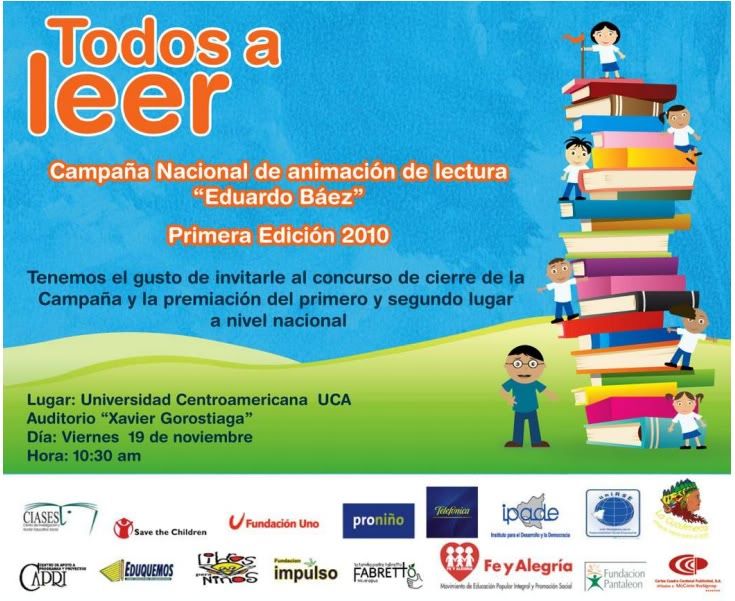
Last year, four schools were able to accomplish these goals. The schoolchildren all left the finals with shiny new school supplies; the best contestants received full academic scholarships through college; the teachers received cell phones that Dr. Castro said even she had never touched before, which caused the entire room to laugh (this only became funnier to me when I read her CV).
Needless to say, more schools are going to be training and trying out this year, with these grand prizes. But Dr. Castro and CIASES don’t see the contest strictly as a form of philanthropy. “Offering such great awards is just the means,” Dr. Castro explained to the room full of schoolteachers, “to the end of raising these children’s reading fluency to acceptable international standards. We need community motivation, parent participation, and teacher training to spur the children towards these goals.”
Dr. Castro closed her presentation with a quotation from eight-year-old Graciela Brandon, a young girl who had participated in the contest:
“A mí me gusta mucho leer, porque es como tener una televisión en mi cabeza.”
“I really like reading because it is like having a television inside my head.”
I couldn’t have put it better myself. Or if I had, it would have taken a full-length post that nobody would want to read. Nonetheless, I’ll include some of my thoughts on internal television in my final post about the Latin American Congress on Reading, which will focus on Sergio Ramírez’s more refined and ambitious reflections on the subject.
If you have an additional thirteen minutes, here is a great video that covers some of the material I’ve discussed here.
 Organikos
Pingback: Nicaragua Reads « Raxa Collective | Today Headlines
Pingback: Culture Of Hack | Raxa Collective
Pingback: Teaching, Reading, Books, And The Art Of Heroic Generosity | Raxa Collective