Yesterday morning, I attempted to visit the David Sheldrick Wildlife Trust, but thanks to Tripadvisor, my taxi driver couldn’t find the location of the elephant orphanage. Instead, I found myself at the Nairobi National Park’s animal orphanage. Surrounded by a swarm of Kenyan school children (who seemed to be more interested in me than in the wild monkeys), I observed the establishment with slight disappointment. The orphanage seemed more like a mediocre zoo than a safe haven for its animals. I was disappointed with the lack of educational materials, tour guides, or remotely enthusiastic staff. Even as I paid my $15 entry fee (which is quite expensive for Nairobi standards), the clerk was rude and could not provide me with any information; he just scurried me along so he could attract more tourists to the booth.
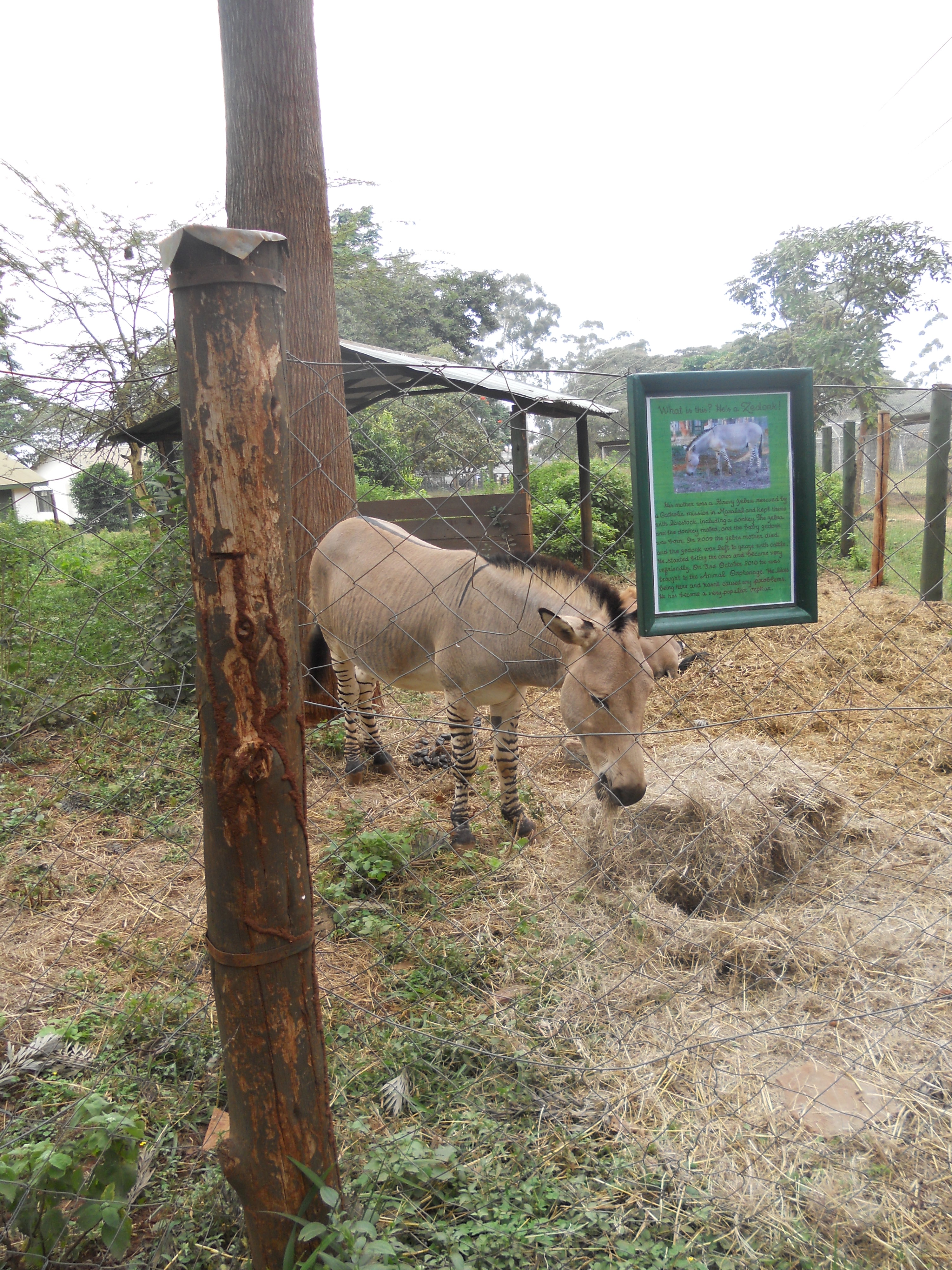
I proceeded and moseyed around, reading the “Educational” signs that hung on the cages and learning a bit more about some of the animals, like the zedonk (zebra/donkey hybrid) or the cheetah. I was curious as to why some of the animals had been there for so long and why they hadn’t been brought back to the wild. Although I know the Nairobi National Park’s Animal Orphanage must do a lot of good for wildlife rehabilitation, I had trouble seeing tangible evidence of it. Unfortunately, the profitability of tourism had clouded the conservation vision and potential education opportunities that Nairobi Animal Orphanage could offer. Sustainable and nature tourism should educate the tourists not hustle and ostracize them.
Laying aside my disappointment from yesterday, I was able to find the David Sheldrick Wildlife Trust today! Since 1987, The David Sheldrick Wildlife Trust has hand-reared more than 90 newborn elephants and released 150 elephants back into the wild at Tsavo National Park. The charity was founded by Daphne Sheldrick, in honor of her late husband, David Sheldrick, who dedicated his life to wildlife conservation as the founder Warden of Tsavo East National Park. The project’s mission is to support “the conservation, preservation and protection of wildlife, which include anti-poaching, safeguarding, rescuing, and hand-rearing elephant and rhino orphans that can ultimately enjoy a quality of life in wild terms when grown.”
Their anti-poaching initiatives are evident in both Sheldrick’s de-snaring project as well as educational programs for both communities and tourists. For example, the David Sheldrick Wildlife Trust works closely with Kenya Wildlife Services to ensure the protection and conservation of Kenyan wildlife; this operation consists of five de-snaring teams who constantly patrol Kenya’s wildlife parks and collect snared animals. Snaring is a more ancient-style of poaching that utilizes wires to capture animals by their necks.
During the 1990s, the practice of snaring went from a level of subsistence to a commercialized unsustainable business: wildlife decreased by 60% since 1990 when the culling of wild game on private land was legalized. However, the efforts of the de-snaring project have improved snaring levels immensely. The Trust has also lobbied for stricter laws and penalties against snaring offenders. The organization is also committed to the communities around the borders of Kenya’s National Parks by improving living and educational conditions. For example, they support local schools, have six mobile cinemas that put on wildlife films in local communities, and sponsor National Park field trips to introduce children to their own country’s vast wildlife.
Now that you have some background on the Trust, I want to tell you more about the David Sheldrick Wildlife Trust’s main project: nursing baby elephants and rhinos back to health! Anti-poaching is an important part of the Sheldrick mission because many of the elephants arrive at the orphanage as a result of poaching. Although each elephant has a different story to tell, many were separated from their mothers and family by a human cause, such as poaching. One elephant, Kilaganu, was found protecting the corpse of his mother who had evidently been poached. That’s where the trust comes in. Their plan is to nurture these baby elephants at the trust in Nairobi for about 2 years; afterward, the trust still looks after them for about 10-15 years in a more natural and wild setting before releasing them to live independently with other wild elephants.


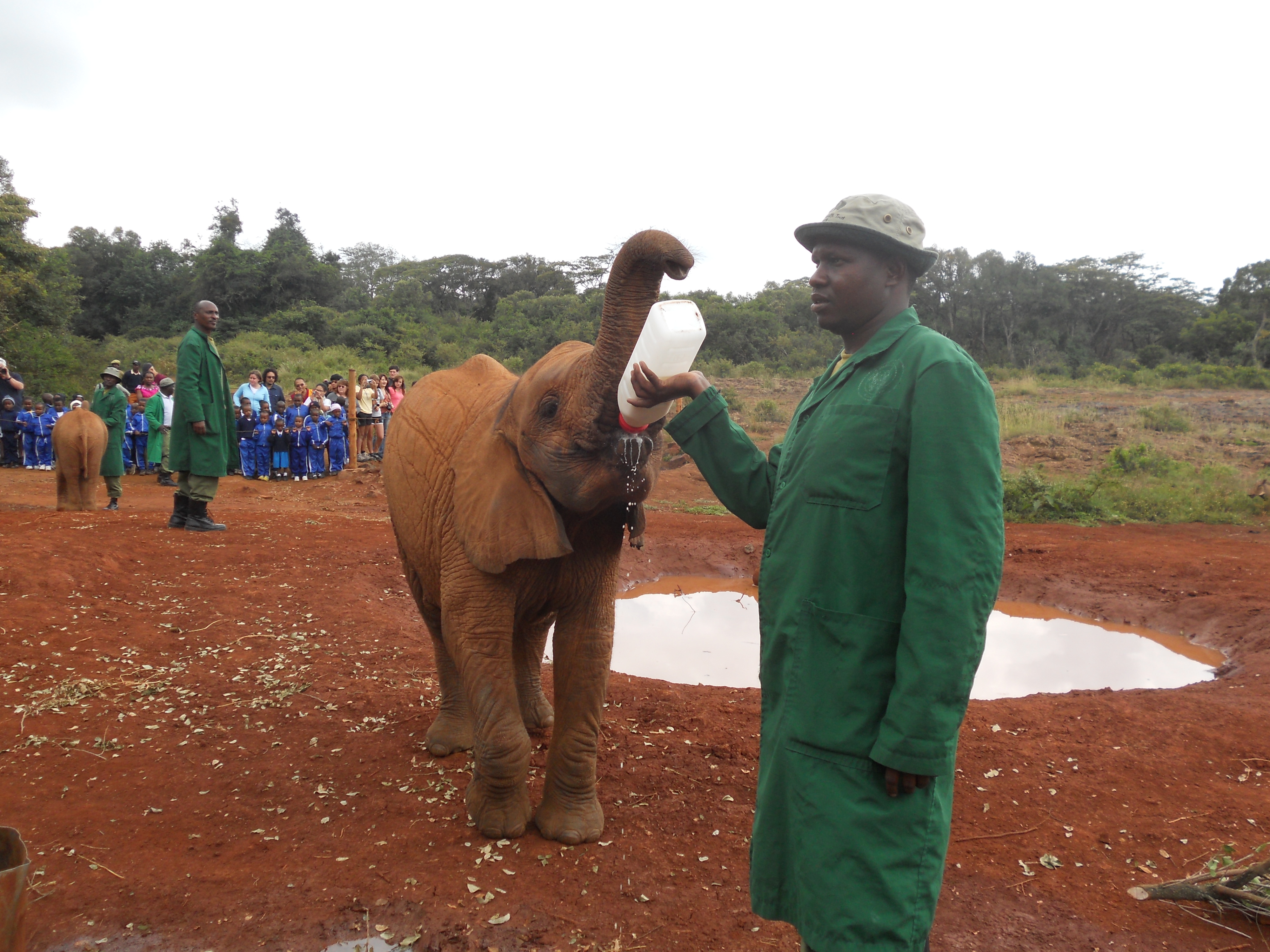
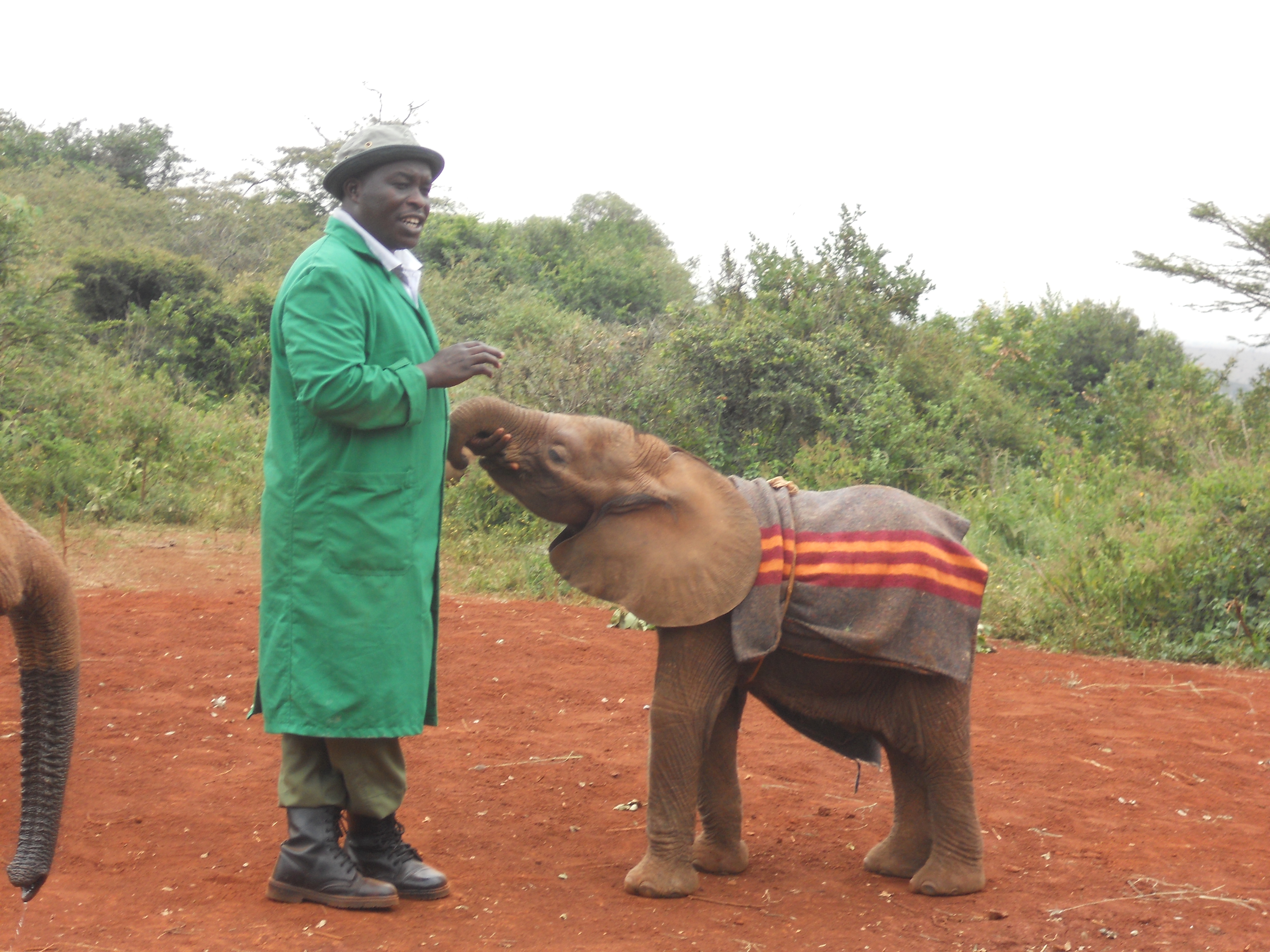
Witnessing the feeding process, I began to understand the legitimacy and passion of the Sheldrick mission. Guided by a man dressed in a dusted green safari coat and black laced boots, a fleet of baby elephants marched down hill for their morning feeding. Once a day, the Wildlife Trust is open for an hour for tourists to visit their establishment and watch the elephants play with each other, slurp on gigantic bottles of milk, and kick around soccer balls. Meanwhile, the elephant caretakers explain all about the organization; introduce each elephant’s name, history, and personality; and answer the audience’s questions.
I learned so much about elephants! Did you know that elephants can catch pneumonia? Did you know they have a very human-like development cycle? Like human babies, maternal nurturing and love is crucial!
At three months old and draped in a blanket, Mumbushi, the youngest elephant, was adorably needy; she followed around one of the caretakers, constantly sucking his hand. These caretakers are truly guardians: they sleep with the elephants at night to ensure they don’t feel lonely. Many of the baby elephants arrive at the orphanage still in trauma or grief from the loss of their mother and family. That’s where the constant supervision of a keeper comes into play, as well as the social interaction with the other orphans.
My experience was so positive that I decided to adopt a baby elephant! For $50 a year, I help to sponsor her and the orphanage. (I get to visit her when I have a break from work!) Her name is Shakuru, which means grateful in Swahili. Shakuru is one of fourteen young elephants and two rhinos that are currently being hand-reared for release back to the wild. At three days old, Shukuru had fallen down an exposed manhole on the Mzima – Mombasa Pipeline. Fortunately, a herdsman found Shukuru, rescued her from the hole, and protected her from henchmen intent on killing her for bush meat. He then brought her to Voi Elephant Rehabilitation Unit to be flown to Nairobi. Shakuru is now almost two!
So what differed between my experience at David Sheldrick Wildlife Trust and the Nairobi Animal Orphanage? Education. Even in my sponsorship handbook for Shukuru, I received educational publications on the age progression of elephant and rhino orphans, and the history and current debate on poaching. Educating tourists is a vital part of conservation tourism and its power should not be underestimated. The Trust’s enthusiasm and passion for wildlife conservation is contagious. I can’t wait to come back and visit Shukuru one-on-one!
 Organikos
Katrina, Thanks so much for sharing about your two very different adventures. It’s evident that customer service and genuine passion from the staff greatly contributed to your experience in this wonderful initiative. As a nurse, it was so interesting to read about the similarities and personalities that these adorable elephants have to humans. It’s great to know that there are invested people who are willing to nurture the youth of our wildlife. I intentionally say “our”. I am from a small town in Colorado but value the beauty of nature the world has to offer and believe that it is through shared efforts that change comes. You said it perfectly, this is a contagious feeling; I’ll have to look into adopting a baby elephant and seeing her soon as well!
Pingback: Collective Action, Brown & Cornell « Raxa Collective