A recent article in TIME Magazine alerted me to how easy it is for us as consumers to shrug off the warnings of a changing world. I am guilty of it and I have caught myself, and hope that with this change I pledge to make, you might think about it too…
I’m humbled by the cognitive dissonance of knowing how sensitive the planet’s oceans are while hungrily indulging in sushi and fish filets with a comfortable negligence regarding their origins. Food choices like these, the effects of which are typically underestimated as a mere drop in the ocean, are proving to have a bigger ripple effect than we’d like to think. And it’s high time we all thought about the fish on our dish and just how it got there.
The article in TIME by Bryan Walsh reminded me of a memorable excerpt from a conversation between some friends of mine:
Q: “So what did porcupine taste like? Does it taste like chicken?”
A: “It tastes like… have you ever eaten donkey?”
As hysterical as it was for me at the time, it made me think, is the sometimes absurd variety of the human palate an evolutionary response to a scarcity of resources?
Ok so there’s no imminent extinction of livestock; there is many a happy cow in California, the UK alone consumes nearly 30 million eggs per day, and just look at New Zealand’s sheep-to-people ratio. But what about the animals we still hunt for sustenance? The majority of the fish and seafood eaten by humans comes from the wild – a wild that is rapidly depleting. And while I theorize that there may be some primal instinct in our hunter-gatherer constitutions that alerts us to the impending extinction of the only food group we still hunt and gather (hence the urge to grill up and sauce a porcupine), our shopper-consumer psyches don’t seem to be getting the message of scarcity.
Don’t think there’s a seafood problem? Let’s reexamine our school of thought.
The world’s oceans are no longer the hosts of an endless bounty that they were once thought to be. As much as 90% of the entire ocean’s large predatory fish, such as shark, swordfish and cod, have been fished out. More than 75% of the world’s fisheries are fully exploited, depleted or overexploited. Present fishing practices are often wasteful or damaging to the marine habitat and an estimated 7.3 million tons of by-catch (fish not targeted to be caught) is thrown back into the sea dead each year. Among the causes for such rapid depletion of our marine resources are poorly managed fisheries, destructive fishing methods, large-scale fishing technologies and a global fishing industry 2.5x the size of what the oceans can sustainably support.
So what does this mean for consumers? Imagine your favorite choice on the sushi menu going extinct, or a famous recipe for fish and chips joining the endangered species list. Seafood stocks are now one sixth of what they were a century ago, and if current practices don’t improve, stocks of all fish currently fished for consumption are predicted to collapse within 40 years.
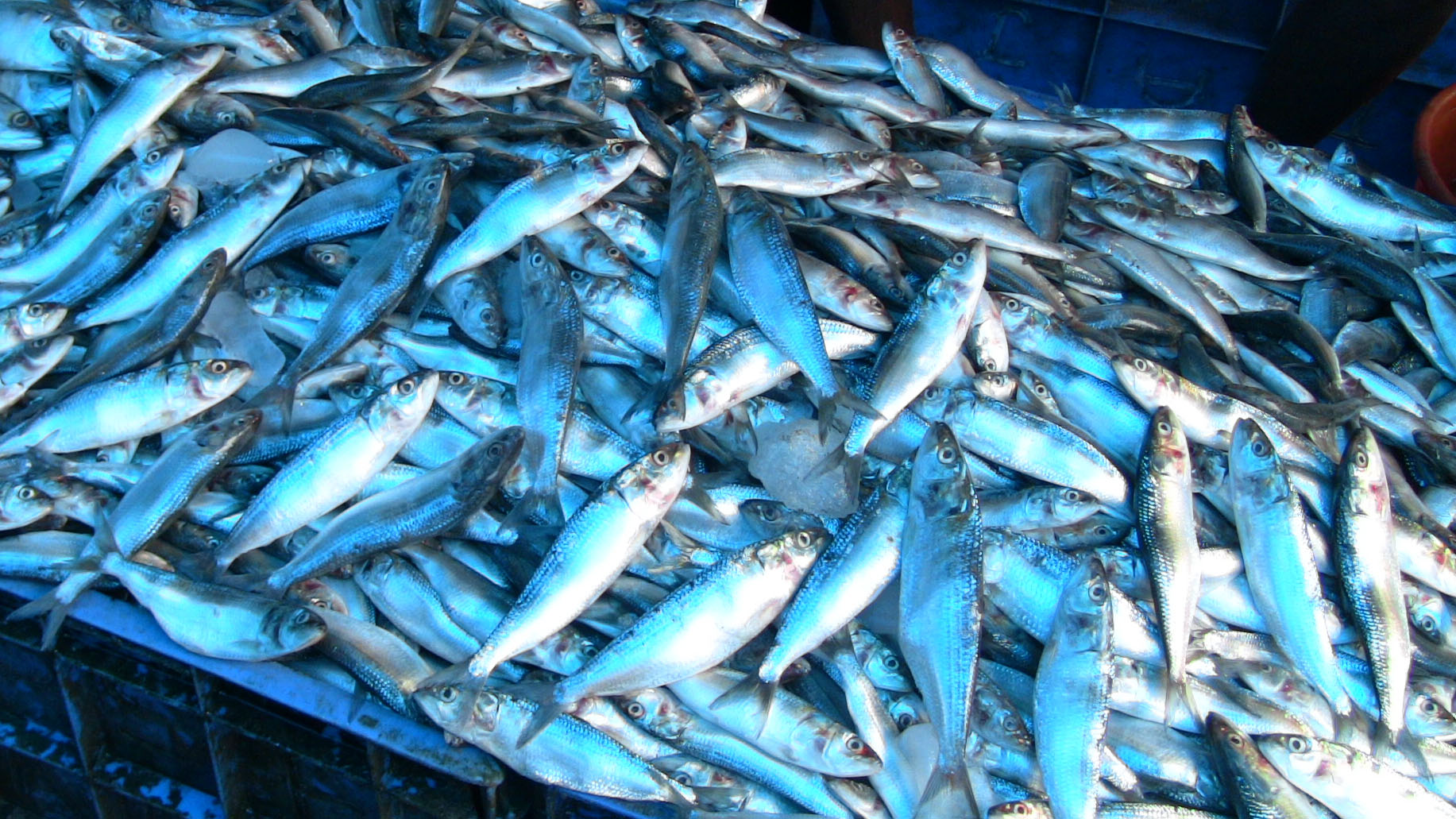
What can we do to make sure our babies’ babies get their fish sticks? We can cut down on our consumption of seafood that is being overfished, that comes from poorly managed fisheries, or whose fishing methods result in by-catch or damaged marine habitats (such as bottom trawling). The article in TIME highlights how aquaculture, if done right, can develop into a sustainable means of satisfying the planet’s growing appetite for seafood, which is recognized for its health benefits and as one of the main sources of protein in some of the world’s most food-sensitive areas. However, until we can farm the sea with the same expertise with which we farm the land, we need to do what we can as omnivores to keep the surf in our surf ‘n’ turf. A couple general rules make it a bit easier, such as opting for fish that are low on the food chain, like Tilapia and Herring, and only selecting seafood products which have been certified by organizations like the Marine Stewardship Council. But for more detailed guidelines, check out this easy-to-use pocket guide published by the World Wildlife Fund (WWF).
This guide can be tucked into your wallet for easy reference, and it will allow you to start asking the right questions. Which ocean? Farmed or caught? Poled or trawled? And share it with your friends to get them on board! The more responsible consumers are made aware of the fishy issue, the sooner our suppliers will be urged to meet the demands of a more conscientious marketplace.
Like me, you may have to cut back on certain favorites like orange roughy and salmon sashimi, but when it comes to the dwindling seafood supply, we’re all on the same boat.
 Organikos
Pingback: We’re No Angels « Raxa Collective