Many people associate fiery skies over cities with pollution and smog. While these are indeed causes for a red-orange color during sunset and sunrise, they are not exclusively so – any particles in the air, including dust and vapor, can cause Rayleigh scattering. This optical phenomenon is not as complicated as some other forms of light scattering, and is more easily explained.
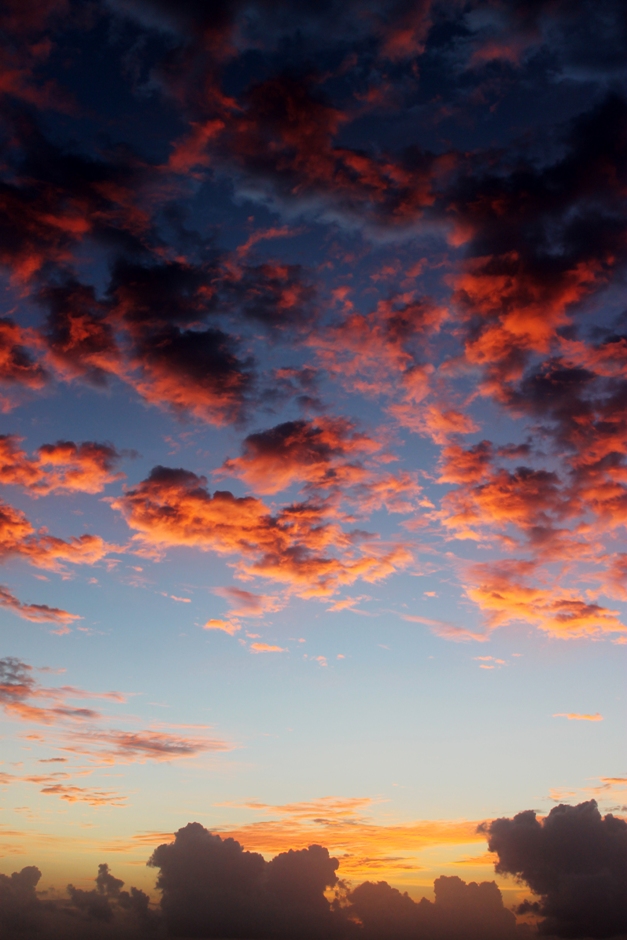
White light is made up of the entire spectrum of color, and each color is perceived by different mechanisms, including an object’s color absorption, reflection, the light’s wavelength, and our eye’s light receptors’ spectral sensitivities. Rayleigh scattering, which makes the sky appear blue and the setting sun reddish orange, is no more than the sun’s rays scattering due to varying wavelengths. So why doesn’t the sky appear the same color all the time? At noon on a clear day, the sky is blue because the sun is beating down directly above, at a 90 degree angle. When the sun sets, the angle is much wider, and the rays which reach the horizon become much longer than those at noon, allowing them to scatter in a different way – one which exposes the reddish orange end of the spectrum to our eyes.
 Organikos
Pingback: Cochin Sunsets « Raxa Collective
Pingback: PhotoSingularities: Eclipse | Raxa Collective