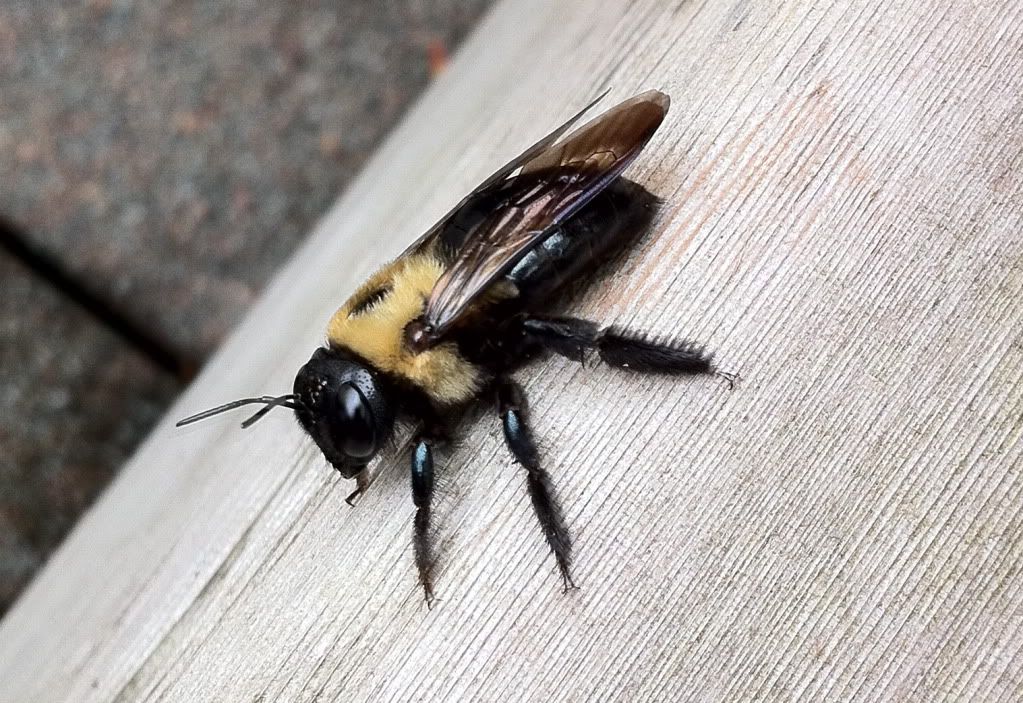
A snapshot of the inebriated bee. Click for higher resolution!
No, it’s not a new mixed drink.
I was sitting on a bench a few days ago when I noticed something interesting: two or three bumblebees were slowly making their way across the wood towards me. The big, fat yellow and black hymenopterans—vaguely furry—seemed to be a bit bewildered; when I waved my hand towards them, they froze in place but didn’t fly away. One lifted a furry leg towards me as if to reprimand me for my presumption. After a moment, they continued their relentless (if misguided) march in the direction of where I was sitting. About half way through their odyssey, however, they began to fumble around and head off in different directions. They seemed indolent at best, utterly drunk at worst. But I had to consider: how could they be tipsy on a Tuesday morning? Frat parties and weekend festivities were long since passed, and I didn’t see any firkins of spiked honey mead nearby. I took advantage of their exhaustion to nab a quick picture before I had to head off to class. The thought of the tired bees stuck with me, though.
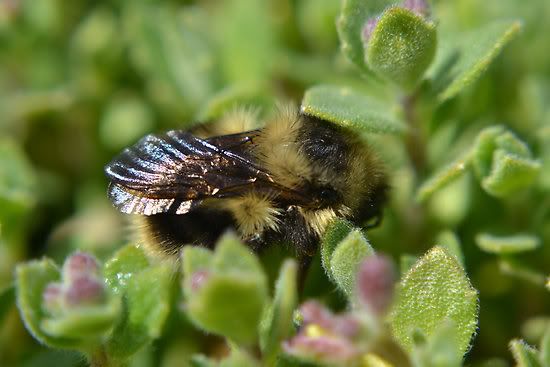
A sleeping bumblebee
Doing a bit of research, I found out some cool things about bumblebees. First, they don’t spend the night in the nest. That means they’re essentially transients; every evening they pick a different flower and either sleep inside of it, or hang underneath. Perhaps these bees that I saw weren’t rabble-rousing delinquents shaking hangovers, then, but just little guys having woken up from a deep night’s sleep. Second, bumblebees apparently appear very lethargic on cold mornings, almost drunken or ill. The remedy for this, ironically enough, seems to be nectar from flowers (or the sun’s warmth). Bingo. When I thought back, I realized that it was an overcast, chilly morning when I saw these bumblebees crawling around. Perhaps I was too quick to judge these insects as reckless carousers: never judge a book…
Mother nature teaches us something new everyday.
 Organikos
Pingback: Wild Bees And Crop Yields | Raxa Collective