
Summer '11 by Elle Grace Miller
As people around the world attempt to work their economies out of doldrums (or whatever you call this moment in history), those who can are reconsidering how they distribute their budgets. Some who previously didn’t use cost as the deciding factor in their purchases, whether for food, household products like toilet paper or cleaners, or big ticket items like cars or construction materials, etc. are now beginning to think twice about their choices. This holds true for items carrying labels such as organic, green, eco-friendly, shade grown, etc…the bigger the budget bite, the more likely the convictions that drive these decisions are put to the test.
So what rubric are consumers using to make these decisions? When it comes to fruits and vegetables, sometimes local trumps organic, depending on the item, as some produce absorbs conventional pesticides to a greater degree than others. Some consumers also use a combination of health and sustainability to make their decision, deciding that the environmental and health benefits of say, grass fed beef, are important enough that the solution is to merely eat it less frequently. (A win-win solution in my opinion.)
Consequently, lifestyle choices are riding a pendulous swing. What was the norm for most households at the turn of the 20th century and for decades beyond: raising and preserving food, small scale animal husbandry, etc; had started to be viewed as either “counter culture” at worst, or “artisanal” at best. More and more these activities and others like them have re-entered the cultural main stream. Articles, books, workshops and the like have proliferated, offering D.I.Y. alternatives. People may make choices like walking or bicycling more as well, which are another example of a win-win solution…reduction of carbon footprint as well as the bite of fuel bills.
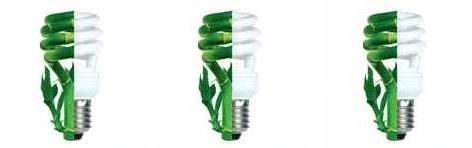
However, when the price tag is the only deciding factor there are invisible issues that may not be taken into account. From light bulbs to solar panels, the greener option may initially be more expensive, and often a budget just doesn’t have that type of flexibility. But choosing the less costly item is often a Pyrrhic victory for the pocket book, because in the long run the costs are higher, both personally and globally.
 Organikos
We’re all in this together trying to make the right choices – and less is often more, I agree!
Absolutely! It’s always such a fine line though, isn’t it? Thanks for stopping by! Cheers!