The arts in all their glory are no more remote from the evolved features of the human mind and personality than an oak is remote from the soil and subterranean waters that nurture and sustain it. The evolution of Homo sapiens in the past million years is not just a history of how we came to have acute color vision, a taste for sweets, and an upright gait. It is also a story of how we became a species obsessed with creating artistic experiences with which to amuse, shock, titillate, and enrapture ourselves, from children’s games to the quartets of Beethoven, from firelit caves to the continuous worldwide glow of television screens.
—Denis Dutton
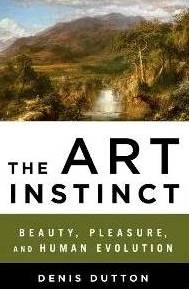
The late philosophy professor, editor, writer (and occasional provocateur) Denis Dutton spent a great deal of his professional life closing the gap between art and science.
A student of Darwin, he spoke extensively about the apparent evolutionary human attraction to certain types of landscapes and shapes that we universally define as beautiful. Dutton bases his theory on studies that link the “perfect landscape” to that of the Pleistocene savannas where homo sapiens evolved, with all the requirements of human development…available water, rolling hills for good vantage points, tall grasses for both attracting game and having cover while hunting it, and tall trees with low positioned forks for an easy climb to safety in the case of predators.
Dutton wrote that the pages of his book:
offer a way of looking at the arts that flies in the face of most writing and criticism today–a way that I believe has more validity, more power and more possibilities than the hermetic discourse that deadens so much of the humanities. It is time to look at the arts in the light of Charles Darwin’s theory of evolution–to talk about instinct and art.
Dutton’s 2010 TED talk, lightheartedly animated by artist Andrew Park, provides an apt memorial to the wit and conviction he brought to his work.
 Organikos
Pingback: Rock « Raxa Collective
Pingback: Lion King in Real Life « Raxa Collective