
This one was actually made by Ana's daughter Meli - it must be a family tradition!
I don’t know what I was expecting when Ana Teresa invited me to take a look at her studio. On the one hand, I’d seen the quality of the products on the shelves in REMOC, and thus knew that the craftswomen were not amateurs; but I also knew that many of them didn’t have high incomes or hours to invest in their business – one of the challenges of the trade, for them, is that they are making a living while maintaining a home for their families and fulfilling their duties as a wife and mother. So, despite knowing that the work they produce is ‘serious’, I was still impressed when Ana ushered me through a door I’d thought led to a garage, and I found myself in a real, fully equipped artisan’s workshop.
 Ana makes handbags, above all leather and suede ones. A woman of many talents, she makes lots of other things too; but handbags are her specialty. She was more than happy to show me around her crafting space while the plantains sizzled away in the kitchen (that was why I was there: a few days previously I’d mentioned that the banana’s older brother was my favourite Costa Rican delicacy, and I was promptly invited over for a plantainy feast). Amongst the delicious smells from next door, I was pointed toward a large wooden bookshelf which housed swathes of fabulous, deep colours of suede. On top of the bookshelf was an assortment of clay piggy banks of various sizes: Ana’s sister Carmen paints them in traditional designs to sell in the REMOC shop.
Above the main desk is a shallow shelf where Ana Teresa keeps her CDs. They’re not for musical inspiration while she works; she upcycles them into some of her designs. There were also scrap bins all around, full of pieces of fabric she couldn’t make something from but couldn’t throw away either. I took a quick look at her sewing machine, and then asked her about a large, complex-looking tool which looked somewhat like an upright vice. She explained that it was for attaching snap fasteners.
I never really put much thought into how many different tools and mechanisms are required for all the various little details involved in such a craft. As the next installment of my marketing training had the theme of pricing, I was moved to change the layout of my lesson to accommodate what I had just realised.
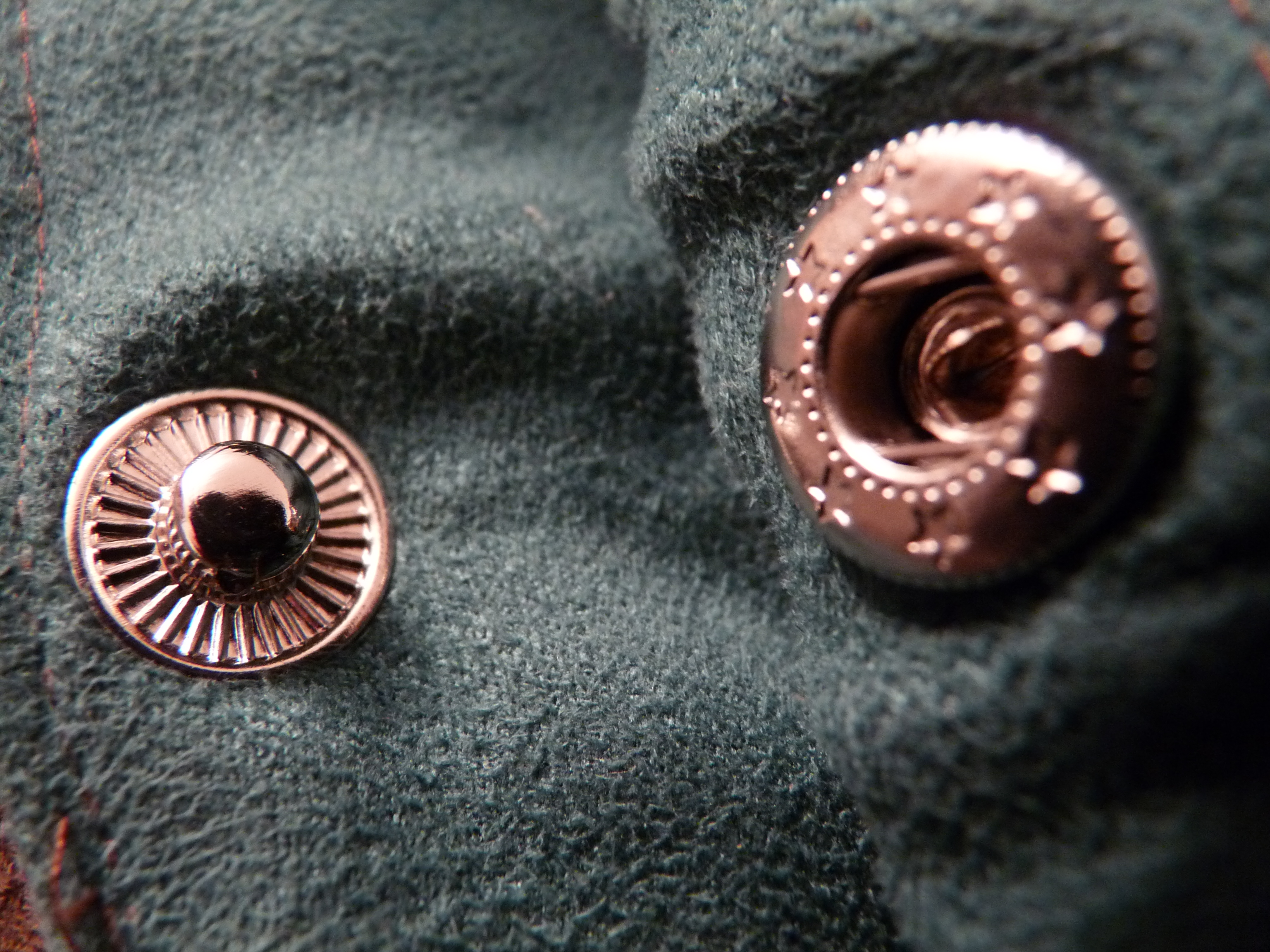
Who would have thought that you'd need such a hefty, expensive, specialized device just to affix this little thing?
Handmade things cost more than machine-made things for a very good reason. This knowledge is part-cause, part-effect of my time in MUSADE. As my flatmate Jenny has an Etsy shop where she sells her own handmade jewellery, I had a pretty good idea of the effort involved in producing an item from scratch; and this was one of the reasons why I was so interested in working for MUSADE in particular. But in many ways, instead of learning life lessons by acquiring new knowledge and understanding through my work in Costa Rica, what I ended up doing was consolidating various scattered pieces of information and common sense I’d already possessed. I now feel like I ‘know’ handmade – and especially, I know that when I buy handmade, I’m paying more because of all the things we talked about in my ‘Price’ lesson.
Many of the women in REMOC were assigning to their goods the price they thought people would be willing to pay for them. They would see mass-produced handbags in the windows of American shops and say, “That’s how much a bag costs”; and the prices of their own handmade bags would reflect that. Now, while Costa Rica is rich in Central American terms, its economy isn’t on the same level as the U.K. where I live; so perhaps handmade goods can’t afford to carry a greatly higher price there like they can here. Still, I thought it was important that the women understand how pricing works, investigate how much they’re actually earning per product, and work out what their items are really worth, even if they don’t end up being able to ask that price from local customers.
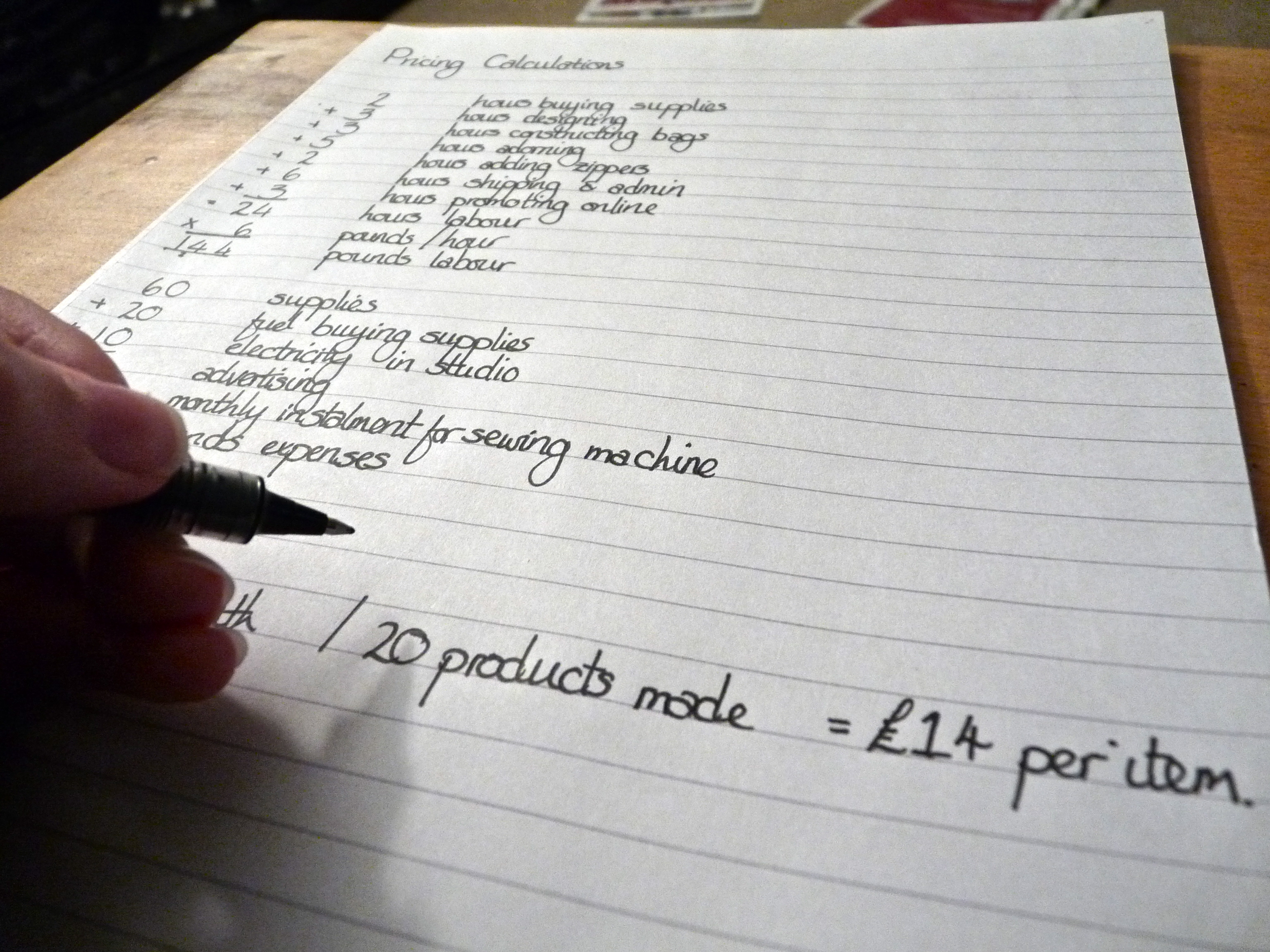
There has to be a lot of number-crunching behind any lucrative business.
So we put our heads together and thought of all the expenses of time and money that are put into their businesses. I explained that a good way of pricing a product was to add up all the money you’ve spent on materials, add up all the time you’ve spent making it, giving yourself an hourly wage and adding it all together (I was taken aback when they suggested that their hourly wage should be 1 000 colones – $2). Anyway, all this had been in the original plan, but after noticing Ana Teresa’s snap-fastener machine, I had to add in an extra point: what do you do about all those long-term investments?
We ended up with the conclusion that the best policy was to decide how soon they want to recover the money they invested in it, work out how many bags they’ll sell in that time and divide to find how much to add on to the individual prices in order to repay themselves. With this method, it won’t be such a huge leap in price; but even adding on an extra 30¢ a product is enough to edge the handmade product higher above the price of factory-equipped competitors on the market.
This is why handmade items are worth much, much more, materially speaking, than machine-made alternatives. Once you’ve factored in your labour, materials, time taken up buying materials, time taken maintaining the business, and investments like sewing machines, snap-fastener-fasteners and years of honing your skills… It’s no wonder a robot can do it cheaper. Handmade items go through a long, beautiful story before they reach the customer; and when you pay a little extra for the item, you fund the story.
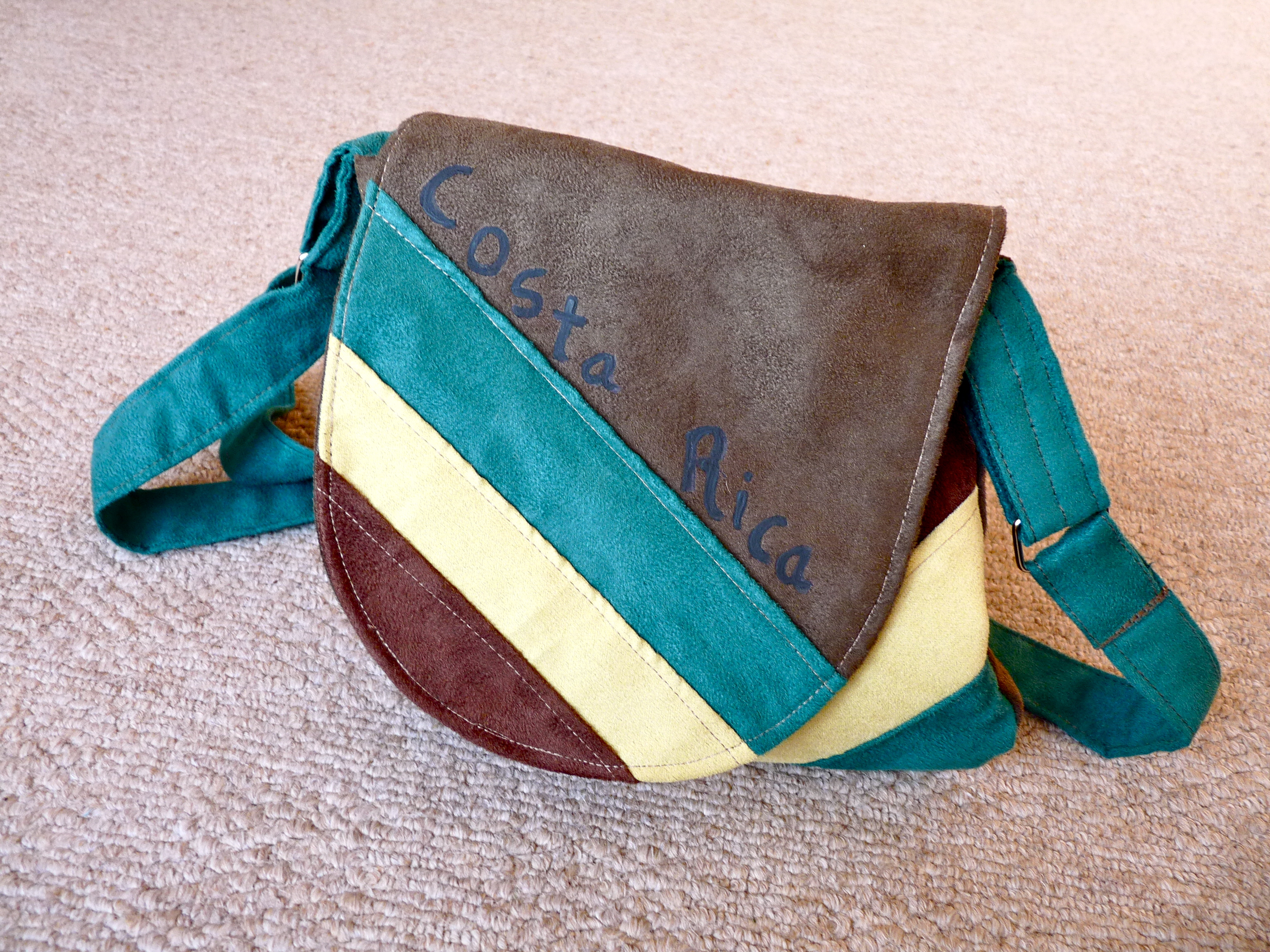
After learning the story behind Ana's bags, I was lucky enough to be gifted one!
At this point in my life, I’m not in the artisan’s target market. I’m a student, I’m a volunteer, I’m a long-distance girlfriend who regularly spends several hundred pounds on flights to the US: so I can’t afford any extra luxuries. But I do love and appreciate the value of handmade things, and until I can afford the luxury of buying it myself, I’ll take that appreciation write and write and write about it, so that others can consider picking up on it too.
 Organikos