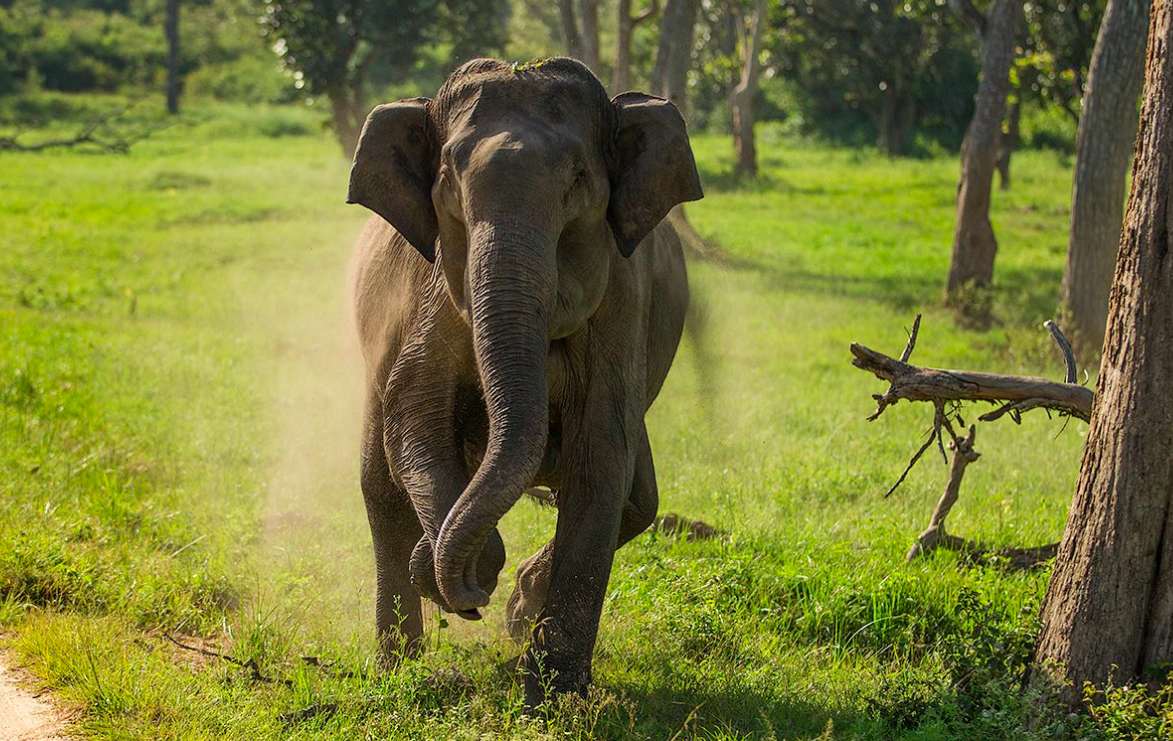
Elephant in mock charge at Bandipur Tiger Reserve; photo credit: Sudhir Shivaram
If you want to be a good wildlife photographer, you need to be a good naturalist first. Understanding your subject’s behaviour and knowing the natural history is even more important than good equipment to make good images.
Elephants commonly make a mock charge when they have calves in their group. During a photographic safari in India’s national parks the drivers and guides are knowledgable about this behaviour and know how to react. When a jeep enters the vicinity with elephants they understand that a mock charge is likely.
After the mock charge the elephant relaxes and moves within the family group naturally. This is the opportunity for good behaviour shots.Please do not make the elephant charge again by asking the driver to start the jeep or by other means.
The intent of this post is to help people understand that there’s more to wildlife photography than the camera work: Keep your distance and do not aggravate the animals in order to get a shot.
Camera Settings:
Shoot in AI Servo or AF-C mode to gain continuous focusing. Keep a high shutter speed to freeze the action (anything above 1/2000 sec). Keep your focus on the subject’s head/eyes.
Canon 1D Mark IV, Canon 70-200 f2.8 L IS II, ISO 640, f2.8 @ 1/6400, Evaluative Metering -1/3 Stop, Aperture Priority.
 Organikos