According to a UN report, there are around 57 million children who don’t have a school to go to.The UN’s Educational, Scientific and Cultural Organisation (Unesco) says in some areas it could take 70 years before there are enough primary school places for every child. There has been some progress though; there are now half as many children unable to go to school as there were in the year 2000. That means in the past 13 years around 60 million more children now have access to an education. And initiatives like Aleutia’s definitely play a big role in bringing down the number of children who lack access to education.
For $20,000 each, every school in the developing world could have a room full of computers, so students can access educational resources and get online. All thanks to a London-based startup founded by an American named Mike Rosenberg. Since 2007, Rosenberg has been building ruggedized desktop computers for African schools and clinics, all powered from solar panels. This summer, it’s delivering not only computers and panels, but 47 full prefab container classrooms, one for each of Kenya’s counties.
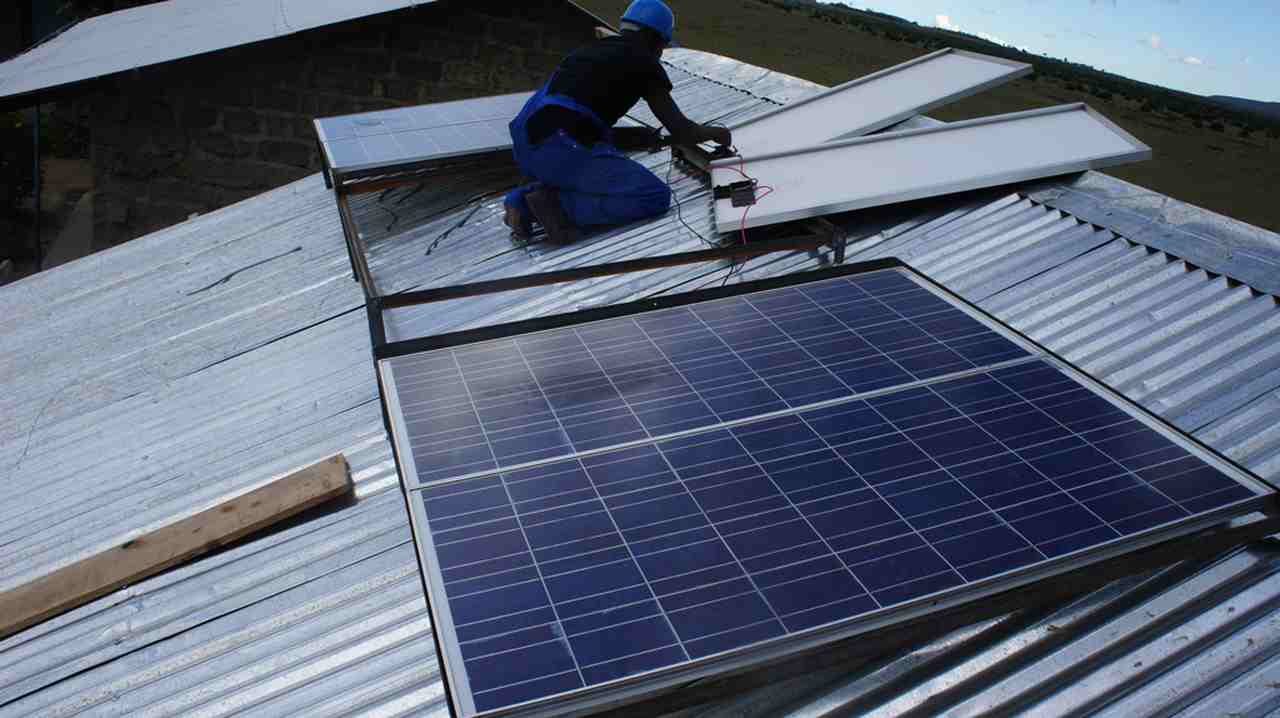
The PC-classrooms, which are 20 feet by 9 feet, will go into schools chosen by Safaricom Foundation, Africa’s largest telco, which is funding the project and providing logistical support. That includes 10 computers, a server, 11 monitors, a switch, batteries, and the solar panels. In the Kenya project, two whole classrooms fit on a standard 40-foot flatbed trucks. The classrooms come fully preloaded. The roofs already have their panels installed, and the computers come with a range of software and apps, including the offline version of Wikipedia and educational games like Skoolbo, a popular math challenge. At the center of these projects are Aleutia’s “ruggedized” computers, which are designed to stand up to temperatures of 50 Celsius, humidity, and sand and dirt. They have solid state drives, no fan, no spinning hardware, and are meant to keep running come-what-may. Rosenberg admits to some virus issues with some of the projects, but the computers for the latest project will run Linux, which should be more virus-free.
Read more here.
 Organikos