We assume our calendars and clocks are based on fixed constructs, but don’t always take the time to consider the science behind them.The facts and rhymes we memorize in school – 365 days in a year; “30 days hath September, April, June and November, etc.” are thrown off balance by the fact that the actual number of days required for the earth to complete its orbit around the sun are not whole numbers.
It officially takes around 365¼ days (precisely 365.242) to complete the orbit. In 45BC Julius Caesar’s official astronomer Sosigenes balanced the calendar with the addition of a day every 4 years.
So what happens with those of us born on said day? I just read that the chance of being born on a leap day is one in 1,461 and that there are five million of us around the world. There are even statistics about “serial leap day births” – families with multiple leap day births. Honestly, I have to wonder about the truth in that.
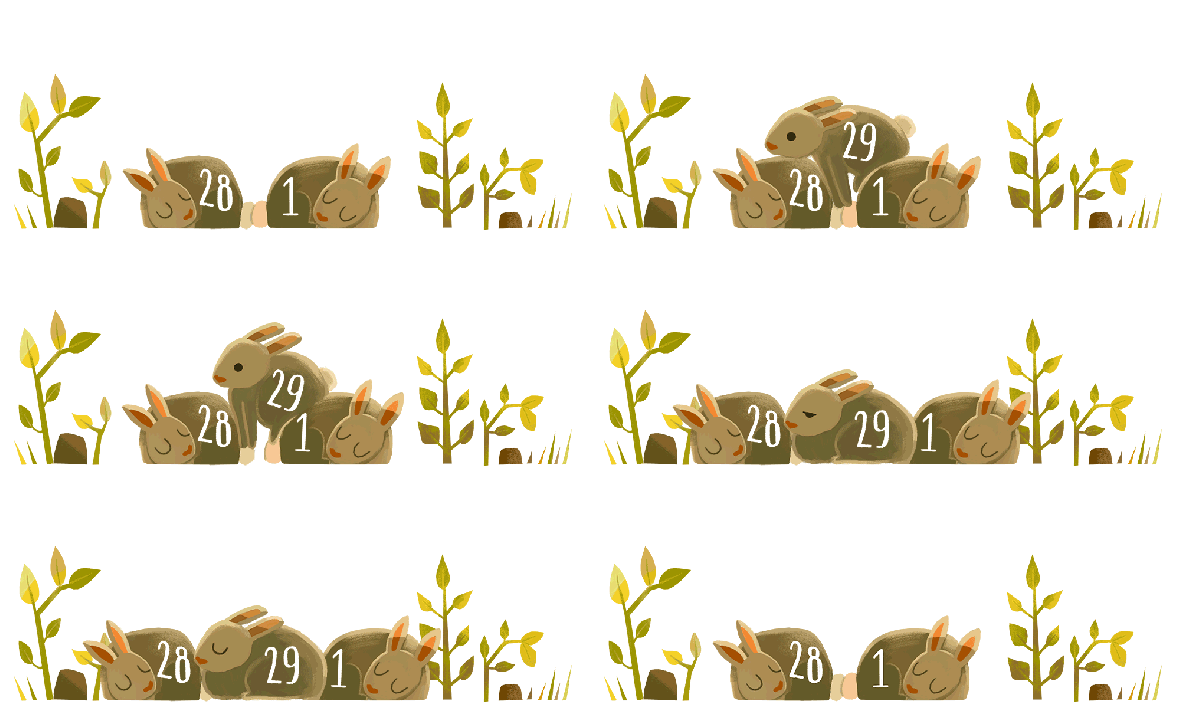
Google is famous for their holiday doodles. No science behind this one – just a visual with a strong dose of cuteness! Thanks to Olivia Huynh for her Doodle.
 Organikos