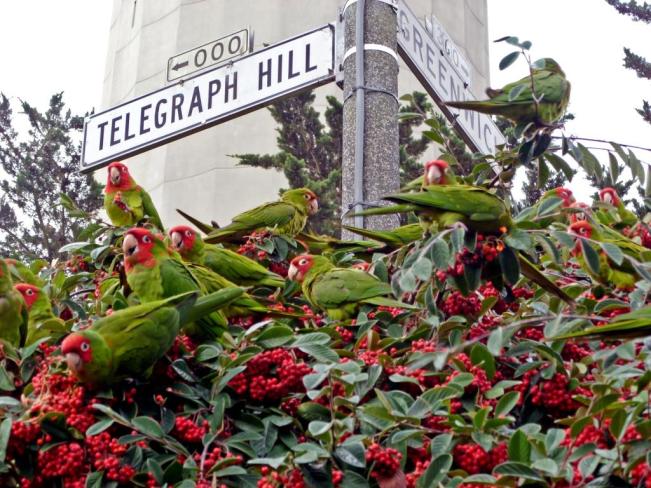
Image from Evergreen.edu
Given the large amount of bird lovers on this blog, if you have not seen the documentary The Parrots of Telegraph Hill I recommend you watch it (list-keeping birders, on the other hand, might not like it as much). As any of our followers would know, every day on our blog we feature a bird, usually exotic to westerners, on our Bird of the Day post, and frequently have a bird-related post (as you can see below) regarding their habits, migration, population change, and more (I guess I’ll add another one to that list right now!). The documentary adds information to those subjects, but from a whimsical, non-methodical perspective that could be more relatable and engaging to people who do not consider themselves documentary-type watchers (such as myself).
In essence, it follows the story of a man’s relationship with a flock of feral South American parrots that live in the area of San Francisco. One of the things that intrigued me most was that a person with no background in ornithology (or biology for that matter), became so vital for providing key observations on the Cherry-headed Conures useful to the scientific community.
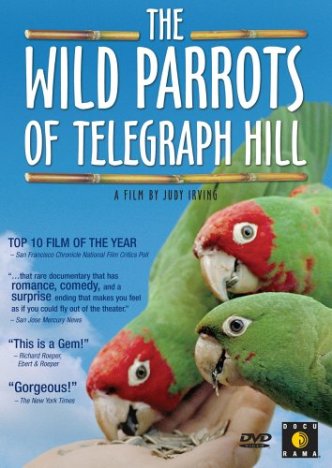
His feeding practices of the flock might be frowned upon by environmentalists and birders, but I would argue that the close relationship he developed with the flock and the opportunity he took to record the behavior of the cherry-heads has an innate value that cannot be compared to the impact that the parakeet flock has on the ecosystem. I don’t think people should start feeding feral birds, but his case was an exception. His experience with the cherry-head flock made me think for the first time about how people should deal with wildlife living in non-native areas and on what the appropriate measures to not propagate this problem might be.
 Organikos