
Writing now from Villa del Faro, in Baja California Sur, I am delighted to read this article from the Travel section this week in the NY Times:
Keeping the Fire of Irish Lighthouses Alive
The golden age of lighthouse construction is long gone, but in their wake are beautiful vistas and stories that bring modern Irish history to life.
By
To get to the Clare Island Lighthouse in County Mayo, in the west of Ireland, you climb up to the island’s northern cliffs along a road of stones, past damp sheep chewing grass, around the bend through an alley of fuchsia hedges in bloom. Keep walking until you reach the lighthouse and slip your key in the lock, hang your parka by the door and take a seat beside the peat-burning fireplace. Someone may be nearby to take your drink order, and the reward for a long walk will be a cold gin and tonic and the soft heat of the fire.
Built in 1806, Clare Island Lighthouse sits at the northern edge of the island, 387 feet above the Atlantic Ocean. Until it was decommissioned in 1965 (its clifftop position turned out to be less than ideal during fog), the lighthouse played an important role in maritime safety. Ireland is, after all, an island — before the time of GPS, lighthouses were essential in preventing shipwrecks along the rocky coast. The golden age of lighthouse construction in the country was in the mid-19th century; between the 1830s and 1860s alone over 40 lighthouses were built. They thrived for more than a century, but technology changed and automation spread. In 1997, the Baily in Howth Head, in County Dublin, was the final lighthouse to be automated.
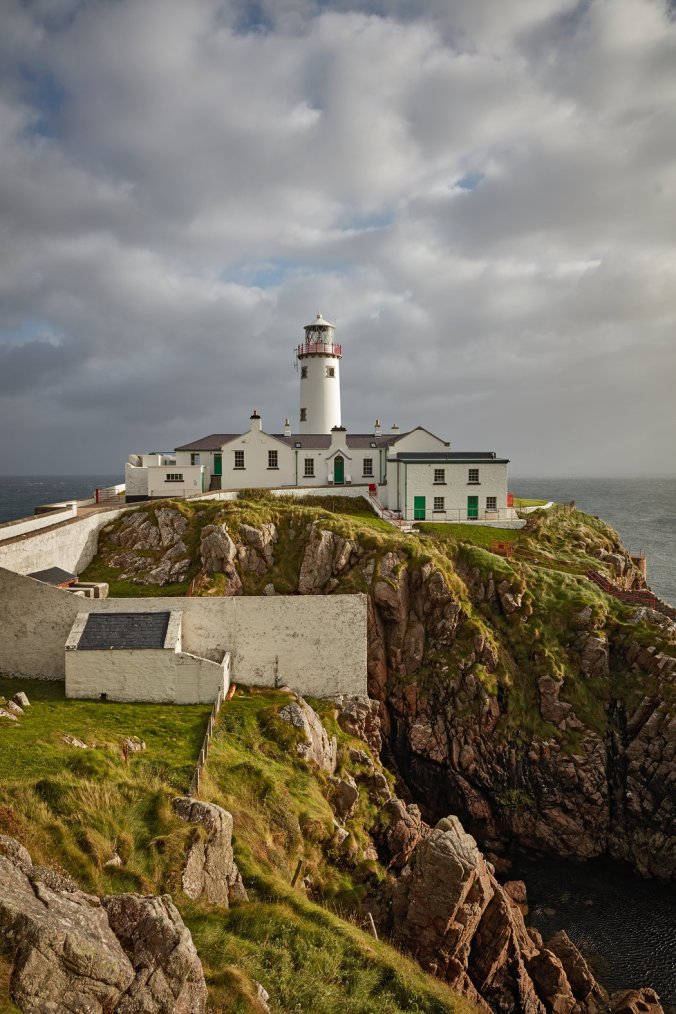
These historic landmarks are finding new life with the help of the Great Lighthouses of Ireland, a tourism trail introduced in 2015 that highlights 12 exceptional examples. At Wicklow Head, 45 minutes south of Dublin, for example, a two-bedroom unit with kitchen is in the lighthouse tower itself (it’s 109 steps up to the kitchen). The tower’s octagonal rooms have arched windows and sweeping views out to the sea. Or you can rent the former keepers’ quarters in Galley Head Lighthouse in County Cork, and you’ll not only have a scenic base for beach walks and dolphin watching, but you will also see the vantage point where lightkeepers would have witnessed the sinking of the Lusitania in 1915.
“What is normal to me is now history,” said Gerald Butler, 66, who worked as a lighthouse keeper in Ireland for 21 years. One of 15 children, Mr. Butler comes from a family of lightkeepers including his father and grandfather. Today, he is the attendant keeper (a maintenance role) at Galley Head, where he spent portions of his youth. “As time passes, people have questions,” Mr. Butler said. “They want to know about growing up in the lighthouse, what we ate, the storms. They want details.”
As a New Yorker married to an Irishman, I travel frequently to Ireland. We have a rule: With every trip to Dublin, we leave the city and visit someplace new. This summer, I dreamed of staying in a lighthouse on each of Ireland’s four coasts. I planned too late, and both Wicklow Head and Galley Head were booked (space in lighthouses is limited, so book early).
Connections to my Irish family normally provide a reason to visit obscure graveyards and quiet country towns not on most guidebook maps, but for this trip, two lighthouses in County Mayo and County Donegal would guide the way. I hoped to find not just beautiful vistas, but people like Mr. Butler, who could bring this facet of modern Irish history to life…
Read the whole article here.
 Organikos