Dance Now

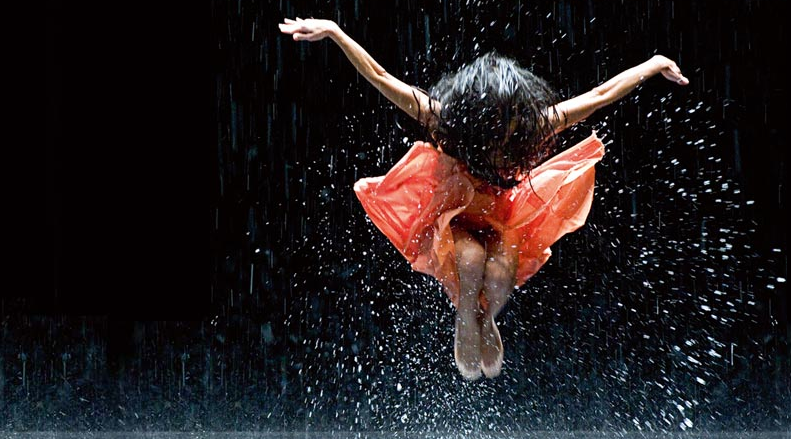
Throughout human history Dance has been a form of culture that is much greater than the sum of its parts.  Wordlessly it has the capacity to tell stories, communicate with deities, perform rites of passage, lead a people to war or join them together.

Whether linked to seasonal activity in villages or the entertainment history of the 20th century, dance is part and parcel of the human condition.

In the cinematic world director Wim Wenders has made a career making films that do similar things.   Continue reading

“Audrey” Redux

Robert Barker/University Photography

Last month I excitedly wrote about the soon-to-bloom Titan arum at Cornell University in a series of posts: here, here and here. I think I even made the promise not to subject our readers to more on the theme. But bear with me. One last post. Really… Continue reading

New Nazca Lines

This slideshow requires JavaScript.

Last year I wrote about the maize mazes carved from growing corn fields that reminded me of the mysterious Nazca Lines in the Peruvian desert. I just discovered Polish artist Jarolslaw Koziara, whose work falls more into the category of land art installation, with carefully crafted plantings to create geoglyphic imagery. Continue reading

Poisson d’Avril

It was unlike me to have missed acknowledging the Vernal Equinox last week but please note that it wasn’t forgotten.  In much of the northern hemisphere spring began sprouting all over the place, sometimes unseasonably early, and the first day of spring was observed in all its glory in Crist’s Holi series.

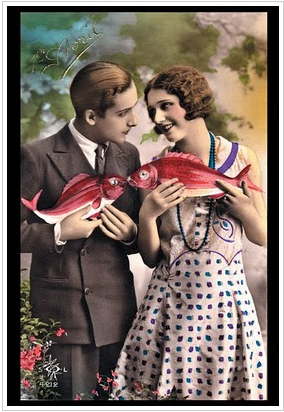
So I’m being careful not to miss April 1st and in the spirit of that celebration am sharing some of artist Ken Brown‘s collection of turn of the century (the 19th to the 20th that is!) French fantasy postcards that celebrate “Poisson d’Avril”, the French equivalent of April 1st or April Fools’ Day. Continue reading

“I Will!”

What began as a WWF Australia project to focus public attention on climate change has turned into an international movement that has become the largest voluntary action ever witnessed, reaching 1.3 billion people across the globe.

In the best possible way the movement has gone viral, expanding exponentially, bringing people together in a celebratory atmosphere that represents the power of social media and a good idea. Continue reading

In the Shadow of Books

For centuries books have held a place of honor in our collective hearts and minds, whether housed in the great libraries of classical civilizations, the libraries of the “Great Houses” of Europe, or the wooden niche in a country home.

Whether related to their historical relevance or their long beloved history, books resonate with the stories they tell, the places they carry us to and the way they make us feel. Continue reading

Thekkady, Through an Old Camera’s Lens

“We have fallen heirs to the most glorious heritage a people ever received, and each one must do his part if we wish to show that the nation is worthy of its good fortune.” –Theodore Roosevelt

We have commented elsewhere on the counterintuitive observation that hunters and fishermen are sometimes, perhaps even often, the best conservationists. (See Seth Inman’s posts from last autumn.) At least in the “North American Wildlife Conservation Model” established in the early 20th century it can be understood that way. Some environmentalists would call the slope between the two concepts a “slippery” one.

Theodore Roosevelt, the 26th President of the United States was a very public example of this. Approximately 230,000,000 acres of wilderness, including deserts, mountains, wetlands and forests were placed into the public trust under his presidency. I wrote about his importance to the early conservation movement in the U.S. in a post called The Natural. At the time I wrote that post I purposefully avoided using the archival photographs that portrayed Roosevelt’s long history of hunting, assuming it wouldn’t fit with our Conservation point of view. Continue reading

Giving Wildlife a Hand

Creativity often breaks the boundaries of “Art” and flows unrestricted into the art of advertising, catching the eye and closing the deal.  Using uncharacteristic restraint in avoiding all the obvious applause puns tugging at my imagination, I will just say “kudos to WWF” for using Guido Daniele’s inspired work to make their important point. Continue reading

Curiouser Than Fiction

Children examine the Automaton during a visit to The Franklin Institute.

About 5 years ago I brought home a curious book called The Invention of Hugo Cabret by Brian Selznick.  Both of my sons had been avid readers and lovers of detailed illustrations since childhood and books like The Eleventh Hour by Graeme Base had been favorites for as long as I could remember, so the elaborate charcoal drawings and almost graphic novel design in this new book were intriguing.

The most fascinating moment came with poking around the history behind the story itself.  Although placed within a work of fiction, both Georges Méliès and automatons are quite real. The Franklin Institute of Science and Technology has one in their collection with a history similar to the one in Selznick’s book:

In November of 1928, a truck pulled up to The Franklin Institute science museum in Philadelphia and unloaded the pieces of an interesting, complex, but totally ruined brass machine. Donated by the estate of John Penn Brock, a wealthy Philadelphian, the machine was studied and the museum began to realize the treasure it had been given. Continue reading

Horticultural Midwifery

Photo: Robert Barker / Cornell University

At risk of being labeled a “horticultural geek” I feel compelled to continue Audrey‘s story.  (Although I surely should stop calling the plant by that name, but once again, I can’t seem to help myself.)

Most plants in cultivation require human pollination in order to remain genetically viable.  The Titan Arum is no acception.  In fact, this plant actually can’t self pollinate because the 450 female flowers that ring the base of the column-like structure (spadix) are receptive days before the the 500 to 1,000 male flowers above them are ready to  shed their pollen. (Even in botany females mature earlier than males!) Continue reading

“Audrey” Is Open!


Last week I posted about an upcoming blessed event at the Kenneth Post Lab Greenhouses at Cornell University.

Due to the 9.5 hour time difference between US Eastern Standard Time and India Standard Time I wasn’t always able to watch the “Greenhouse Cam” while it was filming, but I checked in whenever there was overlap.

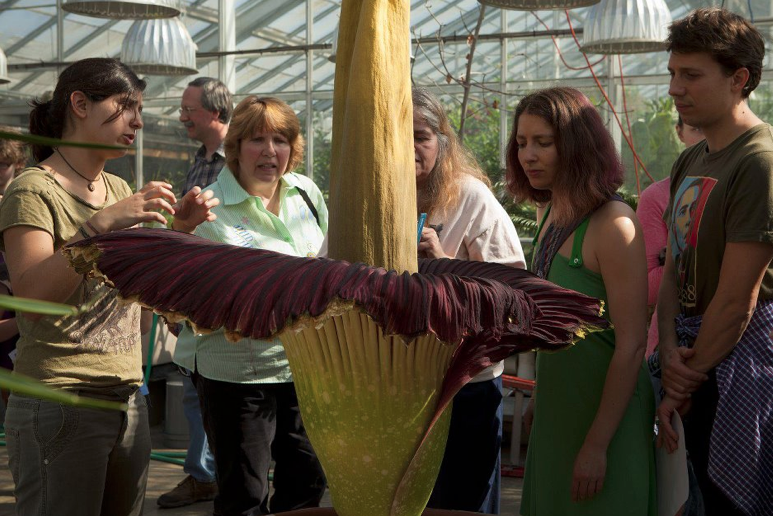
You can tell from the looks on people’s faces, it’s really starting to stink.

What a quote to wake up to!

Continue reading

Thekkady Remembered

This slideshow requires JavaScript.

Our contributor Vijaykumar Thondamon received an extraordinary gift last week: His Highness Marthand Varma of Travancore, who celebrated his 90th birthday March 16th, presented him with his collection of rare photos of Thekkady.  We are honored that Mr. Thondamon is sharing them with us. Continue reading

Meeting in the Middle

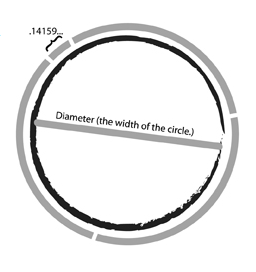
Pi, Greek letter (π), is the symbol for the ratio of the circumference of a circle to its diameter.  The area of a circle is calculated using Pi and the radius of the circle.
In honor of this perfect proportion, math enthusiasts around the world celebrate Pi Day on March 14th. Pi = 3.1415926535…

Multiple ancient civilizations including Egypt, Greece and Iron-Age India have stunning examples of the use of Pi; think “Great Pyramids” and you get the idea. Continue reading

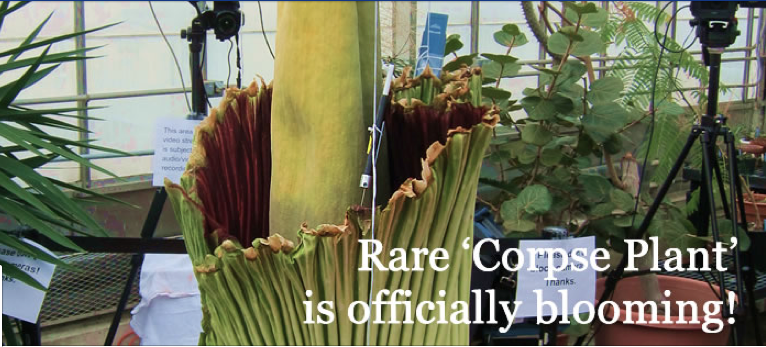
Humongous, Malodorous and Rare


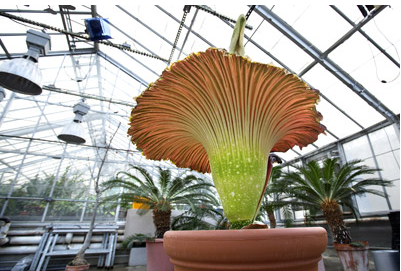
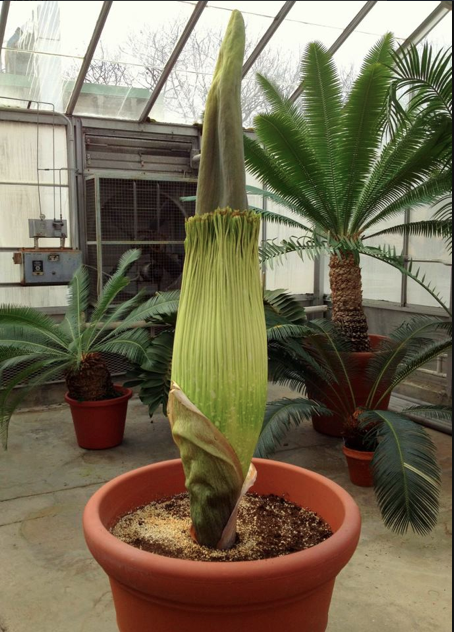
It’s big. It’s green. Its growth is rapid. And even before it actually blooms it easily brings “Audrey”, the plant from The Little Shop of Horrors to mind. An extremely rare titan arum, also called the corpse plant, is expected to bloom at the Kenneth Post Lab Greenhouses at Cornell University this week.

Titan arum, also known as Amorphophallus titanum, is a plant that grows in the wild only in the rainforests of Sumatra and rarely blooms in cultivation. Many universities and botanical gardens have specimens, but there have been approximately only 140 such cultivated blooms in recorded history.   Continue reading

Cottage Industry

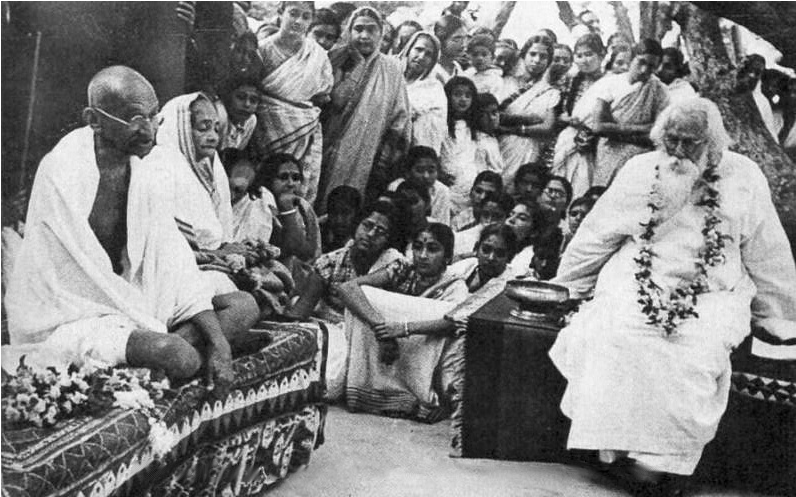
Nobel Laureate Rabindranath Tagore founded Shanti Niketan (meaning an Abode of Peace) laying the foundation for what is today known as Vishva-Bharati University, home of one of the best art colleges in the world. In 1922 Mohandas Karamchand Gandhi visited Santiniketan and met Sushen Mukherjee, a young man inspired by the movement for Indian Independence. The meeting influenced Mukherjee to set up Amar Kutir “my cottage” in 1927, establishing a rudimentary cottage industry for sari printing, handloom, and leather craft production 15 miles away from Santineketan on the banks of the Kopai River near West Bengal. Continue reading

“You-er Than You!”

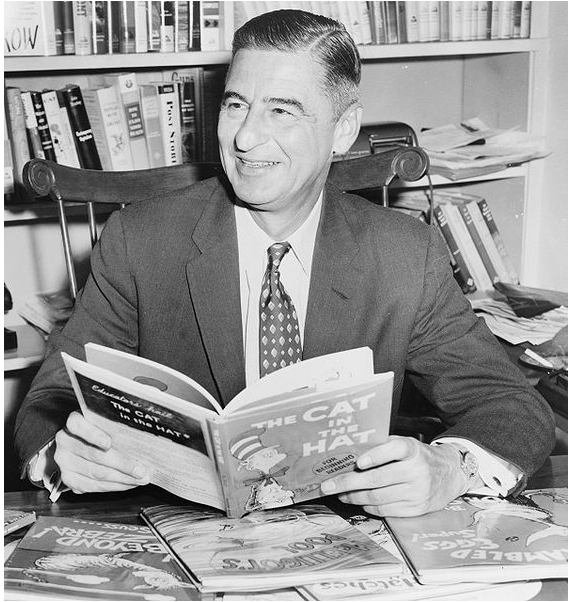
Photo: Library of Congress Prints and Photographs Division

A Dr. Seuss centennial had come upon me a few days ago in an “almost missed it moment”. In many ways the consumate “ad man” who became one of the most beloved children’s book authors never actually changed careers.  Nearly each and every one of his books continues to reach the pinacle of salesmanship, but not for a product. With joy, wit and often irony, they sold the love of reading, imagination and exploration.

Continue reading

A Bird In Hand….

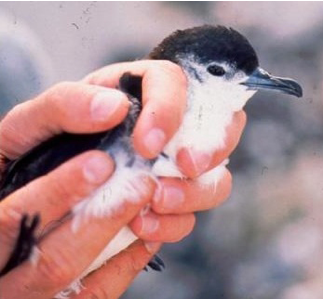
Some fields of scientific study rack up an astounding rate of new species discoveries annually; think entomology as an example.  But ornithologists are currently more likely to be subtracting species than adding them.

But last year Peter Pyle, a sharp eyed scientist at the Institute of Bird Populations noticed something amiss while studying a group of pelagic bird specimens in the Smithsonian’s collection from 1963. Pyle’s theory was strong enough to merit a DNA study and it was discovered that the small bird had been misidentified as a Little Shearwater. The analysis was correct and the bird was given the name Bryan’s Shearwater, Puffinus bryani. Continue reading

Rock, Paper, Scissors

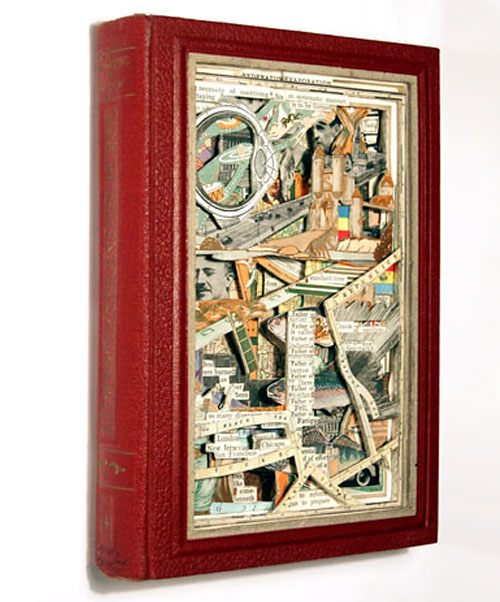
I grew up being taught that books are precious.  Whether due to text, illustration or both, the best of them possess a piece of our living memories, passed down through generations, becoming dog-eared with loving use.  In the age of eBooks and threatened libraries, the intangible qualities of a bound book are becoming even more precious.

But for many of the same factors (growth of internet research and eBooks) as well as due to progress itself, there are specific books that become obsolete almost as soon as they are moved from press to shelves.  Encyclopedias, Road Atlases and Medical Journals are good examples.  So what, then, is to become of those weighty tomes that a generation or two ago held pride of place in every household? Continue reading

The Heart of The Matter

This slideshow requires JavaScript.

Playgrounds are fairly ubiquitous in most parts of the world, be they rusty swings or elaborate constructions. My own sons have clamored up wooden forts and rope bridges in upstate New York where they were born; metal piping in the shape of a plane fuselage in Costa Rica where they grew up; and inventive, child friendly park structures in Paris where we lived as well…not to mention any and all trees, stone walls and Mayan temples they would find in between.

In 2009 Japanese architectural firm Tezuka Architects teamed up with renowned Japanese crochet artist Toshiko Horiuchi MacAdam to create a play space both uniquely charming and innovative, that even the most “Global Citizen” of children would be amazed by. Continue reading

Patagonian Expedition Race

Ready, Set…And the Race is On!

We had the good fortune to work directly with the Patagonian Expedition Race and its founders for several years, both behind the scenes and in the field, and it was an exhilarating experience to say the least.

Blending adventure, conservation, sportsmanship and the ancient concept of finding “the sacred” in nature, the race gives athletes the opportunity to test their ingenuity and endurance while bringing attention to one of the earth’s last wild places. Continue reading