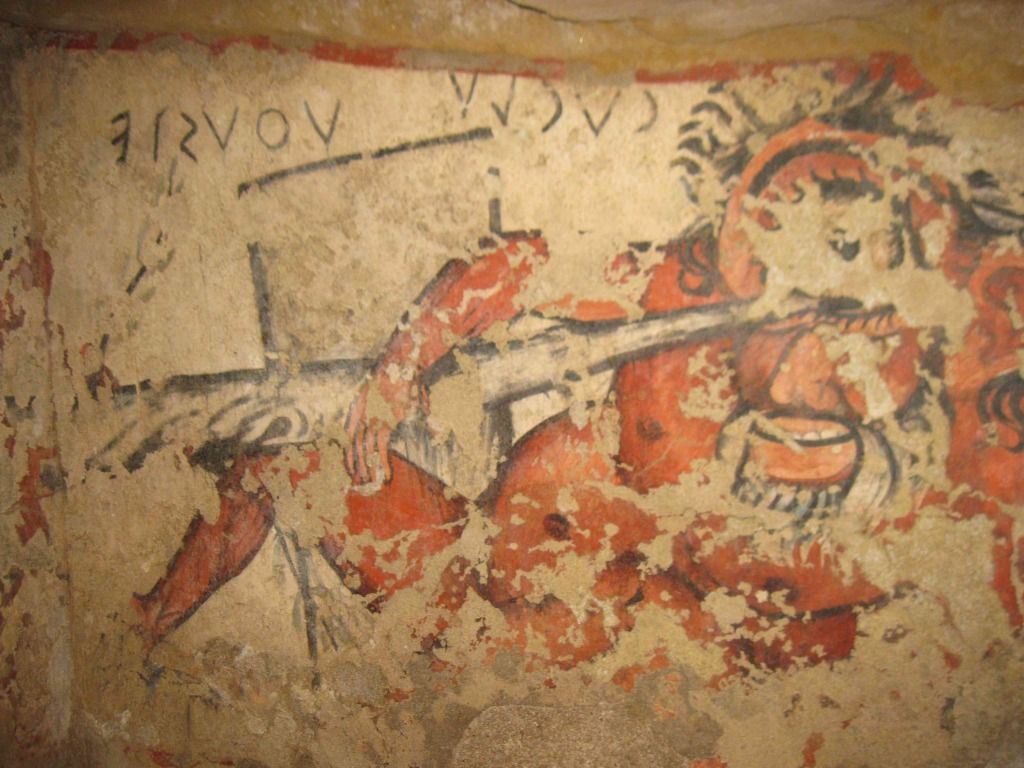
The Etruscans are, for all their great cultural influence on the Romans, a poorly understood people. We know they once dominated northern Italy and much of its western coast and that they interacted extensively with not only the Romans but also many other native Italic tribes in the 1st milennium BC. Some of this contact is reflected linguistically: the modern English word “person,” deriving from Latin persona, entered the Latin language from Etruscan phersu Continue reading
Author: James Zainaldin
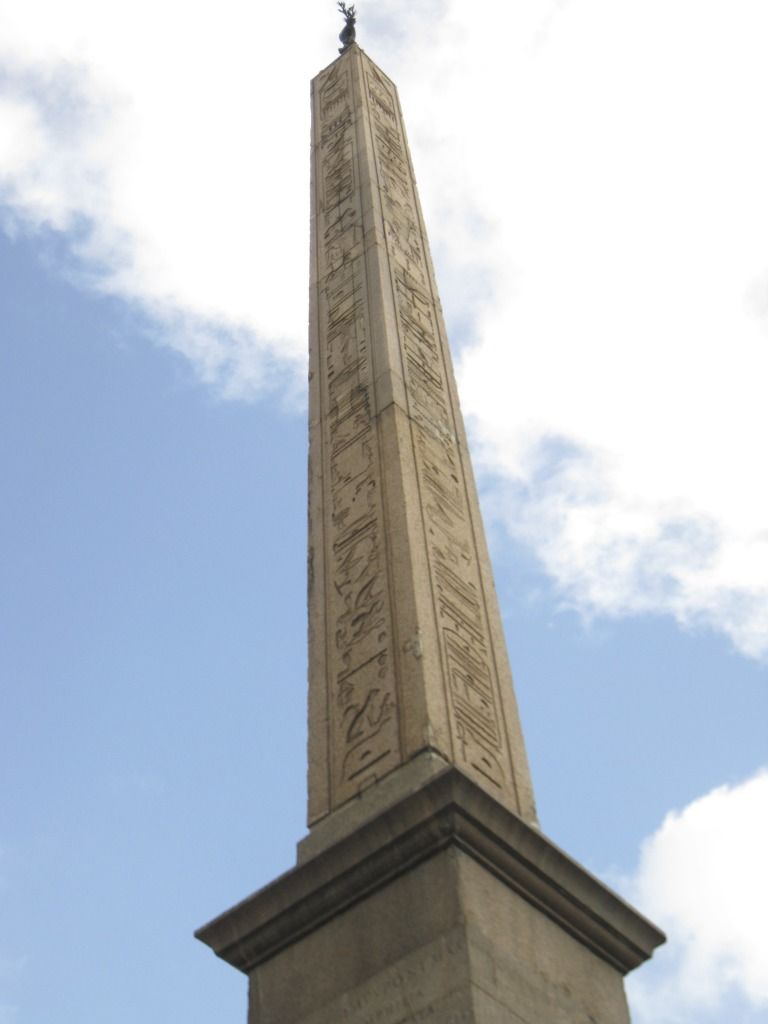
Obelisks in Rome
Rome is renowned for (among many other, er, more important things) its vast “collection” of obelisks. These obelisks, most featuring hieroglyphics running their length, typically came to Rome through conquests in Egypt. Victorious generals and emperors Continue reading
From West to East: A Road Trip Journal (Part 3)
This is the third in a series of posts on a summer trip; see the second.
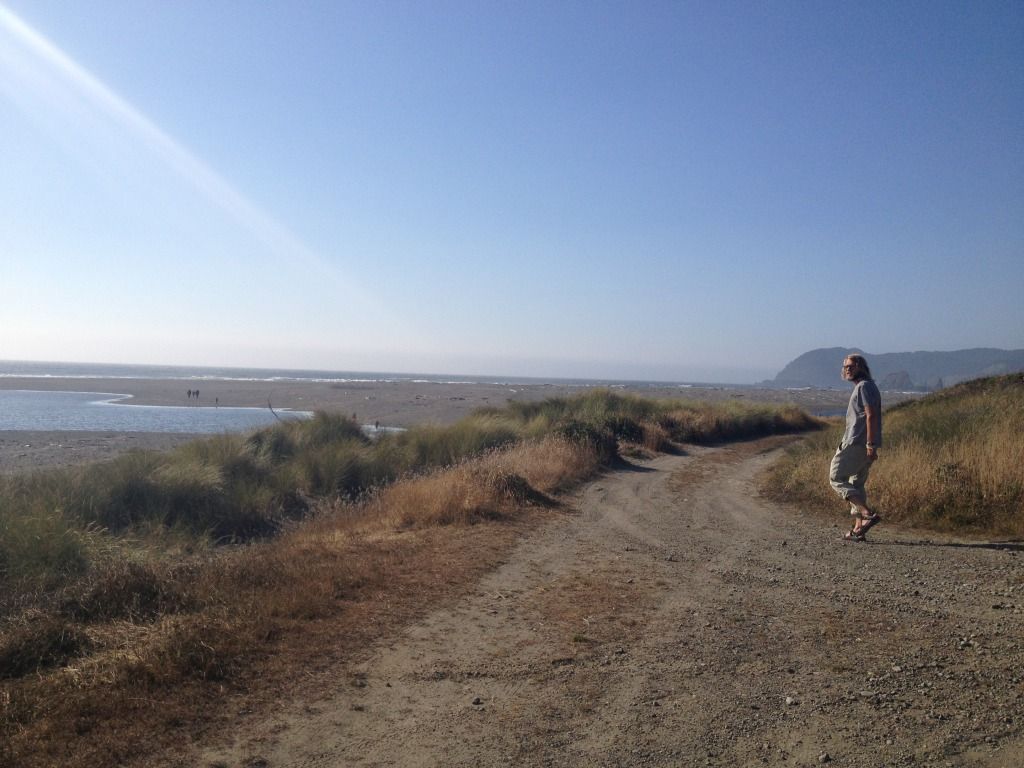
In Fort Bragg, the first thing we did was eat a substantial breakfast, since we had missed supper the night before. We ate at a curious Wizard of Oz themed restaurant called “Eggheads,” complete with a yellow-brick road (of linoleum tile) running through the center of the building. We asked the proprietor what had prompted the theme—had the young Judy Garland frequented the coastal town? Were the pots and pans castoffs of the Tin Man’s suit? As it turns out, the answer was rather more mundane: Eggheads’ bathroom is difficult to find. Those wanting to make the trip must go through the dining area and kitchen, exit into a lot behind the building, and hang a left around a corner before finding the small cottage hiding the commode nestled between a few sheds and next to some old gardening equipment. The circuitous route defeats expectations so soundly that, about thirty years ago, management decided to create a prominent trail for customers. When a dull saffron floor tile was chosen, the yellow brick road was born—and all of the many allusions to the Wizard of Oz which thereafter sprung up on the menu and storefront.
From West to East: A Road Trip Journal (Part 2)
This is the second in a series of posts on a summer trip; see the first here.
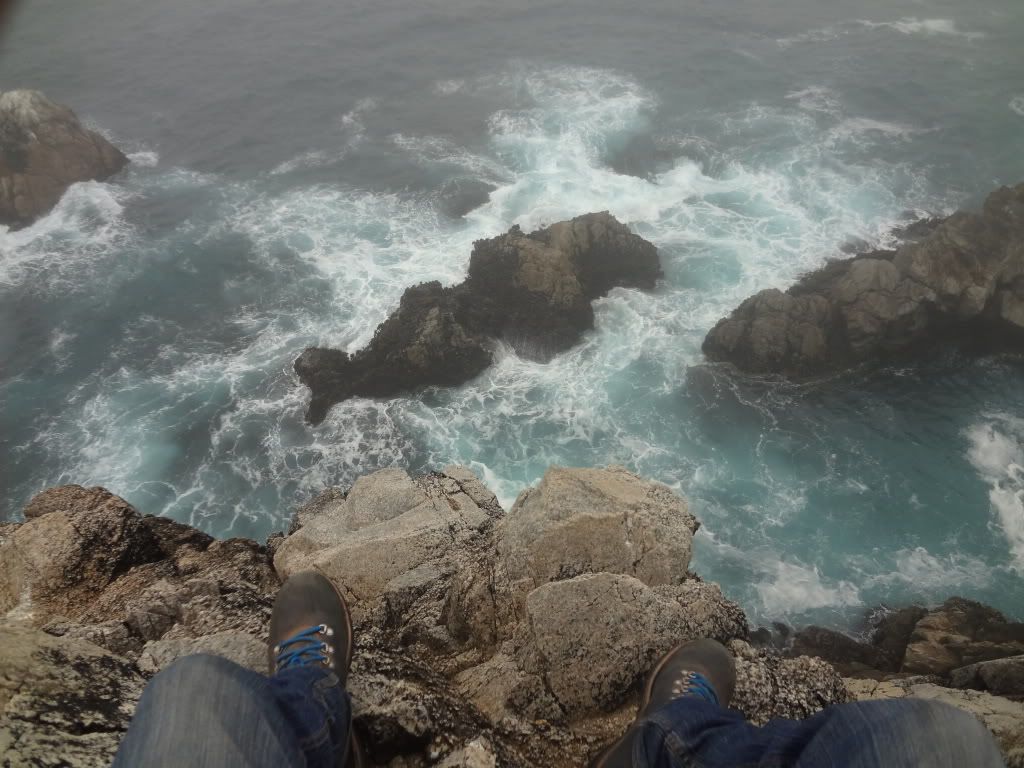
In the afternoon we were off, driving up the west coast without any real plans; we knew we wanted to be in Seattle in four or five days, but that intervening time period was ours to spend as we wished. From a quick glance at the map, we thought that Point Reyes, a national coastline a few hours north of the bay area, Continue reading
From West to East: A Road Trip Journal (Part 1)
This is the first in a series of posts on a summer trip. Sorry it’s not quite summer anymore; things have been busy, but hopefully I’ll get the rest of these out before too long!
A little bit of background: I spent this summer studying ancient Greek language at the University of Berkeley. In late May, a few days before I was scheduled to catch my plane at Hartsfield-Jackson airport for Berkeley, I invited a few of my best friends over to bid them a fond farewell for the summer. Suffice to say, we ended up on the roof at three a.m. discussing how incredible it would be to do a cross-country road trip after my class was over. Now, we had thrown around this possibility dozens of times before, but this time, everything was a bit different. For one, none of us was a kid anymore; Tyler, my next door neighbor, had just graduated from University of Georgia; my brother, Carl, is going into his senior year at Emory University; and Nick, a good friend from high school, and I are both going into our junior years (Emory for me, Haverford for him). Moreover, all of us were itching to get out of our quiet suburbs and see some of the world before the relentless march of years and responsibility would make it impossible for us to take the trip together. Before we knew it, we were taking solemn oaths that we’d be hitting the road in shortly more than two months. Obviously, we did, or I wouldn’t be writing this now.
Bird of the Day: Black-billed Magpie (Yellowstone National Park, WY)

Cherry Blossoms in Spring
One-hundred years ago, the First Lady of the United States of America, Helen Taft,
and the Japanese ambassador’s wife, Viscountess Chinda, planted two Japanese cherry trees in Washington, D.C. The annual commemoration of this act of good will would come to be known as the “National Cherry Blossom Festival.” In this festival, droves of Americans flock to see the riotously beautiful pink and white blossoms of the Yoshino and Kwanzan cherry trees. Officially, the National Cherry Blossom Festival in Washington, D.C. serves to reaffirm the commitment to enduring friendship between United States and Japan: Continue reading
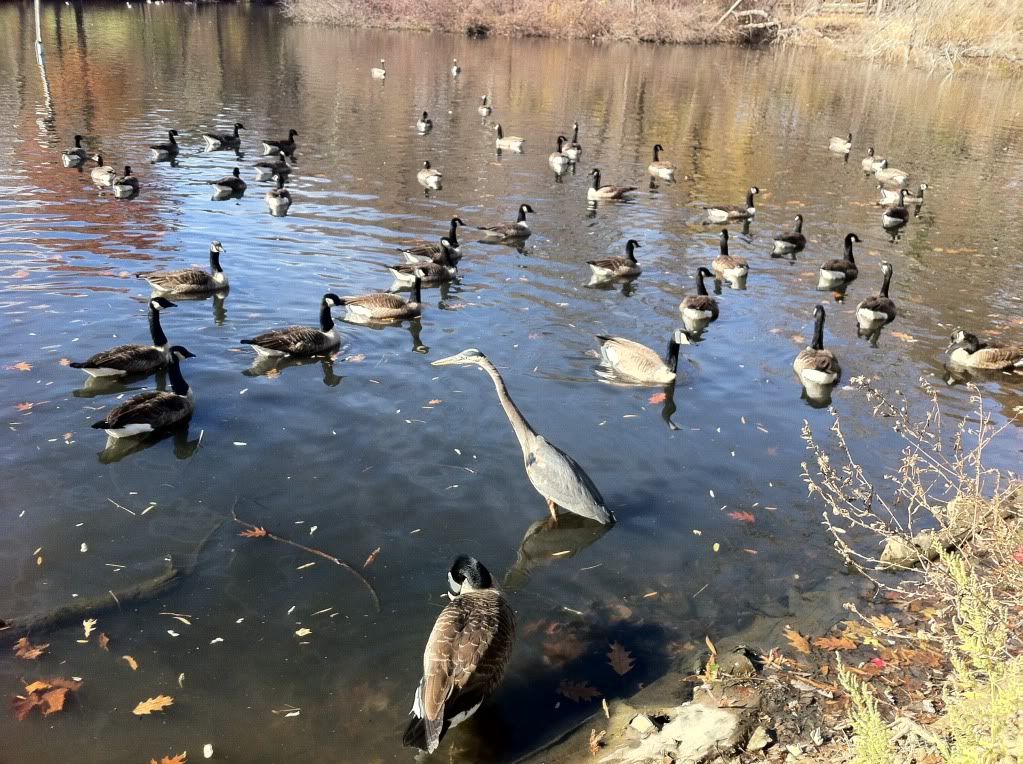
Bird of the Day: Great Blue Heron (Haverford College, Pennsylvania)
Entering the Mythic Imagination
Imagine, for a moment, that you are stalking the primeval jungles Continue reading
The Cyberspace Jungle
Today, w
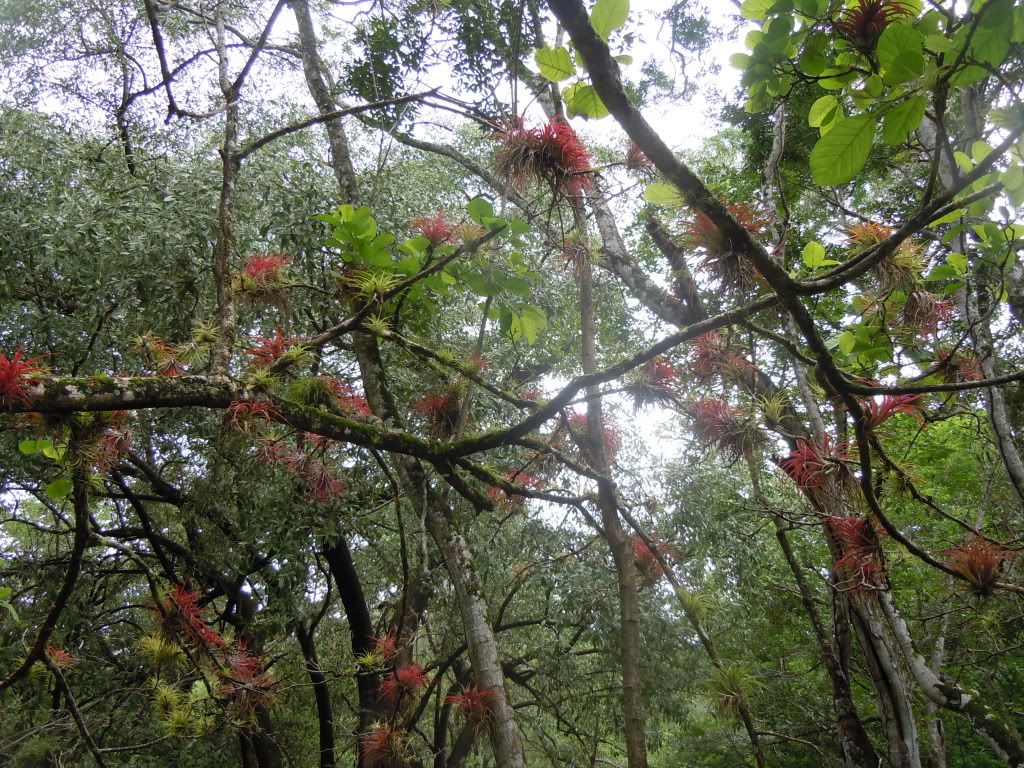
e are bombarded with information. Millions of bits–photos, text, video–stream by us every second we’re on the web. And we’re always on the web. Mobile devices on 3G (and now “4G”) and lightweight laptops able to access nearly ubiquitous WiFi hotspots mean that the modern age is certainly the information age. And the Internet continues to grow riotously; like a tropical rain forest, millions of unique niches exist, but they are inhabited here instead by users and data. And much like a natural ecosystem, the internet is also inextricably interlinked and interdependent: hyperlinks, reference pointers, and social media make the Internet a pseudo-organic entity that has its gaze turned not only outward (towards expansion) but also inward (towards connections). In its own way, the internet is an oddly beautiful thing. The freewheeling, ever-shifting topography of the web means that from second-to-second it’s never quite the same place.
But for all its seductive beauty and facile utility Continue reading
God’s Cow
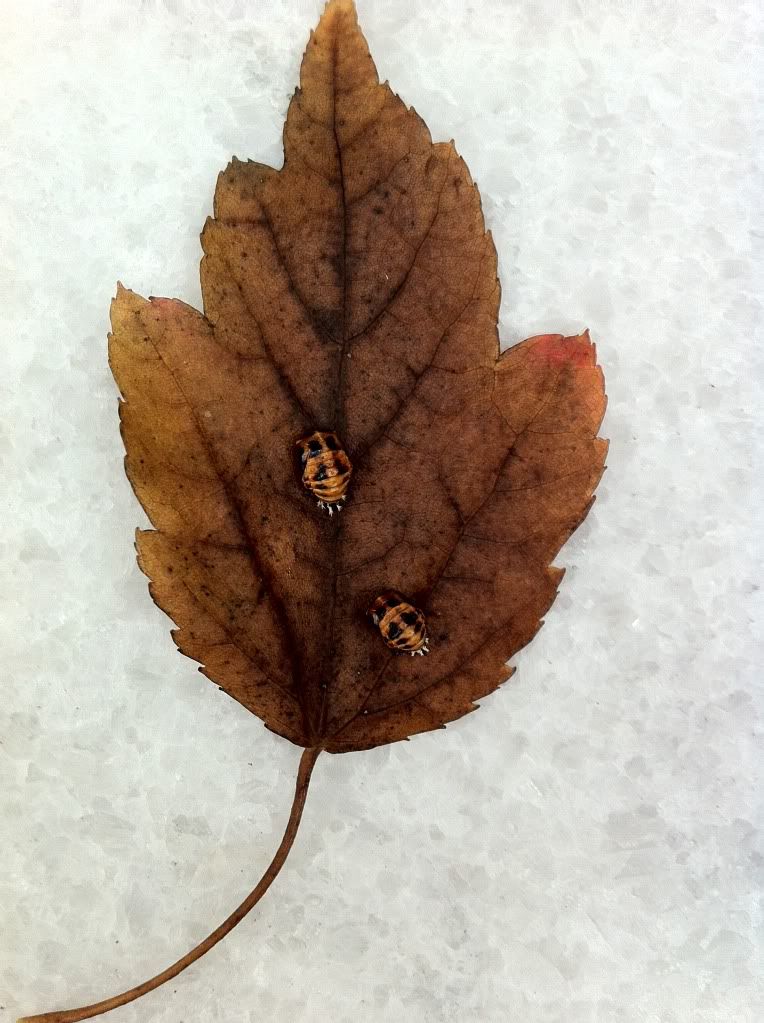
Today I saw something very odd: dozens of ladybugs crawling along the top of a recycling bin. Some were the dark red that we normally associate with ladybugs, while others were a pale orange verging on yellow. Strange looking half-formed ladybugs, seemingly crouched in tight balls, adhered themselves along the surface as well. In the midst of it all swarmed long, fat black bugs with orange spotting along their backs. What was going on here? And what was this panoply of ladybug life occurring on a recycling bin in the middle of a college campus?
When I afterwards looked up ladybugs, I found that I had actually witnessed something pretty cool: the full life cycle of Coccinellidae, known as the ‘ladybug’ in America but the ‘ladybird’ elsewhere in the world. It’s also known as ‘God’s cow,’ the ‘ladyclock,’ or the ‘lady fly.’ There are over five thousand species worldwide, but the name ‘ladybug’ is perhaps most readily synonymous with the image of a small, round red bug with black spots.
The ladybug, as I had seen, has four distinct phases in its life cycle. The life of the ladybug begins in an egg; small clutches hatch after three or four days at which point the larval form of the bug emerges. It may molt three to four times over a period of about twelve days before pupation (i.e., the beetle creates a pupa). Continue reading
Scraping Hell’s Attic
The sulphur-bottom whale is the largest mammal on (or under) the earth’s surface; many speculate that it might be the largest animal ever to have inhabited our terraqueous globe. These immense creatures can typically grow to between eighty and a hundred feet long, with the largest specimens caught suggesting that the whales might exceed one hundred and ten feet in length! The weight of the sulphur-bottom whale is commensurate with its size: they can weigh between one hundred and one hundred and fifty tons. For comparison, the largest elephant ever recorded weighed a mere twelve tons. If the sulphur-bottom whale rolled over in its sleep Continue reading
The Drunken Bumblebee
No, it’s not a new mixed drink.
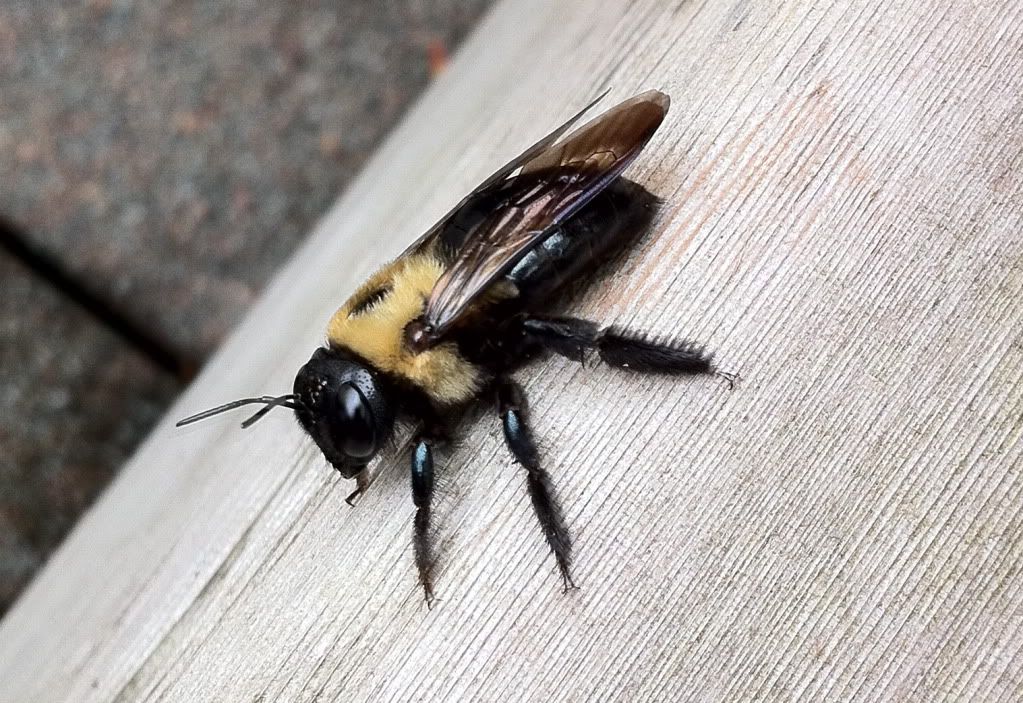
I was sitting on a bench a few days ago when I noticed something interesting Continue reading
Rotam fortunae non timeo!

Rotam fortunae non timeo -- "I do not fear the wheel of fortune!"
“Mortal men travel by different paths, though all are striving to reach one and the same goal… happiness,”[1] or so says Boethius, the great Roman philosopher. I think we can all agree that, no matter what we want to do or how we choose to do it, our ultimate goal is happiness. It is “the good which once obtained leaves nothing more to be desired.”[2] It doesn’t necessarily take a philosopher to realize this, though; approach any random person and he or she will probably confirm that a happy life, is, of necessity, a good one.
But what is happiness? We say we are “happy” when we get an A on a test, win an important sports game, or finish a grueling paper—but what do we mean by it? The joy from these moments, however real at the time, begins to appear ephemeral in retrospect. Think back to the 6th or 7th grade: do you still glow with warmth when you remember getting a 93 on an Earth Sciences test (if you remember at all!)? Continue reading
A Worldly Point of View
Diversity in American universities is on the rise: just a little under a quarter (23%) of Harvard’s undergraduate enrollment consists of international students. At Columbia University, over a quarter (26%) of the university’s enrollment are international students. The story is the same at other top schools around the nation. UCLA, Boston University, Cornell and NYU all boast international student levels at around 15%. Here at Emory, the picture is roughly the same. Most of these international students in American universities hail from Asian countries, but there is plenty of exchange from Europe, Africa, the Middle East, and other parts of the world as well.
At Emory, many international students specifically come from China, India, South Korea, and Japan. Having spoken to these foreign exchange students, it is clear that international admissions to a top-20 American university are incredibly competitive, even more so than they are here. One friend told me that he was the only student from his entire town (a suburb of Calcutta, so quite a lot of competition) to attend a top-30 American school; even with his extremely impressive credentials Continue reading
Live an Example

Lullwater at Emory
Do you respect your friends? Unless you have very strange relationships, I’m guessing you can say that your friends’ ideals and opinions are meaningful to you. If you know that a buddy doesn’t enjoy country music, you’re probably not going to blast Keith Urban when he’s around. If your best friend can’t stand whistling, maybe you’ll refrain from providing your most rousing rendition of the Star Wars theme song. If she’s not so into politics, perhaps that’s not the person you’ll run to and inform of Glenn Beck’s latest revelation.
The point is, what matters to your friends usually matters to you, and vice versa. If you’re mindful of this Continue reading
To Recycle, Compost, or just Trash?
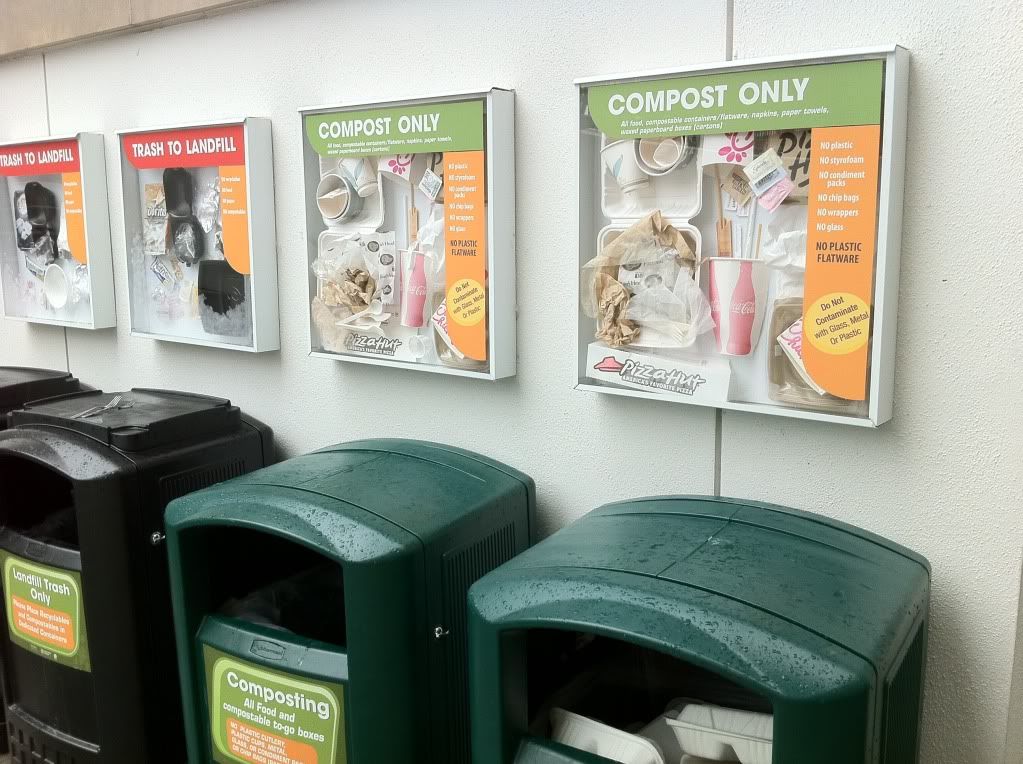
Every student’s visit to the food court in Cox Hall, one of Emory’s largest dining halls, generates quite a bit of trash. Because of the diversity of Cox’s offerings—Chick-Fil-A, Pizza Hut, the Deli, and more—this waste comes in all varieties, too: thin cardboard cartons, Styrofoam boxes, plastic knives and forks, soy sauce and ketchup packets. While sorting these out and recycling them appropriately might only be a matter of taking a few moments to look at the labels, some students feel that they don’t have the time to find out what goes into recycling, composting, or just the trash. College sophomore Daniel F. weighs in:
I like to think that I care about the environment, but there are times when I just can’t sort out what’s what. It gets confusing when you start bringing a lot of these packages together…
Emory, luckily, is making it easier for bewildered students like Daniel to live in a sustainable way. Continue reading
Finding Oneself in a Modern World
This fall, many new faces will be arriving on campus, and many old ones will be returning. But for both groups, the same question will await them. This question has lived on Emory’s campus—all college campuses— for generations. It lurks around Asbury Circle; stalks the stacks after midnight in Woodruff Library; and patters through the fiendishly designed halls of Tarbutton when all of the faculty have gone home. It’s insistent, but patient, always around the next corner, but it never goes away: it is the question of, “what should I do?” Or as it maybe more frequently presents itself, “who should I be?”