 Every day since my arrival at Cardamom County, I’ve either seen or woken up to the sounds of monkeys scurrying across my roof, launching themselves from their tree branches onto my tiled terrace, and looking curiously into my room as if there were giant bananas inside. As it turns out, they can’t really see inside unless the lights are on, so it might have been their own fuzzy reflections they were so intrigued by – the narcissists. Whatever the case may be, something is different in the woods these days, Continue reading
Author: Martin Smith
Culinary Contentment at Cardamom County
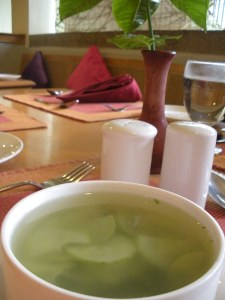 Sometimes, when you experience something so good, you want to share it with the world. This is what’s happened to me as I’ve dined at All Spice, the ethnic fusion restaurant at Cardamom County Resort. As I mentioned in a previous post alluding to the pleasures of growing one’s own herbal ingredients in an urban setting, I’m a huge fan of coriander, also known as cilantro. So when I sat down for dinner at All Spice last night, I ordered the sliced cucumber, lemon and coriander soup knowing I would love the flavor of this dish, which is an original house recipe.
A Brief History of the Houseboat
 Earlier this week I had the pleasure of having lunch aboard one of the houseboats in the Raxa Collective fleet of comfortable crafts: buoyant examples of luxury as defined in a recent post. That is to say that these are unique vessels upon which one’s thirst for experience can be quenched and one’s hunger for life can be satiated… Continue reading
Easy Tips for City Living
As I eagerly prepare to head to Cardomom County in a few days to contribute some of my time and efforts to Raxa Collective on site, I’m packing up my apartment in Paris and thinking of the irony of leaving my little pot of coriander in the window for fields of spices in Kumily. I was growing coriander, basil and parsley – and before that, these lovely flowers my mother got me during her visit several months ago.
Growing my own herbs was a fun way to keep the kitchen an innovative little atelier. Basil was a must for anything remotely Italian, or Thai if I got so daring; parsley was hard to know what to do with at times but got its fair share of dicing in with many miscellaneous creations; and then of course there’s coriander, my preferred name for which is cilantro as I grew up with the herb in its Mexican context of carne asada tacos and guacamole. An absolute favorite flavored flora of mine.
In some countries, the mores of a city-dweller’s everyday life can somehow keep “environmental friendliness” in those darned quotation marks, and make the concept seem as remote as the rainforest. Continue reading
Careful What You Fish For
A recent article in TIME Magazine alerted me to how easy it is for us as consumers to shrug off the warnings of a changing world. I am guilty of it and I have caught myself, and hope that with this change I pledge to make, you might think about it too…
I’m humbled by the cognitive dissonance of knowing how sensitive the planet’s oceans are while hungrily indulging in sushi and fish filets with a comfortable negligence regarding their origins. Food choices like these, the effects of which are typically underestimated as a mere drop in the ocean, are proving to have a bigger ripple effect than we’d like to think. And it’s high time we all thought about the fish on our dish and just how it got there.
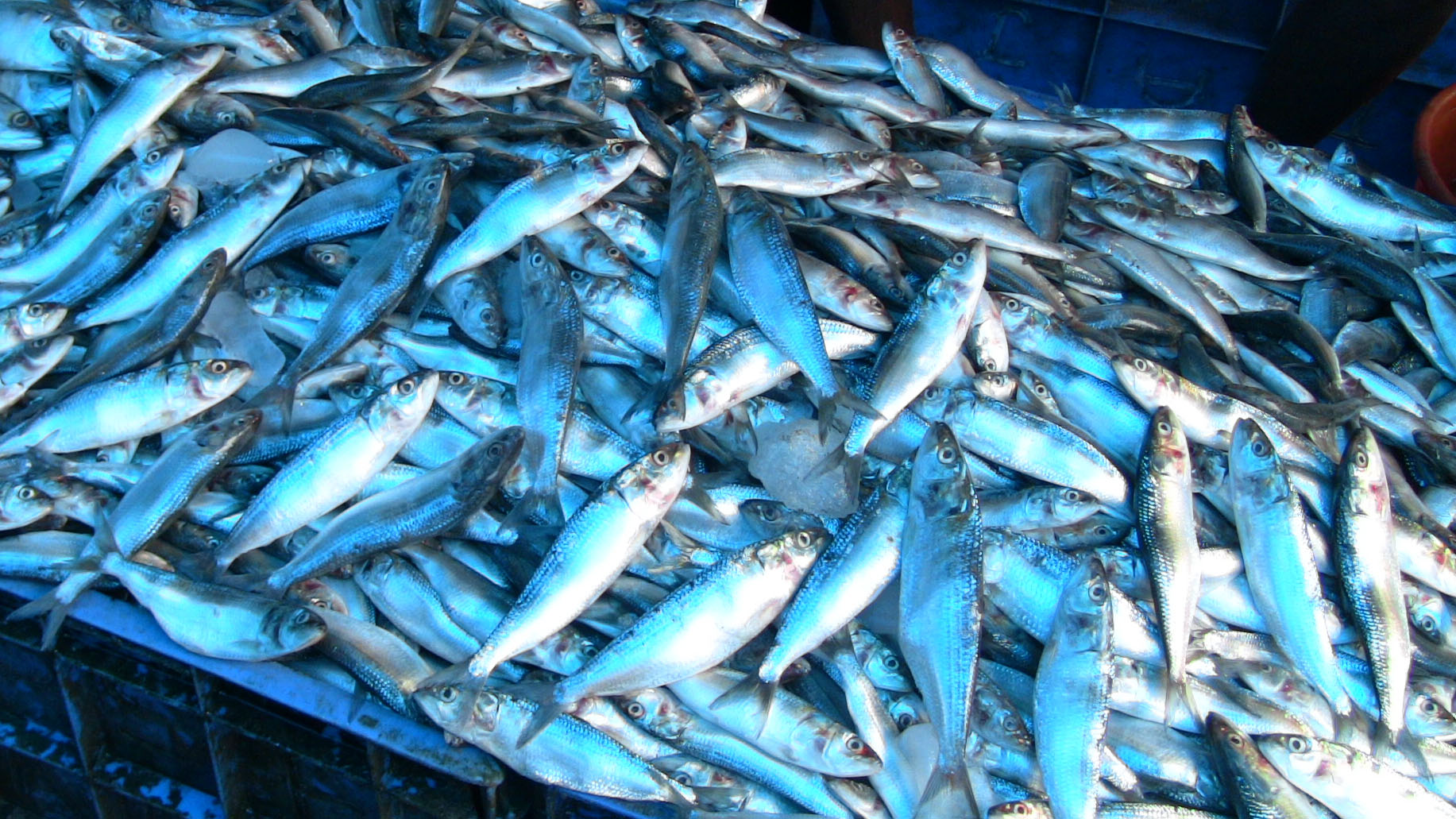
The article in TIME by Bryan Walsh reminded me of a memorable excerpt from a conversation between some friends of mine:
Q: “So what did porcupine taste like? Does it taste like chicken?”
A: “It tastes like… have you ever eaten donkey?”
As hysterical as it was for me at the time, it made me think, is the sometimes absurd variety of the human palate an evolutionary response to a scarcity of resources?
Ok so there’s no imminent extinction of livestock; there is many a happy cow in California, the UK alone consumes nearly 30 million eggs per day, and just look at New Zealand’s sheep-to-people ratio. But what about the animals we still hunt for sustenance? Continue reading
The Transparency Paradox
When I lived in Singapore to do an internship aimed at rolling out the sustainability road-map of a major service solutions and facilities management company, my building neighbored “Singapore’s first eco-mall,” a beacon of consumerism just like any other mall, but with one main difference: an exclamation point punctuating its statement of eco-friendliness.

A true comrade of the Earth according to its interior walls and eco-kiosks, this mall was built with technologies that will likely soon become architectural norms. Its urinals are water-free, its windows let in natural light but with minimal heat, its roof harnesses solar power and rainwater, its lighting uses minimal wattage, it is constructed of environmentally safe materials, the list goes on and on… and is painted all over the walls. You get priority check-out if you bring your own bag and priority parking if your car is a hybrid. But for some it’s not clear whether the priority really lies in being an eco-mall, or in making sure you know it’s an eco-mall.
One of the challenges that experts and champions in the field of sustainability and corporate citizenship face Continue reading
 Organikos