A couple of days ago, I hopped on a motorcycle (my first in 21 years!) helmed by Saleem, and headed across the border of Kerala into Tamil Nadu. I hadn’t realized until this trip just how proximate the neighboring state was, and that I had actually walked into it several times without realizing I had done so.
Saleem had plans to take me through the measure of forest that extends beyond Kerala to the penstock pipes that carry water from the Periyar River down to Tamil Nadu and a hydroelectric plant. These pipes are an attraction unto themselves, and looking over the slope down which they run provides a scenic view of the lush farmland of this TN valley.
At that time, I didn’t know– and Saleem only hinted at– how fraught with political tension the very spot we were standing is (and has been) to the Tamilians and Keralans. The provenance of this conflict is a century-old treaty between the Princely State of Travancore (which is now Kerala) and the Secretary of State for India, representing what is now Tamil Nadu. Essentially, this treaty gave to Tamil Nadu, an otherwise arid area, the right to use water from the Periyar River for irrigation– for 999 years. This agreement, for all intents and purposes, created the Tamil Nadu you see in the picture above. Continue reading →
Early yesterday morning, Gourvjit and I met Saleem and Deepthi, a graphic designer who was collecting information about wildlife in the Periyar, for a trek into the forest. Because Gourvjit and I had recently been with Amie and Milo on a path typically followed from the boat landing–which was where we were meeting our guide this morning–to avoid touring the same land we asked the guide to lead us on a different route. He told us there was one which might yield some interesting wildlife sightings, but that the terrain would be a bit more difficult. We took the challenge, of course.
What our guide had neglected to tell us then, but which we soon realized, was that the route he had planned for us to take wasn’t really a ‘route’ at all. That is to say, to make our way we had to cut through 7 ft tall elephant grass and other underbrush, and we followed no well-worn groove in the dirt, or footpath. But in this manner we carved our way up a hillside, conquering some slippery rocks under foot, to a clearing, from which we could see a broad landscape of savannah hills and waterways.
Yet on the way down from the clearing these minor travails were justified as, after tramping through another patch of thick grass, our guide told us to be still while he pointed to what looked like a lump of tree–but with eyes. Deepthi whispered to me that we were seeing a Sri Lankan (or Ceylon) Frogmouth, a nocturnal bird native to the Western Ghats, whose skill at camouflage makes you about as likely to spot it as one of the Periyar’s 50 tigers. I can say very honestly that I have never seen a bird I was so taken with, with its wide-set and perfectly round eyes, and its blocky, brown, and perfectly rigid form. Because the Frogmouth hides in the daytime by keeping still, we were able to get unusually close to it for a good while before it was threatened and flew off to a tree with thicker foliage.
It was a really unique experience to see this bird, and one I’ll not soon forget. Luckily, Deepthi was able to capture some great shots of the bird. Check them out!
In my last post, I wrote about and linked to some writing about the Forest Rights Act of 2006, legislation which gives added to protection to tribal communities with a traditional claim on protected and preserved land in India. I ended by speculating about the difference between policies and practices regarding human-animal cohabitation at other wildlife sanctuaries and the one where I’m staying, which is in the Periyar Forest.
Well, I’ve spent the past couple days learning firsthand about the tribal community in around Kumily and Thekkady, and I can now with confidence confirm that the tribal heritage development and preservation initiatives in this area are indeed succeeding, and perhaps to a greater degree than at other parks. ‘Success’ is here defined as a community gradually finding sources of income that do not require the extraction of resources from the preserved environment.
To this end, in the Periyar there are four Community Development Committees, as well as numerous agencies designed to regulate and control interactions between the tribal community and the forest, and the tribal community and the market. I guess in the past tribal community members had been treated unfairly by buyers of their agricultural product (which is mostly pepper). Part of the CDCs’ job is to ensure that farmers are made aware of fair market prices and meet only with honest middlemen.
I met with the chairman of one of the CDCs and he told me about the economic and political structure of these relationships. He also told me that, at least within the Mannan community, more young peope are going on to professional schools and receiving advaced degrees, and that close to 50% of the tribal population now makes its primary income from outside the forest.
While these may be informal indicators of change and improvement as the Forestry Dept. defines it, they do point to developments in Kumily and India in general that it seems almost like you watch happening before your eyes on the ground.
I’m at the experience desk at Cardamom County, waiting for my first set of afternoon check-ins as a trainee. While waiting, I found some interestingly related articles about the Forest Rights Act, which is a piece of legislation passed in India in 2006. For all intents and purposes, the FRA allows tribal communities to petition the government for rights to lands they’ve historically dwelt on. The controversy surrounding this legislation is based on questions of anthropogenic cohabitation, deforestation, and the honesty with which the government handles petitions.
Here are a couple articles from India Together addressing certain of these issues.
“Unable to bear the hardships of leading a dignified life living cheek by jowl with wildlife, a large percentage of tribes living in forest areas crave for relocation, provided of course they get livelihood options, and are able to retain their cultural and tribal identity. Yet, anthropologists contend that tribes have been coexisting peacefully for thousands of years in wildlife reserves while the concept of wildlife and biodiversity conservation is nascent. In line with this, they say that relocation of the indigenous people will rob them of their dignity.”
“…the FRA says is that the development projects have to be appropriate; they have to be ecologically right, culturally sensitive and they should benefit people. The kind of projects which are coming up are mindlessly extracting water and forest resources on which people depend; these are not really ‘development’ projects. And if the FRA is coming in the way of such projects then it’s a good stumbling block to have.”
Of course, the Periyar Tiger Reserve (where I happen to be living) stands as a sort of counter-example to these more pessimistic perspectives on the FRA. Here’s a fairly old article (from 2007) about local, former poachers patrolling the park at night, protecting the wildlife from unauthorized exploiters.
I’m interested to find out if these policies still exist at Periyar. I’ll let you know what I find out.
Since I arrived in Bangalore airport on June 3, I’ve heard about Baba Ramdev and his highly publicized, nine-day fast. What I learned today was that, while Ramdev was being treated for weakness due to his hunger strike, another, less-publicized hunger striker, Swami Nigamananda, was being treated in the same hospital. Nigamananda had been fasting for nearly four months (114 days!) to protest illegal pollution in the River Ganga, a holy site for practicing Hindus and also a vital source of water for nearly 400 million Indians. He died this morning, the last days of his strike overshadowed by Ramdev’s.
Before I left the U.S., many friends and family members had told me emphatically, don’t drink the water! When I would ask why, they replied as if it was common sense: well, it’s dirty. Some had apocryphal stories about some friend of theirs who had gotten sick after drinking from a tap in India, and I typically left it at that. But Nigamananda’s death raised the question again in my mind: why is water in India dirty? Is this just some immutable fact, some geological curiosity, or is it rather a human-created problem worth addressing?
These questions aren’t easily answered, just as any question posed about a nation as diverse and large as India is not. There are as many reasons why some water is dirty and some is clean, and investment in hi-tech treatment facilities isn’t always the difference (though it’s a start). I’m only recently wading into the dense information surrounding Indian water policy, the role of industrial polluters along India’s rivers in dirtying the water, and what is being thought of to clean up the situation.
Because let’s not forget: if clean tap water can’t be had, besides boiling all water, the alternative for the consumer is…bottled water. In the States, more and more people are coming to an awareness of the destructiveness of bottled water, but in most areas of the U.S. clean tap is readily available and people have a simple choice to make in how they get it. In India, this choice is not so simple.
The availability of clean water is a pressing environmental, health, and national security problem for the resident of India. But it’s also a problem for the traveller. As the number of empty bottles of water in my room mounts, and as the monsoons continue to dump rain on me all day, I have to think: am I doing everything I can to combat this problem? As I increase the amount of boiled water I drink, I also am inclined to think more broadly. I’ll let you know what I come up with as I investigate the problem further.
In the mean time, here’s a video (by the same women who did ‘The Story of Stuff,’ which I highly recommend, though I sometimes can’t stand her tone) about bottled water v. tap water, with an emphasis on the U.S. India makes a guest appearance about half-way through, though in an unexpected way.
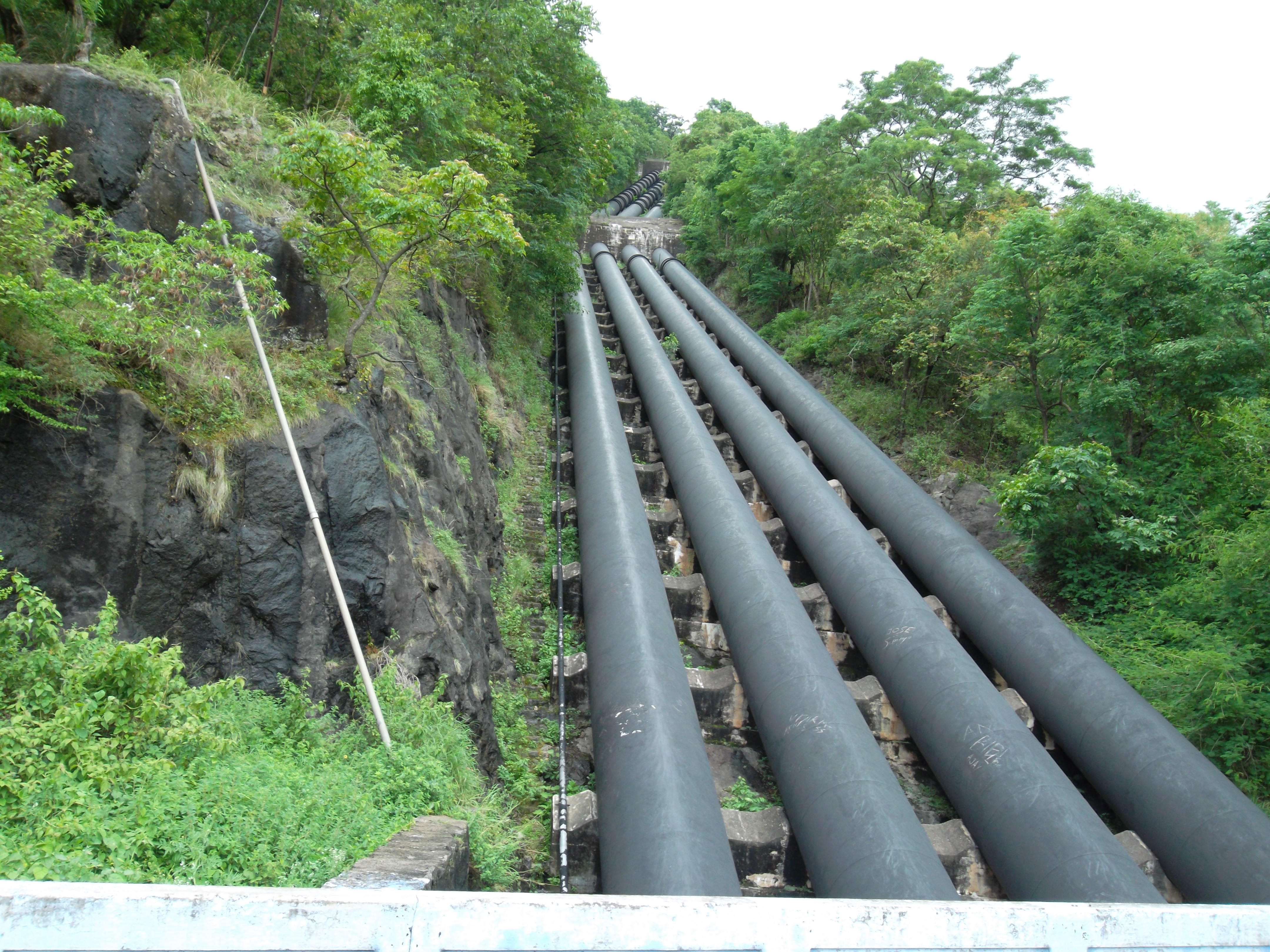 These pipes are an attraction unto themselves, and looking over the slope down which they run provides a scenic view of the lush farmland of this TN valley.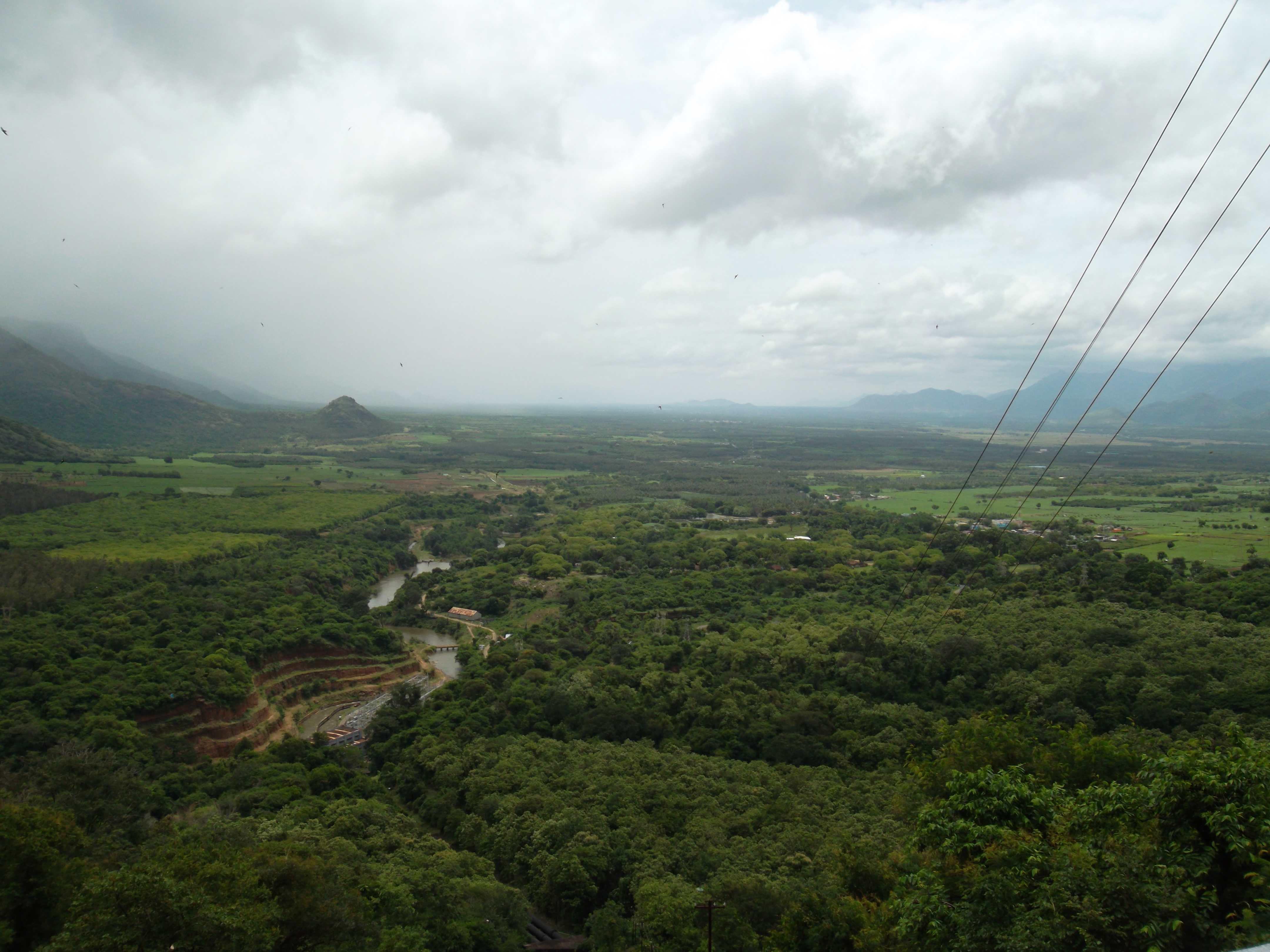


 Organikos