
Tacacori, Costa Rica
Tacacori, Costa Rica
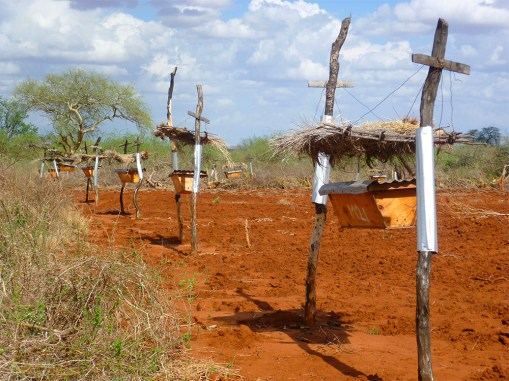
Hanging beehives create a natural deterrent fence around crops in Kenya. Via ThisIsColossal
In Africa and India, elephants can be huge–literally–agricultural pests. Stomping casually through plantations, plowing over fences and crushing or devouring crops, these nearly unstoppable giants are often shot by farmers not for any ivory-related avarice, but rather out of a desire to protect their livelihood that lives in the form of fruits and vegetables.
A more pacific method of keeping elephants out of agricultural areas that I have seen in southern India is deep and wide trenches surrounding the plantation, which elephants are loath to cross since they are likely to get stuck. Of course, these moats are understandably impossible to replicate everywhere, and biologist Lucy King has been studying the possibility of creating another sort of fence since 2006.
As you can see from the photo above, Dr. King’s idea was Continue reading
For the first two installments of this video series, please click here and here.
With footage filmed between late October and early December of this year, the compilation video below features twelve different families of birds, not including the domesticated chickens we have as egg-suppliers on property.
First, a Rufous-tailed Hummingbird scans its territory for trespassers; next, a female Yellow-throated Euphonia eats some tiny fruit from a local tree, and a male of the same species sings his bubbly song, which includes a mimicked phrase from the Rufous-breasted Wren toward the Continue reading
Over the last month or so, I’ve been recording videos of animal behavior at Xandari, and I finally have enough to share a small compilation of insects doing their thing on property. Sometime during the next week, I’ll also upload a video of new bird behavior observed here.
In the video above, you’ll see a small colony of leaf-cutter ants Continue reading

Tacacori, Costa Rica
Tacacori, Costa Rica

Ripe and ripening Caturra coffee at Xandari Resort, Costa Rica.
We have a strong connection with coffee here at Raxa Collective, especially given the recent developments in coffee growing at Xandari Resort in Costa Rica over the last year. With the COP21 climate change summit in Paris happening this week and the next, there’s been an announcement by Costa Rica’s Ministry of the Environment (MINAE) that 25,000 more hectares of coffee plantation in the country will be converted to carbon-efficient, National Appropriate Mitigation Action farms, funded in part by the UK and Germany. Lindsay Fendt reports for the Tico Times:
Costa Rica began its coffee NAMA pilot program in 2013 with 800 small producers. The donated money will allow Costa Rica to expand the program to more than 6,000 family-owned farms. By 2023, the country plans to have implemented the NAMA best practices in all of its coffee farms.
The pilot farms reforested unused areas of farmland, reduced their dependence on chemical fertilizers and employed other innovations on a farm-by-farm basis. The strategies already have been proven effective. Coopedota, located in the Los Santos region southeast of San José, became the world’s first carbon neutral coffee producer in 2011 by utilizing many of the NAMA recommendations. Along with improving efficiency, the coffee cooperative burns coffee bean byproducts to produce its own energy. The cooperative’s members say in addition to helping the environment, the changes have saved them more than $200,000 a year in costs.

Tacacori, Costa Rica
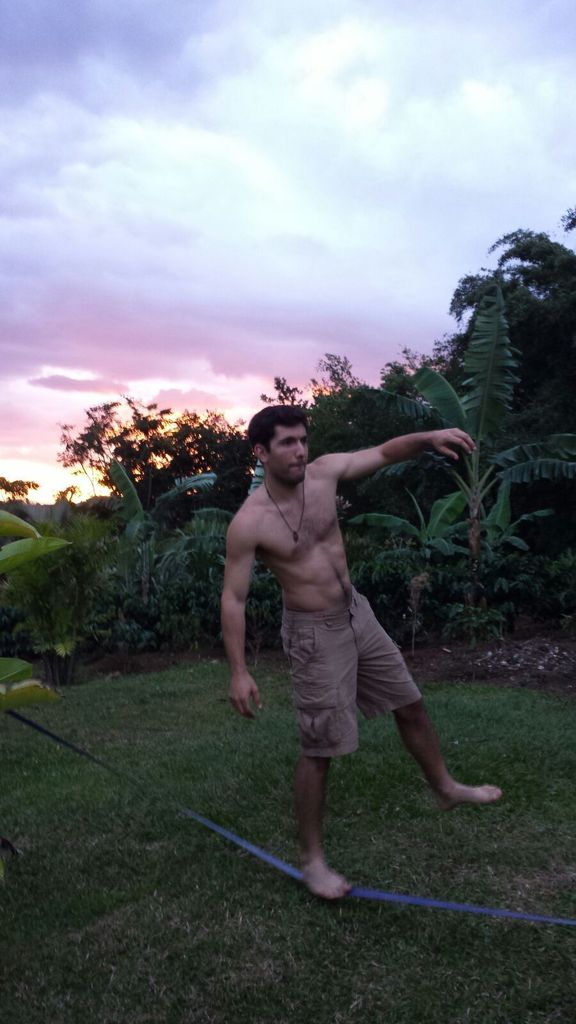
Slacklining at the west farm at Xandari. Photo by Jocelyn Toll.
A little over a year ago, James wrote about slacklining while here at Xandari, since we were both practicing the recreational activity a few times a week. Back in the day, we had to search far and wide for appropriate trees on which to anchor our line, finally settling for orange trees in the orchard that we rotated between. Since then, we have two special spots designed for slacklining at Xandari, one by the west pool, where the sunsets make for a great view (see left), and another down below the studio, where the line can be set up at a longer distance and the posts are strong enough to take some serious bouncing.
Our studio slackline, however, is nowhere near as long or strong as that which Théo Sanson walked in Utah last week. As you can see in the video below, he traversed a “highline” that must have been a thousand feet above the ground, anchored between two landmarks in the desert of Castle Valley. The music you hear in the background of the video happens to be one of my favorite soundtrack pieces, drawn from Ennio Morricone’s work for the western film The Good, the Bad, and the Ugly.

Tacacori, Costa Rica
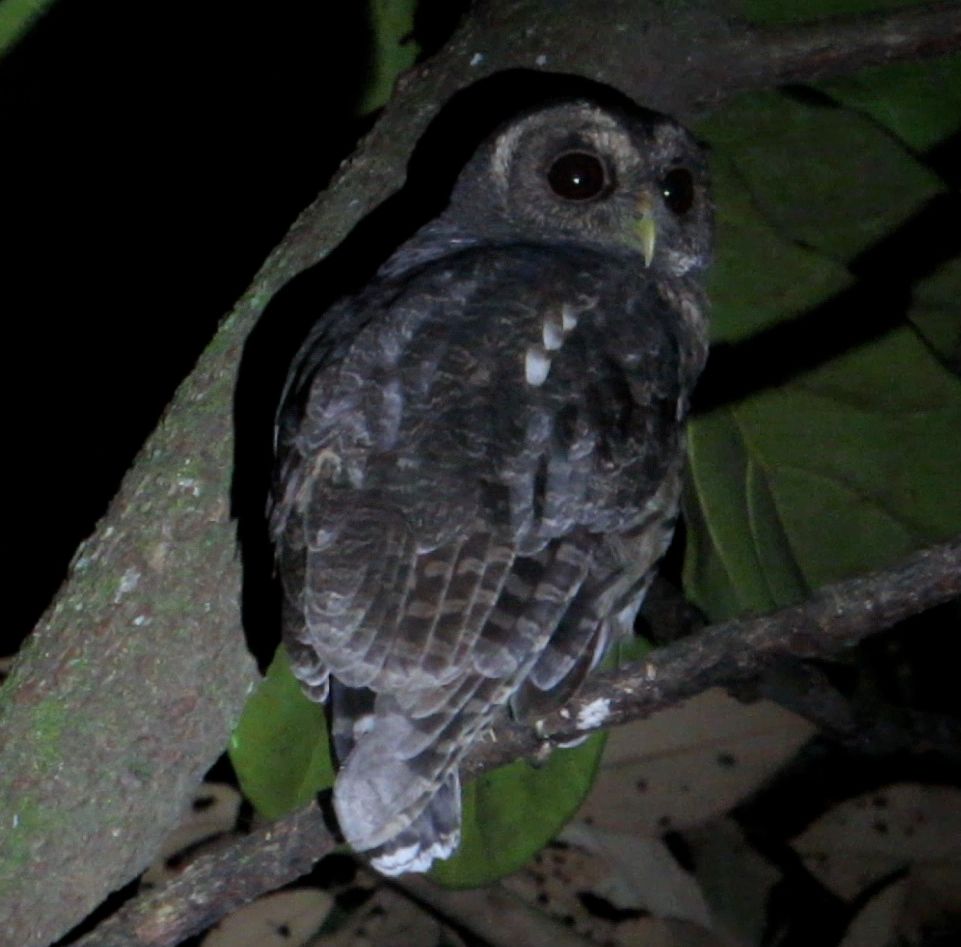
A Mottled Owl seen on Halloween, 2015
This past month at Xandari was a good one for the resort’s eBird hotspot, since it saw the beginning of the migratory bird season in earnest (some species start migrating from North America in September or even late August). Not only were 91 distinct species seen throughout the month, but 15 of these species were newly observed on property (including three new representatives each of both raptors and warblers; four new swallows; and even a new hummingbird that was probably fleeing the rain-induced cooler temperatures at its higher elevation habitat). These fresh observations have bumped the hotspot’s species count up to 137, putting Xandari in a tie for 54th place by species count within the entire province of Alajuela, which as the third-largest province of Costa Rica includes some of the stronger birding sites in the country, like Arenal and Poás volcanoes and Caño Negro National Park (not to mention all the private reserves––like Xandari’s––that get lots of bird-watchers every year).
Last night, fittingly for Halloween, Jocelyn and I saw a Mottled Owl (not the first time at Xandari, but the first time filmed that I know of):

Tacacori, Costa Rica

female – Tacacori, Costa Rica

Screenshot from a spot by the French news channel M6
Last week Konbini, the online magazine dedicated to popular culture, featured a short story (the nonfiction kind) on the French city of Grenoble, so-called capital of the French Alps. In a collaboration between the city council and the French publishing company Short Édition, certain public spaces that frequently feature waiting time–libraries, the post office, the tourist center–have been equipped with short story dispensers.
After pressing a button to select between one-, three-, and five-minute stories, a long strip of paper is printed from the kiosk and the user can enjoy a piece of short fiction from Continue reading
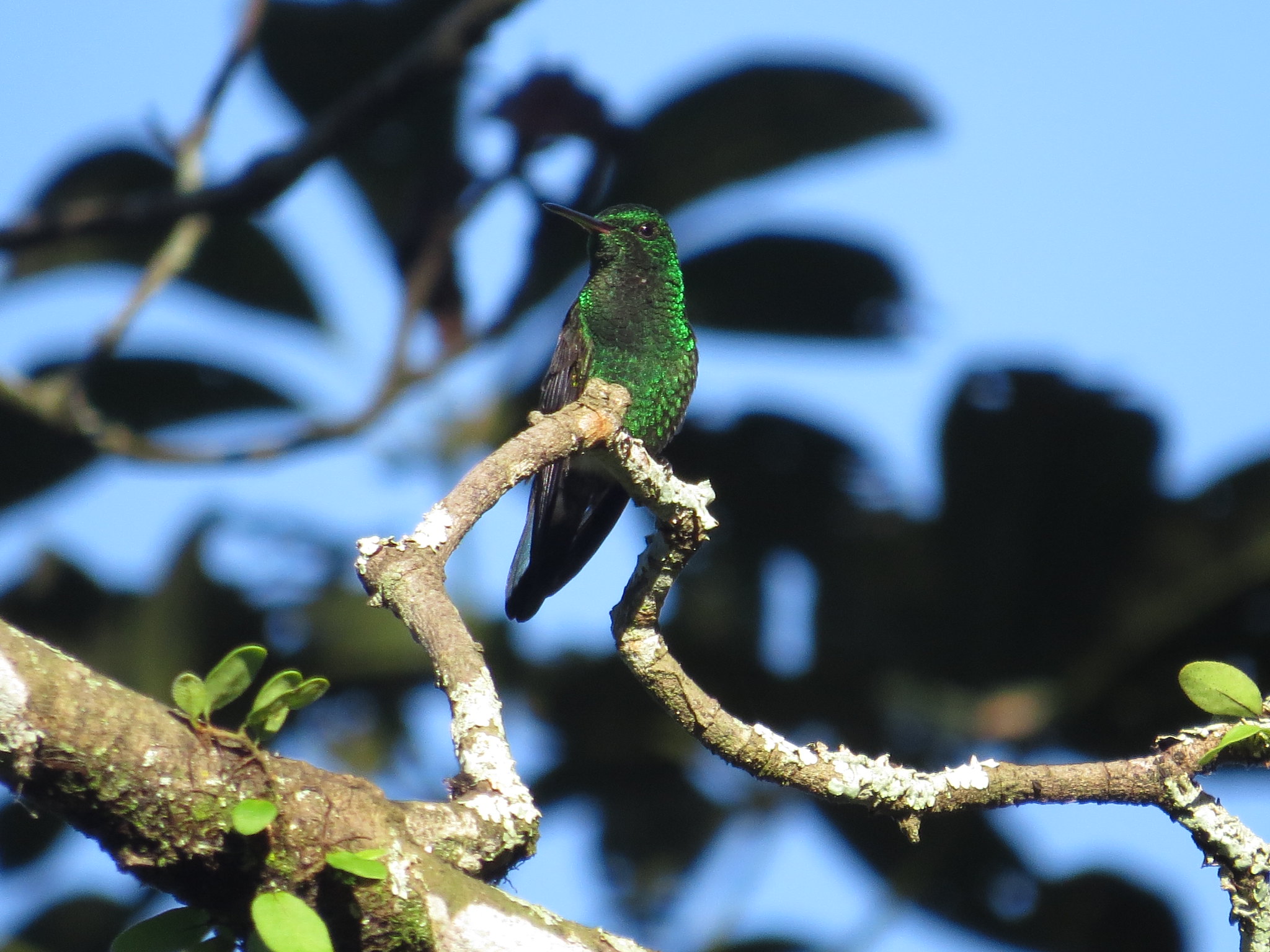
Earlier this week, while out on my morning bird-watching walk, I was lucky enough to watch this female Canivet’s Emerald (a small hummingbird that you don’t see every day here) stay at the same perch for over a minute.
This July we shared the first news we had of the proposed western wildlife conservation plan as it related to the sagebrush habitat, and yesterday Sally Jewell, the Secretary of the Interior, announced that the US Fish and Wildlife Service has determined that the charismatic bird species will not be placed on the endangered species list due to the collaborative efforts in place to protect “the great empty.”
Here’s what John Fitzpatrick, director of the Cornell Lab of Ornithology, had to say on the matter:
This decision by USFWS is an important milestone in the history of the Endangered Species Act. It shows how the Act can be effective, not only when it calls for emergency regulations to save a species, but also as an incentive for governments, conservation groups, and private landowners to collaborate towards conserving a species before its populations become critically endangered. To all of those in the West who are working together, amidst so much controversy, to preempt a listing through proactive conservation, we say, ‘Great progress so far–please stay the course.’

James and I first heard a Laughing Falcon from Xandari property on the 6th of July last year, according to our eBird records. Since then I’ve heard the raucous call plenty of times but never actually got a glimpse of the bird until last month, when one individual happened to perch in the same area of the orchards two mornings in a row.
The Laughing Falcon primarily feeds on snakes, including venomous species, as well Continue reading

Last month, I was using our most unique room at Xandari, Villa 20, as an office for a while. I say most unique — despite the fact that we have a Star Suite (Villa 27) — because 20 is constructed in a completely different way from all of Xandari’s other buildings. It is a round structure with a natural thatch roof, and it has huge windows affording about 180 degrees of view into the wooded gardens above the orange orchard. It so happens that this vegetated spot, not too far from the river that creates the southern border to Xandari’s property, is one of the stomping grounds for the Gray-necked Wood-Rail, a resident species of bird that is more often seen than heard, not only because it is extremely secretive and suspicious, but also incredibly loud.
As you can see in the final footage of the solitary individual above, they move cautiously while looking all around them for threats, and they move quite quickly when they perceive one. Continue reading

Cockpit Country, Jamaica
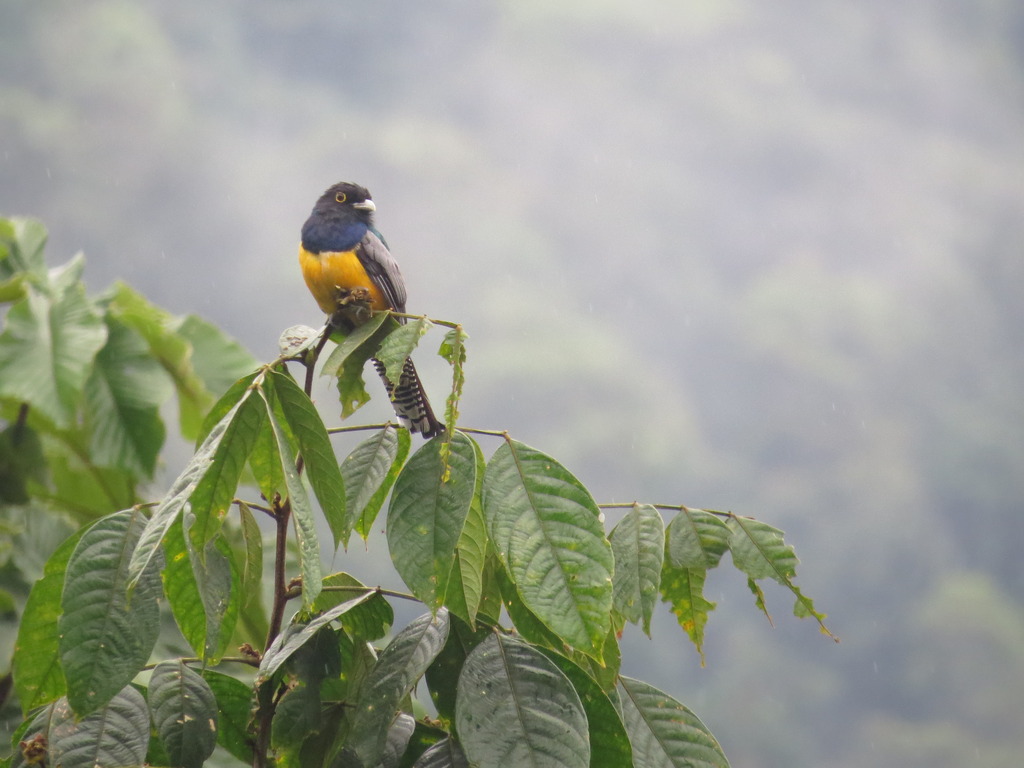
male – Reserva El Copal, Costa Rica
 Organikos