Bats can Focus Biosonar by Stretching Mouths

While in Cockpit Country for our first expedition to Jamaica looking for the Golden Swallow, John, Justin and I watched in awe as hundreds and hundreds of bats flowed out of a cave and flew in a distinct path right by us over the course of half an hour. The slightly shoddy video below can only partly convey the sensation of having the flapping mammals zoom past in a steady stream. We’ve recently featured a couple stories of scientific developments in bat research on the blog, including wing-beat echolocation in fruit bats and singing for communication in other species.

A couple weeks ago, we learned via Discover Magazine’s science blog by Continue reading →

The Barred Antshrike

Last weekend, a former minister of the environment for Costa Rica was staying at Xandari with his wife. Avid birders with life lists, they noticed a binder on the lobby’s coffee table with the cover image pictured above. The binder was the product of work James and I did last summer, highlighting forty interesting species of resident birds on Xandari’s property. After the table of contents, the first featured bird — the Barred Antshrike — was a surprise to the visiting couple. They’d been birding the Central Valley for years, but they’d never seen the species, and they simply didn’t believe that it could be found in such an accessible location.

Politely, the couple smiled at the binder-creators’ mistake and set out Continue reading →

Cave Swallows in Jamaica

Our last big video from the Jamaican Golden Swallow expedition was from the Blue Mountains. This time I have some footage of a colony of Cave Swallows we found at the end of our trip when we were driving along the north coast of the island. About fifty or sixty birds live in this shelf of rock overhanging the ocean, having created nests in the walls with mud pellets.

In the video above, you can see Justin swimming under the natural bridge to get a better view of the birds as they circle around to check on their nests, possibly Continue reading →

Avian Alarm Calls

A Tufted Titmouse calling in flight.

When you’re walking in the woods or even on a city block, chances are you’ll hear birds chirping at some point. Whatever they’re trying to communicate, it certainly isn’t the joyous celebration of life that cartoons and our active imaginations often make out birdsong to be. Males might be trying to attract a mate, individuals could be declaring their territory, and if it’s the right time of year, chicks may be begging for food. Another reason for a bird to vocalize is to create an alarm call in the interest of its general foraging flock, whether to flee from or mob a potential predator.

I’ve watched small birds like sparrows and chickadees mob a pygmy owl, crows, and a Red-tailed Hawk, but I’ve never had the chance to experience the beginning of the action, which apparently starts with just one alarm call, which turn out to be variable enough in some cases to communicate predator size and danger. Christopher Solomon reports for the New York Times‘ science section:

MISSOULA, Mont. — In the backyard of a woodsy home outside this college town, small birds — black-capped chickadees, mountain chickadees, red-breasted nuthatches — flitted to and from the yard’s feeder. They were oblivious to a curious stand nearby, topped by a curtain that was painted to resemble bark.

Continue reading →

“The Great Empty,” more Full than its Sobriquet Implies

Photo © Gerrit Vyn

What will you be doing this Wednesday 5/20 at 8pm EDT? If you’re in the United States and have a television, you should consider watching a PBS Nature documentary on the Greater Sage-Grouse (male in mating display pictured left) and other wildlife members of the vast community that lives in the sagebrush plains that span eleven western states and hundreds of thousands of miles. Titled “The Sagebrush Sea,” the film is the first of its type shot and produced by the Cornell Lab of Ornithology, and it promises to be quite entertaining and educational about this vast and daunting landscape. A friend who was in one of my freshman-year classes at Cornell has been helping out in the editing room as an employee at the Lab this spring, and he tells me that its been a really rewarding experience. Just from watching the trailer below you can see why!

You can check out the PBS Nature schedule webpage to see when the broadcast Continue reading →

Merlin App Recognized in 2015 NSF Showcase

Prairie Warbler © Gerrit Vyn

Last week, an online video event was held to celebrate and showcase work funded by the National Science Foundation, called the NSF 2015 Teaching and Learning Video Showcase: Improving Science, Math, Engineering, and Computer Science Education. 112 videos featuring innovative work in these fields were shared on the website, and 21 were recognized as Facilitators’ Choice, Presenters’ Choice, and/or Public Choice projects.

From the Showcase website’s About page, here are the criteria for recognition in each category:
During the event, facilitators from each resource center will select a few videos, which will recognize extraordinary creativity in the use of video to share innovative work to determine the “Facilitators’ Choice.” In addition, all presenters will have the opportunity to vote for their favorite videos to determine “Presenters’ Choice.” Finally, all public visitors to the event will be asked to select those videos that they find most compelling. Those with the greatest number of public votes will receive “Public Choice” recognition.

The Cornell Lab of Ornithology’s Merlin Bird ID app was one of only 3 projects to Continue reading →

A Brief Global Big Day Summary

Bush Thick-Knee, Brisbane, AU. Photo by Brian Sullivan, via eBird.

On Saturday, while visiting Chicago, I was only able to get a very short amount of time birding for a total of seven species. In the meantime, over twelve-thousand people around the world, across about 110 countries, saw 5,892 species (reported so far, and including the paltry seven I saw).

The photo on the left is of a Bush Thick-Knee, an Australian species that was the first seen during the Global Big Day. In Panama, the Lab’s Team Sapsucker got 320 species, and in New Jersey, at the World Series of Birding, the Cornell Redheads defended their championship title from last year.

One of the species I saw on Saturday was the Chimney Swift, a bird I hadn’t seen before, so that was exciting! If you want to follow more about the Global Big Day, check out eBird’s page!

A Day in the Blue Mountains

Last week we shared the compilation of A Day in the Cockpit. Here’s the second installment of our expedition video, with about nine minutes of the Blue and John Crow Mountains:

Much of this footage was taken within the national park, or Continue reading →

A Day in the Cockpit

Out of the several hours of video that we took during our first month of the Jamaican Golden Swallow Expedition, Justin has condensed the cream of the crop into a fifteen-minute compilation that flows from sunrise to moonlight, with lots of birds, scenery, and other life in between.

Watching the video above, you can  Continue reading →

The Rufous-throated Solitaire

Back when I wrote about our ascent of Blue Mountain Peak, I mentioned that the Rufous-throated Solitaire is a bird that can be pretty tough to spot.

In that prior post, I had a picture of the same individual featured in the video above. If you turn the volume up, you can hear all the shrill details of the bird’s call, and imagine sounds like those echoing through the misty hills — the guidebook to Jamaican birds actually describes the vocalizations as “ventriloquial,” which we found to be accurate.  Continue reading →

The Great Golden Swallow Gear Review: Part 4

A mongoose in the Havahart 1090

Havahart Medium 1-Door Collapsible Easy Set Trap, Model 1090:

Justin:  Great product all-around.  Lightweight, foldable, and easy to set once you’ve learned how to do so.  It’s a solid unit that can take some hits and very rarely did the trap spring by itself.

Garmin Oregon 650 3-Inch Worldwide Handheld GPS with 8MP Digital Camera:
Justin:  Most reliable and intuitive GPS that I’ve ever used.  The touch screen and layout is user-friendly and easy to navigate.  I chose this unit based on reviews that claimed it’s its high-sensitivity, WAAS- and GLONASS-enabled GPS receiver and HotFix® satellite prediction would allow for reliable accuracy, even in deep forest in remote locations.  Sure enough, even under the most dense canopy cover, we were always able to quickly gain satellite reception and an accuracy of 30ft or better.  In less demanding environments, satellite precision was 5ft or less.  The ability to load Continue reading →

The Great Golden Swallow Gear Review: Part 3

Seth displaying his catch. Photo by Justin Proctor.

Thermarest Prolite Plus sleeping pad:

Seth: Comfortable and light, these pads kept us insulated and padded even on cement floors, but the compression sack that is supposed to store the pad is far too small. I don’t recommend sleeping on these on a hot, humid day at around noon.

Justin: This is the first thermarest I’ve used in my life. I’ll probably never have to buy another. I slept comfortably on this thermarest every night, whether it was lying on concrete, a tiled floor, or a more forgiving forest floor. I threw out the ludicrously small sack that came with this otherwise good product on the second day.

John: Don’t ask me, I just sleep on an old yoga mat. I should also point out that it took Seth and Justin a few minutes to deflate and roll these up every morning.


ExOfficio Men’s Boxer, Curfew, medium: (worn by Seth – see photo)

Seth: These highly expensive pairs of underwear are fast drying, don’t retain bad odors, and are quite breathable. Their only downside is that there’s a bit too much fabric in the seat, so they can be wedgie-prone.

Justin: I think Seth just wanted to beat me on the pricing of luxury undies.

John: What’s underwear?


Continue reading →

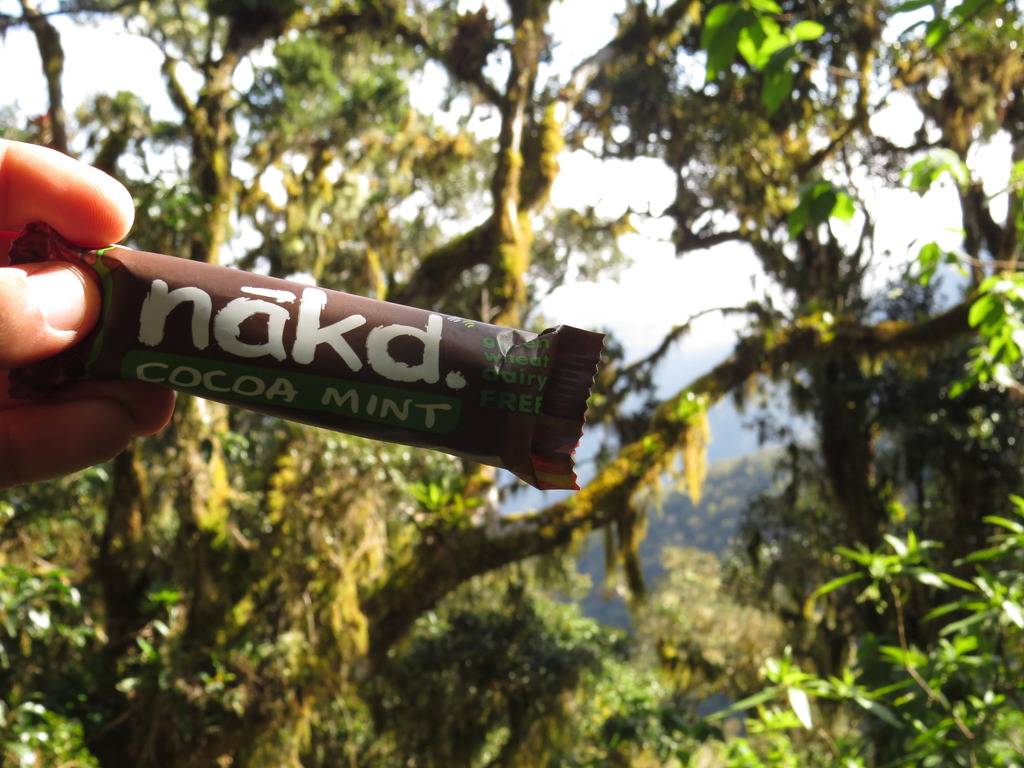
The Great Golden Swallow Gear Review: nākd edition

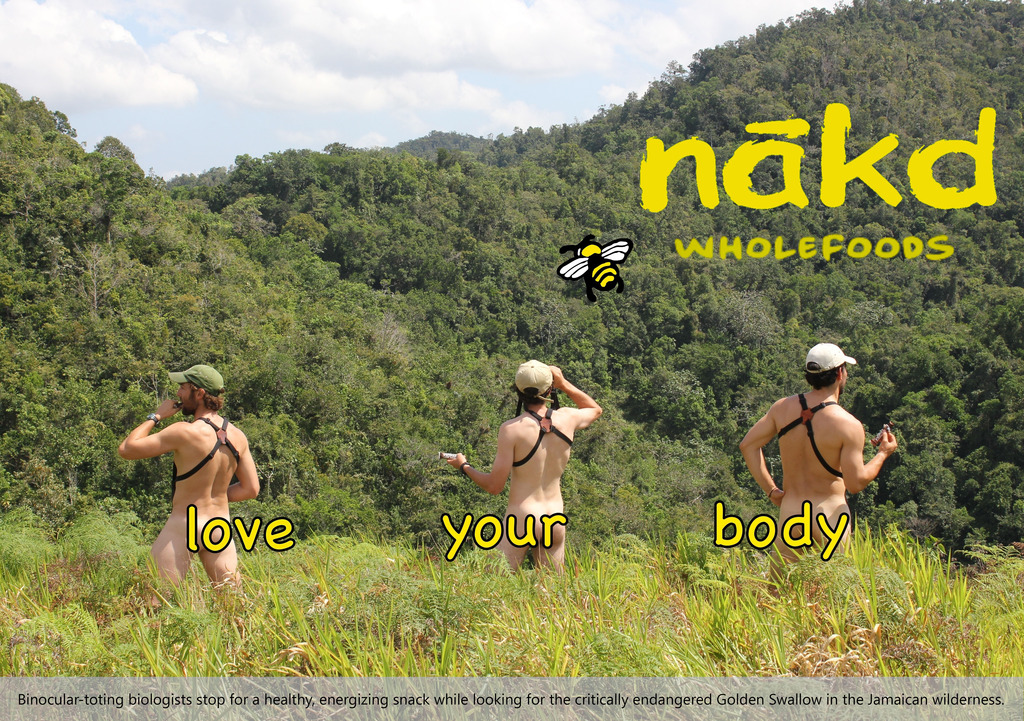
Given the photo above, perhaps this post would have been better suited to April Fools’ Day. However, since April 1st was the first day we had back in Ithaca, the precise editing required to keep the photo PG-rated would have been rushed and the result would have been, shall we say, sloppy. Although it may seem like a strange way of saying thanks, this post — and especially the header photo — are a token of our great appreciation for the folks at nākd (Nature Balance Foods), particularly for Traci in US operations, who coordinated everything with us! I should clarify that we created the photo above of our own volition and without any explicit sponsorship — it is not a nākd photo shoot, it’s just a naked photo shoot.

On the trail up to Blue Mountain Peak, the highest summit in Jamaica.

We had mentioned long ago that we were receiving lots of nākd bars to help us through our expeditions, and no amount of expressed gratitude can reflect the true value of these snacks to our diet during the past three months. The best part is that we could eat as many as we felt like it since they have no added sugar or artificial ingredients, and are basically just a combination of 1) dates and/or raisins, 2) almonds, cashews, or pecans, and 3) spices or natural flavoring like cocoa powder or coffee.

Continue reading →

Revisiting a Year-old Thesis Experience


It’s been exactly — down to the same date, funnily enough — four months since I posted anything about Iceland in particular, seven months since I shared an excerpt from my honors thesis, and one year since I submitted that thesis to the history department at Cornell University. It’s interesting that as I write this I’m back in Ithaca, on campus, and during the last week have been involved in the proofreading process for two friends writing English theses to be turned in tomorrow. And then, coincidentally but not by chance, Hua Hsu writes a book review in the New Yorker that revolves around how to write a thesis.

Reading Hsu’s discussion of Eco’s book, as well as revisiting parts of my thesis to be able to give advice to my English-major friends, is a rewarding and somewhat nostalgic experience. There are several of Eco’s points that
particularly resonate with me, such as Continue reading →

The Great Golden Swallow Gear Review: Part 2

MSR Whisperlite International Stove V2:

Justin:  Referring to just the stove:  The whisperlite international is a darn good stove.  Lightweight, folds up nicely, and is relatively easy to set-up, maintain, and clean.  I purchased this stove because it can burn almost any flammable gas or liquid.  That’s imperative when you are traveling internationally.  The only change I would make would be to upgrade the ‘teeth’ on the three stands that hold your cookware so as to create more friction and lessen the likelihood of a pot or pan slipping off the stove.


MSR Standard Fuel Pump:

Justin:  This is an easy to use pump, but it requires more maintenance than one would desire.  Though the pump syringe never broke, it always felt weak to the touch.  The pump cup attached to the inner end of the syringe does not attach well to the syringe, while it also dries out over the course of several days.  Without lubrication and vigilance, that pump cup will slip off and/or rip if you’re not careful.  Once the cup has ripped, it will be impossible to build up pressure in the MSR bottle. Accessing the innards is also difficult, and requires at least four hands pushing and pulling at different pressure points at the same time.  Be sure to purchase the Whisperlite International service kit because you will need the spare parts.  After two solid months of use, I am thinking that I will now have to replace this unit entirely.  Continue reading →

The Great Golden Swallow Gear Review: Part 1

A sea cave on the northern coast of Jamaica, where Cave Swallows nest.

We’ve finally put our heads together and written all our thoughts on the various articles of gear we brought with us to Jamaica for two months! Overall we were pretty pleased with everything we used, and would recommend them to the average backpacker except where it’s clear that we weren’t very satisfied.

GSI Outdoors Pinnacle Dualist Cookware Set:

Justin:  This cookware set has some big pro’s and some big con’s.  The fact that everything fits nicely together, and the entire unit is lightweight is definitely a plus.  However, a rogue surge of flame from our stove one night that came up high on the sides of the pot caused the pot to warp in shape (which is surprising because of its constant tolerance to high heat from below).  Therefore the lid never fit correctly again.  The bowls are solid and the two that come with a foam/elastic band around them are effective in keeping you from getting burned from hot contents within.  The folding handle of the pot is hazardous – perhaps there is a locking mechanism that we are unaware of or did not receive.  The two retracting sporks that come with the set are complete garbage.  The minute you attempt to ‘pierce’ a piece of food, the spork will retract and become useless.  Best to pawn these sporks off as a gift to a friend that you really don’t like much.

John: Hey, Seth, want a spoon?

Seth: Heck yeah! … … … hey, Justin, want a spoon?

Continue reading →

Golden Swallow Expedition Back in Ithaca

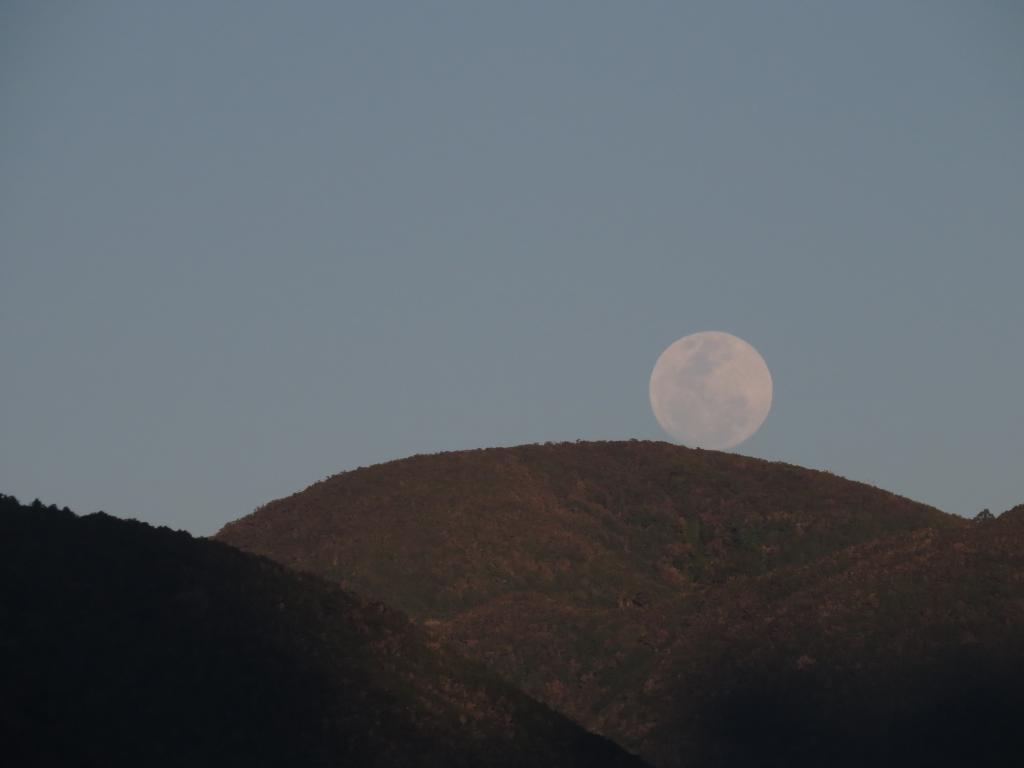
A moon rises in the Blue Mountains

Photo by Justin Proctor

It’s been a while since you last heard from us, but not because we’re lost in the Jamaican wilderness!

We arrived back in Ithaca, NY a week ago, and have been hard at work processing our data, photos, videos, and thoughts from this past trip to the Blue Mountains. In addition, we’ve had to analyze our data from both trips combined, trying to seek out patterns in aerial insectivore sightings and making maps of all our point counts with different species seen in both Cockpit Country and the mountainous eastern portion of the island.

We’re also looking up references to all information on Cave Swallows, Antillean Palm Swifts, and White-collared Swifts in either Jamaica, the Caribbean, or the world, depending on what kind of journal articles have been published about them in the past. Other research we’ve been doing involves Barn Owls and Turkey Vultures, which will be the subject of spin-off Continue reading →