The Good Race Against Food Waste

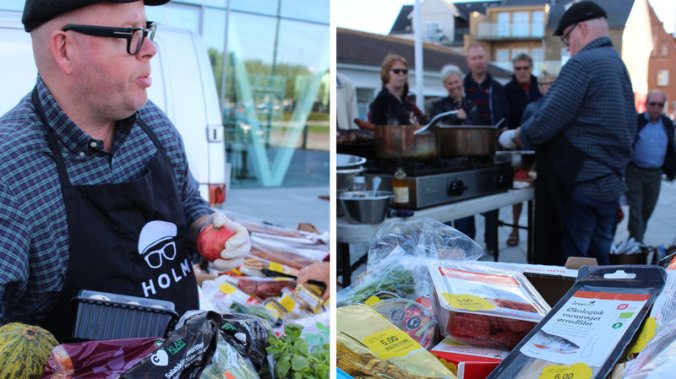
Claus Holm, a Danish celebrity chef, demonstrates at a festival on the Danish island of Fyn how expired products lurking at the back of the fridge can still be delicious. PHOTO: Sidsel Overgaard for NPR

Claus Holm, a Danish celebrity chef, demonstrates at a festival on the Danish island of Fyn how expired products lurking at the back of the fridge can still be delicious. PHOTO: Sidsel Overgaard for NPR

By 2050, the world will need 60 per cent more calories per year to feed a projected population of 9 billion. Cutting the rate of global food loss and waste could help bridge this food gap while creating environmental and economic benefits. And the people of Denmark are already well ahead in the race to cut food waste. While the Stop Wasting Food movement is the national embodiment of a collective consciousness, the need to cut back on waste has seeped through the consumer chain, as NPR finds.  Continue reading
The Man Who Moved a Mountain

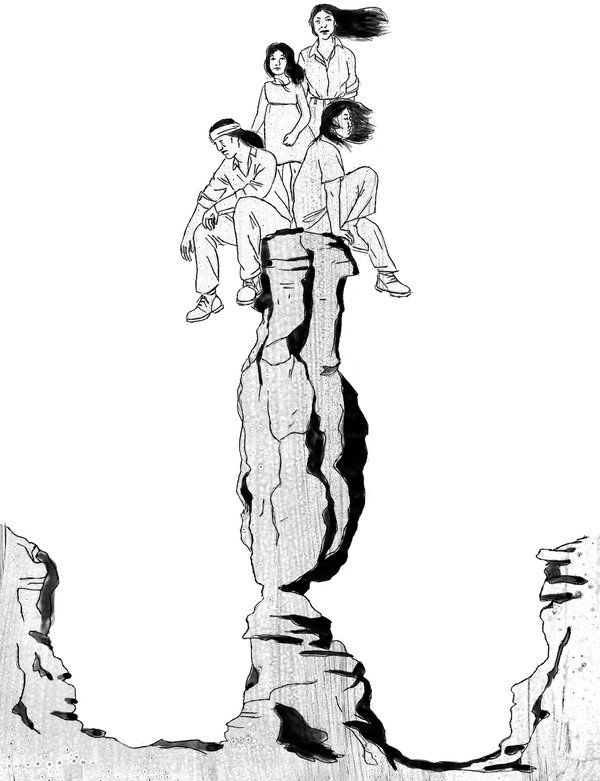
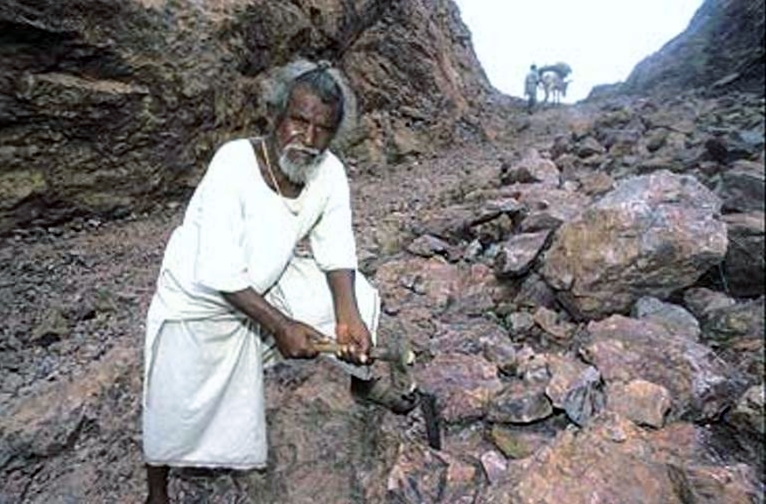
Dashrath Manjhi chipped away at a mountain for 22 years to let his village have access to civilization (and medicine)

Dashrath Manjhi chipped away at a mountain for 22 years to let his village have access to civilization (and medicine)

Forget reality shows about the subject; the ultimate tale of man vs. nature may be the story of Dashrath Manjhi, who single-handedly carved a road through an entire mountain that had been isolating his village from essential services. Using only a hammer and chisel, Manjhi, a landless farmer, carved a path through a mountain in the Gehlour Hills, Bihar, India, just so that his village could have easier access to medical facilities.

Continue reading

People First at This Public Regrigerator

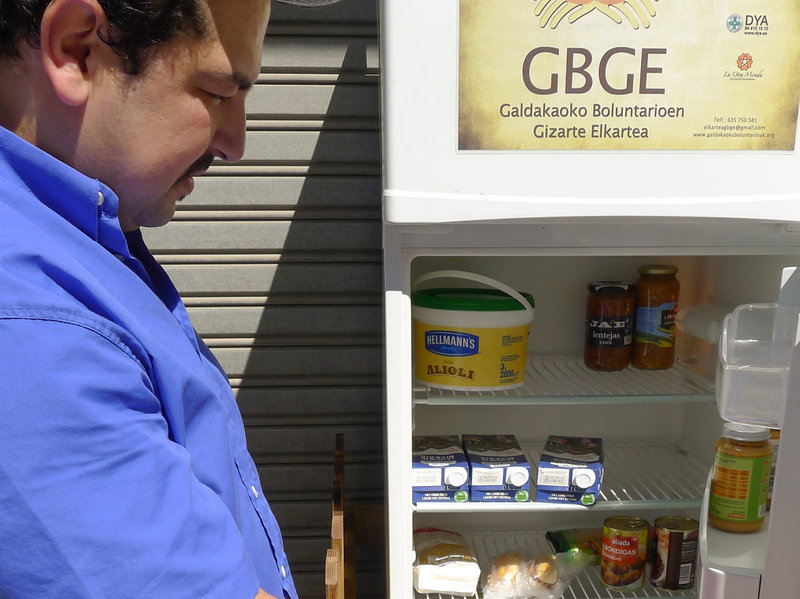
Issam Massaoudi, an unemployed Moroccan immigrant, checks out what's inside the Solidarity Fridge. Massaoudi says money is tight for him, and it's

Issam Massaoudi, an unemployed Moroccan immigrant, checks out what’s inside the Solidarity Fridge. Massaoudi says it’s “amazing” to be able to help himself to healthy food from Galdakao’s communal refrigerator. PHOTO: NPR

Last year, a small act of kindness in the desert country of Saudi Arabia warmed the hearts of many across the globe. An anonymous individual put a fridge outside his house and called on neighbors to fill it with food for the needy. And now a pioneering project in the Basque town of Galdakao, population about 30,000, aims to eliminate wastage of perfectly good groceries and food. Solidarity refrigerator is showing the world how a little generosity can go a long way.

Continue reading

Helping the Ocean Clean Up

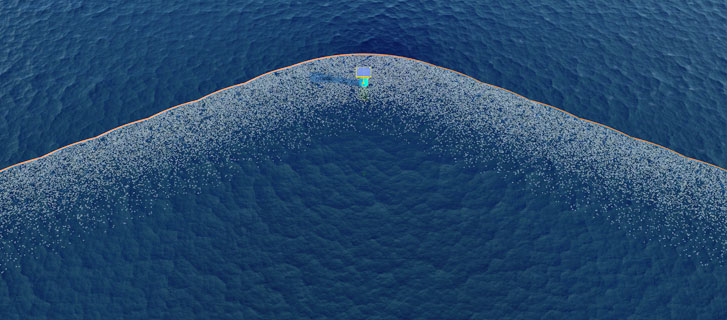
The Ocean Cleanup started tests in 2014 to see if the floating barriers are a feasible way to remove garbage. PHOTO: The Ocean Cleanup

The Ocean Cleanup started tests in 2014 to see if the floating barriers are a feasible way to remove garbage. PHOTO: The Ocean Cleanup

Dutch engineering student Boyan Slat announced in a 2012 TEDx talk that he had invented a way for the oceans to rid themselves of plastic with minimal human intervention. About 8 million tons of plastic enters the ocean each year. Part of this accumulates in 5 areas where currents converge: the gyres. At least 5.25 trillion pieces of plastic are currently in the oceans, a third of which is concentrated in the infamous Great Pacific Garbage Patch. Slat’s idea is to building a stationary array with floating barriers that would filter and collect floating plastic using the ocean’s natural currents.

Continue reading
A Man of His Work

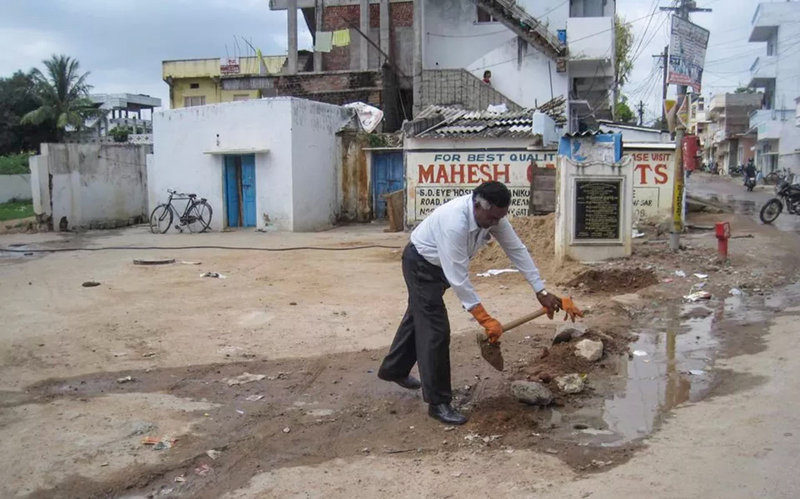
Another pothole bites the dust in India, thanks to the efforts of Gangadhara Tilak Katnam

Another pothole bites the dust in India, thanks to the efforts of Gangadhara Tilak Katnam

“You shouldn’t be out there filling potholes at your age.” That’s what Venkateswari Katnam tells her 67-year-old husband, Gandgadhara. He doesn’t listen. Over the past five years, he estimates that he has filled around 1,100 potholes on the streets of Hyderabad. He carries bags of gravel and tar in the trunk of his Fiat, along with a spade, two brooms, a wire brush and a crowbar. When he spies a pothole — or learns of one from a Facebook message — he can usually fill it in under an hour. He clears out any debris or standing water, pours in the mix of gravel and tar, levels it off and waits about 30 minutes for it to set. He puts up red flags in English, Hindi and Telugu to make sure no one steps or drives in it. And when he’s done, he takes a selfie to add to his collection of filled pothole Continue reading

Winnie-the-Pooh Wants to Save the Bees

Planting a bee-friendly tree beneath Warwick Castle. Via The Telegraph.

Last month, I shared a story from Cornell’s orchards, where apple blossoms were pollinated this year solely by local wild bee species rather than commercial honeybees. Funnily enough, the same day I posted that story, the science editor for The Telegraph wrote a piece concerning bees across the Atlantic, where the British Beekeepers Association has partnered with one of the original Winnie-the-Pooh illustrators to make a new story encouraging children to care for these productive insects. As Pooh tells Piglet in the new story when they realize there is a shortage of honey, “you can only be careful for so long before you run out altogether.” Sarah Knapton reports:

Beekeepers are also hoping to engage children by encouraging them to bake with local honey, become beekeepers, visit nearby apiaries and throw seed-bombs to help the spread of wildflowers.

New illustrations show AA Milne’s characters Christopher Robin, Piglet, Tigger, Eeyore and Pooh making a vegetable patch in the Yorkshire Dales, building a bee box in the shadow of the Angel of the North in Gateshead, and planting a flowering tree in the shadow of Warwick Castle.

The friends are also pictured dropping bee-balls in Birmingham, painting in Sherwood Forest, Nottinghamshire and visiting a honey show in Glastonbury.

Continue reading

Guardian Pressure, Gates Commitments, Turning The Dial

Screen Shot 2015-06-28 at 7.55.55 AM

In case you have missed the campaign that the Guardian has been waging, click the image above, which will take you to their partnership site, 350.org, which we have been admirers of too. Brilliant and bold, better than anything the New York Times or any other media outlet has done in activist mode on environmental issues. You may say you want your journalism pure and objective, but on this issue, with the planet in the balance, we say not so.

Is it just coincidence that after campaigning for months now to get Mr. Gates to do something more, this good news arrives today?

Gates to invest $2bn in breakthrough renewable energy projects

Bill Gates plans to double investment in green energy technology and research to combat climate change, but rejects calls to divest from fossil fuels

Bill Gates has announced he will invest $2bn (£1.3bn) in renewable technologies initiatives, but rejected calls to divest from the fossil fuel companies that are burning carbon at a rate that ignores international agreements to limit global warming.

Speaking to the Financial Times, Gates said that he would double his current investments in renewables over the next five years in a bid to “bend the curve” on tackling climate change.

The Bill and Melinda Gates Foundation, lead by Gates and his wife, is the world’s largest charitable foundation. According to the charity’s most recent tax filings in 2013, it currently has $1.4bn invested in fossil fuel companies, including BP, responsible for the Deepwater Horizon oil spill in the Gulf of Mexico.

In March, the Guardian launched a campaign calling on the Gates’ Foundation and the Wellcome Trust to divest from coal, oil and gas companies. More than 223,000 people have since signed up to the campaign.

Continue reading

Mining Companies Gonna Mine

MAËLLE DOLIVEUX

MAËLLE DOLIVEUX

We try to stay away from stereotypes, cliche, cute kitten videos and memes. But the editorial below will leave you with heightened awareness of just how low mining companies can go, literally, figuratively and spiritually to get what they want. Rio Tinto is a cliche, a nightmare about killing the earth and any cultural artifacts that get in the way of its profits. Let’s awake from this nightmare. Come on, Arizona, be better than this:

Selling Off Apache Holy Land

Lydia Millet

ABOUT an hour east of Phoenix, near a mining town called Superior, men, women and children of the San Carlos Apache tribe have been camped out at a place called Oak Flat for more than three months, protesting the latest assault on their culture. Continue reading

Put a Face to Litter

Every day in Hong Kong, more than 16,000 tons of waste is dumped in the streets and public spaces. PHOTO: hkcleanup.org

Every day in Hong Kong, more than 16,000 tons of waste is dumped in the streets and public spaces. PHOTO: hkcleanup.org

Going by Hong Kong’s Cleanup Challenge, your DNA can rat you out the next time you toss as little as a candy wrapper on the beach or in the park. The country is taking its trash problem seriously, with an entire week in June dedicated to cleaning urban spaces and its coastline. In fact it generates 6 million tonnes of trash a year – the weight of 350 blue whales. Clearly, this is not sustainable. And that’s precisely why one of the country’s NGOs and the advertising firm Ogilvy & Mather came up with the Face of Litter campaign.

Continue reading

Planting the Oak Back in Oakland

Felled to make way for developments, oaks are now being nurtured to better urban health. PHOTO: Louis Dallara

What’s in a name… Shakespeare’s 400-year-old line is timeless and oft repeated. For it goes beyond a few syllables and rests on the very soul of the matter. And going by a few volunteers setting up an inaugural stand of 72 coast live oaks in a West Oakland park, it seems like someone felt it, too. Say Oakland and you’d invariably conjure up images of woodlands and acorns. That and given that the oak is America’s national tree, you’d expect vast woodlands and tributaries of branches. Instead, sentiment is attached to the few oaks that still stand their ground in the face of development and there’s a “re-oak” campaign underway. In good time, we hope.

“Names are a powerful way to think about a place,” said Walter J. Hood, a landscape architect and professor at the University of California, Berkeley, who lives and works in Oakland and came up with the idea of resurrecting the city’s forgotten groves. “If a landscape changes, your way of life changes,” he said, “whether it’s a freeway cut into a neighborhood or a new dense canopy of trees.”

Read the New York Times report here.

The Whole Truth

The last time potholes really had our attention was almost three years ago, when Russian ad agency Voskhod painted local politicians’ faces around garish potholes in the town of Yekaterinburg. Over the years and particularly during our stay in India, bumpy rides have come to be a way of life. There’s the initial irritation over a wheel jumping into a hole, some amount of cursing the government for not getting around to fixing them, and then resignation – this has almost come to be a ritual. But when we happened to chance upon Chicago-based Jim Bachor’s ‘art-titude’ towards potholes, it was pleasant to see how the issue had become apolitical in that it did not scream for attention from the government. Instead, the passive activism appears more of a manifestation of citizen ownership. And, a good sense of art and humor.

Continue reading

One for the Bird

Poaching and destruction of grasslands has brought down the bustard's population to 150 in the world. PHOTO: Kiran Poonacha

Poaching and destruction of grasslands has brought down the bustard’s population to 150 in the world. PHOTO: Kiran Poonacha

If there’s one certain takeaway from this blog, it’s the enduring and growing love for the feathered friends. In India, the conservation debate often touches on the Great Indian Bustard (GIB), which has an ostrich-like appearance and is labelled as “critically endangered.” In fact, the world population of the GIB is pegged at 150, with India, particularly Rajasthan, being home to 70 per cent of this number. Loss of the Bustard’s dry grasslands and scrub habitat, increased hunting and changes in land use have been blamed but Dr Pramod Patil refused to let things settle at that. Precisely why his pioneering work in protecting the Bustard population in Thar desert of Rajasthan won him the Whitley Award this year. Popularly known as the ‘Green Oscar’ and also won by compatriot Dr Ananda Kumar for his system to reduce man-elephant conflicts in India, the award carries a grant of £35,000. More importantly, it puts the focus back on the Great bird.

Continue reading

Check This Out

anarc71

We watch the comments and forwarding links on each of our posts, and there have been many fellow travelers over the years coming and going from our community. Here is one fellow we would like to point your attention to, first to thank him for his shoutout of our site; second because we like the name Milo, which got us to click his link; third we find his message kindred to our own; and last but not least because of the graphic above, which is worth more than a thousand words.

#PeopleVsShell

Photo credits: Greenpeace.org

Environmental Activism has never taken a back seat in Seattle and we continue to root for the individuals, organizations and public officials who are working to draw global attention to a possible environmental disaster. Certainly not the moment to “Keep Calm & Carry On”…

Hundreds of kayakers in Seattle were preparing to go and “shake their paddles” in protest at a newly arrived 400ft long, 355ft tall Royal Dutch Shell oil rig on Saturday, with hundreds – perhaps thousands – more scheduled to attend on dry land.

“We here in Seattle do not want Shell in our port. We want them to get out and change their business before they change our planet and destroy the life of future generations,” said Annette Klapstein, a 62-year-old retired attorney and member of activist group the Raging Grannies.

On Monday, the Obama administration effectively gave Shell the green light to restart its Arctic drilling and exploration operations with an approval issued by the Bureau of Ocean Energy Management, a governmental regulatory agency.

Shell was forced to halt its Arctic exploration in 2012 amid a series of severe security mishaps.

Environmental groups and scientists reacted to Monday’s news badly, warning that letting Shell back into the Arctic for exploration and drilling was very likely to cause an ecological disaster and contribute to climate change. Continue reading

Creative Solutions To Seemingly Impossible Challenges

A protester opposes allowing Royal Dutch Shell drilling rigs to dock in Seattle on their way to Alaska. Credit David Ryder for The New York Times

A protester opposes allowing Royal Dutch Shell drilling rigs to dock in Seattle on their way to Alaska. Credit David Ryder for The New York Times

After a shockingly depressing, disappointing decision by the President of the USA to approve Shell’s drilling plan in the Arctic (this company is clearly not ready for the responsibility–what happened to your better, judicious self, Mr. President?!?), it is heartening to see citizens’ creative counter-tactics (even if this particular David does not beat this particular Goliath, thank you anyway, thinking people of Seattle, for trying):

Continue reading

Stand with Máxima

Acuña de Chaupe has become the target of harassment and violence because she refuses to cede her land to Newmont. Photo credit: Latin American Mining Monitoring Programme

Acuña de Chaupe has become the target of harassment and violence because she refuses to cede her land to Newmont. Photo credit: Latin American Mining Monitoring Programme

Thanks to EcoWatch for this story, which we had not previously posted about but which highlights a cause worthy of supporting in Peru:

…Newmont is majority owner of the massive Peruvian gold mine Yanacocha, the second largest gold mine in the world, and its planned Conga gold and copper mine nearby would be even larger, requiring a farming community to move and the four lakes they rely on for irrigation to be drained.

But the community has so far refused to relinquish its treasured land and lakes, and in response activists say the company has reacted with intimidation and harassment.

One person particularly in the company’s cross-hairs is Máxima Acuña de Chaupe, says activist Mirtha Vásquez, a Peruvian lawyer at Wednesday’s meeting. Continue reading

Dear Citizens Of Malta, Please Embrace The Ban

Activists say hunters use the currently legitimate spring season for hunting quails (above) to illegally hunt other birds. Photograph: Natalino Fenech

Activists say hunters use the currently legitimate spring season for hunting quails (above) to illegally hunt other birds. Photograph: Natalino Fenech

We have noted previously the odd (to us) behaviors that can be easily interpreted (not only by us) as abominable treatment of birds. It is not only a regional thing in the Mediterranean, this incomprehensible desire to decimate bird populations. From the Guardian, this news on the efforts of a dedicated group of activists:

Vote could see the spring hunting of birds such as quail and turtle doves, which is outlawed in the rest of the EU, banned in Malta

in Malta

Fiona Burrows is the kind of activist that hunters in Malta love to hate.

The Nottingham 30-year-old has been threatened, cursed at, and pushed around while doing the job she says she lives for: stealthily filming the illegal hunting of protected migratory birds and reporting perpetrators to the police.

Burrows takes precautions – she always parks her car facing an exit route and has even bought wigs to avoid detection by hunters – but she thinks these are probably not enough.

“Something bad is going to happen to me sooner or later,” she says. “It’s inevitable.” Continue reading

Foundation Earth, Randy Hayes, Cheaters and Fair Play

LogoTransp2We have not linked to this foundation before, but we have been listening to and reading Randy Hayes on the subject of climate change recently, and think this is a good primer to share about the foundation’s strategy and goals:

Toward A True-Cost Economic Model: Cheater Economics, Fair Play, & Long-Term Survival

Over the next century communities worldwide will experience an unprecedented shift of weather instability. Extreme weather events are ecological spasms often driving economic spasms and regional collapses. Concerned citizens and opinion leaders need to prepare before these eco-spasms proliferate. Far from being prepared, most leaders and power brokers are not mindful of the rethinking that is required. This working paper and appendix offers a brief economic vision, a set of economic principles, and list of problematic trends to help respond to the challenges as we work for a better day. –Randy Hayes

Mountains

Continue reading

Inspired By Libraries Without Borders

jacob-lawrence-library-1

from a series on libraries by Jacob Lawrence.

What a wonderful surprise, to come across this talk by Kenan Malik, on a topic that has been of interest to us for some time:

I gave a talk at the launch at London’s Institut Français of Libraries without Borders, the charity inspired by Patrick Weil that aims to increase global access to books and libraries. Also speaking were Ian McEwan, Lisa Appignanesi, Barbara Band and Patrick Weil himself. Here is a transcript of my talk.


Let me begin with a story not of a library or a book but of a grand piano. The one grand piano in Gaza, that was discovered still intact in a theatre destroyed by an Israeli missile during last year’s war. A piano that has been restored string by string, hammer by hammer, by Claire Bertrand, a young French music technician who travelled to Gaza specially to bring the piano back to life, in a project financed by Daniel Barenboim. Continue reading

Embracing Student Activism


Students have been rallying for change since the time of Plato with varying degrees of effectiveness. In fact, the act of questioning authority through dialogue is part and parcel to the educational process. It’s heartening when the voices of resistance from multiple communities join forces to activate change.

Congratulations to the students of Syracuse University for rallying SU to remove endowments to direct investments in coal, gas and oil companies.

Syracuse is the biggest university in the world to have committed to remove its endowment from direct investments in coal, oil and gas companies. It aims to make additional investments in clean energy technologies such as solar, biofuels and advanced recycling.

In a statement, the university said it will “not directly invest in publicly traded companies whose primary business is extraction of fossil fuels and will direct its external investment managers to take every step possible to prohibit investments in these public companies as well”. Continue reading