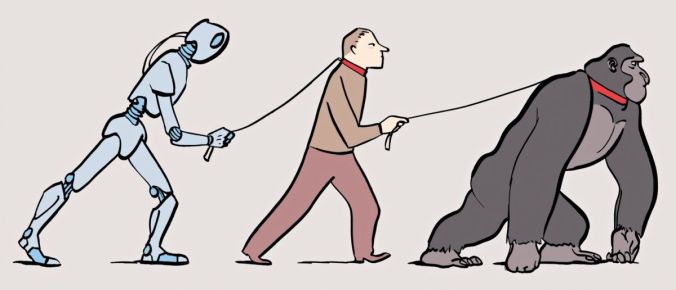
Nathan Heller is one of the most consistently engaging, most compelling writers out there, and this new article is one more piece of evidence:
IF ANIMALS HAVE RIGHTS, SHOULD ROBOTS?
We can think of ourselves as an animal’s peer—or its protector. What will robots decide about us?
Harambe, a gorilla, was described as “smart,” “curious,” “courageous,” “magnificent.” But it wasn’t until last spring that Harambe became famous, too. On May 28th, a human boy, also curious and courageous, slipped through a fence at the Cincinnati Zoo and landed in the moat along the habitat that Harambe shared with two other gorillas. People at the fence above made whoops and cries and other noises of alarm. Harambe stood over the boy, as if to shield him from the hubbub, and then, grabbing one of his ankles, dragged him through the water like a doll across a playroom floor. For a moment, he took the child delicately by the waist and propped him on his legs, in a correct human stance. Then, as the whooping continued, he knocked the boy forward again, and dragged him halfway through the moat.
Harambe was a seventeen-year-old silverback, an animal of terrific strength. When zookeepers failed to lure him from the boy, a member of their Dangerous Animal Response Team shot the gorilla dead. The child was hospitalized briefly and released, declared to have no severe injuries. Continue reading

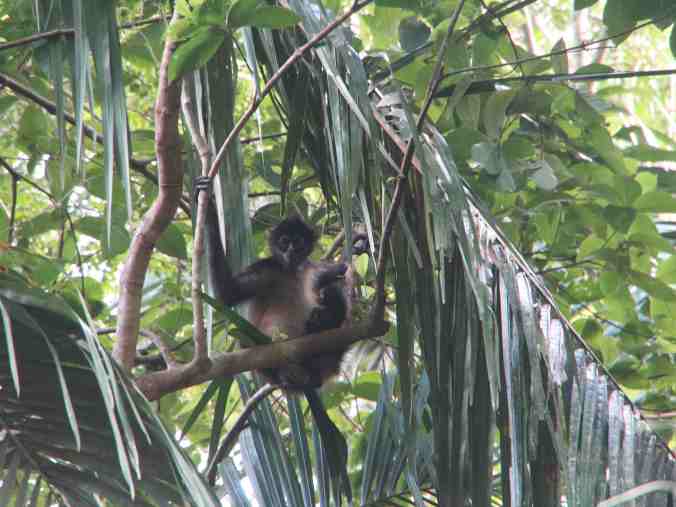
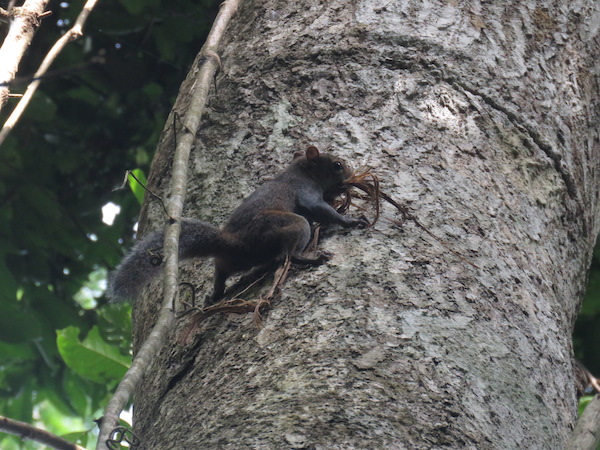

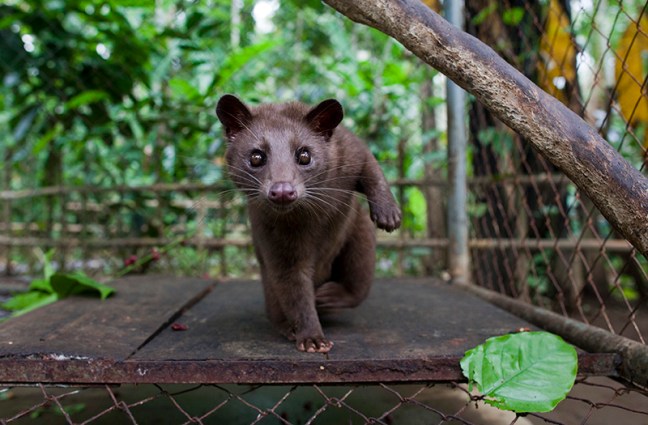


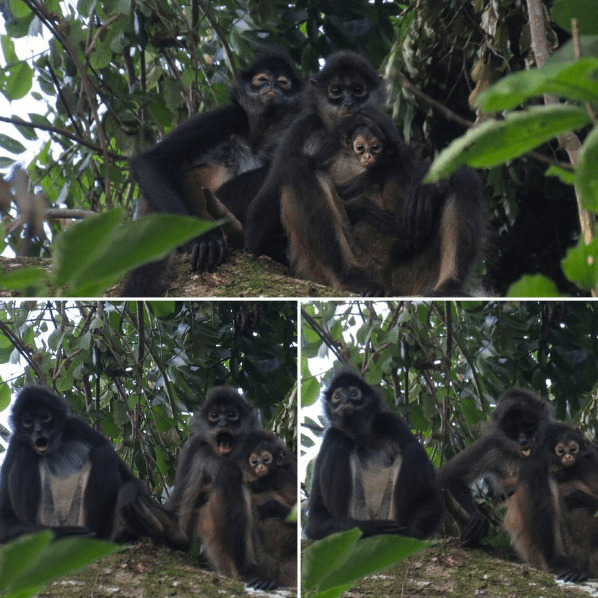 Pretty much any time you walk out in the woods at Chan Chich Lodge, at some point during your hike you should be able to hear the rocking branches that are a sign of either spider monkeys or howler monkeys moving or eating in the treetops. And if you’re lucky, the swinging simians might stop and watch you with an uncannily familiar curiosity (or boredom), interrupting their normal activity for a minute or two before continuing on their way.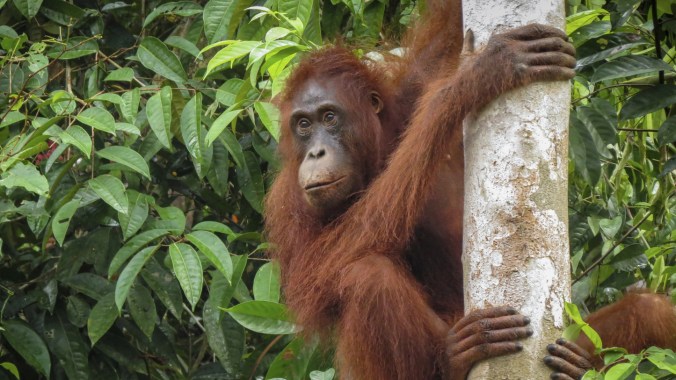




 Organikos