Bees May Sleep to Maintain Learning Brains

Bee in mid air flight carrying pollen in pollen basket. Credit: Muhammad Mahdi Karim

Bees are incredibly important to much of the world’s flora, and we are always happy to see when research on them is continuing. After all, the better we understand them, the better we can protect them. Elizabeth Preston reports for Discover Magazine’s blog that when young honeybees spend time in the hive, they spend more time sleeping afterwards, probably to absorb whatever they’re learning among all the other bees:

Facing a whole hive of bees at once can be overwhelming—even for a bee. Young honeybees sleep more after spending time in the hive than after being by themselves. They need the extra nap time, it seems, to build and maintain their learning brains.

The first surprising thing about this might be that insects sleep at all. “Since around the 1980s there is good evidence that insects show…characteristics of sleep,” says Guy Bloch, who studies bee behavior at the Hebrew University of Jerusalem. Yes, their brains are tiny and organized differently from ours. But they rest in a similar way. And just as sleeping helps us sort through the new things we’ve learned each day, there’s evidence that sleep in bees and fruit flies is also tied up with memory and learning, Bloch says.
Continue reading

Bee Friendlier

Screen Shot 2014-10-13 at 12.46.44 PM

Our otherwise impenetrable fortress, resisting commercial interests everywhere, sometimes lets one over the wall.  For worthy causes only. Good stuff here, we think, especially learning about The Xerces Society through this company’s initiative:

Our Commitment

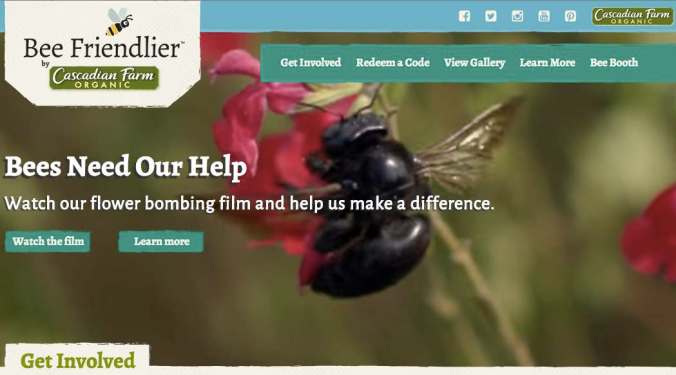
At Cascadian Farm, we’ve been farming organically since 1972, and we know how essential bees are to the environment and food supply. In fact, almost all of the food that we make depends on bees. That’s why we’re spearheading Bee Friendlier, an education and support program to help bees thrive. It’s also why we’re donating $0.50, up to $150,000, for every code redeemed online before December 31, 2014, to help support bee research and habitat creation… Continue reading

Robo-bees

PHOTO COURTESY OF KEVIN MA AND PAKPONG CHIRARATTANANON

PHOTO COURTESY OF KEVIN MA AND PAKPONG CHIRARATTANANON

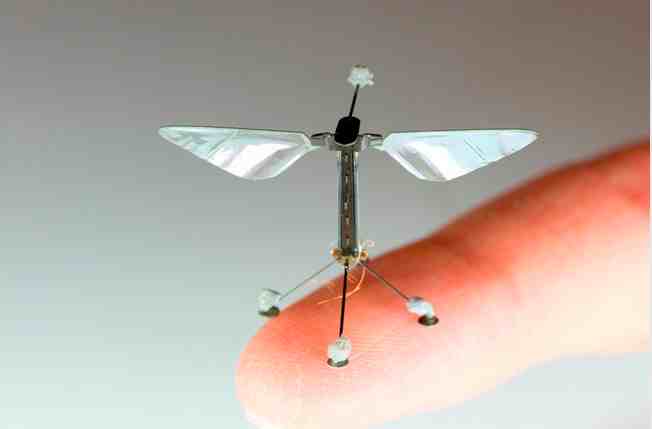
At RAXA Collective we’re often writing about the birds and the bees within the context of ornothological and entomological biodiversity, as well as the agricultural health of the planet. The impact of CCD, or colony collapse disorder, is significant enough that the Obama administration has challenged scientists with the same force of urgency as Kennedy’s 1962 appeal for a moon landing before the decade was over.

Food attorney and National Geographic contributor Mary Beth Albright writes:

To stay optimistic on this planet I have to believe that most agree that saving honeybees is vastly preferable to replacing them but an interesting alternative is coming out of Harvard. On its website a research team led by engineering professor and National Geographic Emerging Explorer Robert Wood states “we do not see robotic pollination as a wise or viable long-term solution to Colony Collapse Disorder. If robots were used for pollination—and we are at least 20 years away from that possibility—it would only be as a stop-gap measure….”

Continue reading

Burt, Bees, Believe

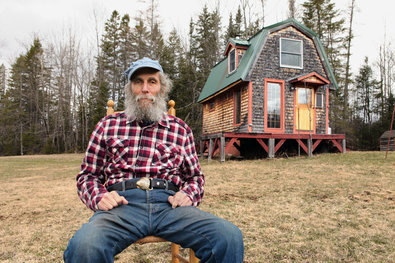
Jody Shapiro. A quiet conversation with the founder of Burt’s Bees.

Jody Shapiro. A quiet conversation with the founder of Burt’s Bees.

More bees, please. More bees pleases. Thanks to the New York Times for satisfying our appetite for bee-related news and features:

Burt Shavitz, the World’s Most Famous Retired Beekeeper

Where would we be without bees?

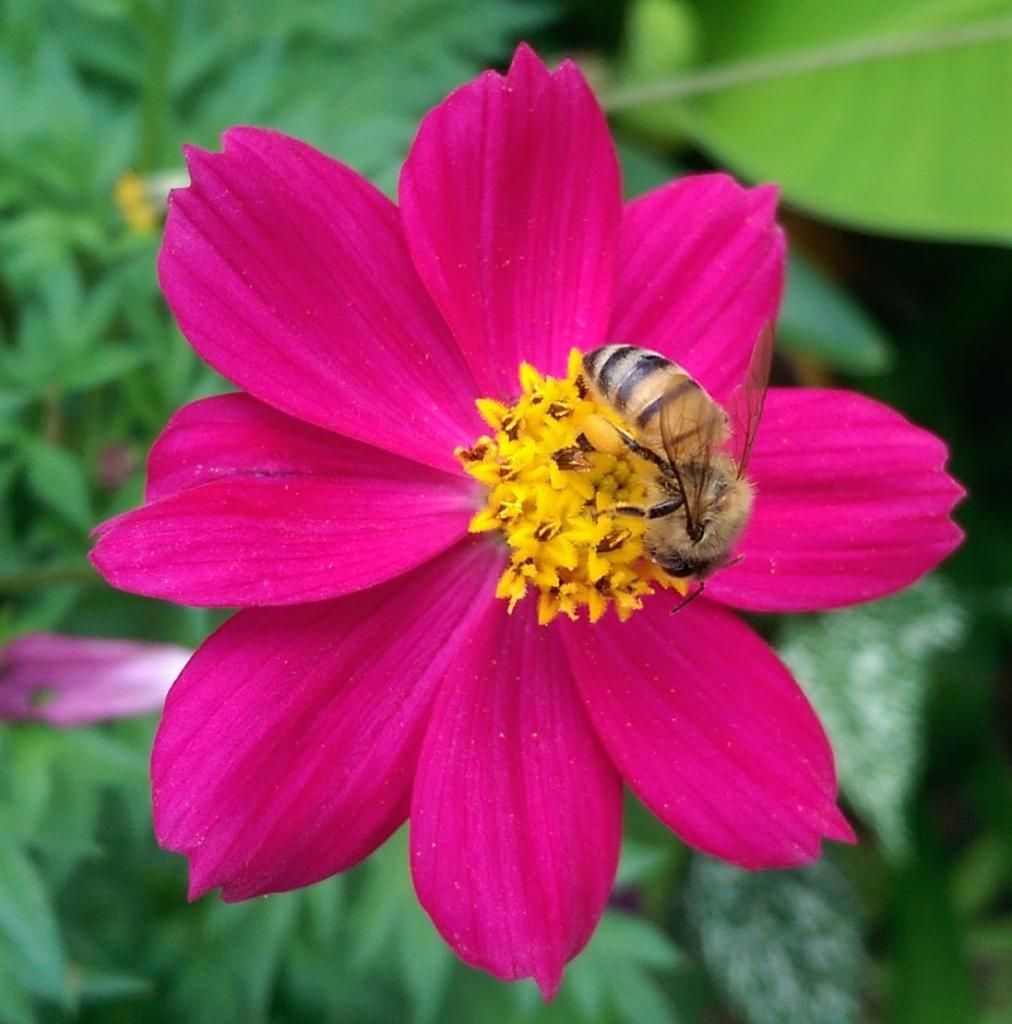
Bee on a flower

Recent posts on flowers at Xandari (here and here) have gotten me thinking about all of the work that goes into making such beauty possible. Mostly I had in mind Xandari’s head gardener, José Luis, and his excellent team. Snapping the above photo, however, I was reminded of nature’s great contribution in the process. Continue reading

Himalayan Honey Harvest

This slideshow requires JavaScript.

Like birds, bees are a common thread on these pages, for both their innate beauty, and their importance to life on earth. Although much of the honey on the market in the world today comes from cultivated hives, the history of gathering wild honey goes back millennium. 

For generations the Gurung tribespeople of central Nepal have assembled twice a year around cliffs filled with colonies of  the world’s largest honeybee, Apis laboriosa. This dangerous Himalayan honey-harvest was recently documented by U.K.-based travel photographer Andrew Newey, who spent two weeks capturing this dying tradition, which is under the threat of commercialization.

“For hundreds of years, the skills required to perform this dangerous task have been passed down through the generations” writes Newey, “but now both the bees and traditional honey hunters are in short supply.” Continue reading

Bees With Backpacks

After a brief and minor lapse the Guardian is back on game. Albeit with a hint of Monty Python. Sometimes a serious ecological challenge has a solution with an unexpected look or a funny ring to it, and we appreciate that this story was deemed worthy:

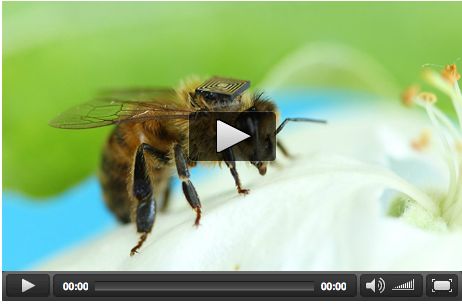
Thousands of Australian honey bees have been fitted with tiny sensors in a study to help understand what is causing the precipitous collapse of colonies around the world.

About 5,000 bees will carry the 2.5mm x 2.5mm sensors, like hi-tech backpacks, for the next two months at the study site in Hobart. Continue reading

Bees, Close Up, Thanks To Important Research, USA Taxpayers And Some Very Talented Photographers

Bees are important.  You knew that.  We did not need to tell you.  But how many bee species are there in the world? Give it your best guess before reading further. And how different do those species look, one from another? We had no idea. We first encountered these images here so credit where due (we had recently started to wonder) for where we learned about these amazing photographs and the story behind them:

Sam Droege is head of the US Geological Survey Bee Inventory and Monitoring Laboratory in Maryland, and for the past seven years he and his team have been photographing bees and other insects to create online reference catalogues to help researchers identify the thousands of species across North America. Here is a selection of their work.

Then we did a search to learn more and found that they have been broadcast far and wide for some time.  Jordan G. Teicher, who writes about photography for Slates Behold blog, had what we thought was the best presentation of these so we chose the photo above from his post:

The photos of native bees and wasps taken at the U.S. Geological Survey Bee Inventory and Monitoring Lab are used for scientific purposes, but they are created with an eye for artistry.

“I tell the interns and techs that when they are taking these pictures, they are artists,” lab chief Sam Droege said via email. “We have powwows over the pictures after they are taken to discuss lighting, positioning, and the perennial problems of bad bee hair and dirty specimens.” Continue reading

Urban Pollination Studied By Seattle’s Citizen Scientists

Thanks to this coverage commitment we came across the video above and this accompanying explanation:

…Marie Clifford and Susan Waters, graduate researchers at the University of Washington in Seattle, have found a way to get around scarce research funding: citizen scientists. The Urban Pollination Project (UPP), co-founded in 2011, takes Seattle community gardeners and trains them to collect data on local bees. Tapping into citizen scientist efforts, Clifford and Waters can gather data from 35 Seattle community gardens – a scale of research otherwise outside of their resources and funding capabilities. Continue reading

Bees Provide Much

Earlier this week we highlighted a new clearing house for bee news, and now we have come across another, deeper well of knowledge related to bees, and all that they do/provide more than honey. Who knew, for example, that among the important physical realm issues he pondered, bees figured into this man’s thinking:

“If the bee disappeared off the surface of the globe then man would only have four years of life left. No more bees, no more pollination, no more plants, no more animals, no more man.” Albert Einstein

This and more, from CIBER (Centre of Integrative Bee Research) at the University of Western Australia in Perth, Western Australia. Their cross-disciplinary research team includes: Continue reading

Bee News, Weekly

Thanks to the Guardian‘s expanding coverage of an important topic with a series that routinely rounds up bee news (yes, it sounds funny, but try living without bees):

About this series

Concerned about the the worldwide bee crisis? Join us for Buzzfeeds, a weekly analysis featuring our resident bee expert Alison Benjamin Continue reading

Live from the Hive

Did you ever wonder what it is like to be a Honeybee? Now you can see for yourself with the new live Honeybee cam above. Brought to you by the same people who brought you the famous Bear cam, this live feed offers a variety of camera views of a Honeybee hive recovering from a hive collapse. Continue reading

Urban Pollinators

There are a growing number of websites, like the one above, that simply bring attention to an important issue in the ever-urbanizing world: how important plant life is to human life, and (not incidentally) the importance of how those plants get pollinated.  Click here for perhaps the leading blog on this issue, at least in the UK, which seems to lead the world on paying attention to this issue. The Guardian‘s Alys Fowler is the most consistent supporter in the journalistic world: Continue reading

Krulwich On Insect Communities Understood Through Mathematics

Another of those wonders, this time about bees, brought to you by the godfather of fun science reporters:

Solved! A bee-buzzing, honey-licking 2,000-year-old mystery that begins here, with this beehive. Look at the honeycomb in the photo and ask yourself: (I know you’ve been wondering this all your life, but have been too shy to ask out loud … ) Why is every cell in this honeycomb a hexagon? Continue reading

For Bees, Europe Does The Right Thing

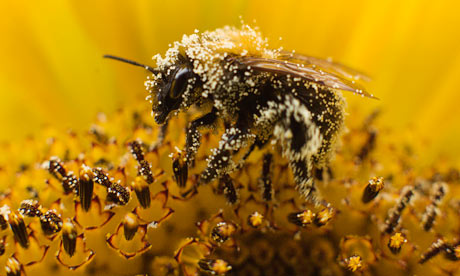
A bee collects pollen from a sunflower in Utrecht, the Netherlands. EU states have voted in favour of a proposal to restrict the use of pesticides linked to serious harm in bees. Photograph: Michael Kooren/Reuters

A bee collects pollen from a sunflower in Utrecht, the Netherlands. EU states have voted in favour of a proposal to restrict the use of pesticides linked to serious harm in bees. Photograph: Michael Kooren/Reuters

At a time when news out of Europe often points to political dysfunction, on at least one front we can point to some good news for these creatures who need help perhaps more than ever, and deserve it; they are finally getting it in at least one part of the world:

Europe will enforce the world’s first continent-wide ban on widely used insecticides alleged to cause serious harm to bees, after a European commission vote on Monday.

The suspension is a landmark victory for millions of environmental campaigners, backed by the European Food Safety Authority (EFSA), concerned about a dramatic decline in the bee population. The vote also represents a serious setback for the chemical producers who make billions each year from the products and also UK ministers, who voted against the ban. Both had argued the ban would harm food production. Continue reading

Rural Bees

Our soft spot for bees is self-evident. We also have a soft spot for Greece in general and the Peloponnese in particular, the southern part of this southern European country that forms the “sweet spot” for olives, olive oil, wine and yes, honey.

Unblended honey is one of the world’s amazing taste experiences, with sensory “notes” as varied as herbal, floral, citrus and wood. The Peloponnese and the rest of the country provides a wide range of habitats with distinct blooming periods because the majority of its land is home to forests and wild ecosystems with less than a third of it allocated to farming.

“Colony collapse disorder”,  a problem in the United States and some European countries has not yet reached Greece, partially because the beekeepers are still able to maintain a safe distance from commercial farming, and the pesticides so frequently used there.

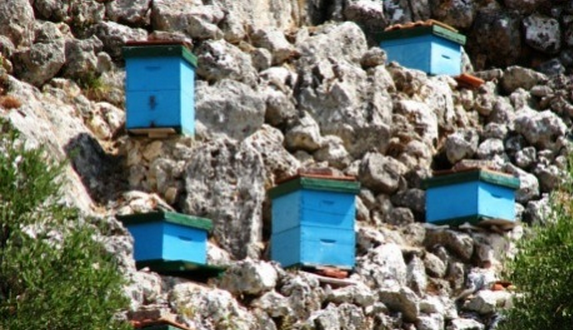
Beekeeping is a way of life in rural Greece. Continue reading

Elderberry – Sambucus nigra

Native to the sub-tropical regions of Europe and Australia, Elderberry grows widely in Kerala’s Hill Range gardens above 1000 meters. The clustered berries are an important food for many birds and the flowers are a favorite for honey bees and other pollinating insects.  Continue reading

Wild Bees And Crop Yields

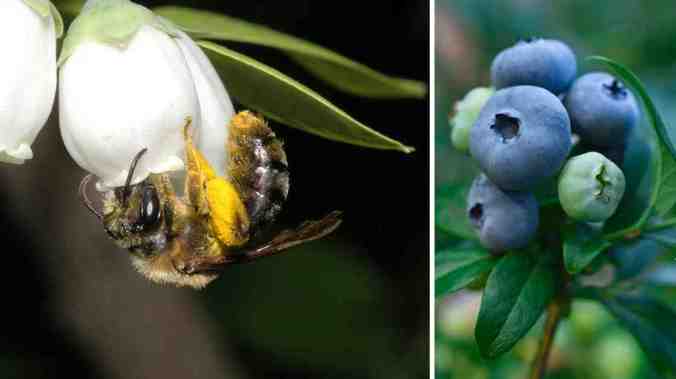
Wild bees, such as this Andrena bee visiting highbush blueberry flowers, play a key role in boosting crop yields. Left photo by Rufus Isaac/AAAS; Right photo courtesy of Daniel M.N. Turner

We like stories about bees for many reasons, but mostly in relation to the seemingly unrelated topics of food and collective action. In less than five minutes, this podcast news story adds important information to the mix:

Some of the most healthful foods you can think of — blueberries, cranberries, apples, almonds and squash — would never get to your plate without the help of insects. No insects, no pollination. No pollination, no fruit.

Farmers who grow these crops often rely on honeybees to do the job. But scientists are now reporting that honeybees, while convenient, are not necessarily the best pollinators. Continue reading

Science Scores One For The Bees

Bees-007

Environmental campaigners say the conclusion, by Europe’s leading food safety authority, sounds the “death knell” for the insect nerve agent neonicotinoid. Photograph: Alamy

There is a steady stream of unhappy news for bees in recent years, with scientists often being called to study the problem and propose solutions; today was just another such news day. We have a particularly soft spot for bees, so these actions taken, reported from Europe, are welcome additions to today’s news:

…”This is a major turning point in the battle to save our bees,” said Friends of the Earth’s Andrew Pendleton: “EFSA have sounded the death knell for one of the chemicals most frequently linked to bee decline and cast serious doubt over the safety of the whole neonicotinoid family. Ministers must wake up to the fact that these chemicals come with an enormous sting in the tail by immediately suspending the use of these pesticides.” Continue reading