Sweet Potato Origin Story


merlin_136754454_c4302230-80b3-4890-af60-f6030c8dde14-master675.jpg

A chromolithograph of Christopher Columbus arriving at the Caribbean. Credit Louis Prang and Company/Getty Images

Thanks to Carl Zimmer for this 1493-ish story:

All by Itself, the Humble Sweet Potato Colonized the World

Many botanists argued that humans must have carried the valuable staple to the Pacific from South America, a hidden chapter in human history. Not so, according to a new study.

merlin_136706727_2ce09f86-757c-4b1a-9282-57e2695eda29-jumbo

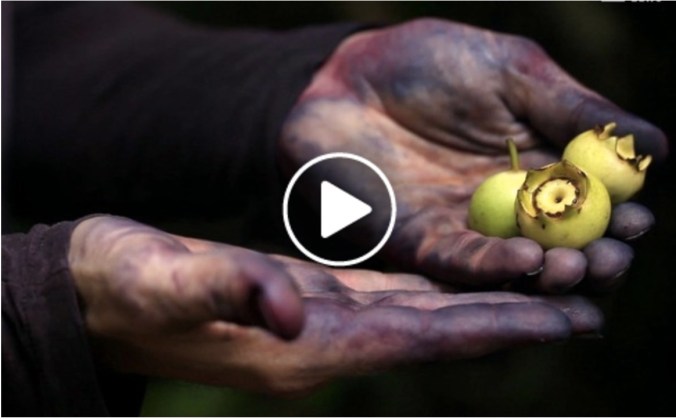
The distribution of the sweet potato plant has baffled scientists. How could the plant arise from a wild ancestor in the Americas and wind up on islands across the Pacific? Credit Karsten Moran for The New York Times

Of all the plants that humanity has turned into crops, none is more puzzling than the sweet potato. Indigenous people of Central and South America grew it on farms for generations, and Europeans discovered it when Christopher Columbus arrived in the Caribbean.

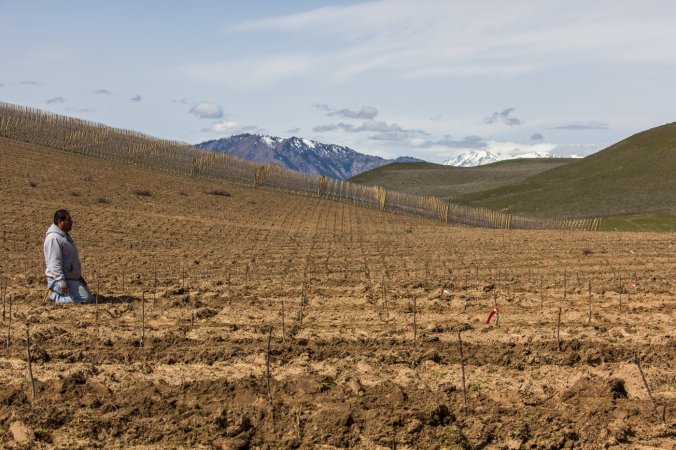
In the 18th century, however, Captain Cook stumbled across sweet potatoes again — over 4,000 miles away, on remote Polynesian islands. European explorers later found them elsewhere in the Pacific, from Hawaii to New Guinea.

The distribution of the plant baffled scientists. How could sweet potatoes arise from a wild ancestor and then wind up scattered across such a wide range? Was it possible that unknown explorers carried it from South America to countless Pacific islands? Continue reading

Toys-R-Greening


720.jpg

Pieces such as leaves, bushes and trees will be made entirely from plant-based plastic. Photograph: Maria Tuxen Hedegaard/Lego

Among contributors to this platform, the number of lego pieces bought over the last fifty years likely aggregates into the hundreds of thousands. And yes, we all eventually knew that the product is petroleum-based and therefore worthy of reconsideration in for the next generation. But they have remained irresistible anyhow, and so we are glad to hear the company is moving in a new direction. Rebecca Smithers, the Consumer affairs correspondent for the Guardian, offers this news on where the company is going with green:

First sustainable Lego pieces to go on sale

Range including leaves, bushes and trees made entirely from plant-based plastic sourced from sugar cane will be available later this year

The first Lego pieces made from plant-based plastic sourced from sugar cane will go on sale this year, the company has announced.

The 85-year-old Danish toymaker said production has begun on a range of Lego botanical elements or pieces such as leaves, bushes and trees, made entirely from plant-based plastic. They will start appearing in Lego box sets with bricks and mini-figures later this year. Continue reading

Banana Futures

dsc_0647_custom-a81d4e41b86f8c114eb1264a2095b0fbfebb1907-s1300-c85

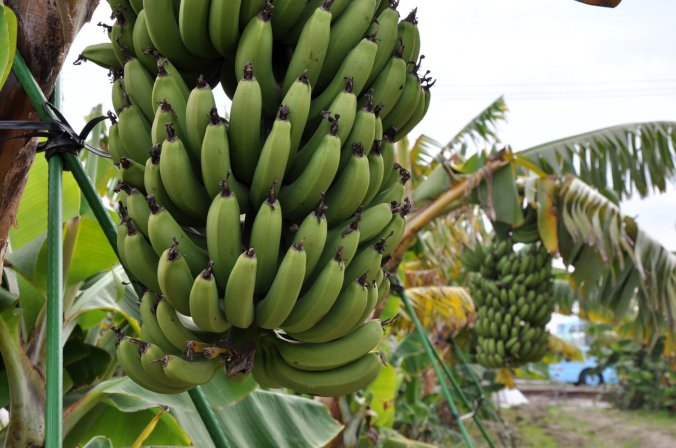
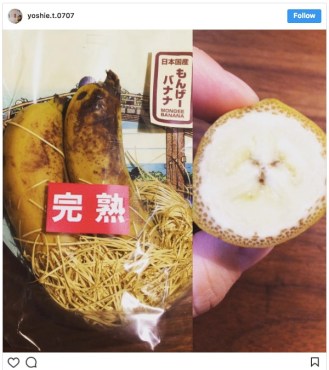
Japanese Mongee bananas debuted this winter, bred to be cold-resistant and pesticide-free. Plus: you can eat the peel. Courtesy of D&T Farm Inc

When we talk about the future of bananas, it is often looking backwards protectively. But forward is an option as this story below illustrates, as with other edibles, likewise:

A Banana Grown At Subzero Temps Also Has An Edible Peel

BananaA Japanese farm introduced a new crop this winter: an organic banana with a peel that’s thin enough to eat. In a nod to this appealing outer covering, Setsuzo Tanaka, the banana’s inventor, has named his creation the Mongee (“mon-gay”) banana — which means “incredible banana” in Japanese.

“Setsuzo’s original purpose was to make a delicious banana with no pesticides,” Tetsuya Tanaka, a spokesperson for D&T Farms, the company behind the banana, writes in an email. Setsuzo Tanaka spent four decades tinkering with tropical fruit before the Mongee was born.

But if pesticides were his main concern, why not just grow a normal organic banana? Aren’t all bananas equally tasty? Continue reading
Undoing Dams, Animals Pitch In

ap_498416275898

Since 2014, Washington’s Elwha River has flowed freely through what once was Lake Mills and the Glines Canyon Dam. But the site still leaves a barren scar in Olympic National Park. Now, a human- and bird-led effort is turning it green again. Photo: Elaine Thompson/AP

Conservation is sometimes in the hands of animals, as this story in the current Audubon magazine illustrates:

Birds Are Helping to Plant an Entire Lost Landscape in Olympic National Park

After the largest dam removal in U.S. history, scientists, Native Americans, and wild animals are working together to restore the heart of the Elwha.

ap_081210040812

The Elwha Valley and Glines Canyon Dam prior to demolition. Photo: Elaine Thompson/AP

It’s a scorching August day in the Elwha Valley, and it only feels bleaker as we peer into the 200-foot void of Glines Canyon Dam. A sputtering trail of water marks the concrete lip where, for nearly a century, two hulking braces trapped logs, rocks, and sediments as they washed down from the mountains of northern Washington, forming a reservoir that was six times deeper than a competition-diving pool. At its height, the dam churned out 13.3 megawatts of hydroelectricity, enough to power 14,000 homes and a local paper mill. But it also seriously altered the Elwha River’s ecology, along with that of surrounding Olympic National Park. Endangered chinook salmon were cut off from their spawning sites; fish-eating birds and otters suffered; and estuaries became more brackish and shallow. Finally, in 1992, the U.S. government issued the order to destroy Glines Canyon Dam and the nearby Elwha Dam. Yet it wasn’t until two decades later when the water was completely freed. Continue reading
Amaranth’s Allies: Art, Academia & Activism

00seeds18-superJumbo.jpg

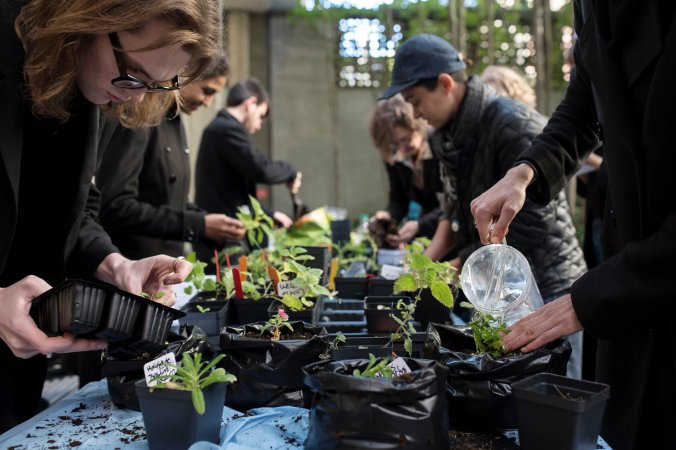
New School students and faculty repotting seedlings on campus in preparation for the exhibition.

Search on the three words “seeds of change” on this platform and you will find dozens of stories dealing with topics like botanical hazard initiatives or innovative approaches to flora conservation and/or climate change and some of the radical plans made to prepare for it that we have linked to over the years. Type the same three words into your favorite search engine and the topics are much more diverse. The three words are also the name of an evolving exhibition, and the subject of an article that mixes art, academia and activism:

A Seed Artist Germinates History

An exhibition using plants brought to New York in ships’ ballast illuminates the city’s hidden past using stinging nettle, milk thistle and amaranth. Continue reading

Seeds of Change

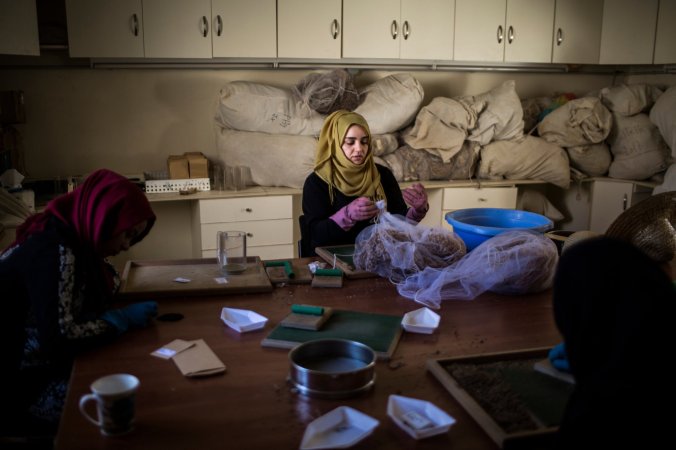
Lebanese workers at the seed bank in Terbol. Mr. Shehadeh’s organization, Icarda, moved operations out of Syria after the war broke out. Credit Diego Ibarra Sanchez for The New York Times

How a Seed Bank, Almost Lost in Syria’s War, Could Help Feed a Warming Planet

TERBOL, Lebanon — Ali Shehadeh, a seed hunter, opened the folders with the greatest of care. Inside each was a carefully dried and pressed seed pod: a sweet clover from Egypt, a wild wheat found only in northern Syria, an ancient variety of bread wheat. He had thousands of these folders stacked neatly in a windowless office, a precious herbarium, containing seeds foraged from across the hot, arid and increasingly inhospitable region known as the Fertile Crescent, the birthplace of farming.

Mr. Shehadeh is a plant conservationist from Syria. He hunts for the genes contained in the seeds we plant today and what he calls their “wild relatives” from long ago. His goal is to safeguard those seeds that may be hardy enough to feed us in the future, when many more parts of the world could become as hot, arid and inhospitable as it is here. But searching for seeds that can endure the perils of a hotter planet has not been easy. It has thrown Mr. Shehadeh and his organization, the International Center for Agricultural Research in the Dry Areas, or Icarda, squarely at a messy intersection of food, weather and war.

Icarda, though it received no state funding, was once known as a darling of the Syrian government. Based in Aleppo, its research had helped to make Syria enviably self-sufficient in wheat production. But a drive to produce thirsty crops also drained Syria’s underground water over the years, and it was followed by a crippling drought that helped to fuel the protests that erupted into armed revolt against the government in 2011.Icarda, in turn, became a casualty of the war. By 2014, the fighting drew closer to its headquarters in Aleppo and its sprawling field station in nearby Tal Hadya. Icarda’s trucks were stolen. Generators vanished. Most of the fat-tailed Awassi sheep, bred to produce more milk and require less water, were looted and eaten. Mr. Shehadeh and the other scientists eventually sent out what they could — including a few of the sheep — and fled, joining half the country’s population in exile. Continue reading

How Does Your Garden Grow?

Partnering with programs like the Atlanta Community Food Bank Garden Program and the Cornell Lab of Ornithology to bring bird friendly and healthy food education to youngsters connects well with our ethos. Citizen Science participation starts early. We hope our readers will share with public and private K-12 schools!

SCHOOL GARDEN GRANTS to grow healthy, happy, nature-connected kids!

School gardens provide an exciting context for cross-disciplinary learning and a wonderful opportunity to engage students in hands-on activities, project-based learning, and citizen science. Kids benefit from gardens in academic, physical, emotional, social, and behavioral ways. We are excited to support teachers’ efforts to engage kids in outdoor learning and all its benefits!

We will award 20 grants to teachers within the United States who strive to take the classroom outside, reconnect students with the natural world, and teach them valuable concepts and skills that integrate across all subjects. In partnership with our amazing sponsor, Alaska Fertilizer, we’re thrilled to support 20 teachers with a $500-$2,000 grant, gardening supplies, and BirdSleuth’s Habitat Connections kit. Funds can support a new garden or the revitalization of an existing one. In addition to funding food/veggie gardens, preference will be given to bird, pollinator, native habitat, rain, and other natural projects. Continue reading

Taste The Place: Navajo Greenthread

tea1_vert-b01a1f88eb6ec914884123022d3526d05ef1a121-s400-c85

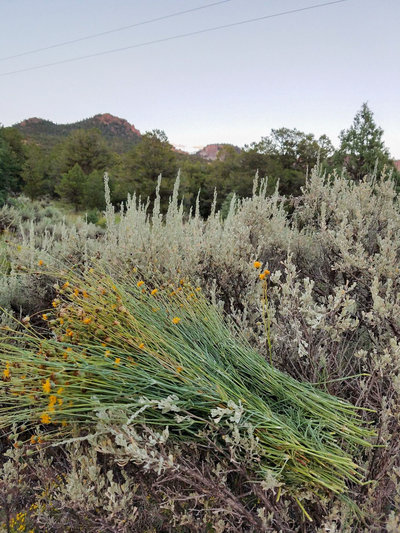
Greenthread (Thelesperma) is a wild plant that thrives in the mid-summer heat of the American Southwest. This bunch is freshly cut, and waiting for rinsing and drying to make Navajo tea. Courtesy of Deborah Tsosie

Give yourself a few minutes for this story about the link between seasonal produce and cultural patrimony:

In the dusty red earth of eastern Arizona’s portion of the Navajo Nation, the main road stretches out beneath the massive white-cloud sky and rubs against barren, chalky mesas; sometimes it skirts the deep, dry crack of a canyon stubbled with sagebrush. Small fields of corn occasionally sprout up beside the road, the short stalks still far from ripe.

But away from the road, tucked beside lakebeds or the foot of a hillside, a mid-summer visitor will find bright yellow flowers beginning to open. They are the crowning blooms of a thin plant that can grow up to two feet tall and which thrives in the heat of this arid region. Called greenthread (Thelesperma), it is used to make Navajo “tea.”

garland2_custom-1d9e1c90351b0643bdc75c5165546a671754eec4-s1300-c85

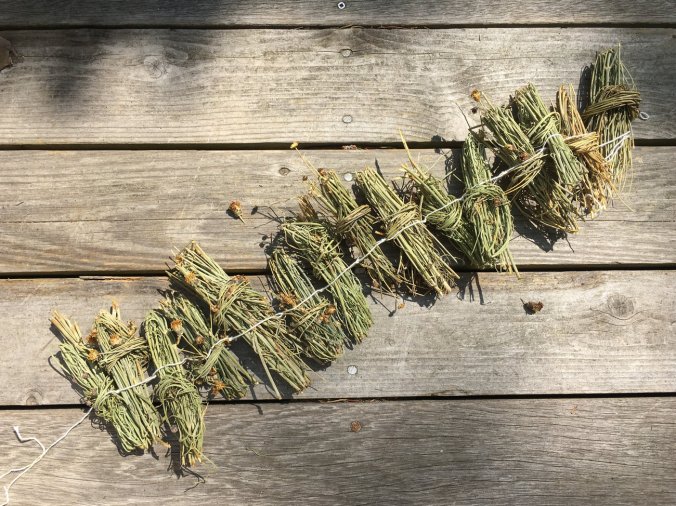
A garland of greenthread. The dried bundles are brewed with sugar or honey. Courtesy of Ada Cowan

Continue reading

Popkin’s Arboreal Editorial

27popkin-master768

Credit Zoe Keller

Economic value from trees is as old as mankind. Timber for homes and ships and all variety of implements. Nutritional value also: olives and their oil; figs; nuts. In the last year while in the forests of northwest Belize we were on the lookout for something new, something we had not yet known, something that would reveal new value within the forest; we had no clue what it might be. We were looking for the intersection between economic, nutritional and ecological value.

And finally a few months ago we came upon a nut that was new to us, and the trees it grows upon are particularly valuable from an ecosystem perspective. And an ethnobotanical perspective. So we are on the lookout for tree stories, especially those that overlap with themes we tend to in these pages–ecological, cultural and edible. We have linked to articles by Gabriel Popkin a couple of times previously, so we are not surprised by this editorial fitting our schema so well:

For several years, I’ve led tree walks in Washington, D.C. I start by asking participants who they are and why they want to spend precious hours looking at trees. My students are nearly all highly educated, successful people who work impressive jobs, speak multiple languages and effortlessly command sophisticated computers and phones. Yet most know barely the first thing about the trees around them. They want to change that. Continue reading

Cactus Celebration

Kormann-Cacti-Woody_N_Argentina_Iguazu_04-51a-new

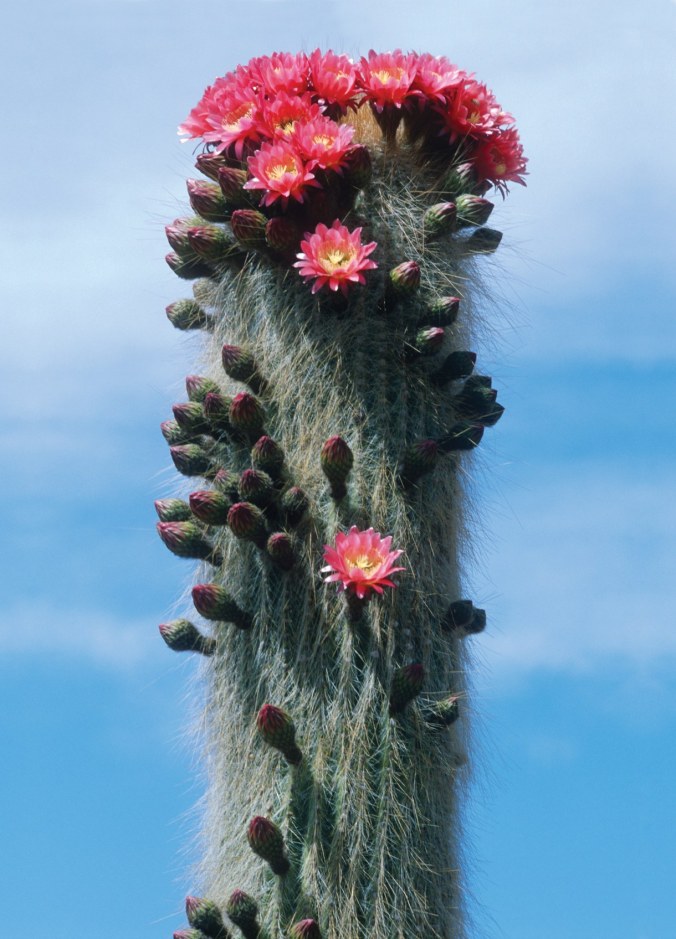
Trichocereus poco. Argentina, 2002. Photograph by Woody Minnich

There are no real favorites when it comes to biodiversity, but it is worth pointing out that there is something unusual about the beauty of spiny things. Thanks to Carolyn Kormann, writing on the New Yorker’s website, for the words she surrounds these photographs with:

The Strange Wonders of the Cactus, the Plant of Our Times

Cactuses are spiky and rough; foreboding and strange; gnarled, Seussian, and sometimes toxic. They remind us of nature’s irreverent brutality, and of its occasional inexplicability. Continue reading

“Arks of the Apocalypse”

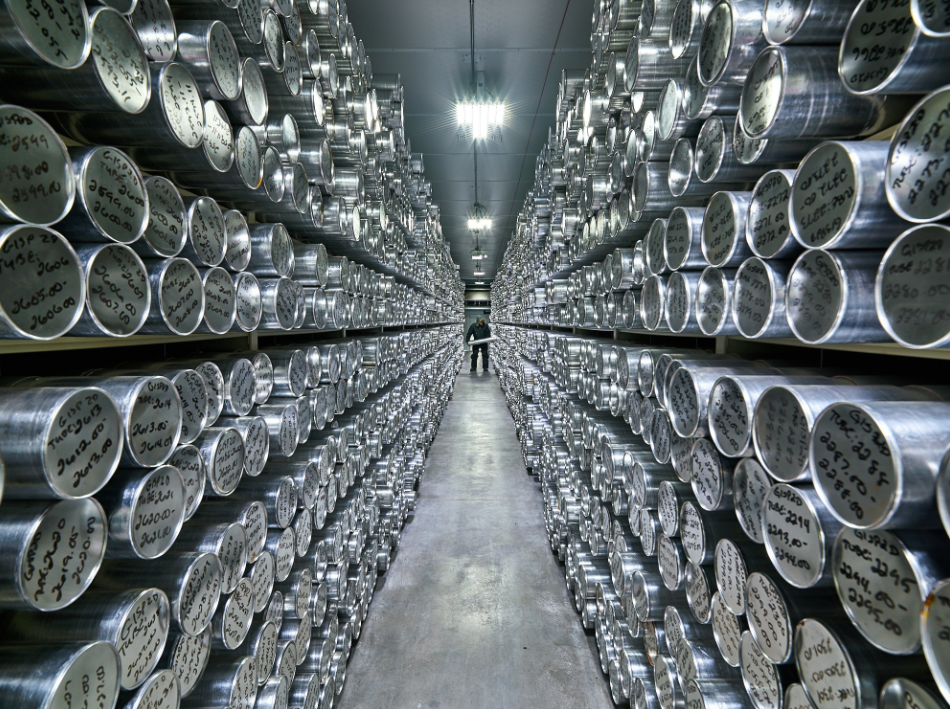
U.S. National Ice Core Laboratory, Lakewood, Colo. photo credit: Spencer Lowell for The New York Times

Thanks again to the New York Times for highlighting the global nature of this scientific “call to arms” to save not only data, but genetic and organic material as a back-up plan for future generations. From the Svalbard Global Seed bank in Norway, to sperm banks for coral, endangered wildlife, and even glacial ice – these archives are meant to provide both a life line to the future and answers about the past.

The fragility of each project is evident as Science itself has come under attack from current public policy, which doesn’t appear to see the irony of their denial in the face of facts about climate change.

It was a freakishly warm evening last October when a maintenance worker first discovered the water — torrents of it, rushing into the entrance tunnel of the Svalbard Global Seed Vault, a storage facility dug some 400 feet into the side of a mountain on a Norwegian island near the North Pole. A storm was dumping rain at a time of year when the temperature was usually well below freezing; because the water had short-circuited the electrical system, the electric pumps on site were useless. This subterranean safe house holds more than 5,000 species of essential food crops, including hundreds of thousands of varieties of wheat and rice. It was supposed to be an impenetrable, modern-day Noah’s ark for plants, a life raft against climate change and catastrophe.

A few Norwegian radio stations and newspapers reported the incident at the time, but it received little international attention until May, when it was becoming clear that President Trump was likely to pull the United States out of the Paris climate agreement. Suddenly the tidings from Svalbard were everywhere, in multiple languages, with headlines like “World’s ‘Doomsday’ Seed Vault Has Been Breached by Climate Change.” It didn’t matter that the flood happened seven months earlier, or that the seeds remained safe and dry. We had just lived through the third consecutive year of the highest global temperatures on record and the lowest levels of Arctic ice; vast swaths of permafrost were melting; scientists had recently announced that some 60 percent of primate species were threatened with extinction. All these facts felt like signposts to an increasingly hopeless future for the planet. And now, here was a minifable suggesting that our attempts to preserve even mere traces of the bounty around us might fall apart, too.

Continue reading

Leading Legumes To A Better Place


Anthropocene’s Emma Bryce has summarized the science of Building a better soybean:

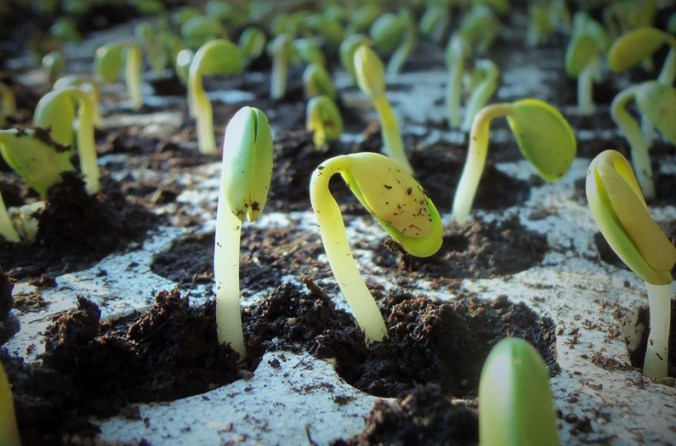
What will it take to build crops that can withstand future climate changes? A group of plant biologists think they might be on to a solution for soybeans. Using genetic engineering, they’ve created a plant whose yields remain unaffected by high-stress conditions. The key lies in a genetic tweak that makes the plant overexpress a particular enzyme, which is thought to boost the efficiency of their photosynthesis cycle and enhance seed production. Continue reading

James Prosek, Come to Chan Chich Lodge!

ProsekSweden.jpg

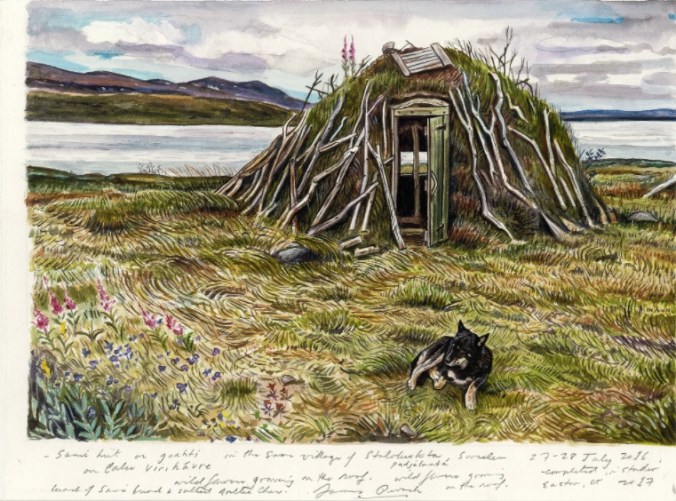
A Sami reindeer herders’ hut on Lake Virihaure in Padjelanta National Park. Credit Paintings by James Prosek, courtesy of the artist and Schwartz-Wajahat, New York

We had a tradition from the moment we arrived in Kerala, inviting some of our favorite people to come see what we were doing there. This one’s work at Cornell was a lovely coincidence because of Seth’s work at the Lab of Ornithology. But mainly, a conservation-oriented naturalist illustrator seemed a perfect fit for what we do. So, seeing what he has contributed to the Travel section of the New York Times today I realize we are due to extend another invitation, this time for him to join us at Chan Chich Lodge in Belize:

A Botanist in Swedish Lapland

By

The plan was to retrace part of a journey that Carl Linnaeus made in 1732 when he was 25, from Uppsala, just north of Stockholm, to the northernmost region of Sweden, known as Swedish Lapland. Linnaeus kept a detailed journal of his travels, often called his “Lapland Journal,” with maps of the mountains, rivers and lakes, drawings and his squiggly handwriting. Continue reading

Citizen Science, Mushroom Edition

04-magic-mushrooms.w710.h473.2x.jpg

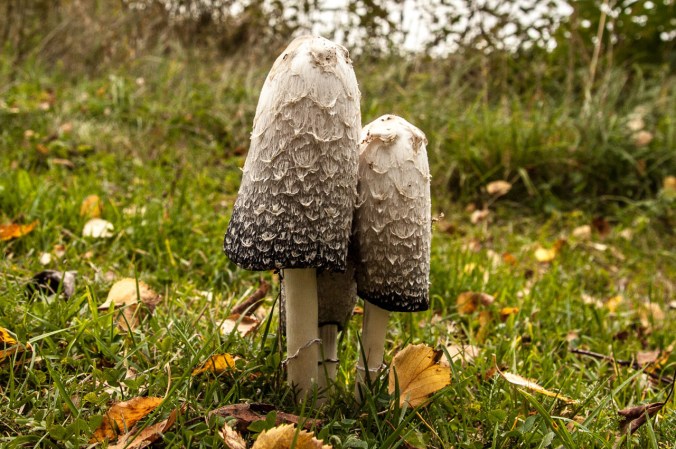
Photo: Johan Hansson/Creative Commons Attribution

We have a mycological leaning on this platform, which started due to Milo’s interest, which was infectious.  So, our news filters pick up stories like this; normally I avoid sharing the stories involving hallucinogens, though I read the serious ones myself. I do not expect stories like this one below from New York Magazine, so this was a pleasant surprise:

Meet the Citizen Scientists Who Think Mushrooms Have Superpowers

By

Last month, around 2,500 people with some connection to hallucinogenic drugs gathered at the Oakland Marriott City Center in Oakland, California for what might best be described as the psychedelics state of the union. Psychedelic Science 2017, as it was more formally known, drew professionals of all stripes: chemists who make the hallucinogens, neuroscientists who study their effects on the brain, therapists who discuss their after-effects on patients, shamans and healers who administer the drugs, and anthropologists like Joanna Steinhardt, who are trying to make sense of the meaning of psychedelic culture. Continue reading

Preserving Biodiversity to Feed the World

BioDiv.jpg

Thanks again to Atlantic for its occasional short film series, and in this case specifically to Erica Moriarty for bringing our attention to a video by Independent Lens available for sampling over at PBS (click the image above):

In the last century, 94% of the world’s seed varieties have disappeared. Family farmsteads have given way to mechanized agribusinesses to sow genetically identical crops on a massive scale. In an era of climate uncertainty and immense corporate power, farmers, scientists, lawyers, and indigenous seed keepers are on a mission to defend the future of food. Botanical explorer Joseph Simcox has been to over 100 countries, collecting thousands of seeds. In this documentary from Independent Lens, he travels to the Peruvian Amazon. Continue reading

Cosmic Crisp

img_4971-2-_custom-32c796fc06c225a286485fa8bc034cc5f61b7652-s1400-c85.jpg

A worker takes a break after planting young Cosmic Crisp trees in an orchard near Wenatchee, Wash. Dan Charles/NPR

The folks at the salt, over at National Public Radio, deliver (click the image above to go to the story) the crispest, juiciest food stories:

Get ready for a new kind of apple. It’s called Cosmic Crisp, and farmers in Washington state, who grow 70 percent of the country’s apples, are planting these trees by the millions. The apples themselves, dark red in color with tiny yellow freckles, will start showing up in stores in the fall of 2019.: Continue reading

Happy Plants?

04GARDEN1-master768.jpg

A dense carpet of woodland perennials. Thomas Rainer, a landscape architect, calls plants “social creatures” that thrive in particular networks. Credit Mark Baldwin

Thanks to the landscape architect Thomas Rainer, and the author, for these observations:

Thomas Rainer and I have both been doing the botanical thing for decades; we know, and use, many of the same plants — and even much of the same horticultural vocabulary. But what he and I see when we look at a butterfly weed or a coneflower, or what we mean when we say familiar words like “layering” or “ground cover,” is surprisingly not synonymous. Continue reading

Plants, Water & Sound

flower-and-earbuds.jpg

Thanks to Brandon Keim and Anthropocene for this summary of some recent science exploring the reactions of flora to sound in their search for water:

Plants can hear water. Could noise pollution interfere?

There’s a transformation underway in how people think about plants: not just as inanimate biological objects, but as capable of perceptions and actions that resemble the intelligent behaviors of animals. Continue reading

Foraging Classes

HornFarmCenterLogoStacked-72-540x540WhiteBGA mushroom dropped in on my life, in an unexpected manner, and now I find myself wandering to unexpected places, such as rural Pennsylvania. I am sharing here mainly as a record of how I have come across the resources that inform how we approach bringing foraging to Chan Chich Lodge.

So, bravo and thanks to our friends at the Horn Farm Center for Agricultural Education, which is my latest find in these wanderings. I particularly like their clearly laid out information on the educational resources they offer, most notably this section on foraging classes: Continue reading

Paleo Diet – Served Up Straight

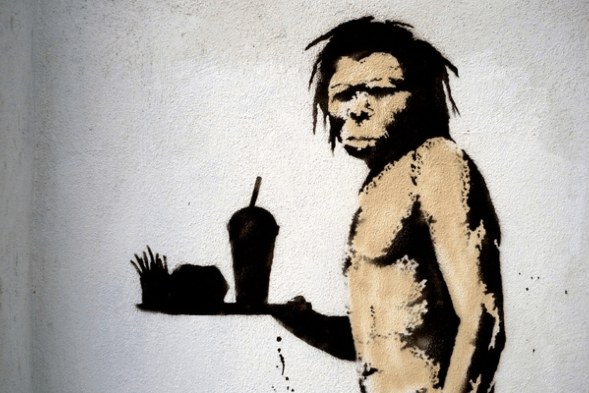
Banksy’s “Caveman”. Credit: Lord Jim Flickr (CC BY-SA 2.0)

Thanks to Scientific American‘s Guest Blog feature for this interesting fodder for thought.

The “True” Human Diet

From the standpoint of paleoecology, the so-called Paleo diet is a myth

People have been debating the natural human diet for thousands of years, often framed as a question of the morality of eating other animals. The lion has no choice, but we do. Take the ancient Greek philosopher Pythagoras, for example: “Oh, how wrong it is for flesh to be made from flesh!” The argument hasn’t changed much for ethical vegetarians in 2,500 years, but today we also have Sarah Palin, who wrote in Going Rogue: An American Life, Continue reading