Methane Is Madness, Central New York

25559408356_2c9efc84c5_b

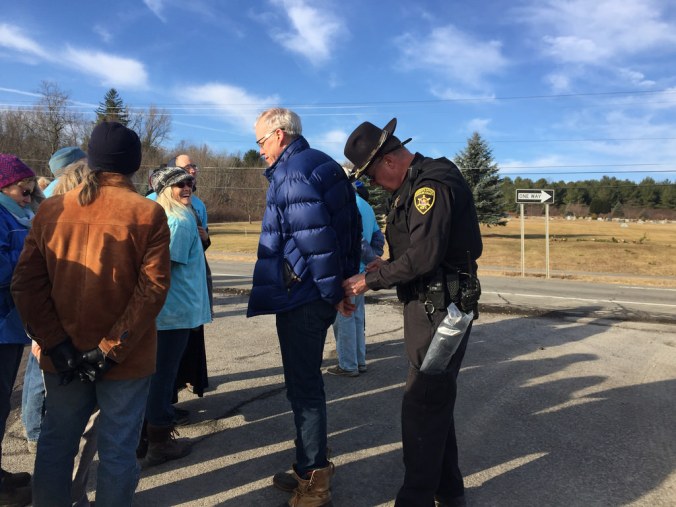
No one contributing to these pages has (yet) taken protest quite this far. We are not surprised to see the man in the blue jacket getting arrested, on principle, but the others listed below–none with as famous a name but all living in a famously protest-inclined part of New York State–make us wonder whether we have what it takes:

Bill McKibben Arrested at Civil Disobedience Action Against Gas Storage at Seneca Lake

Famed author and climate activist joins 56 people from 20 NYS counties to form human blockade at the gates of Crestwood Midstream, demands halt to climate-damaging fracked gas infrastructure, as total number of arrests in sustained campaign hits 537

Watkins Glen, NY – The fight over the fate of the Finger Lakes became national today when best-selling author, environmentalist, and founder of the international climate campaign, 350.org, Bill McKibben joined the opposition. McKibben, 55, was arrested this morning with 56 area residents as part of an ongoing civil disobedience campaign against proposed gas storage in Seneca Lake’s abandoned salt caverns. Continue reading

When Wheels Move the Soul

skating

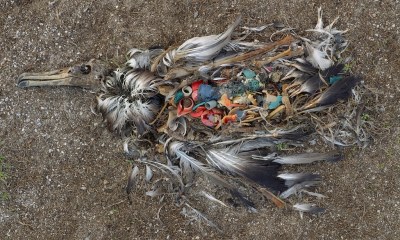
Korogocho skaters are taking advantage of some of the best streets in one of Nairobi’s poorest slums. PHOTO: Will Swanson 

Can a paved road and a pair of used skates aid development? An emphatic yes. This is the story of a failed slum upgrading project that saw the light of day when kids took to the streets. Over scavenging in the dump for things they could resell, the children took to the streets this time to skate. To keep out of trouble. To compete. For a chance at life.

Continue reading

Ocean Cleanup Project Tests Successfully

Around 90% of the world’s sea birds have eaten plastic items that they mistook for food, a study estimates. Photograph: Chris Jordan/Midway: Message from the Gyre

We’ve alluded to the Great Pacific Garbage Patch before, though we haven’t shared any stories covering it directly. Last week, The Guardian reported some good news from The Netherlands, where the prototype for a 100km-long, crowdfunded cleanup boom for the ocean was tested successfully. Arthur Nelsen reports:


Further trials off the Dutch and Japanese coasts are now slated to begin in the new year. If they are successful, the world’s largest ever ocean cleanup operation will go live in 2020, using a gigantic V-shaped array, the like of which has never been seen before.

The so-called ‘Great Pacific garbage patch’, made up largely of tiny bits of plastic trapped by ocean currents, is estimated to be bigger than Texas and reaching anything up to 5.8m sq miles (15 sq km). It is growing so fast that, like the Great Wall of China, it is beginning to be seen from outer space, according to Jacqueline McGlade, the chief scientist of the UN environmental programme (Unep).

Continue reading

Look At the Germans

Wind turbines surround a coal-fired power plant near Garzweiler in western Germany. Renewables now generate 27 percent of the country’s electricity, up from 9 percent a decade ago. PHOTO: Nat Geo

Wind turbines surround a coal-fired power plant near Garzweiler in western Germany. Renewables now generate 27 percent of the country’s electricity, up from 9 percent a decade ago. PHOTO: Nat Geo

Germany has been one of the few countries that have successfully moved away from nuclear energy. Germany has so far successfully shut down its nine units that had the capacity of generating enough power for at least 20 million homes in Europe. In fact, the contribution of nuclear power in Germany’s electricity generation has now fallen to just 16 percent and renewables are now the preferred source of electricity generation in the country.

Germany is pioneering an epochal transformation it calls the energiewende—an energy revolution that scientists say all nations must one day complete if a climate disaster is to be averted. Last year about 27 percent of its electricity came from renewable sources such as wind and solar power, three times what it got a decade ago and more than twice what the United States gets today. The change accelerated after the 2011 meltdown at Japan’s Fukushima nuclear power plant, which led Chancellor Angela Merkel to declare that Germany would shut all 17 of its own reactors by 2022.

Continue reading

To Keep The Mountain Gorillas Alive

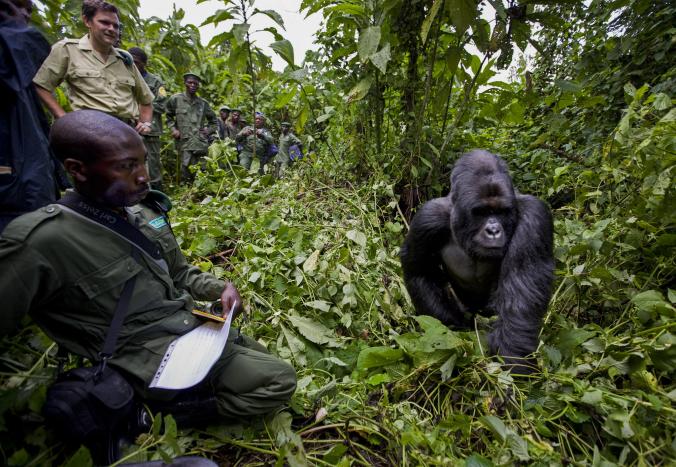
In November 2008, conservation authorities in the DRC had their first sighting of a mountain gorilla in more than 15 months. Because of the commitment and bravery of its rangers, the gorilla population is now estimated to be 880. PHOTO: BRENT STIRTON, GETTY

In November 2008, conservation authorities in the DRC had their first sighting of a mountain gorilla in more than 15 months. Because of the commitment and bravery of its rangers, the gorilla population is now estimated to be 880. PHOTO: BRENT STIRTON, GETTY

The Virunga National Park in the Democratic Republic of Congo is one of the world’s deadliest parks. It’s also home to some 300 mountain gorillas—more than a quarter of those that remain on the planet. Beneath Virunga’s surface lies a wealth of minerals and oil, coveted by multinational companies. Deadliest park because since 1996, more than 150 Virunga rangers have been killed in the line of duty. Emmanuel de Merode, director of Virunga National Park and a National Geographic Society Explorer of the Year, was nearly killed in 2014 for protecting the park and its mountain gorillas.

Continue reading

A Library at the Police Station

Over 5,000 books make up the library at the local police station in Tirupur, a small town in Tamil Nadu state of India. PHOTO: BetterIndia

Over 5,000 books make up the library at the local police station in Tirupur, a small town in Tamil Nadu state of India. PHOTO: BetterIndia

Can libraries be taken out of the four walls of an educational institution? Can it find a place in the midst of communities, accessible not only for children but for all who seek better understanding, greater learning? Like these 5,000 books that traveled from the US to a tiny police station in Tamil Nadu, India.

Continue reading

Forging Understanding Through Food

Luwam Melake (left), a recently arrived Eritrean refugee, and Saba Tesfay, who is half-Hungarian and half-Eritrean, wash, roast and grind coffee beans during a traditional Eritrean coffee ceremony. PHOTO: Lauren Frayer for NPR

Luwam Melake (left), a recently arrived Eritrean refugee, and Saba Tesfay, who is half-Hungarian and half-Eritrean, wash, roast and grind coffee beans during a traditional Eritrean coffee ceremony. PHOTO: Lauren Frayer for NPR

What are ways to combat xenophobia, an aversion to what is perceived as foreign? Especially when that involves fragile human spirits, miles away from their homelands and hoping on the faintest possibility of refuge in an alien land. Budapest is showing the way.

Customers crowd into a bustling Budapest restaurant for dinner. They open their menus, expecting to read about stuffed paprikas and Hungarian goulash.

But instead they find … Eritrean sourdough pancake bread. Afghan pie. Syrian sweets.

“It’s a little bit difficult, because not all the ingredients are available in Hungary. So a few of them are coming from Austria or other countries. But we can do it!” laughs Judit Peter, the bartender and director of special projects at Kisuzem, a trendy, bohemian bar in Budapest’s historic Jewish quarter. “People really like it. We’ve served 80 portions a day — and that’s quite a lot for a small kitchen like ours.”

Continue reading

The BIG Backwater Conservation Story

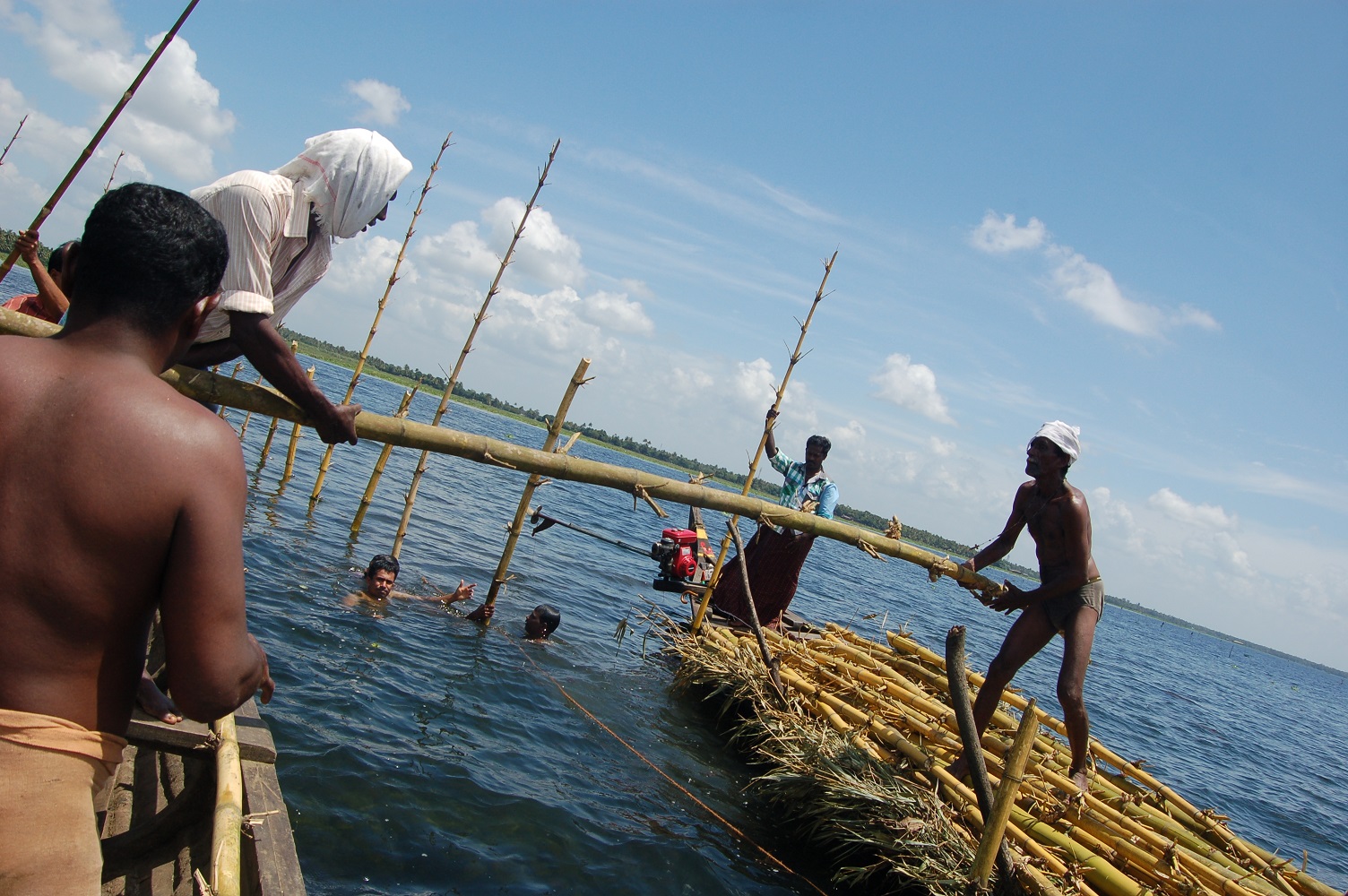
A fish sanctuary in the making on Lake Vembanad, Kerala, India. PHOTO: Scroll

A fish sanctuary in the making on Lake Vembanad, Kerala, India. PHOTO: Scroll

We love the backwaters. Period. Every single time one of our Xandari Riverscapes houseboats puts out into these deep waters, our hearts swell with pride. Responsible showcasing the charm, the timelessness of these waters and its people brings us much joy. And when we come across conservation efforts to maintain the quintessence and soul of this stretch of paradise, we can’t help but let you know.

Spread over 36,000 hectares and three districts in Kerala, this is the kind of landscape that gives conservation ecologists a blinding headache – a resource-rich, highly-productive area that is pulled apart in several directions (waste-dumping, tourism, livelihoods, water security) and depended upon by conflicting communities who have no other alternatives. Lakes have been straddling this intersection all across India – from Chilika in Odisha, to the Bengaluru urban lakes, to Loktak in Manipur, to Vembanad.

Such heavy-use landscapes outside protected areas, however, also might hold answers to the future of conservation. Whether it is a large lake system, or forest fragments that serve as the refuge of a few species or a corridor for wild animals, or a forest fringe, or large agricultural swathes that also host biodiversity, a section of conservationists believes that the future lies in teamwork between nature and mankind.

Continue reading
The Good Race Against Food Waste

Claus Holm, a Danish celebrity chef, demonstrates at a festival on the Danish island of Fyn how expired products lurking at the back of the fridge can still be delicious. PHOTO: Sidsel Overgaard for NPR

Claus Holm, a Danish celebrity chef, demonstrates at a festival on the Danish island of Fyn how expired products lurking at the back of the fridge can still be delicious. PHOTO: Sidsel Overgaard for NPR

By 2050, the world will need 60 per cent more calories per year to feed a projected population of 9 billion. Cutting the rate of global food loss and waste could help bridge this food gap while creating environmental and economic benefits. And the people of Denmark are already well ahead in the race to cut food waste. While the Stop Wasting Food movement is the national embodiment of a collective consciousness, the need to cut back on waste has seeped through the consumer chain, as NPR finds.  Continue reading
Guardian Pressure, Gates Commitments, Turning The Dial

Screen Shot 2015-06-28 at 7.55.55 AM

In case you have missed the campaign that the Guardian has been waging, click the image above, which will take you to their partnership site, 350.org, which we have been admirers of too. Brilliant and bold, better than anything the New York Times or any other media outlet has done in activist mode on environmental issues. You may say you want your journalism pure and objective, but on this issue, with the planet in the balance, we say not so.

Is it just coincidence that after campaigning for months now to get Mr. Gates to do something more, this good news arrives today?

Gates to invest $2bn in breakthrough renewable energy projects

Bill Gates plans to double investment in green energy technology and research to combat climate change, but rejects calls to divest from fossil fuels

Bill Gates has announced he will invest $2bn (£1.3bn) in renewable technologies initiatives, but rejected calls to divest from the fossil fuel companies that are burning carbon at a rate that ignores international agreements to limit global warming.

Speaking to the Financial Times, Gates said that he would double his current investments in renewables over the next five years in a bid to “bend the curve” on tackling climate change.

The Bill and Melinda Gates Foundation, lead by Gates and his wife, is the world’s largest charitable foundation. According to the charity’s most recent tax filings in 2013, it currently has $1.4bn invested in fossil fuel companies, including BP, responsible for the Deepwater Horizon oil spill in the Gulf of Mexico.

In March, the Guardian launched a campaign calling on the Gates’ Foundation and the Wellcome Trust to divest from coal, oil and gas companies. More than 223,000 people have since signed up to the campaign.

Continue reading

Who Are You in the Wild?

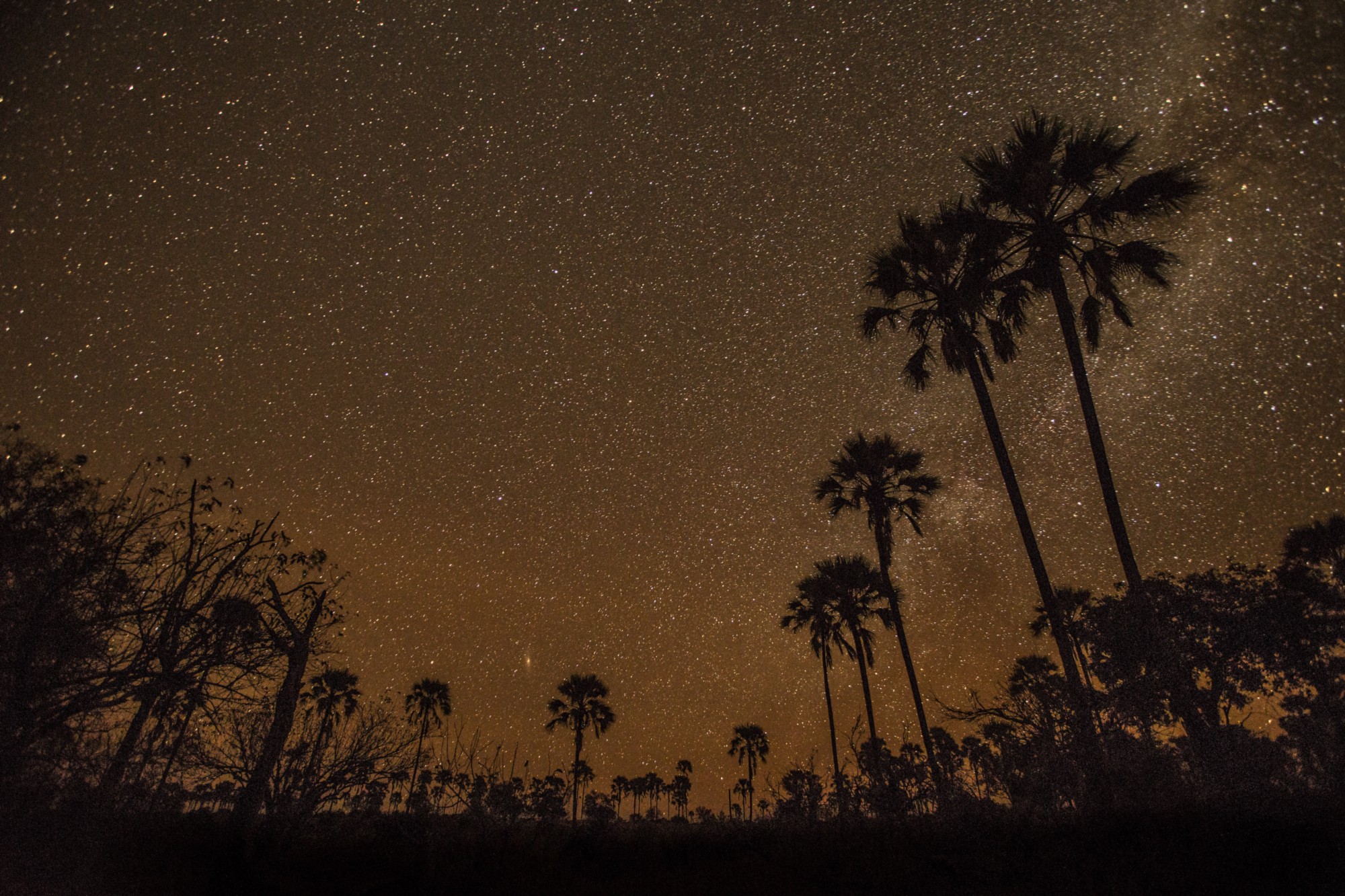
The Okavango Delta is home to the largest-remaining elephant population and keystone populations of lion, hyena, giraffe and lechwe antelopes. It’s the size of Texas, and visible from space. PHOTO: James Kydd

The Okavango Delta is home to the largest-remaining elephant population and keystone populations of lion, hyena, giraffe and lechwe antelopes. It’s the size of Texas, and visible from space. PHOTO: James Kydd

What can one man do towards protecting the wild? For starters, your efforts could center around saving Africa’s last remaining wetland wilderness. Then, you could be so relentless in your mission that UNESCO includes your ‘battleground’ in its World Heritage List. Then, you keep at your preservation project until you meet the Minister of Environment and get him to sign a pact on protecting the river system. If that all sounds good to you, allow us to introduce explorer Steve Boyes who has done all of the above and pledged his life to the conservation of the Okavango River Delta.

Located in northern Botswana, this untouched 18,000 square kilometer alluvial fan is the largest of its kind, and is supplied by the world’s largest undeveloped river catchment — the mighty Kavango Basin. The Okavango Delta is home to the largest-remaining elephant population and keystone populations of lion, hyena, giraffe and lechwe antelopes. It’s the size of Texas, and visible from space.

Continue reading

Plastic Aplenty

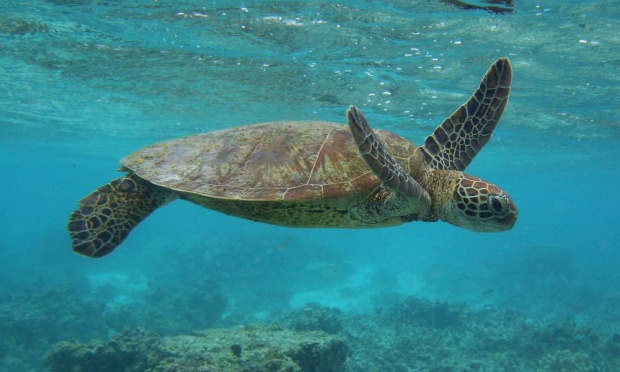
Forty per cent of the small turtles travelling through Moreton bay were recently found to have consumed plastics and more than two-thirds of the endangered loggerhead turtle, too. PHOTO: Mark Kolbe/Getty Images

Forty per cent of the small turtles travelling through Moreton bay were recently found to have consumed plastics and more than two-thirds of the endangered loggerhead turtle, too. PHOTO: Mark Kolbe/Getty Images

Queensland – said to be Australia’s dirtiest state (discarded rubbish recorded at levels almost 40 per cent above the national average). Also home to Moreton Bay, the only place in the country where dugongs gather in herds and which has a significant population of the endangered loggerhead sea turtle. Over celebrating its coastal flora and fauna on World Oceans Day, the state and its leaders found themselves mulling a ban on single-use plastic in the area. Here’s why.

Continue reading

Mining Companies Gonna Mine

MAËLLE DOLIVEUX

MAËLLE DOLIVEUX

We try to stay away from stereotypes, cliche, cute kitten videos and memes. But the editorial below will leave you with heightened awareness of just how low mining companies can go, literally, figuratively and spiritually to get what they want. Rio Tinto is a cliche, a nightmare about killing the earth and any cultural artifacts that get in the way of its profits. Let’s awake from this nightmare. Come on, Arizona, be better than this:

Selling Off Apache Holy Land

Lydia Millet

ABOUT an hour east of Phoenix, near a mining town called Superior, men, women and children of the San Carlos Apache tribe have been camped out at a place called Oak Flat for more than three months, protesting the latest assault on their culture. Continue reading

Be for Boreal Forests

Canada’s boreal region covers almost 60 percent of the country’s land area, essentially spanning from the Atlantic to the Pacific. It is one of the largest and most complex ecosystems on the planet. PHOTO: borealfacts.com

Canada’s boreal region covers almost 60 percent of the country’s land area, essentially spanning from the Atlantic to the Pacific. It is one of the largest ecosystems on the planet. PHOTO: borealfacts.com

Question time. What is the largest intact forest on the planet? If you guessed Amazon, firstly you aren’t the only one; more importantly, you’ll have to know the answer is the Canadian boreal forests. Here are some facts: It covers a staggering 1.5 billion acres, between 1-3 billion birds flock nest and breed here each year, it alone stores 208 billion tonnes of carbon i.e 20 years worth of the world’s emissions from burning fossil fuels, and contains 200 million acres of surface fresh water alone. Yes, that’s a lot of numbers; but they are only some of the reasons for making sure these forests stay intact.

So, whether you enjoy a morning chasing warblers in Central Park’s Ramble, listening to ovenbirds sing in Rock Creek Park in Washington, D.C., scanning the Chicago waterfront for ducks or strolling the shaded paths of Mount Auburn Cemetery near Boston while vireos and tanagers flash through the old trees, you are drawing delight directly from that immense swath of unsullied northern forest.

Continue reading

A Case for the Wildebeest

According to the UNEP, wildebeest populations have declined in areas of southern and eastern Africa. PHOTO: Natural Habitat Adventures

The Great Migration of Serengeti National Park, designated a World Heritage Site, is legendary. The stars of this 1,200-mile odyssey are the wildebeest – 1.5 million of them – accompanied by 200,000 zebras. Every year is an endless journey for them, chasing the rains across 150,000 square miles of woodlands, hills and open plains. With them having firmly established their caliber as a species built literally for the long run, the migration spectacle should probably be the only space where the wildebeest find a mention. But conservation debates are hovering over these beasts – categorized as non-threatened by the IUCN – and looking at them as a keystone species.

Continue reading

The Whole Truth

The last time potholes really had our attention was almost three years ago, when Russian ad agency Voskhod painted local politicians’ faces around garish potholes in the town of Yekaterinburg. Over the years and particularly during our stay in India, bumpy rides have come to be a way of life. There’s the initial irritation over a wheel jumping into a hole, some amount of cursing the government for not getting around to fixing them, and then resignation – this has almost come to be a ritual. But when we happened to chance upon Chicago-based Jim Bachor’s ‘art-titude’ towards potholes, it was pleasant to see how the issue had become apolitical in that it did not scream for attention from the government. Instead, the passive activism appears more of a manifestation of citizen ownership. And, a good sense of art and humor.

Continue reading

Thank You, Oxford!

thThanks to the Guardian for its ongoing coverage of environmental news, including great attention to Oxford University’s environmental stewardship; also, especially to George Monbiot for his role at the paper as a shaker-upper:

Damian Carrington

But UK’s second biggest university by endowment says it will not bow to campaigners’ demands for full divestment from fossil fuels

The University of Oxford has ruled out future investments in coal and tar sands from its multi-billion pound endowment, but said it would not divest from all fossil fuels as demanded by thousands of students, academics and alumni.

Campaigners welcomed the move as a victory for the fast-growing fossil fuel divestment campaign, as it was the first time the university had made clear its position on the issue.

“Many world leaders have studied under Oxford University’s spires,” said Andrew Taylor, at campaign group People & Planet. “They should be taking notes today. The lesson is: it’s time to phase out coal and axe tar sands.” Continue reading

Creative Solutions To Seemingly Impossible Challenges

A protester opposes allowing Royal Dutch Shell drilling rigs to dock in Seattle on their way to Alaska. Credit David Ryder for The New York Times

A protester opposes allowing Royal Dutch Shell drilling rigs to dock in Seattle on their way to Alaska. Credit David Ryder for The New York Times

After a shockingly depressing, disappointing decision by the President of the USA to approve Shell’s drilling plan in the Arctic (this company is clearly not ready for the responsibility–what happened to your better, judicious self, Mr. President?!?), it is heartening to see citizens’ creative counter-tactics (even if this particular David does not beat this particular Goliath, thank you anyway, thinking people of Seattle, for trying):

Continue reading

Stand with Máxima

Acuña de Chaupe has become the target of harassment and violence because she refuses to cede her land to Newmont. Photo credit: Latin American Mining Monitoring Programme

Acuña de Chaupe has become the target of harassment and violence because she refuses to cede her land to Newmont. Photo credit: Latin American Mining Monitoring Programme

Thanks to EcoWatch for this story, which we had not previously posted about but which highlights a cause worthy of supporting in Peru:

…Newmont is majority owner of the massive Peruvian gold mine Yanacocha, the second largest gold mine in the world, and its planned Conga gold and copper mine nearby would be even larger, requiring a farming community to move and the four lakes they rely on for irrigation to be drained.

But the community has so far refused to relinquish its treasured land and lakes, and in response activists say the company has reacted with intimidation and harassment.

One person particularly in the company’s cross-hairs is Máxima Acuña de Chaupe, says activist Mirtha Vásquez, a Peruvian lawyer at Wednesday’s meeting. Continue reading

Skyfall

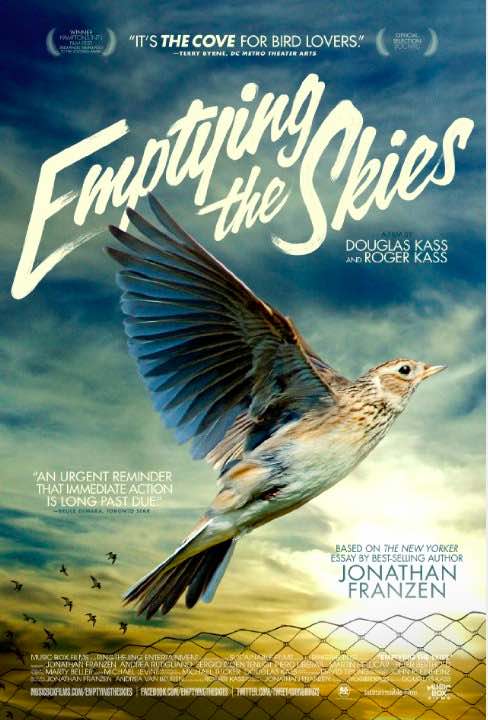
Screen Shot 2015-04-26 at 7.22.04 AMOur literary bird-loving activist took it to another level, as the film (click above) testifies well.  Really, this must stop. Thanks to the Cornell Lab of Ornithology for bringing this to our attention with this interview:

Cornell Lab: Where are you from, how did you find out about this issue—and what made you want to make this film?

Roger Kass: Born and raised in Bedford, New York, I have a background in law and movie production.  I first learned of the issues presented in Emptying the Skies by reading Jonathan Franzen’s story in the New Yorker magazine and wanted to make a film about it to bring these terrible truths to a larger audience.

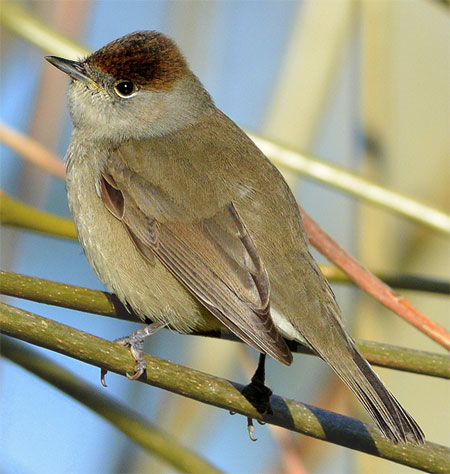
The Blackcap (Sylvia atricapilla) is a commonly hunted species in the Mediterranean. This female safely returned to her northern breeding grounds in England. Photo by jefflack Wildlife & Nature via Birdshare.

The Blackcap (Sylvia atricapilla) is a commonly hunted species in the Mediterranean. This female safely returned to her northern breeding grounds in England. Photo by jefflack Wildlife & Nature via Birdshare.

The main characters in the movie are environmentalists and people who love animals, but they don’t seem like bird watchers exactly. What motivates them to take this interest in tiny songbirds? Follow-up question: they are all men. Why do you think there were no women?

Doug Kass: As is often the case, there were a lot of things we weren’t able to put into the final film. Most CABS members we met were very passionate bird watchers and had extensive lists of sightings, as well as favorite locations, and bucket lists. You could describe them as “extreme bird-watchers,” because unlike most birders, they come into physical contact with the birds.

If you are podcast-oriented, give Leonard Lopate a listen on this topic: Continue reading