Dear Citizens Of Malta, Please Embrace The Ban

Activists say hunters use the currently legitimate spring season for hunting quails (above) to illegally hunt other birds. Photograph: Natalino Fenech

Activists say hunters use the currently legitimate spring season for hunting quails (above) to illegally hunt other birds. Photograph: Natalino Fenech

We have noted previously the odd (to us) behaviors that can be easily interpreted (not only by us) as abominable treatment of birds. It is not only a regional thing in the Mediterranean, this incomprehensible desire to decimate bird populations. From the Guardian, this news on the efforts of a dedicated group of activists:

Vote could see the spring hunting of birds such as quail and turtle doves, which is outlawed in the rest of the EU, banned in Malta

in Malta

Fiona Burrows is the kind of activist that hunters in Malta love to hate.

The Nottingham 30-year-old has been threatened, cursed at, and pushed around while doing the job she says she lives for: stealthily filming the illegal hunting of protected migratory birds and reporting perpetrators to the police.

Burrows takes precautions – she always parks her car facing an exit route and has even bought wigs to avoid detection by hunters – but she thinks these are probably not enough.

“Something bad is going to happen to me sooner or later,” she says. “It’s inevitable.” Continue reading

Foundation Earth, Randy Hayes, Cheaters and Fair Play

LogoTransp2We have not linked to this foundation before, but we have been listening to and reading Randy Hayes on the subject of climate change recently, and think this is a good primer to share about the foundation’s strategy and goals:

Toward A True-Cost Economic Model: Cheater Economics, Fair Play, & Long-Term Survival

Over the next century communities worldwide will experience an unprecedented shift of weather instability. Extreme weather events are ecological spasms often driving economic spasms and regional collapses. Concerned citizens and opinion leaders need to prepare before these eco-spasms proliferate. Far from being prepared, most leaders and power brokers are not mindful of the rethinking that is required. This working paper and appendix offers a brief economic vision, a set of economic principles, and list of problematic trends to help respond to the challenges as we work for a better day. –Randy Hayes

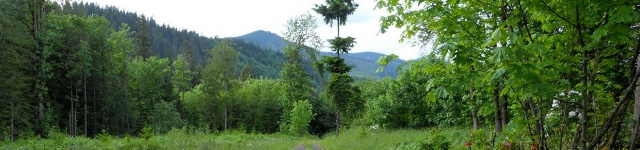
Mountains

Continue reading

Embracing Student Activism


Students have been rallying for change since the time of Plato with varying degrees of effectiveness. In fact, the act of questioning authority through dialogue is part and parcel to the educational process. It’s heartening when the voices of resistance from multiple communities join forces to activate change.

Congratulations to the students of Syracuse University for rallying SU to remove endowments to direct investments in coal, gas and oil companies.

Syracuse is the biggest university in the world to have committed to remove its endowment from direct investments in coal, oil and gas companies. It aims to make additional investments in clean energy technologies such as solar, biofuels and advanced recycling.

In a statement, the university said it will “not directly invest in publicly traded companies whose primary business is extraction of fossil fuels and will direct its external investment managers to take every step possible to prohibit investments in these public companies as well”. Continue reading

Where Are The Market Forces When We Need Them?

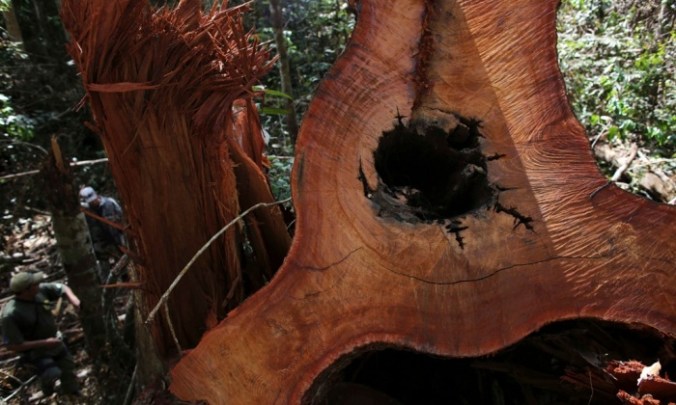
More than half of the world’s forest loss between 1990 and 2010 took place in Brazil and Indonesia. Photograph: Nacho Doce/Reuters

More than half of the world’s forest loss between 1990 and 2010 took place in Brazil and Indonesia. Photograph: Nacho Doce/Reuters

Thanks to the Guardian‘s environment-focused reporting for this sad evidence on the state of affairs:

Subsidies to industries that cause deforestation worth 100 times more than aid to prevent it

Brazil and Indonesia paid over $40bn in subsidies to industries that drive rainforest destruction between 2009 and 2012 – compared to $346m in conservation aid they received to protect forests, according to new research

Brazil and Indonesia spent over 100 times more in subsidies to industries that cause deforestation than they received in international conservation aid to prevent it, according to a report by the Overseas Development Institute (ODI).

The two countries handed out over $40bn (£27bn) in subsidies to the palm oil, timber, soy, beef and biofuels sectors between 2009 and 2012 – 126 times more than the $346m they received to preserve their rainforests from the United Nations’ (UN) REDD+ scheme, mostly from Norway and Germany.

Continue reading

Don’t Go Away Mad, Just Go Away

koch_sitegraphic-830x467

The Koch brothers are a wondrous phenomenon. You probably knew that. What can you do (?), you might ask. We know the feeling. Well, here is something. A public service announcement from our colleagues at EcoWatch, linking to a petition effort worthy of your consideration:

The Natural History Museum just released an unprecedented letter signed by the world’s top scientists, including several Nobel laureates, calling on science and natural history museums to cut all ties to the fossil fuel industry.

The letter comes on the heels of recent news that Smithsonian-affiliated scientist Willie Soon took $1.25 million from the Koch brothers, Exxon Mobil, American Petroleum Institute and other covert funders to publish junk science denying man-made climate change, and failed to disclose any funding-related conflicts of interest.

In particular, it points a finger at the Smithsonian National Museum of Natural History (D.C.) and the American Museum of Natural History (NY), where David Koch is a member of the board, a major donor and exhibit sponsor.

Oil mogul David Koch sits on the boards of our nation’s largest and most respected natural history museums, while he bankrolls groups that deny climate science.

Sign this petition to the Smithsonian and the American Museum of Natural History: It’s time to get science deniers out of science museums. Kick Koch off the Board! Continue reading

Chocolate’s Guardian Angels

cocoa-quarantine-022_wide-39016c6d94530c4ab8f0cde5365f072e7d22cf61-s1500-c85

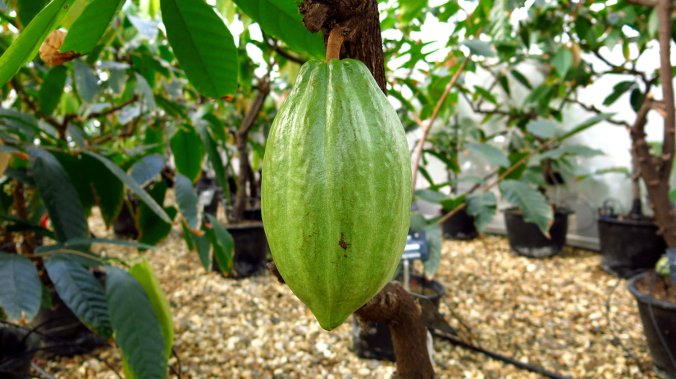
Rows of potted cocoa plants from around the world. Before a cocoa variety from one country can be planted in the other, it first makes a pit stop here, at a quarantine center in rural England. Courtesy of Dr. Andrew J. Daymond

Chocoholics have plenty to celebrate in this age of chocolate renaissance. But also plenty to worry about. Conservation is the answer to some of those worries, and collective action is the mechanism by which some of the conservation must be carried out. This article, again from “the salt” thanks to National Public Radio (USA), gives us one example:

The Fate Of The World’s Chocolate Depends On This Spot In Rural England

Walk into a row of greenhouses in rural Britain, and a late English-winter day transforms to a swampy, humid tropical afternoon. You could be in Latin America or Sub-Saharan Africa. Which is exactly how cocoa plants like it.

“It’s all right this time of year. It gets a bit hot later on in the summer,” says greenhouse technician Heather Lake as she fiddles with a tray of seedlings — a platter of delicate, spindly, baby cocoa plants.

Since she started working here at the International Cocoa Quarantine Centre, eating chocolate doesn’t feel the same.

“You certainly know all the work that goes into producing that chocolate bar, and all the potential threats that could be there in the future,” Lake says.

Continue reading

Resistance Is Not Futile

Pisonia with acidification graph 2009, Judy Watson, acrylic and chinagraph pencil on canvas, 214.5 x 191.5 cm

Pisonia with acidification graph 2009, Judy Watson, acrylic and chinagraph pencil on canvas, 214.5 x 191.5 cm

We have not seen him for a noticeable stretch of time, but glad to read the words of one of the singular voices of our generation, leading the charge, again:

In the third piece in the Guardian’s major series on climate change, Bill McKibben describes how relentless climate movements have shifted the advantage towards fossil fuel resistance for the first time in 25 years. But he argues triumph is not certain – we must not rest till the industry is forced to keep the carbon in the ground.

You can read previous pieces here

The official view: all eyes are on Paris, where negotiators will meet in December for a climate conference that will be described as “the most important diplomatic gathering ever” and “a last chance for humanity.” Heads of state will jet in, tense closed-door meetings will be held, newspapers will report that negotiations are near a breaking point, and at the last minute some kind of agreement will emerge, hailed as “a start for serious action”. Continue reading

Redefining Recycling

In the early years of this site we highlighted a concept of “the fourth r” – focusing on the restaurants and events planners who support a form of social entreprenuership by donating excess food to local shelters. On an annual basis huge amounts of prepared foods go to waste in all forms of venues, but the classic buffet-style cafeteria is a long-term culprit. But luckily creative solutions have gone hand-in-hand with awareness of the problem. At the time we used the term “recycled” when taking about the food programs. Kudos to the new voices who redefined at as “repurposed.”

Back in 2011 when I was a student at the University of Maryland in College Park I once noticed a massive pile of trash in front of a dining hall. A closer look revealed that it was mostly food — a half-eaten sandwich, a browning apple and what appeared to be the remains of the day’s lunch special.

The heap was gross, but intriguing. Turned out it was a stunt to get students thinking about how much food they throw out each day.

Nowadays, students are coming face to face with their food waste, and its environmental and social impact, a lot more often. They also have more opportunities do something about it. Continue reading

The Ecological Health Of Oceans In Dire Need Of Support

The news that is fit to print, for better or worse as it impacts our mood and our sense of hope (or sense of doom on occasion), includes this review of the current best knowledge on marine ecosystems by one of our favorite science writers:

Ocean Life Faces Mass Extinction, Study Says
Scientists find what they say are clear signs that humans are beginning to damage oceans on a catastrophic scale, but there is still time to preserve their ecological health.

Finger Lakes, Just Say No

It is not a simple matter to resist all the various ways in which our natural environment is being threatened in insidious manner on a regular basis, especially proposals that appear to solve energy needs. Please, no snickering about chardonnay-sipping liberals while you read the latest such proposal in the region a number of our contributors call home, because these are actually salt of the earth farmers and craft level producers of a sacred beverage (yes, we can pour it on when properly motivated) who will suffer most if this project is implemented as proposed:

WATKINS-slide-WT0Z-thumbStandardWhat Pairs Well With a Finger Lakes White? Not Propane, Vintners Say

Local vintners are fighting a project under which tens of millions of gallons of liquefied petroleum gas, and up to two billion cubic feet of natural gas, would be stored in caverns near Seneca Lake.

Lima, Climate Change, Key Takeaways

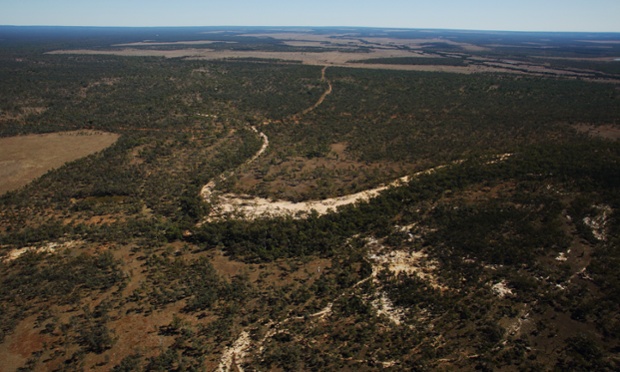
The Galilee basin in central Queensland: ‘it would produce 6% of the carbon necessary to take the planet past a 2C temperature rise, the red line set by the world’s governments’. Photograph: Andrew Quilty/PR

The Galilee basin in central Queensland: ‘it would produce 6% of the carbon necessary to take the planet past a 2C temperature rise, the red line set by the world’s governments’. Photograph: Andrew Quilty/PR

We new that his leaving 350 would not mean any retreat from activism. Proof positive here. Thanks to Bill McKibben and the Guardian for their attention to this week’s meetings in Lima:

The world’s nations are meeting in Lima, near the equator, to pledge and promise about global warming. But the actual worth of those promises can be more accurately gauged in the far north and the far south of the planet, where real decisions in the next months will show whether the climate concern is rhetorical or real.

By now most people know about the northern example: the tar sands of Alberta. Some time in the coming months the new Republican-controlled Congress will demand that Obama approve the construction of the Keystone XL Pipeline. If he vetoes that call and sticks to his principles, it will help keep expansion of the tar sands complex in check. That won’t make up for America’s vast expansion of oil and gas drilling in recent years, but it will send some kind of signal: there is a limit somewhere to how much fossil fuel we plan to extract. Continue reading

Doses Of Truth On Oil Prices, Alternative Energy And Climate Change

PHOTOGRAPH BY DANIEL ACKER/BLOOMBERG VIA GETTY

PHOTOGRAPH BY DANIEL ACKER/BLOOMBERG VIA GETTY

There is a quarter hour podcast about the Lima climate change talks that is as good as it gets in terms of bringing complex issues to a bearable level of simplicity (spoiler alert: our maven of doom is at her best in terms of realism), and that dose of information pairs well with this dose by Michael Specter, the New Yorker‘s other “tough truths” guy:

Just before the turn of the millennium, I met a man who had recently invested a fortune in wind power. He said he wanted to do all that he could to slow the course of climate change. He was also convinced that, as the world began to run out of oil, alternative sources of energy would offer a unique entrepreneurial opportunity. “Oil prices will fluctuate for a while,” he told me. “But, eventually, they can only move in one direction. Up. Oil is a finite resource and, as supplies dwindle, the costs will have to rise. That will make alternatives like wind power much more attractive.” Continue reading

Illegal Wildlife Trade, Quantified

9f71b8b7-4c32-4afe-86e7-2d27c9f6b728-620x372

Photograph: James Morgan/WWF/AFP/Getty Images

The Guardian’s coverage of one of our least favorite but critically important topics is appreciated, as always:

Continue reading

Wet Future, Sustainable Cities

city-sponge

Thanks to Conservation for this counterintuitive explanation of the sustainable city of the future, with the water-related effects of climate change taken into account:

THE FUTURE WILL NOT BE DRY

In a world of melting ice caps, storm surges, and tropical cyclones, the most resilient cities aren’t the ones that fight the water back—but the ones that absorb it.

By Fred Pearce

The ramshackle river port of Khulna in southwest Bangladesh is one of the most flood-prone urban areas on Earth. The third-largest city in one of the world’s poorest and most populous nations is at constant risk of inundation. It lies 125 kilometers inland from the shores of the Indian Ocean. And yet a tenth of this city of 2 million people is flooded at least ten times a year on average.

Continue reading

Profits, Privileges, Environmental Destruction

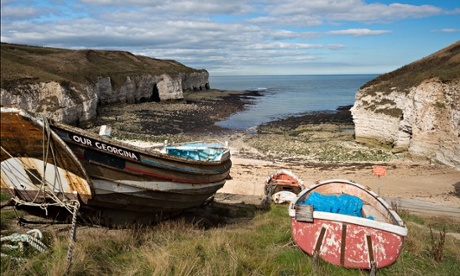
Mombiot blog on sea protection : Fishing boats near the beach at Flamborough head Yorkshire

Fishing boats near the beach at North Landing, Flamborough Head, on the Yorkshire coast. Falmborough Head is home to one of the UK’s three ‘no take’ zones – that in total cover just 5 sq km. Photograph: Paul Richardson/Alamy

The excellent Guardian editorialist, whom we have linked to more than once, strikes again:

Ripping up the sea floor on behalf of royal profits

George Monbiot: Even the pathetic laws protecting marine life in this country are instantly swept aside in response to lobbying by Prince Charles’s tenants

A few days ago, I visited the Flamborough Head “no take zone”, one of the UK’s three areas in which commercial fishing is prohibited.

Here marine life is allowed to proliferate, without being menaced by trawlers, scallop dredgers, drift nets, pots and all the other devices for rounding it up, some of which also rip the seabed to shreds. A reef of soft corals, mussels, razorfish and other species has begun to form, in which plaice and cod, crabs and lobsters can shelter, unmolested by exploitation. Fantastic, isn’t it?

Well curb your enthusiasm. Continue reading

If You Happen To Be In Eleuthera…

Bahamas-Lionfish-Jewelery

Regular readers of this site are familiar with contributor Phil Karp’s wonderful posts about this invasive species. He’s been advising this group in Eleuthera for several months. We wish we could be there!

Can you?

Conservation, Passenger Pigeons, History Of Extinction

Gérard DuBois

Gérard DuBois

My favorite doomsday journalist (and I mean that as the highest compliment) posted over the weekend an unamusing memo to remind us that this is an important centenary anniversary. It ups the ante on our commitment to the community of birdwatchers, casual and serious alike, who support important conservation of wildlife habitat all over the world.

It is not amusing to be reminded about various tragic commons, especially ones for which collective action would seem to have been achievable. We link to these stories in the hope that doomsday outcomes will become less likely if we remind ourselves often enough.

Yesterday the ever-better New York Times, newspaper of record that pays more and better attention to environmental issues than most other publications, saw fit to print this piece by the Executive Director of the Cornell Lab of Ornithology, for which we give our thanks and share with you in whole due to its value as a public service:

ITHACA, N.Y. — THE passenger pigeon is among the most famous of American birds, but not because of its beauty, or its 60-mile-an-hour flight speed. Nor is it a cherished symbol of our great country. No, we remember the passenger pigeon because of the largest-scale human-caused extinction in history.

Continue reading

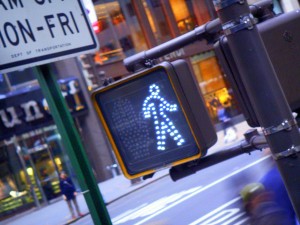
Why We Walk

Photo Courtesy of digitaldeconstruction.com

Photo Courtesy of digitaldeconstruction.com

I have been endlessly fascinated by walking. I asked myself Why We Walk while I walked 400 km on the Camino de Santiago. A recent article by Adam Gopnik in the New Yorker has brought me to this question again in a new context. The article talks about what it means to be a pedestrian in the modern world and how the role of walking has changed as it’s become less necessary. The sad thing about walking for pleasure instead of necessity means that it occurs less. Many of us spend our lives in the sitting position: sitting in cars to then go sit at work and then sitting at home after a long day of sitting. I’m generalizing here as I call myself out on my sedentary life. Our bodies are made to walk, so I must ask myself, Why Don’t We Walk?

Roads are not enjoyable to walk in an increasingly auto dependent world. When living in a residential area there isn’t much activity to make walking around something that invites ‘randomness’. Adam Gopnik writes in the New Yorker about Why We Walk. He says,”We start walking outdoors to randomize our experience of the city, and then life comes in to randomize us.” The sidewalks are public space. In the suburbs we have a lot of private space and little public space. I have to wonder how it could affect our psyche to not brush up against the world. I wonder what we take away when we lose the opportunity to have chance interactions in indeterminate public spaces.  I wonder how creative we could be as a culture if the majority of our interactions with strangers didn’t occur over money exchanges. Adam Gopnik talks about the vague excitement and pure chance of walking in New York City.

You could walk anywhere. Saturday all day, Sunday all day, I’d tramp through the lower-Manhattan neighborhoods. The differences, architectural and social, among Tribeca and SoHo and the East Village, to name only contiguous areas, were distinct and vivid and nameable then: cast-iron buildings shading off into old egg- and paper-carton factories sweetly interrupted by small triangular parks, and edging over, as you walked east, into poor-law tenements that were just being reclaimed by painters. I would set off on a Saturday morning and walk all day, and achieve Kazin’s feeling of vague excitement, of unearned release, in a way that I have never felt before or since.

I like this description because it shows the way he was able to interact with the environment around him as a walker. Suburbs that are designed for cars make walking an outdated form of transportation. It’s inefficient and time consuming if you live in a city that’s designed for cars rather than pedestrians. In the suburbs, there aren’t many people dancing in the ‘sidewalk ballet’ as Jane Jacobs puts it. So, I just wonder what a healthier culture there would be if there were more public space for people to live outward facing lives that brushed up against each other.

The article brings up a quote from Frédéric Gros’s book A Philosophy of Walking, “The purpose of walking, is not to find friends but to share solitude, for solitude too can be shared, like bread and daylight.” This quote to me highlights the sort of communion we can have with each other while walking. While I was walking the Camino, I felt that communion with fellow walkers as well as with the landscape. I was sharing solitude with the landscape. I think taking away that walking aspect of communion in our lives further isolates us from nature. Continue reading

Ocean Conservation, Of Vital Interest Among Islanders Everywhere, Gets Its Due From The Relatively Tiny Barbuda

A map of protected marine zones that are being established around the Caribbean island of Barbuda. Credit Waitt Institute

A map of protected marine zones that are being established around the Caribbean island of Barbuda. Credit Waitt Institute

We had not expected to see Dot Earth again, but all of a sudden, thanks again for the surprise Mr. Revkin:

A Small Island Takes a Big Step on Ocean Conservation

Marine life in the Caribbean has been badly hurt in recent decades by everything from an introduced pathogen that killed off reef-grooming sea urchins to more familiar insults like overfishing and impacts of tourism and coastal development.

Some small island states are now trying to restore once-rich ecosystems while sustaining their economies. A case in point is Barbuda, population 1,600 or so, where the governing council on Aug. 12 passed a suite of regulations restricting activities on a third of the island’s waters. The regulations and reef “zoning,” in essence, came about after months of discussions involving fishing communities, marine biologists and other interested parties, facilitated by the Waitt Institute, a nonprofit conservation organization. Continue reading

Seed Vault, Conservation For The Long Run

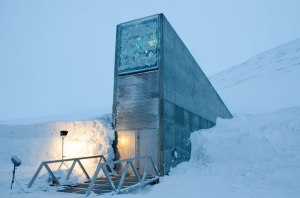
Travels to the seed vault on top of the world

Travels to the seed vault on top of the world

In advance of a story of our own, albeit set in the tropics at our upcoming beach resort, on this same topic, we thank Conservation for the story  they offered in an earlier issue of their magazine about this seed vault way way north:

…One day in Svalbard lasts four months, and the sun never sets; one night lasts four months, and the sun never rises. The other four months consist mainly of either long days with short nights or long nights with short days. Here the equinoxes—the two days annually with 12 hours each of daylight and darkness—really mean something. But what does “a day” mean here, and how many are there in a year? Continue reading