Golden Eagle Population On The Mend

3500 (1).jpg

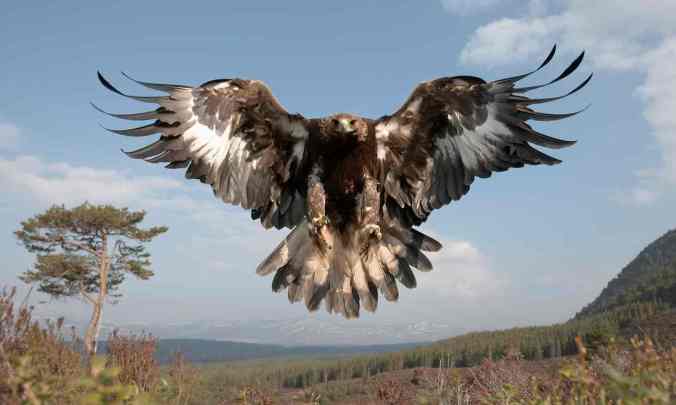
There are now more than 500 breeding pairs of golden eagles in the UK, all in Scotland. Photograph: Peter Cairns/RSPB

Scotland, a hospitable environment for one of the majestic birds, deserves credit for this comeback:

UK golden eagle population soars to new heights

Numbers pass the level deemed viable for the raptor’s long-term survival but it remains missing from a third of its traditional territories

Britain’s golden eagle population has soared to new heights, according to a new survey released on Wednesday.

There are now more than 500 breeding pairs in the UK, up 15% and passing the threshold at which bird’s long-term future is thought viable. Continue reading

Life Among The Lighthouses

Lighthouse.jpg

Writing now from Villa del Faro, in Baja California Sur, I am delighted to read this article from the Travel section this week in the NY Times:

Keeping the Fire of Irish Lighthouses Alive

The golden age of lighthouse construction is long gone, but in their wake are beautiful vistas and stories that bring modern Irish history to life.

By

To get to the Clare Island Lighthouse in County Mayo, in the west of Ireland, you climb up to the island’s northern cliffs along a road of stones, past damp sheep chewing grass, around the bend through an alley of fuchsia hedges in bloom. Keep walking until you reach the lighthouse and slip your key in the lock, hang your parka by the door and take a seat beside the peat-burning fireplace. Someone may be nearby to take your drink order, and the reward for a long walk will be a cold gin and tonic and the soft heat of the fire. Continue reading

Polar Bears On View


Thanks to EcoWatch for this one:

WATCH LIVE CAM: Annual Polar Bear Migration

Explore.org welcomes back the mystical polar bear species to Pearls of the Planet live nature cam family for another season.

The live cameras are being hosted with nonprofit Polar Bears International, which is dedicated to conserving polar bears and the sea ice they depend on. Frontiers North Adventures, a long time ecotourism partner will provide views from its Tundra Buggy Lodge. Continue reading

Congrats On Fellowship, Shannon

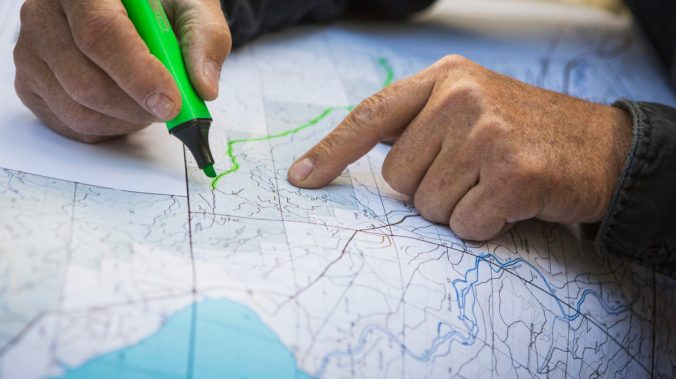
Plum Creek forester Steve Griswold examines a map of the Checkerboard forest.

Good maps and models show us how things are shifting – and are likely to shift in the future — under climate change © Benjamin Drummond

I am happy to meet Shannan this way:

Meet the NatureNet Science Fellows: Shannan Sweet (Cornell)

Conservancy NatureNet Science Fellow Shannan Sweet spends most of her time these days thinking about climate change, agriculture and, well, maps. But the maps that interest her most are not about road trips, or hiking adventures. They’re not even as much about a place as they are about a destination.

Her destination of choice? A world that can feed 10 billion people without exhausting its resources or exacerbating climate change. Continue reading

Deforestation & Big Food

gettyimages-452167592_wide-221276b6658805805386b947e8af444bdba8424e-s1100-c85.jpg

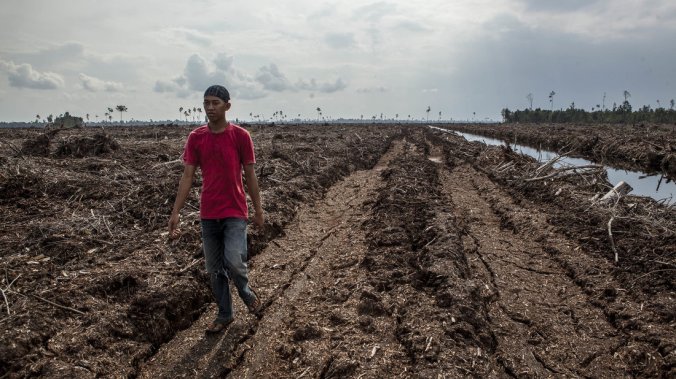
This peat soil in Sumatra, Indonesia, was formerly a forest. Clearing and draining such land releases huge amounts of greenhouse gases. Ulet Ifansasti/Getty Images

The solutions are never easy with regard to climate change; for every bit of good news there is a dose of bad news in the form of realism:

Preparing For Cleaner Air

tnc_86027894-1260x708.jpg

Photo © Kevin Arnold

Thanks to Cool Green Science for this:

Planting Healthy Air: Can Urban Trees Help Clean Up Pollution?

BY ROB MCDONALD

Every report has a genesis, an initial conversation that sprouts an idea that grows into a research study. For me, one of those moments was a phone interview I had with a professor at King’s College in London, about the somewhat goofy idea of gluing pollution to roads. Continue reading

Lessons In Urban Water Conservation From Down Under

01fixes1web-master768.jpg

Residents of Melbourne, Australia, reduced their water consumption during the long drought and effectively saved the city from running dry. Credit Carla Gottgens/Bloomberg

Thanks to the New York Times for this tutorial, provided at city scale, on more sensible management of natural resources:

Australia’s Lesson for a Thirsty California

Sylvia Rowley

MELBOURNE, Australia — On his first visit to Melbourne in 2009, Stanley Grant, a drought expert and professor of civil and environmental engineering at the University of California, Irvine, had a question for his taxi driver.

“How’s the drought?” he asked.

“It’s about 28 percent,” came the reply.

Grant was puzzled. But shortly afterward, they drove past an electronic road sign announcing that the city’s reservoirs were indeed at just 28 percent of capacity. Continue reading

Northeastern USA Will Remain Greener, Longer, Thanks To New Protection In Maine’s Backwoods

06maineexplorer4-master1050

Thank you Maine and thank you federal government of the USA:

Touring Maine’s Newest — and Largest — Parcel of Federal Land

By

On an early fall day, with just a hint of red tinting the maples, the view from the summit of Deasey Mountain is spectacular.

To the west stand the rugged, treeless basins and knife-edge spine of Mount Katahdin. Off to the south, you see Wassataquoik Valley in the near distance, the peaks of the 100 Mile Wilderness beyond. To the east and north, more wild Maine woods and hills rolling for miles, to the Canadian border. Continue reading

Puma, Chan Chich Lodge, & Me (Or You)

puma

Trekking in a protected area, my hopes and expectations balance each other to create a happy medium: if I can see evidence of the ecosystem’s health, and can believe that it supports the entire food chain, I get that biophilia sensation. I do not need to see the top of the food chain, which frequently is a big cat (tigers and leopards in India, jaguars and pumas in Latin America, lions and cheetahs throughout Africa) as much as I would want to. Or as much as I am elated, on days like today and yesterday, when I do see a healthy mature cat. Continue reading

World’s Largest Marine Reserve, Another Accomplishment Of 2016

ap_16302025591684_custom-392a50abd26d8fdc885b7c2a23b34b542c8d806c-s1100-c85

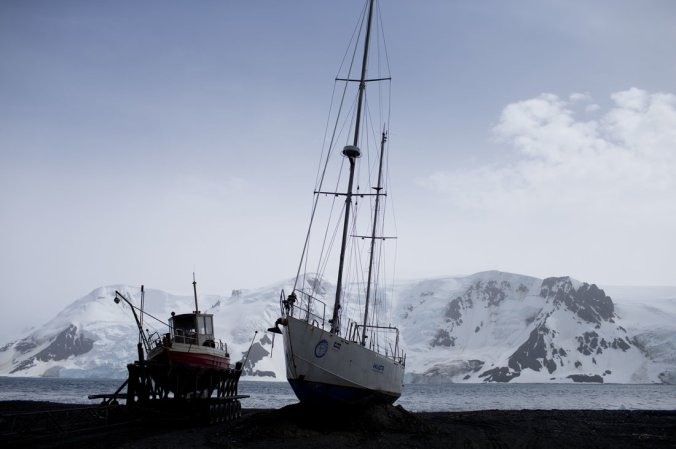
Boats sit on the beach at Bahia Almirantazgo in Antarctica. An agreement was reached on Friday to create the world’s largest marine protected area in the ocean next to the frozen continent. Natacha Pisarenko/AP

In an otherwise dismal year for the environment, we have tried to keep track of the few actions taken that are noteworthy for their scale and ambition. This week, and this month, are ending on a high note in that regard:

Nations Agree To Establish World’s Largest Marine Reserve In Antarctica

MERRIT KENNEDY

After years of negotiations, nations have reached an agreement to establish the world’s largest marine sanctuary in Antarctica’s Ross Sea.

Twenty-four countries and the European Union reached the unanimous deal at an international meeting of the Commission for the Conservation of Antarctic Marine Living Resources in Hobart, Australia on Friday. Continue reading

Centennial Portraiture

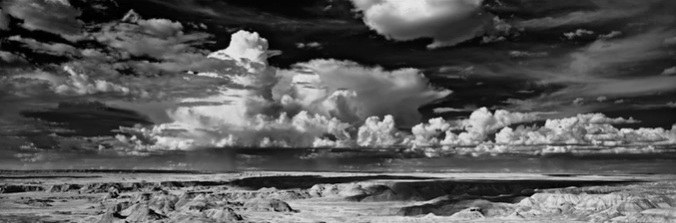
Painted Desert by Cody Brothers

Since August this year a multitude of events have occurred to honor the 100th birthday of the U.S. National Park Service. Aside from the obviously wonderful wilderness experiences available in the country’s 58 parks, as well as our own National Park of the Week series on this site, there are cultural events that highlight the beauty and history of the amazing achievement that is the preservation of our national patrimony for future generations.

Photographers have documented the landscapes of our national parks from the moment the technology made it possible, and the haunting beauty of the panoramas draw artists, explorers and dreamers still.

National Endowment for the Arts grant recipient Cody Brothers is all three. Continue reading

Returning Rivers To Their Natural State

25dam2-superjumbo

A view of the Milford Dam. After the removal of two large dams downriver, the Milford Dam is now the first barrier fish face when ascending the Penobscot River. Credit Murray Carpenter

We are thrilled to read about the rivers getting their groove back:

Taking Down Dams and Letting the Fish Flow

By

BANGOR, Me. — Joseph Zydlewski, a research biologist with the Maine Cooperative Fish and Wildlife Research Unit of the United States Geological Survey, drifted in a boat on the Penobscot River, listening to a crackling radio receiver. The staccato clicks told him that one of the shad that his team had outfitted with a transmitter was swimming somewhere below.

Shad, alewives, blueback herring and other migratory fish once were plentiful on the Penobscot. “Seven thousand shad and one hundred barrels of alewives were taken at one haul of the seine,” in May 1827, according to one historian. Continue reading

Sani Choice, Yasuni Future

5760

Wildlife watch … the author’s guide, Victor, explores an area of flooded forest in the Yasuni national park, Ecuador. Photograph: The Guardian

The Guardian keeps attention on this difficult balancing act, requiring Solomonic wisdom, that we have linked to on more than one occasion:

Ecuador’s Yasuni park: where oil vies with tourism for the rainforest

The Sani people face a choice between encouraging ecotourism to their rainforest – one of the world’s most biodiverse – and allowing in the oil companies

Kevin Rushby

Fernando was sitting on his veranda listening to the whoops and whistles of the jungle. Our visit was a surprise, but the old man was soon answering my questions, keen to talk.

“I arrived here in about 1960,” he told me. “A group of us came to start a new life. Hunting was easy. The animals were almost tame. We just used a blowpipe, no guns.” Continue reading

FishFace

tnc_17243496_preview_cropped-1260x708.jpg

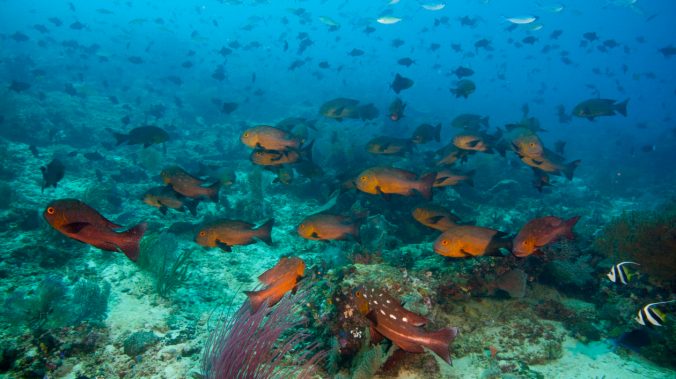
Midnight Snappers, Fusiliers, and Triggers school in deep water, photographed in the waters off Kofiau. Photo © Jeff Yonover

Nature Conservancy’s blog,

We Can Have Oceans Teeming with Fish with FishFace Technology

By Lisa Feldkamp

Traditional methods of gathering fisheries data can take as long as one or two years, costing time and money that many imperiled global fisheries don’t have.Enter FishFace, a new application under development by The Nature Conservancy in partnership with Refind Technologies. Similar to facial recognition software used to identify people, FishFace uses artificial intelligence to learn to recognize fish species in photographs. Continue reading

Before the Flood

21BEFOREFLOOD-master768-v2.jpg

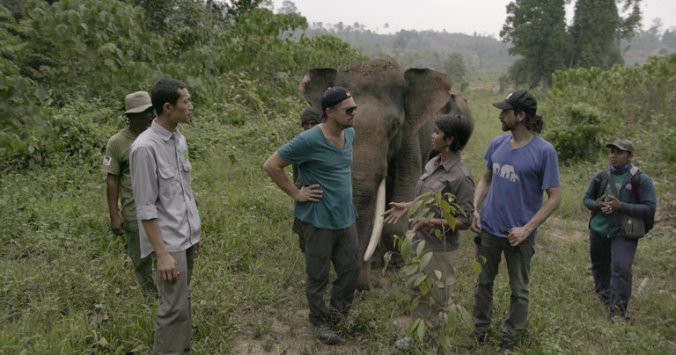
Leonardo DiCaprio in a scene from the global-warming documentary “Before the Flood.” Credit National Geographic

Have you seen it? Let us know if the reviewer got it right:

Review: In ‘Before the Flood,’ Leonardo DiCaprio Sounds the Climate-Change Alarm

Even if you subscribe to the view that a problem isn’t a problem until a Hollywood celebrity tells you it is, “Before the Flood” feels out of phase. It’s a documentary in which Leonardo DiCaprio sounds the alarm about global warming, something that could not possibly have escaped anyone’s attention in recent years and is at this point probably beyond discussion: Either you think climate change is real or you don’t, and the battle lines aren’t likely to be shifted by an earnest movie star. Continue reading

Fiber Fashion

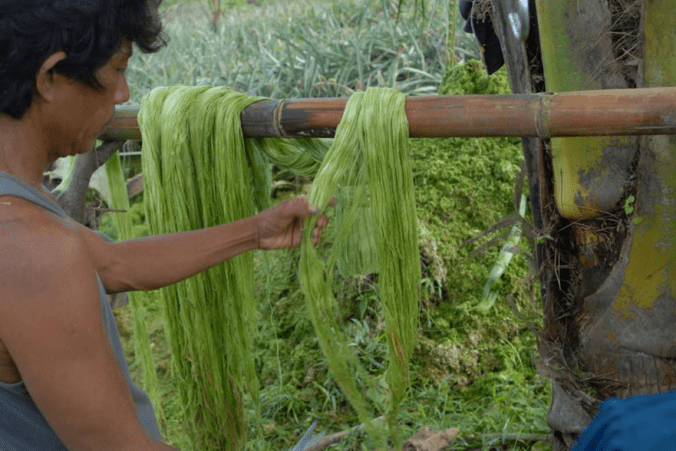
PiñatexTM production will bring new income opportunities for pineapple harvest farmers in developing countries, with the initial development stage taking place in the Philippines

We’re not insensitive to the frequent commentary on both news and social media by animal rights activists against viewing animals as commodities. With those feelings in mind, this discovery of Ananas Anam, a not for profit organization that is developing leather-like textiles using natural fibers that are the by-product of the pineapple harvest, is an exciting one.

I’ll definitely be on the look out for Pinatex products and hope our readers will as well!

ananas- anam – new materials for a new world

OUR SOCIAL IMPACT

Ananas Anam supports pineapple-farming communities in the Philippines. We are developing a new industry that will enhance the social network in rural areas as farmers will be able to sell fibres as a commercial and viable proposition.

Furthermore, the farming communities will benefit from the potential output of natural fertilizer/biogas which is the by-product of fibre extraction.

Other pineapple-growing developing countries will join the Philippines in the production of Piñatex, which will support local economies and strengthen their exports. Continue reading

The Journey We Are All Responsible For

28_millimetres_-_women_are_heroes_action_in_phnom_penh_open_eyes_cambodge_2009

28 Millimeters, Women Are Heroes. Action in Phnom Penh, Open Eyes, Cambodge, 2009

A big part of what we do when we are not adding to these pages involves helping people all over the world plan journeys. We want them to stay in places that we have developed and/or that we manage because we have worked to reduce our contribution to negative anthropocentric travel impacts. There are positive impacts also, of course, including resources flowing to places where they are needed for human development, which in turn increases the likelihood of conservation efforts succeeding.

I was happy to see this newly revamped online publication back in these pages recently, and today as I went to their website I am even more happy to see this amazing article by a writer who was liberally linked to in our first couple of years on this platform. We have enormous respect for Mr. Revkin’s commitment to many of the same things we work on day in and day out. This is a long article, but worth the time and attention:

An Anthropocene Journey

The word “anthropocene” has become the closest thing there is to common shorthand for this turbulent, momentous, unpredictable, hopeless, hopeful time—duration and scope still unknown

By Andrew C. Revkin
October 2016

My reporting career has taken me from smoldering, fresh-cut roadsides in the Amazon rain forest to the thinning sea ice around the North Pole, from the White House and Vatican to Nairobi’s vast, still-unlit slums. Throughout most of it, I thought I was writing about environmental and social problems and solutions.

Lately I’ve come to realize that my lifelong beat, in essence, has been one species’ growing pains. After tens of thousands of years of scrabbling by, spreading around the planet, and developing tools of increasing sophistication, humans are in surge mode and have only just started to become aware that something profound is going on. The upside has been astounding. Child and maternal mortality rates have plunged. Access to education has soared. Deep poverty is in sharp retreat. Despite the 24/7 distilled drama online and on TV, violence on scales from war to homicide has been in a long decline.

Library Luxury of a Different Sort

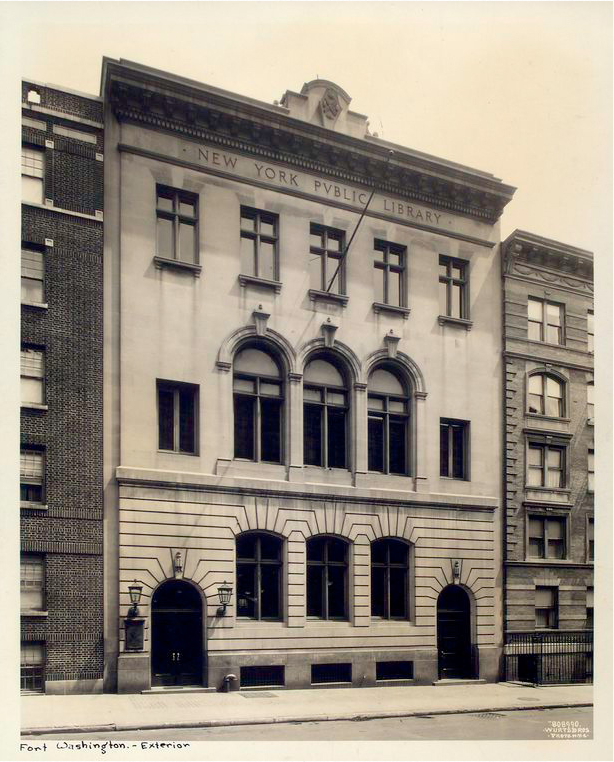
The exterior of the Fort Washington library the year it opened, 1914. The top floor windows are for the apartment. (Photo: New York Public Library/Public Domain)

The beautiful Beaux-Arts design of many of the buildings in the New York Public Library system represent only one definition of luxury. The idea of children growing up playing and reading in the stacks at night produces the colorful imaginings of literature where children spend nights in museums, or ramble about in the “tippy-top floor of the Plaza Hotel”.

I’m sure most of us haven’t heard of the custodian apartments that used to grace New York City’s branch libraries, and I for one, am grateful to Atlas Obscura for sharing this curious history.

Inside the New York Public Library’s Last, Secret Apartments

There are just 13 left.

There used to be parties in the apartments on the top floors of New York City’s branch libraries. On other nights, when the libraries were closed, the kids who lived there might sit reading alone among the books or roll around on the wooden library carts—if they weren’t dusting the shelves or shoveling coal. Their hopscotch courts were on the roof. A cat might sneak down the stairs to investigate the library patrons.

When these libraries were built, about a century ago, they needed people to take care of them. Andrew Carnegie had given New York $5.2 million, worth well over $100 million today, to create a city-wide system of library branches, and these buildings, the Carnegie libraries, were heated by coal. Each had a custodian, who was tasked with keeping those fires burning and who lived in the library, often with his family. “The family mantra was: Don’t let that furnace go out,” one woman who grew up in a library told the New York Times. Continue reading

Salmon Cam, Daylight Hours Only

tnc_69193956_preview_cropped-e1470747691984

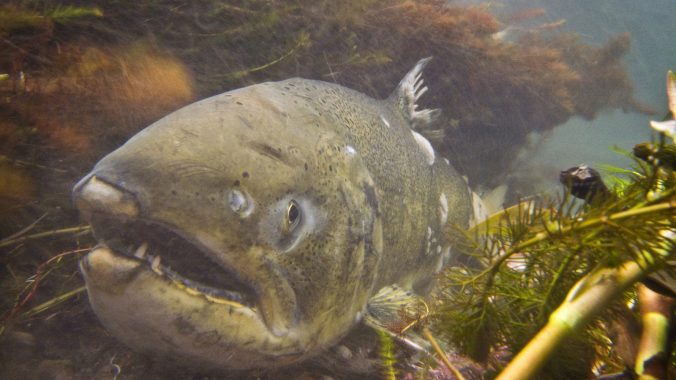
Salmon returning to spawn in the Shasta River. Photo © Bridget Besaw.

We missed this when it was first published a couple months back, so a belated thanks to The Nature Conservancy for pointing us to the site where we can see underwater, in real time, and hopefully observe fish in their natural habitat. Salmon Cam is only visible during daylight hours so click on the website during California daylight hours:

Salmon Cam: Watch Migratory Fish Live

BY MATT MILLER, CHRIS BABCOCK

If you’re a fan of Salmon Cam, you may have noticed a change of scenery when you’re viewing. Continue reading

Bass, Harbinger Of Hope

16nature-master768

Its numbers fluctuate, but the striped bass is far more common than it was just a few decades ago. Credit Getty Images

Thanks to Mr. Taft and the New York Times for this note of reversed fortunes for the fish, and for the anglers who champion them most vocally:

Striped Bass of the Hudson

By

With the jutting jaw of a mob kingpin and the pinstripes of a Wall Street executive, striped bass swim through the brackish waters of New York Harbor like old-school New Yorkers — as if they own the place. Continue reading