Meatless Monday Economics Info Session

5333W

It is Monday, a good time to revisit the “meatless” movement, the one where you take one small step at a time to a better diet. Thanks to Bibi van der Zee and colleagues at the Guardian for arranging this guide to all the good reasons to reduce or eliminate meat from the diet:

What is the true cost of eating meat?

As concerns over the huge impact on the environment, human health and animal welfare grow, what future is there for the meat industry

What are the economics of meat?

5616 (2)

Cattle in the Brazilian Amazon. Photograph: Rodrigo Baleia

Food and farming is one of the biggest economic sectors in the world. We are no longer in the 14th century, when as much as 76% of the population worked in agriculture – but farming still employs more than 26% of all workers globally. And that does not include the people who work along the meat supply chain: the slaughterers, packagers, retailers and chefs.

In 2016, the world’s meat production was estimated at 317m metric tons, and that is expected to continue to grow. Figures for the value of the global meat industry vary wildly from $90bn to as much as $741bn. Continue reading
Commerce, Conscience & Conservation

06Patagonia1-jumbo

Yvon Chouinard, the founder of Patagonia, with its chief executive, Rose Marcario, in the tin shed where he once forged and hammered metal. The outdoor-clothing company has mixed commerce and activism since the early 1970s. Credit Laure Joliet for The New York Times

Since the early days of this platform we have linked to stories about this company many times, and its founder in particular is in our pantheon of role models. During these seven years we have also studiously avoided linking to stories involving politics, other than highlighting activism that holds public officials accountable. This story below borders on  too much politics, but I find the company’s position not only acceptable, but as usual about this company, aspirational. Thanks to David Gelles for this story about how Patagonia has supported grass-roots environmental activists for decades and how it is suing the president in a bid to protect Bears Ears National Monument:

merlin_136030764_da829491-ce0c-4974-a0f9-b170acc558c4-superJumbo

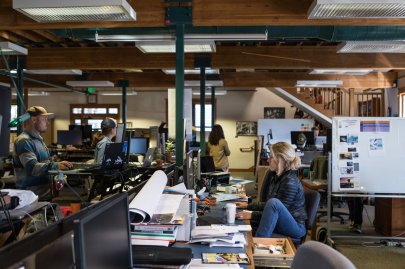
Patagonia employees at the Ventura, Calif., headquarters, where there are picnic tables in the parking lot, on-site day care and easy access to the beach.CreditLaure Joliet for The New York Times

VENTURA, Calif. — The offices of Patagonia occupy a low-slung complex of stucco buildings in this sleepy beachside town in Southern California. There are solar panels and picnic tables in the parking lot, day care with a jungle gym by the main lobby and easy access to the beach, where employees surf during lunch break. It is a corporate Eden of sorts, where idealistic Californians run a privately held company that sells about $1 billion of puffy down jackets and organic cotton jeans each year.

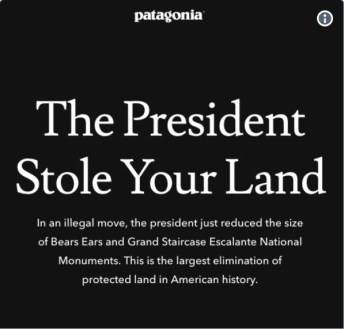
Screen Shot 2018-05-05 at 7.06.08 AMBut on an unseasonably hot and windy Monday morning in early December, Patagonia headquarters were transformed into something that quickly resembled a war room. There were emergency conference calls with Washington lawyers. Court filings were prepared. Web designers remade the company’s home page.

It wasn’t a business crisis that had mobilized the company, however. It was politics. Continue reading

Just When Ford Started Being Great Again, The Signals Indicated A Shift To Reverse

merlin_137576667_7fa921a6-9ace-4e0a-9579-4c864e5232c3-jumbo

Cristina Spanò

Ford1I have been based back in the Americas for fifteen months. For the previous couple years I had been driving Ford’s best-selling vehicle in India –a vehicle with the three letters Eco in its name. This was the company that built the cars I grew up in, but had long since stopped believing in. That “Eco” car got me starting to believe again.

Then the election of 2016 happened. Holding aside all its other dangers, the election result has elevated ecological danger to perhaps its greatest level in my lifetime. A government elected on the slippery Make America Great Again slogan has given cover to companies seeing profit in rollbacks of erstwhile impressive ecological commitments. And the slope down which we all are now sliding seems to be getting steeper. An op-ed by Jamie Lincoln Kitman, the New York bureau chief for Automobile Magazine, illuminates the slip and the slope:

Why Is a ‘Green’ Car Company Pivoting Back to S.U.V.s?

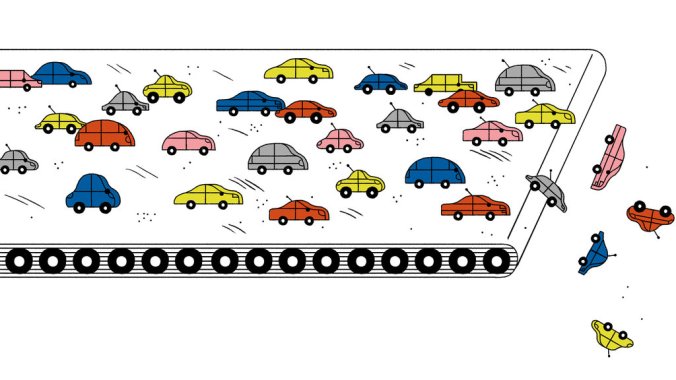
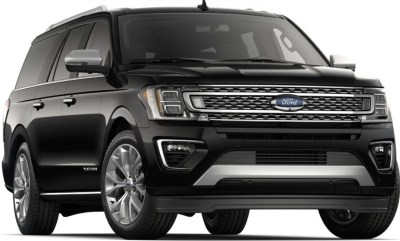
Ford2Two years ago, the Ford Motor Company boasted about having been named Interbrand’s Best Global Green Brand and said it was committed to working to meet stricter fuel economy standards. Last week, after lobbying with the rest of the industry to strike down those standards, Ford announced that it would largely abandon the American passenger car market in favor of building more trucks, crossovers and S.U.V.s. Continue reading

Drink The Wonk

5219.jpg

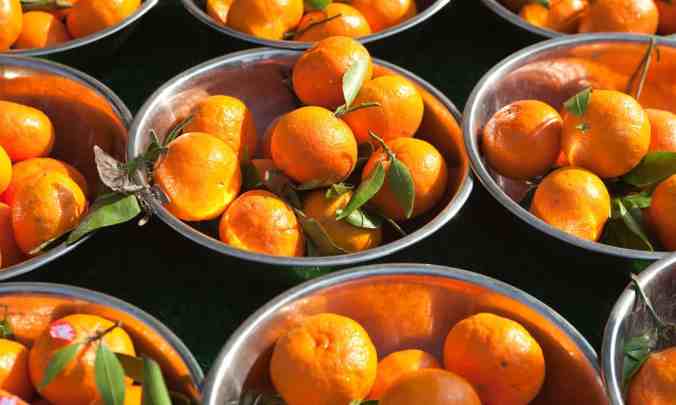
Soft fruit, such as oranges, root vegetables and salad are particularly prone to waste. Photograph: Eric Farrelly/Alamy

Rebecca Smithers, consumer affairs correspondent for the Guardian, has reported on a simple idea to not waste fruit just because its appearance is not standard. Wonky, as they say on the island where the English language comes from. Don’t fear the wonk, this article and this brand are saying. Was this not already happening with juice, as with other waste-reducing beverages? Can a brand be built on such an idea? Thumbs up to that:

‘Wonky’ fruit and vegetables that would have been thrown away are now being used to make a new range of juices, in one of a number of assaults on food waste.

One of the UK’s largest fresh produce growers has teamed up with a Spanish fruit supplier to create a new product, Waste Not, which will stop edible but visually ‘imperfect’ ingredients such as fresh celery, beetroot and oranges from being dug back into the soil, or used for animal feed. The new juices will go on sale in branches of Tesco.

The move is one of a growing number of innovations to reduce food waste throughout the supply chain, following criticism of supermarkets and suppliers that perfectly good food is being thrown out while UK consumers are relying increasingly on food banks. Continue reading

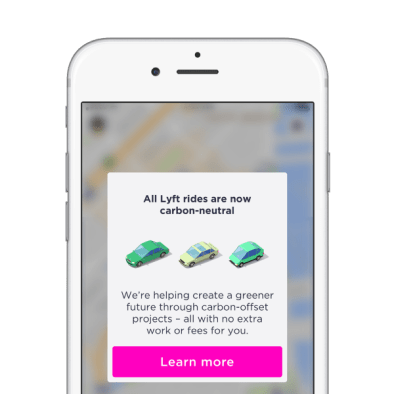
Lyft Is Now Carbon Neutral

Image © Medium

We’ve already expressed our natural preference for Lyft, although Uber is still necessary and useful in certain countries outside the US. But now there is yet another reason to support the underdog, after they announced a few days ago that their rides were from then on (i.e., now) carbon neutral, through the funding of emission mitigation and capture, reforestation projects, and renewable energy programs.

Continue reading

From Re-Wilding To Un-Wilding

03SNAKE-GIF-superJumbo

Illustrations by R. Kikuo Johnson

Yesterday our attention was riveted by heroic efforts in the Highlands to re-wild, and today it is back to the sadder topic of un-wilding. Thanks to Rachel Nuwer for this article on a topic long of interest in these pages:

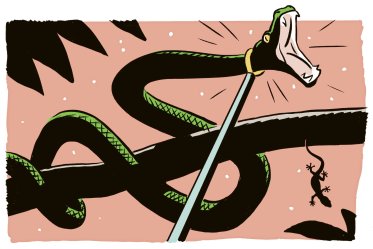
That Python in the Pet Store? It May Have Been Snatched From the Wild

03SNAKE3-superJumbo.jpg

R. Kikuo Johnson

JAKARTA — In the market for a new pet? Maybe something a bit exotic? For many consumers, reptiles and amphibians are just the thing: geckos, monitors, pythons, tree frogs, boas, turtles and many more species are available in seemingly endless varieties, many brilliantly colored, some exceedingly rare.

Exotic reptiles and amphibians began surging in popularity in the early 1990s, not only in the United States but also in Europe and Japan. From 2004 to 2014, the European Union imported nearly 21 million of these animals; an estimated 4.7 million households in the United States owned at least one reptile in 2016.

But popularity has spawned an enormous illegal trade, conservationists say. Many reptiles sold as pets are said to have been bred in captivity, and sales of those animals are legal. In fact, many — perhaps most, depending on the species — were illegally captured in the wild. Continue reading

Carbon Footprint Self-Analysis

Carbon1.jpg

Thanks to Livia Albeck-Ripka and the New York Times for this

How to Reduce Your Carbon Footprint

carbonfootprint-slide-SUBX-jumbo.jpg

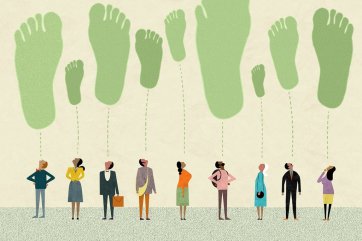
What Is a Carbon Footprint?

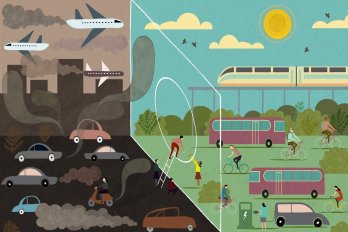
Climate change can be overwhelming. The science is complex, and when it comes to future impacts, there are still a lot of unknowns. While real solutions will require action on a global scale, there are choices you can make in your day-to-day life to lessen your personal impact on the environment. This guide will walk you through some of them.

carbonfootprint-slide-664U-jumbo.jpg

DRIVE LESS

A carbon footprint is the total amount of greenhouse gas emissions that come from the production, use and end-of-life of a product or service. It includes carbon dioxide — the gas most commonly emitted by humans — and others, including methane, nitrous oxide, and fluorinated gases, which trap gas in the atmosphere, causing global warming. Usually, the bulk of an individual’s carbon footprint will come from transportation, housing and food.

You can start the process by calculating your carbon footprint here. You will need to know the following: Continue reading

Plastic Reduction Success Story

5150 (1).jpg

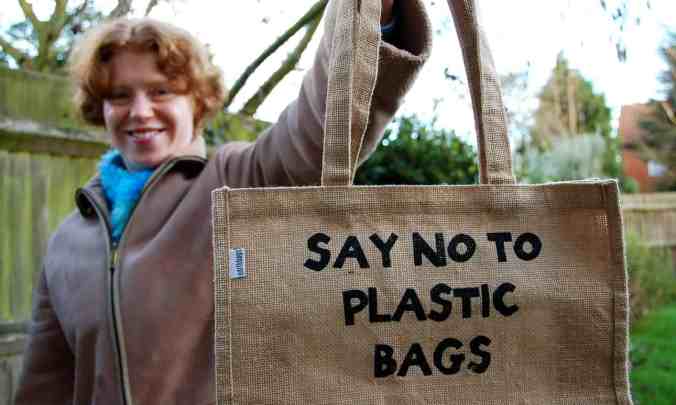
A UK levy of 5p per bag introduced in 2015 has already reduced single-use plastic bags by 85%. Photograph: Stuart Kelly/Alamy Stock Photo

We never tire of reporting on efforts at plastic-reduction, so thanks to Juliette Jowit and the Guardian for this update:

Drop in plastic bags littering British seas linked to introduction of 5p charge

Scientists find an estimated 30% drop in plastic bags on the seabed in the same timeframe as charges were introduced in European countries

A big drop in plastic bags found in the seas around Britain has been credited to the introduction of charges for plastic bags across Europe. Continue reading

Coffee, Starbucks & Costa Rica

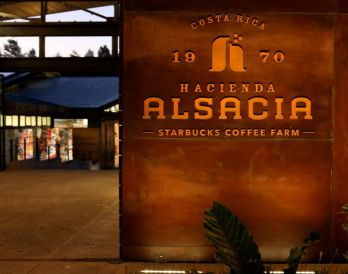
hNKGIzaU-5568-3132

Yesterday we were compelled to link to an illustration that captured the importance of vigilance. Putting that link in context was the reminder that our primary purpose on this platform is to seek out evidence of progress related to environmental and social innovation.

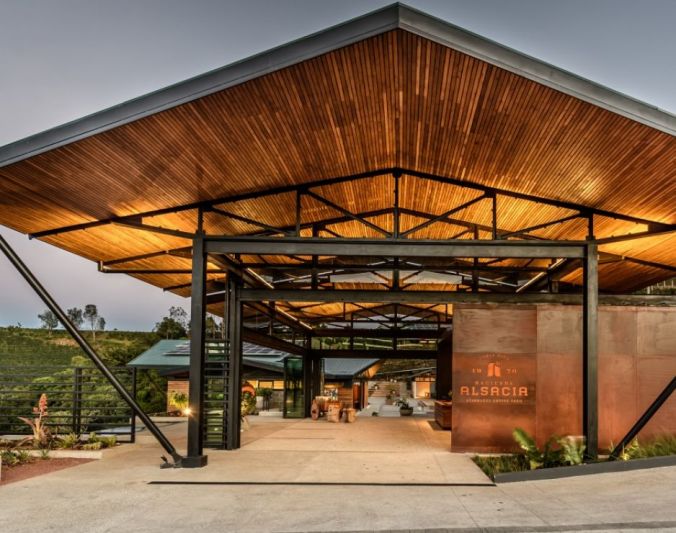
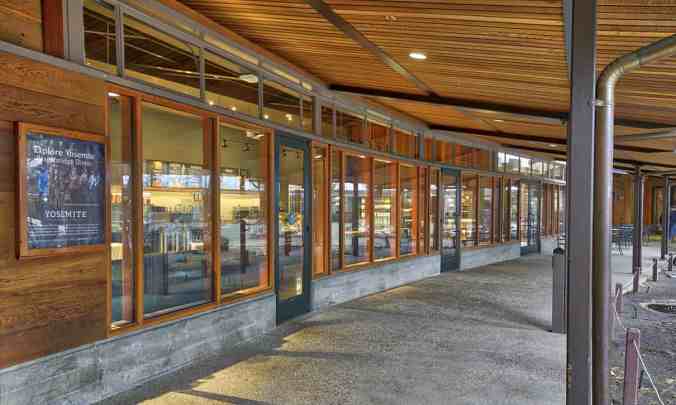
kgGVpXmJ-6720-4480Today a case in point. Credit is due to Starbucks. Just a couple days ago our vigilance antennae were roused by their opening in Yosemite, one more step in a national park system compromised by commercialism. There is no doubt that Starbucks is commercial, but they can also be model corporate citizens when seen from another angle.

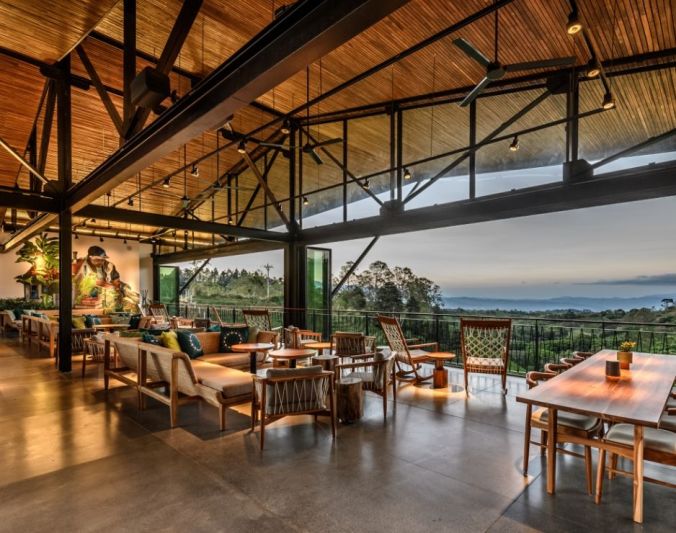
tMOCnNCo-5246-2623Costa Rica provides evidence in favor of Starbucks. Their recently opened facility–a combined working coffee farm, milling operation, visitor center, cafe, gift shop–called Hacienda Alsacia looks like a win-win for a country that deserves attention and investment, and a company that can provide them both of those.

HGX0IDH0-5402-2701

I plan to visit the property next week, so will save my commentary, focusing here on what makes me want to visit:

Starbucks Opens World Renowned Costa Rican Coffee Farm to Visitors

A 46,000-square foot visitor center immerses guests in the entire life cycle of sustainably grown, high-quality arabica coffee from seedling to picking, milling, roasting and the craft of brewing in a café

Starbucks approach to ethical sourcing and innovative coffee tree hybrid research also showcased at the visitor center, part of the company’s $100 million investment in an open-sourced farmer support program to help make coffee the world’s first sustainably sourced agriculture product Continue reading

A Question Worth Asking About Yosemite

5988

There is an intentional lack of exterior signage for the new Starbucks at Yosemite national park. Photograph: Courtesy of Starbucks

Thanks to Freddy Brewster, the former Yosemite trail guide who raised the question, and thanks to the Guardian for airing it:

Yosemite’s secretive Starbucks: cafe opens in park, to delight and dismay

A new Starbucks provides convenience and caffeine to visitors, but to many it represents a trend of commercialism and 25,000 people petitioned to stop it from opening

6720

Australian visitor Tom Collin sips a coffee from the new Starbucks at Yosemite, part of a major remodeling effort inside the 128-year-old national park. Photograph: Gabrielle Canon for the Guardian

It looks and feels just like any of the other roughly 27,000 Starbucks locations that have opened around the world. The green apron-clad barista makes tall, grande and venti coffee concoctions that are handed over in familiar mermaid-endowed cups.

But from the parking lot outside – where there is an intentional lack of Starbucks signage – the world-famous Yosemite falls can be heard through the patter of an early spring rainstorm. Continue reading

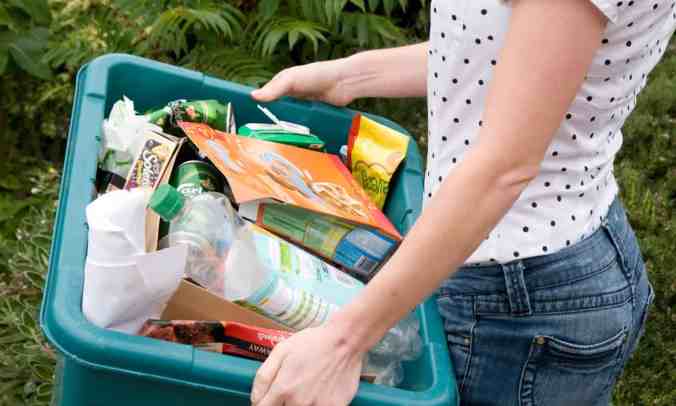
Recycling Primer, UK Edition

3840

Many people aren’t sure which plastics they can recycle – and which they can’t. Photograph: Alamy

Thanks to Angela Monaghan, at the Guardian, for this reminder of the basics of recycling:

Which items can’t be recycled?

Many people think items such as plastic bags and coffee cups can be recycled when they can’t. Here are the do’s and don’ts

British consumers are increasingly willing to recycle their household waste but are failing to grasp the basics, according to the latest research by the British Science Association. Failure to get it right means that a lot of recyclable waste is going to landfill, the BSA says.

The issue is further complicated by inconsistency among councils, which make their own rules and funding decisions on recycling collections.

Common mistakes include putting tissue boxes in the recycling bin without first removing the plastic insert. On the flipside, people often wrongly think that empty deodorant aerosols cannot be recycled. Continue reading

Salmon, Shrinkage & Man

large-chinook-salmon_wide-e91ab4e6c6999d8d452ab3824075c74f0f7bbf3f-s1600-c85

A photo taken in Astoria, Ore., circa 1910. It was stated that the chinook on the left weighed 116 pounds and the one on the right weighed 121 pounds. WikiMedia Commons

John Ryan, filed this story through Northwest Public Radio, KUOW and EarthFix, an environmental journalism collaboration led by Oregon Public Broadcasting in partnership with five other public media stations in Oregon, Washington and Idaho. Another of the many reasons we appreciate National Public Radio (USA) and its various associates:

This Is Why You Don’t See People-Size Salmon Anymore

While the orcas of Puget Sound are sliding toward extinction, orcas farther north have been expanding their numbers. Their burgeoning hunger for big fish may be causing the killer whales’ main prey, chinook salmon, to shrink up and down the West Coast.

Chinook salmon are also known as kings: the biggest of all salmon. They used to grow so enormous that it’s hard now to believe the old photos in which fishermen stand next to chinooks almost as tall as they are, sometimes weighing 100 pounds or more.

“This has been a season of unusually large fish, and many weighing from 60 to 70 pounds have been taken,” The Oregonian reported in 1895. Continue reading

Know Your Packaging

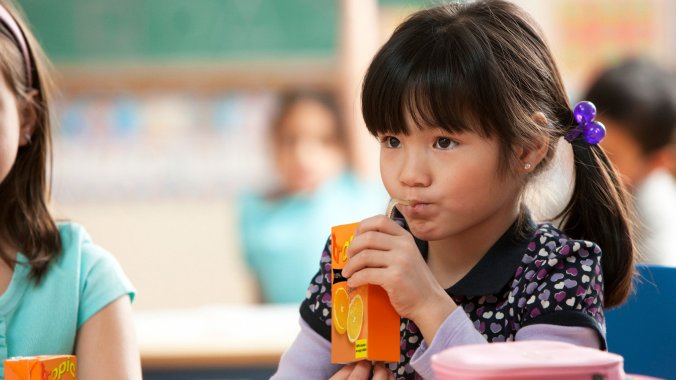
girl-juicebox_wide-4eff0c88df284307072a9da33247352693ffef88-s1600-c85.jpg

Because of layers of material that can be difficult to separate, many containers for juices and broths have traditionally been destined for landfills. But recycling them is getting easier. KidStock/Getty Images

Natalie Jacewicz, a science writer based in New York City has this illuminating story on packaging:

In The Recycling World, Why Are Some Cartons Such A Problem?

Scoot over, cans; cartons are moving in on your shelf space. Specifically, the soft, light rectangular containers commonly associated with juice boxes — “aseptic cartons” to the carton literati.

“They’re growing in popularity,” says Jason Pelz, vice president of recycling projects for the Carton Council, an industry group. “Broth is predominantly in aseptic packaging now, and you see a lot of coconut water in it.”

Aseptic cartons pack several environmental upsides, with one big catch: Traditionally, these containers have been quite difficult to recycle. To take stock of the promises and challenges of this supermarket sensation, I talked to experts on all things carton. Continue reading
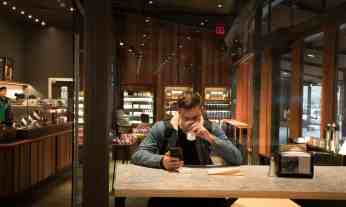
Disruption Reconsidered

lead_960 (14)

Gabrielle Lurie / Reuters

Derek Thompson, writing in the Atlantic recently, has a very readable consideration of the fashionable obsession with disruptors, a topic we give too little attention to in these pages. So, a small step forward:

Airbnb and the Unintended Consequences of ‘Disruption’

Tech analysts are prone to predicting utopia or dystopia. They’re worse at imagining the side effects of a firm’s success.

The U.S economy is in the midst of a wrenching technological transformation that is fundamentally changing the way people sleepworkeatshoploveread, and interact.

At least, that’s one interpretation. Continue reading
Toys-R-Greening


720.jpg

Pieces such as leaves, bushes and trees will be made entirely from plant-based plastic. Photograph: Maria Tuxen Hedegaard/Lego

Among contributors to this platform, the number of lego pieces bought over the last fifty years likely aggregates into the hundreds of thousands. And yes, we all eventually knew that the product is petroleum-based and therefore worthy of reconsideration in for the next generation. But they have remained irresistible anyhow, and so we are glad to hear the company is moving in a new direction. Rebecca Smithers, the Consumer affairs correspondent for the Guardian, offers this news on where the company is going with green:

First sustainable Lego pieces to go on sale

Range including leaves, bushes and trees made entirely from plant-based plastic sourced from sugar cane will be available later this year

The first Lego pieces made from plant-based plastic sourced from sugar cane will go on sale this year, the company has announced.

The 85-year-old Danish toymaker said production has begun on a range of Lego botanical elements or pieces such as leaves, bushes and trees, made entirely from plant-based plastic. They will start appearing in Lego box sets with bricks and mini-figures later this year. Continue reading

Starbucks Taking Some Responsibility

5118

Thanks to the Guardian’s consumer affairs correspondent, Rebecca Smithers, for this:

Starbucks trials 5p takeaway cup charge in attempt to cut waste

People buying hot drinks in cardboard cups in 35 London branches will pay ‘latte levy’

Starbucks will be the first UK coffee chain to trial a “latte levy” – a 5p charge on takeaway coffee cups – under plans that aim to reduce the overuse and waste of 2.5bn disposable cups every year.

In the latest offensive in the war against plastic waste, the chain said it hoped the move, starting on Monday, would help change behaviour and encourage customers to switch to reusable cups instead. Continue reading
A Pro-Environment Form Of Apartheid

4928

Jonathan Watts, over at the Guardian, has this news:

Britain and Europe must ban palm oil in biofuel to save forests, EU parliament told

Forest peoples affected by plantations urge EU to enact ban despite diplomatic opposition

If Britain and other European nations are to fulfil forest protection goals, they must ban the use of palm oil for biofuel and tighten oversight of supply chains, a delegation of forest peoples told parliamentarians this week.

The call for urgent, concrete action comes amid an increasingly heated diplomatic row over the issue between the EU and the governments of major palm-producing nations such as Indonesia, Malaysia and Costa Rica.

The European parliament voted last April to prohibit sales of biofuels made from vegetable oils by 2020 in order to meet its climate goals. This was followed by a related vote last month. Whether and how this might be implemented is now being considered by the European Commission and member states.

Continue reading
Getting To No On Plastic

5514

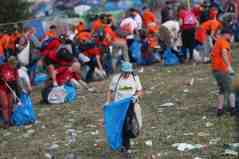
The cleanup … Glastonbury 2017. Photograph: Matt Cardy/Getty Images

This headline in the Guardian–Glastonbury festival set to ban plastic bottles in 2019accompanying the photo to the right is well timed for me:

Emily Eavis says festival is working on ‘enormous project’ to ban plastic bottles on site when it returns after year off in 2018

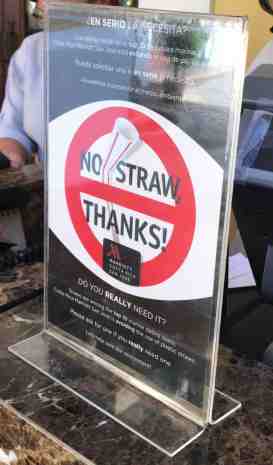
MarriottNoStraw.jpgThat story continues after the jump, but I want to add to this post an image I just photographed when visiting the Costa Rica Marriott Hotel San Jose that was built more than two decades ago. Amie and I were friends with the managers of that property from the mid- to late-1990s, but had lost track of what this property has been up to lately. And I was very happy to learn today that they have recently earned five leaves in the CST program, whose board of directors I served on in the mid- to late-1990s. Bravo, Marriott! And as I snapped this photo, I was told that starting next month this property will have no straws, even if someone says they “really need one” (as the text on the sign says near the bottom). Double bravo!

We have reported on efforts in India, during our years there, to reduce noise pollution using similar signage. Whoever designed this sign for the Marriott property in Costa Rica was thinking along the same lines, graphically speaking. While I am in Costa Rica this week, I hope to have more to report, but for now, back to Glastonbury: Continue reading

Global Citizenship Via Suburban Malls

The Garden Court at Southdale Shopping Center, Edina, Minnesota, circa 1965

The Garden Court at Southdale Shopping Center, Edina, Minnesota, circa 1965 Minnesota Historical Society

Ok, we did not expect to get on a two-day roll with this topic, but Ian Bogost makes an interesting case about the role of malls in the development of cultural norms in the USA in the second half of the last century:

When Malls Saved the Suburbs From Despair

Like it or not, the middle class became global citizens through consumerism—and they did so at the mall.

“Okay, we’ll see you in two-and-a-half hours,” the clerk tells me, taking the iPhone from my hand. I’m at the Apple Store, availing myself of a cheap smartphone battery replacement, an offer the company made after taking heat for deliberately slowing down devices. A test run by a young woman typing at a feverish, unnatural pace on an iPad confirms that mine desperately needed the swap. As she typed, I panicked. What will I do in the mall for so long, and without a phone? How far the mall has fallen that I rack my brain for something to do here. Continue reading
Big Chicken

BookCoverMaryn McKenna escaped our notice until now, as did her recent book Big Chicken:

In this provocative narrative, acclaimed journalist Maryn McKenna reveals the fascinating history of chicken—and how the common backyard bird became an industrial commodity impacting human health around the world. Crucial to its meteoric rise: the routine use of antibiotics, a practice that would transform agriculture, change the world’s eating habits, and contribute to the deadly rise of drug-resistant infections around the globe.

Bringing us on an extraordinary journey from the vast poultry farms of the United States to laboratories, kitchens and sidewalk markets around the world, McKenna reveals how economic, political and cultural forces converged to make America’s favorite meat a hidden danger—and how companies, activists, farmers and chefs are carving a path back to better, safer food.

Named a Best Science Book of 2017 by Amazon, Smithsonian, and Science News; an Essential Science Read by Wired; a Best Health Book by the Toronto Globe and Mail; and a Best Food Book of 2017 by Civil Eats and the Atlanta Journal-Constitution

Antibiotics changed the world.

Then we gave them to the animals we eat.

This is the story of what happened next. Continue reading