Image: Pixabay
Thanks to Emma Bryce for A more nuanced approach to reducing insecticides on our food, shared via Anthropocene:
Image: Pixabay
Thanks to Emma Bryce for A more nuanced approach to reducing insecticides on our food, shared via Anthropocene:
In this era, when saying no in creative manner has been raised to an art form, we remain on the lookout for model mad; but it does not have to be creative or novel. If there is an established machinery to utilize, utilize it! Here is an example. We are not surprised that, when asked, people say they want their environment protected, nonetheless we are pleasantly surprised that the “system” such as it is continues to even ask:
Public To EPA On Cutting Regulations: ‘No!’
As part of President Trump’s executive order to review “job-killing regulations,” the Environmental Protection Agency last month asked for the public’s input on what to streamline or cut. It held a series of open-mic meetings and set up a website that has received more than 28,000 comments, many of which urge the agency not to roll back environmental protections. Continue reading

We have refused to give up hope because there continue to be a trickle of stories like this, thanks to the Guardian. Bruce Springsteen dedicated a whole album to Nebraska, and this short news via video reminds us of that state’s great people:
After Trump’s revival of the Keystone XL pipeline project, some communities along its route are getting ready to fight back. Others see the US president keeping his promise to ‘make America great again’. The Guardian drove along the proposed route of the pipeline, through three red states – Montana, South Dakota and Nebraska – to hear what those who will be affected have to say about it

Photo: Robert Nickelsberg/Getty Images
We link to the occasional food trend article when it matches something we are working on, whether it is the Chan Chich Lodge culinary program or the food production at Gallon Jug Farm. This article, Whole Foods Would Look a Lot Different If It Were Science-Based, almost lost me with the first sentence, an annoying cliche within a sappy first couple paragraphs, but there is a useful case made starting soon after. We are dealing with these very questions so I can suggest the majority of the article starting after the jump:
Whole Foods used to be my idea of grocery heaven. Once upon a time, I shopped at the California Street location in San Francisco — it was light and airy with produce for miles. I knew the cheesemonger. I had philosophical conversations with the butcher. I stared longingly at the Le Creuset bakeware. The soap aisle smelled like lavender. Heaven.
But eventually, I fell out of love. Or, to be more specific, I changed my mind about organic food after reading the research: It turns out organic isn’t more nutritious or even necessarily better for the planet. So I pretty much stopped shopping at Whole Foods altogether. Continue reading
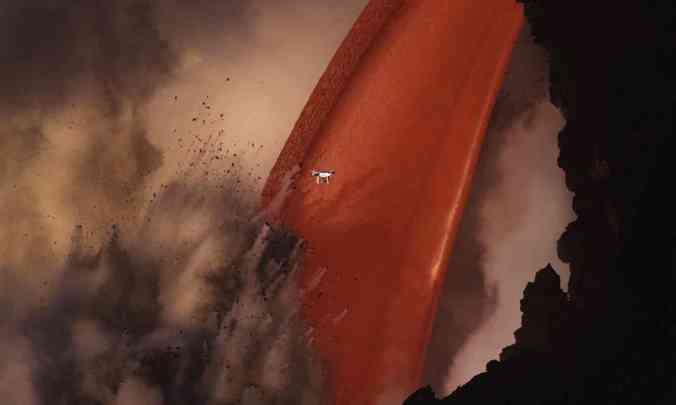
An illegally flown drone gives scale to next to a lava tube in Hawaii Volcanoes national park. Photograph: Andrew Studer
Some in the hospitality business will likely embrace technologies that I cannot picture using in our hospitality operations, ever, but that is fine. Good for them, I say. Recent events at Chan Chich Lodge have reinforced my wonder at, and love for, technology as a tool to support conservation. There is no doubt that guest photos of big (or small) cats and monkeys, shared via social media, help our conservation mission. There is no doubt that tech tools such as eBird and Merlin (Belize edition recently released, just in time for Global Big Day for those of us who need it) also move our conservation mission forward.
That said, I still have a preference for digital detox among our guests, as much as possible. Artificial noises, visuals, aromas and structures are best minimized in order to maximize the many benefits of nature. Distractions, which may be normal things and habits quite common at home, are the spoilers of visits to great places. The problem first came to my attention nearly two decades ago while visiting Mont Saint Michel, where helicopter tours were just becoming a thing, which clearly annoyed every individual who was making the wondrous visit on foot.
I hope, but doubt, that such tours have been limited in the time since then. The evidence seems to point to more distractions in monumental places, whether natural or cultural, that had previously been visually and sonically protected (thanks to Sam Levin at the Guardian for this):
‘Turn it off’: how technology is killing the joy of national parks
As drones, smartphones other gadgets invade America’s most tranquil trails, many lament the loss of peace and quiet Continue reading
This exciting project came to our attention a little over a year ago, and we’re excited to see that it’s going full steam ahead!
This is an Embark Fellowship campaign. If we raise our target, Brown University will donate $25,000 to our project!
What’s up with fish?
The world’s population is growing rapidly, and the global demand for animal protein—from fish to poultry, beef, and pork— is growing with it. But there’s a problem: animal feeds are made from wild-caught fish like anchovies and sardines. These fish are caught using highly destructive fishing methods that result in unintentional by-catch and the destruction of coral reefs. One third of global fish catch doesn’t go towards direct human consumption; it goes to feeding animals. As a result, more than 85% of the world’s fisheries are exploited. We are feeding fish to other animals, and it doesn’t make sense.
Meanwhile, the world’s population is increasing rapidly and is projected to hit 9.7 billion by 2050. We desperately need a new way to feed a growing population that is not at odds with the health of our oceans.
Meet the black soldier fly.

I am always on the lookout for simple but effective graphics illustrating ideas that we attempt to put into action in our various projects–why reinvent the wheel? By rabbit hole good fortune, after I was referred to the Coastal Conservation League as a regional leader in entrepreneurial conservation for the southeastern USA, one of their programs, as illustrated above and described in words below, came to my attention:
The Conservation League started its Food and Agriculture program in 2007 with the goal of protecting South Carolina’s small, family farms. Between 1992 and 1997, more than 200 acres of rural land were converted every day to urban uses, placing South Carolina in the top ten states in the nation for rural land loss. We quickly realized that small farmers lacked access to the infrastructure available to industrial farms, and were therefore unable to say “no” when a developer offered to buy their land. The League saw a food hub as critical to our work protecting rural landscapes and improving quality of life across the coastal plain. Continue reading

Solar panels at the Googleplex, headquarters of Google in Mountain View, Calif. Its data centers worldwide will run entirely on renewable energy by the end of this year, the technology giant announced in December. Credit Smith Collection/Gado, via Getty Images
Although the current administration may be cloaking themselves in a fog of denial, we’re happy to read that much of corporate America is staying the course of their own emissions goals.
Nearly half of the Fortune 500 biggest companies in the United States have now set targets to shrink their carbon footprints, according to a report published Tuesday by environmental organizations that monitor corporate emissions pledges. Twenty-five more companies adopted climate targets over the last two years, the groups said.
Almost two dozen companies, including Google, Walmart and Bank of America, have pledged to power their operations with 100 percent renewable energy, with varying deadlines, compared with just a handful in 2015. Google’s data centers worldwide will run entirely on renewable energy by the end of this year, the technology giant announced in December.
“We believe that climate change is real, and it’s a severe crisis,” said Gary Demasi, who directs Google’s energy strategy. “We’re not deviating from our goals.” Continue reading

The presence of cruise ships in the Northwest Passage is among the dilemmas that climate change is creating for Canada’s Inuit people amid their struggle to balance environmental and economic concerns. PHOTOGRAPH BY KIKE CALVO / REDUX
It is our view, based on news reports like this that appear constantly in myriad variations from around the world, that with few exceptions cruise ships are problematic. Here is just one more datapoint:
THE COMPLICATED RELATIONSHIP BETWEEN CRUISE SHIPS AND THE ARCTIC INUIT
Last summer, the Crystal Serenity, a luxury cruise ship, embarked on a monthlong voyage through the Northwest Passage, the sea route that winds through Canada’s Arctic archipelago. The Serenity, which can accommodate more than a thousand passengers, headed through the same waters as had H.M.S. Resolute, which, in August of 1853, set out to rescue a group of British explorers and ended up trapped in the ice for the better part of a year. The Arctic Ocean is warmer than it was a hundred and sixty-three years ago, and the Crystal Serenity, accompanied by a British icebreaking vessel, made the voyage without dire incident. It is the largest cruise ship to sail through the Northwest Passage, and its voyage signalled the economic changes that are coming to the vast region as a result, in part, of climate change. Continue reading
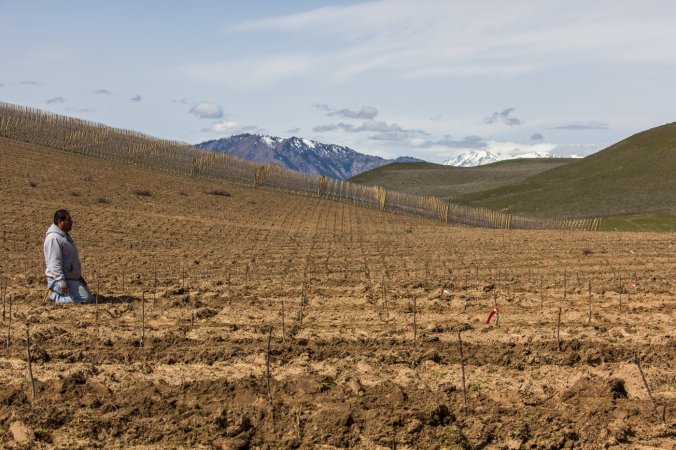
A worker takes a break after planting young Cosmic Crisp trees in an orchard near Wenatchee, Wash. Dan Charles/NPR
The folks at the salt, over at National Public Radio, deliver (click the image above to go to the story) the crispest, juiciest food stories:
Get ready for a new kind of apple. It’s called Cosmic Crisp, and farmers in Washington state, who grow 70 percent of the country’s apples, are planting these trees by the millions. The apples themselves, dark red in color with tiny yellow freckles, will start showing up in stores in the fall of 2019.: Continue reading

Tim Wu has shown up on these pages exactly once in the past. Today marks #2 with a link to his op-ed The ‘Fix’ for Net Neutrality That Consumers Don’t Need, which helps strengthen the case we tried to make in the first post about him. He is a gifted explainer. This seemingly innocuous policy issue, which might otherwise get ignored and thereby also allow another gain of the wrong type to the wrong people, is suddenly clearly a very big deal thanks to Mr. Wu:
Netflix and Amazon have been nominated for hundreds of Emmys and Golden Globe awards in recent years, and that is a testament to both the quality of those companies and the transformation of television. But some of the credit is also due to “net neutrality,” the legal regime that nurtured and protected the open internet and streaming TV in the first place. Continue reading

Do You Need a $400 Juicer?
Anything that can be labeled “the Keurig of” makes my skin crawl. Thanks to Ellen Huet and Olivia Zaleski at Bloomberg for pointing out more anecdotal evidence of the genius of PT Barnum. Why put juice in plastic packs? Why then squeeze it from a machine, let alone such a pricey one? Why not take a week off grid, let us pluck the fruits and vegetables of your choice, and have it served as often as you like as a refresher on the back to nature idea? From many cities in the USA, you can buy a round trip ticket to Belize for the same cost of a machine that will squeeze juice packs for you. Juicero will set you back, while Chan Chich Lodge will set you forward:
Silicon Valley’s $400 Juicer May Be Feeling the Squeeze
Two investors in Juicero were surprised to learn the startup’s juice packs could be squeezed by hand without using its high-tech machine. Continue reading
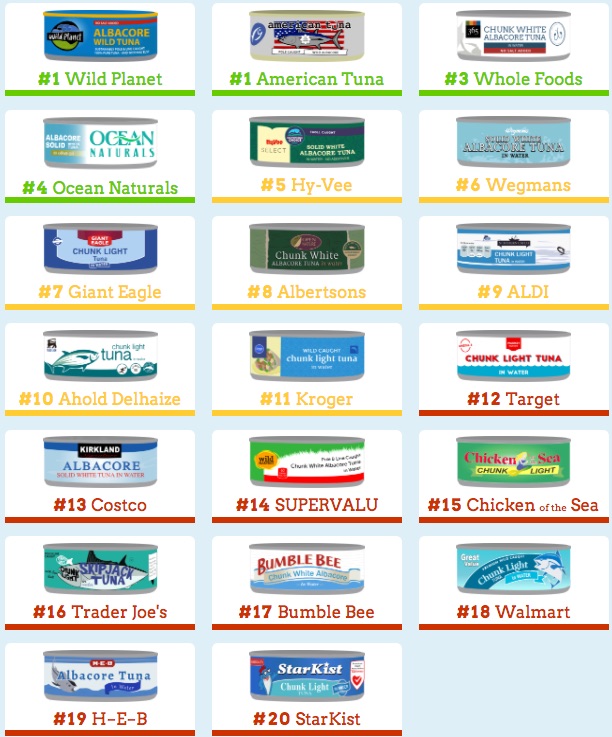
We check in with EcoWatch regularly, and from time to time Greenpeace has a surprising piece of content featured, like this 20 Canned Tuna Brands Ranked: How Sustainable Is Your Brand?
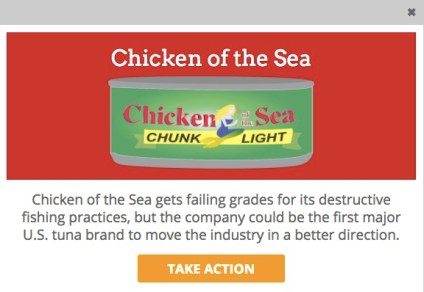 What is surprising to me is this pop up call to action, which echoes back at least three decades for me to the first time I heard of Greenpeace, which was also the first time I heard of any issues related to canned tuna, which was also the first time I looked on a map to see where the Gulf of California, and Baja California Sur were situated. It is surprising because on the ranking above, this same tuna is not the absolute worst of the worst. Even more surprising, in its own way, is that Trader Joe’s is even worse in this ranking. Go figure. Anyway, thanks to David Pinsky, Greenpeace, and EcoWatch for this: Continue reading
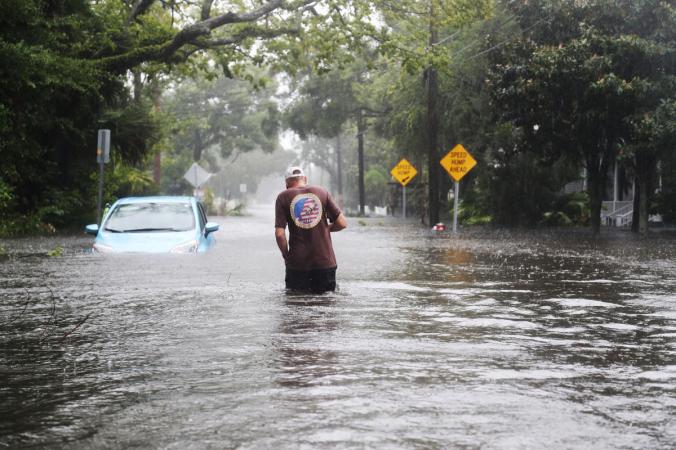
How is it that an Administration as disorganized as Donald Trump’s has been so methodical when it comes to attacking the environment? PHOTOGRAPH BY JOE RAEDLE / GETTY
I committed myself to not name the name, because it adds fuel to a flame that is already out of control. But if you have read any of the posts in our model mad series the name is clearly implied. Plenty of others name so well that it is best just to link their work. One of the best namer of names when it comes to our environment, and failure to protect it, is Elizabeth Kolbert. She occasionally points out that we do not simply fail to protect, but willingly allow the named to dismantle critical protections. We are sadly impressed that Dame Doomsday doesn’t disappoint with her latest contribution:
Next week, millions of Americans will celebrate Earth Day, even though, three months into Donald Trump’s Presidency, there sure isn’t much to celebrate. A White House characterized by flaming incompetence has nevertheless managed to do one thing effectively: it has trashed years’ worth of work to protect the planet. As David Horsey put it recently, in the Los Angeles Times, “Donald Trump’s foreign policy and legislative agenda may be a confused mess,” but “his administration’s attack on the environment is operating with the focus and zeal of the Spanish Inquisition.” Continue reading
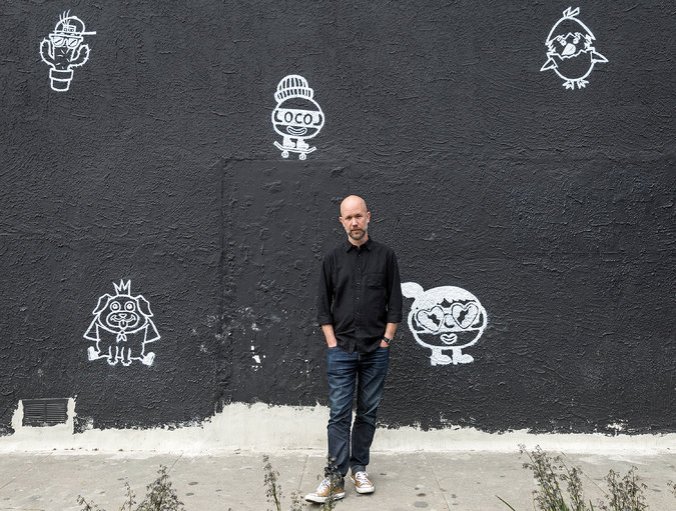
Tony Konecny, the head of coffee operations at Locol, outside the branch in the Watts neighborhood of Los Angeles. CreditEmily Berl for The New York Times
We have no reason to debate the logic of a more reasonably priced cup of quality coffee:
Has Coffee Gotten Too Fancy?
By
LOS ANGELES — The $1 cup of coffee is divisive, as drinks go.
For some, it’s a staple of the American morning: a comforting routine, a good deal. Anything that costs more than $1 is needlessly expensive, a waste of money — the coffee from a deli, diner or doughnut cart is all you need to start the day. For others, the $1 cup is suspiciously cheap. Maybe it tastes bad, or its production does harm to the land and is unfair to laborers. If you have to pay more, then that is probably a reflection of a drink’s true cost. Continue reading

The Impossible Burger. Photo via Forbes.
Impossible? We have liked what we have seen, more than once. But we remain open-minded in both directions. Thanks to Dana Perls, senior food and technology campaigner, for the article Is “Food-Tech” the Future of Food? posted on Medium, that raises the right kinds of questions:
…On the surface, the Impossible Burger’s goal to reduce meat consumption sounds important. There are urgent problems with animal factory farming. But at a time when consumers are pushing for more sustainably produced real food, are these biotech products the right answer? Continue reading

Leigh Wells
On a day often reserved for gags and laughs, we instead repeat, without much cheer but plenty of conviction, two of our favorite words: entrepreneurial conservation. Two opinion pieces today highlight the role of both government and market forces as vehicles of environmental protection. When government must take action, as John D. Leshy and Mark Squillace point out, there is a law that allows the President of the United States to protect nature in the public interest. That law is endangered, and it is not okay, these model mad legal scholars remind us. They also point out that markets have tended to follow and reward the actions Presidents have taken to protect natural monuments in the last 111 years since that law was enacted.
A former Mayor of New York City, who also has credibility when it comes to market forces, reminds us in another editorial that with or without a President’s leadership we can still make progress on our environmental commitments. But only if all the rest of us are fully on board, and ready to shake things up when needed, providing all the more reason for each of us to keep all these model mad examples fresh in mind. If you only have time for one quick read at the moment, make this the one:
Climate Progress, With or Without Trump
America led the world in reducing carbon pollution in 2016, with a decline of three per cent. But the Trump Administration’s plans suggest that current trends are about to shift. PHOTOGRAPH BY KAYANA SZYMCZAK / THE NEW YORK TIMES / REDUX
Thanks to J. B. MacKinnon for this post on the New Yorker website about the relationship between things we know to be true, things we want to be true, and things which may seem like wishful thinking (for which Santa Claus might be the only hope if we cannot adhere to the sanity clause of our compact with the planet):
CAN WE SLOW GLOBAL WARMING AND STILL GROW?
On March 17th, the International Energy Agency announced that 2016 marked the third year in a row that global carbon emissions had stayed at the same level while the world’s economy grew. This three-time repeat has put to rest any lingering suspicions of gremlins in the data. Something new is happening. The global economy has now grown nearly ten per cent without any increase in the annual CO2 emissions that are the principal human contribution to climate change. In the parlance of sustainability, growth and emissions appear to have “decoupled.” Continue reading
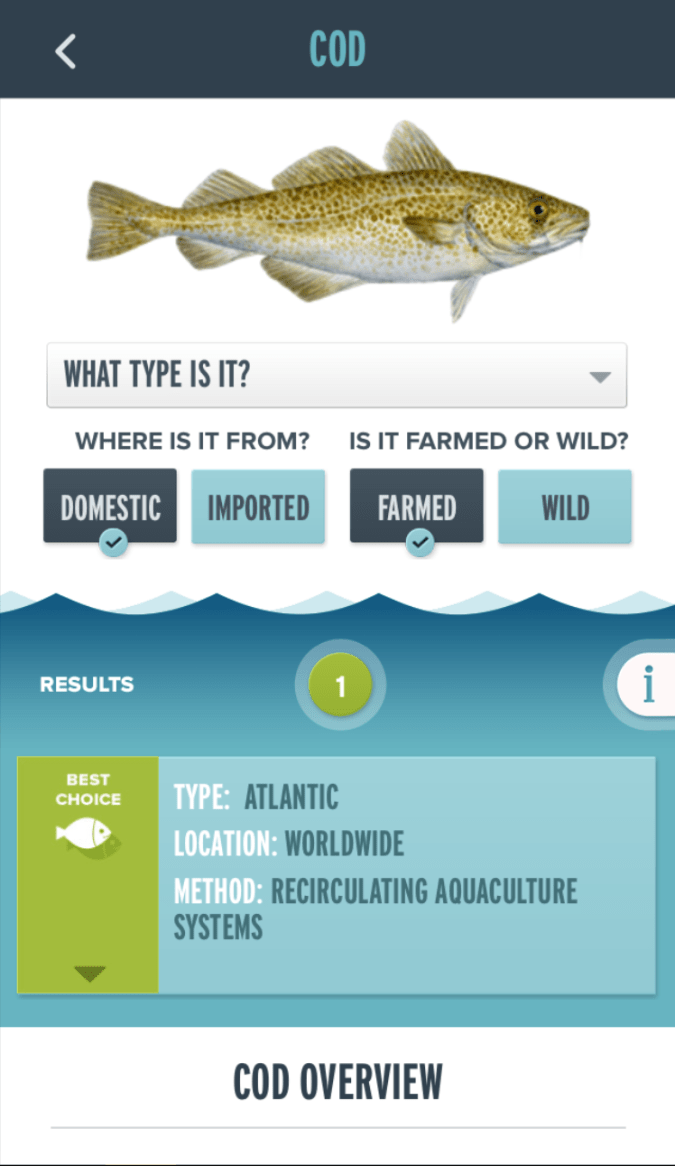
Monterey Bay Aquarium Seafood Watch App best choice recommendations for cod. Screenshot by NPR
Rules change. Guides get updated. Staying on top of this topic requires effort. But it is worth it. Thanks to the folks at the salt for an acknowledgement that choosing fish in a responsible manner is no easy task, even for those regularly paying attention:
This month, I ventured to ask the man behind the counter at a Whole Foods Market what kind of shrimp he was selling. “I don’t know,” he replied. “I think they’re just normal shrimp.” I glanced at the sustainable seafood guide on my phone. There were 80 entries for shrimp, none of them listed “normal.”
What about the cod? Was it Atlantic or Pacific? Atlantic. How was it caught? I asked. “I’m not sure,” he said, looking doubtfully at a creamy fish slab. “With nets, I think. Not with harpoons.” Continue reading

It is not the first time we have enjoyed a good long read about either of these companies’ and/or founders, but this one in the Guardian offers a good look circa 2017:
Patagonia and The North Face: saving the world – one puffer jacket at a time
The retail giants are not only competing to sell outdoor gear – they are rivals in the contest to sell the thrill of the wilderness to the urban masses Continue reading
 Organikos