How Many Options Does It Take To Change A Lightbulb?

(From left) Incandescent, CFL and LED light bulbs. Many people are finding that choosing the right light bulb has a steep learning curve.

(From left) Incandescent, CFL and LED light bulbs. Many people are finding that choosing the right light bulb has a steep learning curve.

From National Public Radio, an update to the ongoing knowhow required to change a lightbulb efficiently (click the image above to go to the podcast):

Buying a light bulb used to be a no-brainer. Now it’s a brain teaser; the transition to more energy-efficient lighting means choosing from a dazzling array of products.

We’ve long identified bulbs by their wattage, but that is actually a measure of electricity, not the brightness of a bulb. The amount of light a bulb generates is measured in lumens.

An incandescent 60-watt bulb, for example, gives off 800 lumens of light. And LED bulbs, which are more energy efficient than their incandescent counterparts, can deliver the same amount of light using as little as 10 watts.

The Environmental Protection Agency says that if every household replaced just one incandescent bulb with an “Energy Star”-rated LED or CFL (compact fluorescent), Americans would save close to $700 million per year in energy costs.

But with so many types of bulbs with different price points and life spans now on the market, many consumers are confused.

When we asked for your questions about light bulbs, we got an earful. So we called in Noah Horowitz, director of the Natural Resources Defense Council’s Center for Energy Efficiency, to answer your most frequently asked questions. Continue reading
Statler Hotel Partners with Clean the World

Jason Koski/University Photography

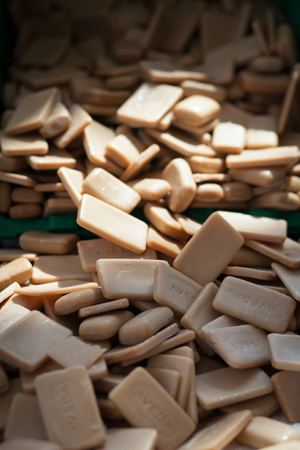
According to the Cornell Chronicle from a few weeks ago, Cornell University’s Statler Hotel has been a partner with the nonprofit Clean the World organization since March, and has collected over 2,500 bars of soap from the Statler’s rooms. This soap has been recycled and distributed to communities in need throughout over 55 countries.

Clean the World is a great group that we have written about before, since its goal is to take something that would otherwise be wasted and provide it to people at risk of poor health due to hygienic conditions  that can be easily ameliorated by increased access to soap.

Continue reading

Fact-Checking Walter Isaacson

Walter Isaacson has done some remarkable things (according to his present byline he is “CEO of the Aspen Institute. Author of biographies of Steve Jobs, Albert Einstein, Benjamin Franklin, and Henry Kissinger. Former editor of Time, CEO of CNN”).  Little reason for him to doubt his own authority, on anything.  But he invites you to fact check the book he is currently working on, starting with a draft of a chapter published in Medium.  I appreciate the creative spirit of collaboration, and his faith in the wider community to get his facts both straight and full of color:

The Culture That Gave Birth to the Personal Computer

I am sketching a draft of my next book on the innovators of the digital age. Here’s a rough draft of a section that sets the scene in Silicon Valley in the 1970s. I would appreciate notes, comments, corrections

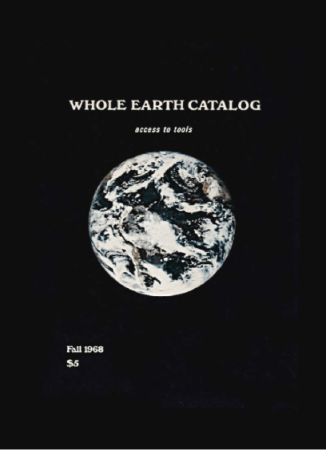
In that draft he makes reference to the starting point of the Whole Earth Catalog, and the meme that came with it of using an image of the earth from space to communicate its fragility and limitations as much as its wondrousness; which, along with the rest of the draft (as if you needed convincing) makes the book sound worth the wait: Continue reading

One More Way To Reduce Your Carbon Footprint (And Handprint)

People typically wash their hands seven times a day in the United States, but they do it at a far higher temperature than is necessary to kill germs, a new study says. The energy waste is equivalent to the fuel use of a small country. PHOTOGRAPH BY GAETAN BALLY/KEYSTONE/CORBIS

People typically wash their hands seven times a day in the United States, but they do it at a far higher temperature than is necessary to kill germs, a new study says. The energy waste is equivalent to the fuel use of a small country. PHOTOGRAPH BY GAETAN BALLY/KEYSTONE/CORBIS

Which small country are they referring to?  Does it matter? No. Just read on to be awed by the news that something you may have thought to be important to your health is actually not; and worse, it is costly to the earth’s health:

It’s cold and flu season, when many people are concerned about avoiding germs. But forget what you think you know about hand washing, say researchers at Vanderbilt University. Chances are good that how you clean up is not helping you stay healthy; it is helping to make the planet sick. Continue reading

If You Build It They May Come, But If You Build It Better Will They Pay For It?

fairTradeLogoThe following paper has been influential since its publication more than two and a half years ago, and seems destined to have a lengthy shelf life, which we hope to contribute to.  It is not only interesting theoretically, but gets at practical questions we consider existential at the level of our enterprise. If consumers (in our case travelers) are willing to pay a fair premium for building and operating a business that is more sensitive to environmental and social responsibility, we can afford to engage in fair trade; if they are not really willing, uh oh…

We are more than happy to share our empirical evidence, but for now let’s take a look at some scientifically-derived evidence:

Consumer Demand for the Fair Trade Label: Evidence from a Field Experiment

Jens Hainmueller

Massachusetts Institute of Technology (MIT) – Department of Political Science

Michael J. Hiscox

Harvard University

Sandra Sequeira

London School of Economics

April 1, 2011

MIT Political Science Department Research Paper No. 2011-9B

Abstract: 

A majority of surveyed consumers claim to prefer ethically certified products over non-certified alternatives, and to be willing to pay a price premium for such products. There is no clear evidence, however, that people actually seek out such ethically certified goods and pay a premium for them when shopping. We provide new evidence on consumer behavior from experiments conducted in a major U.S. grocery store chain. Continue reading

Fish Stock

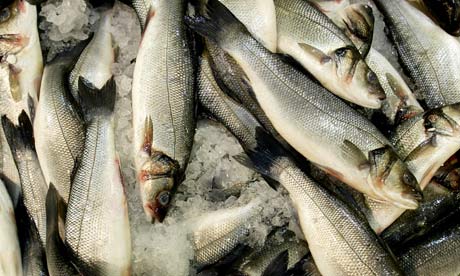
A display of Sea bass for sale at Billingsgate Fish Market in London. Photograph: Scott Barbour/Getty Images


Seth got us started with historical perspective on this topic a couple years back, and Phil recently created the most popular series of posts of the year, also on this topic; we have even tried sharing a sense of humor when possible.  But grim tidings continue:

First it was the cod, then the haddock, the swordfish and even the anchovy – now sea bass looks likely to join the list of no-nos for eco-conscious dinner party menus.

Stocks of the palatable species have sunk to their lowest in the past 20 years, according to a new assessment by the International Council for the Exploration of the Seas. Continue reading

Of Birds and Beans Redux

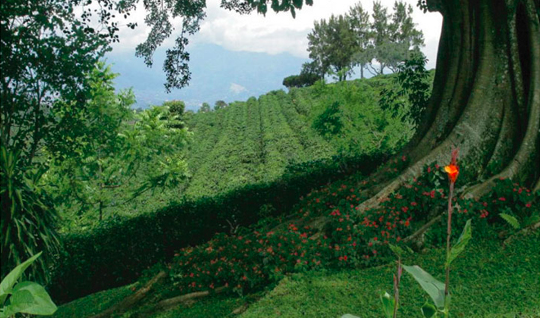
Shade grown coffee plantations in Costa Rica; photo credit: Emilia Ferreira

What first struck me when I read about the Smithsonian Migratory Bird Center this morning was that their bird friendly coffee certification was a great idea. What struck me second was that I’d read about it before on this site, or at least a teaser on the subject. Chalk not having a “part 2” up to a Cornell student’s busy schedule, but it certainly left the door open for me to discover this wonderful initiative on my own.

We’ve discussed the environmental benefits of shade grown coffee on these pages before, and the Cornell Lab of Ornithology is a La Paz Group “touch stone” in many ways. Leave it to them to so clearly make sense of all the sustainable coffee certifiers on the market from a bird’s eye point of view.

Making Sense of Sustainable Coffee Labels
They’re those little rectangular icons lined up on your favorite gourmet coffee bags—a tree, a flower, a frog, a harvester, each trying to tell you something about how the coffee was grown. But what does each one mean, and how do they differ? Here’s a list of common labels and their benefits for birds….

Bird Friendly. Certified by scientists from the Smithsonian Migratory Bird Center, this coffee is organic and meets strict requirements for both the amount of shade and the type of forest in which the coffee is grown. Bird Friendly coffee farms are unique places where forest canopy and working farm merge into a single habitat. By paying a little extra and insisting on Bird Friendly coffee, you can help farmers hold out against economic pressures and continue preserving these valuable lands. The good news is that there’s more Bird Friendly coffee out there than many people realize—we just need to let retailers know we want it…

Organic. As with other organic crops, certified organic coffee is grown without most synthetic pesticides and fertilizers and is fairly sustainable—although there are no criteria for shade cover. Because of coffee’s growth requirements, it’s likely that organic coffee has been grown under some kind of shade. However, many farmers shade their coffee using other crops or nonnative, heavily pruned trees that provide substantially less habitat for birds, and the organic label offers no information about this. Continue reading

The Journalism-Academic Complex

Illustration to John Seabrook's 2011 article "Snacks For A Fat Planet" showing: Indra Nooyi, the C.E.O. of PepsiCo, says it must be a “good company” in a moral sense.

Illustration to John Seabrook’s May 16, 2011 article “Snacks For A Fat Planet” in the New Yorker. showing: Indra Nooyi, the C.E.O. of PepsiCo, says it must be a “good company” in a moral sense.

The Military-Industrial Complex that then-exiting President Eisenhower warned about is unfortunately alive and well, as we saw in the previous decade, when journalists were mostly asleep at the wheel, often even contributors to the dark complex. But journalism has been reborn in some quarters with a new sense of purpose, and new approaches to vigilance that is worthy of the Fourth Estate. Diligent investigative journalism allied with advanced academic research-driven thinking skills produces a better complex.

Case in point: when accomplished academics such as Professor Aaron Chatterji share cogent, punchy follow up posts to articles that caught our attention years back, today’s news on labor activism meets yesterday’s analysis of the intersection of food/health trends and corporate buzz phrases like social responsibility. Thanks to this Duke University professor, New Yorker readers get follow up on a story that might otherwise have been fading, but should not:

Nooyi has backed up her rhetoric with concrete steps, acquiring healthier brands like Tropicana and Quaker Oats and creating Pepsi Next, a lower-calorie version of the flagship brand. She even hired a former official from the World Health Organization to oversee the reforms. Continue reading

Eat Wild, Eat Well

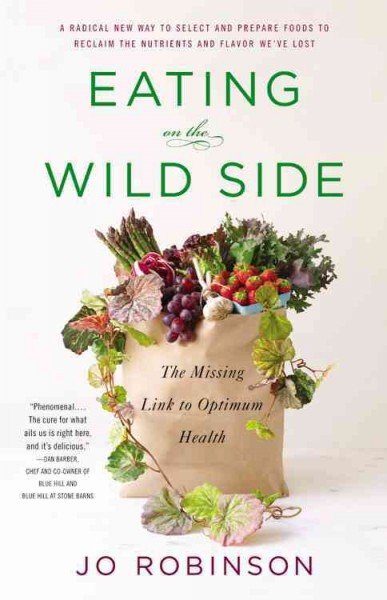
9780316227940_custom-6ce3aa1cfe7dd79644c4d9978c27fa29b29f3b20-s500-c85.jpgAs we start thinking through food programming at the two new properties we are working on here in Kerala, our attentions are scattered around the world, but eating wild keeps coming to us from all over. So when the great interviewer Dave Davies discusses this book with its author, podcast here, our attention is riveted:

In her new book, Eating on the Wild Side, Robinson argues that our prehistoric ancestors picked and gathered wild plants that were in many ways far more healthful than the stuff we buy today at farmers’ markets.

But this change, she says, isn’t the result of the much-bemoaned modern, industrial food system. It has been thousands of years in the making — ever since humans first took up farming (some 12,000 years ago, more or less) and decided to “cultivate the wild plants that were the most pleasurable to eat,” she writes. More pleasurable generally meant less bitter and higher in sugar, starch or oil.

Continue reading

Stubbing It Out

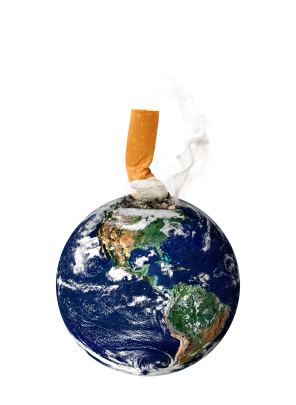
Cigarette ButtsI have seen countless cigarette butts littered on the street or on the beach, and it wouldn’t surprise me if many of the individuals who liter them are those who otherwise act in an environmentally responsible manner. So when I stumbled on this NYTimes article from a few years ago it made me wonder how people’s actions differ between perceived forms of trash.

“Littering is one of my pet peeves, and I always told my kids they’d be in big trouble if I catch them doing it,” said Ms. Scott, a 43-year-old financial executive, as she sat outside an office tower on Michigan Avenue in Chicago on a recent sunny afternoon. “I see people throw stuff out their car windows, and I cringe.”

Yet she confesses that she routinely discards cigarette butts on the sidewalk. For her and countless other American smokers, cigarette butts are an exception to the no-littering rule. “Aren’t cigarettes biodegradable?” Continue reading

Stuff, Change, And Examining Broke

View the video by clicking the image above, again brought to you on Cornell University’s website:

The United States isn’t broke; we’re the richest country on the planet and a country in which the richest among us are doing exceptionally well. But the truth is, our economy is broken, producing more pollution, greenhouse gasses and garbage than any other country. Continue reading

Entrepreneurial Conservation Through Carbon Visualization

Thanks to the University of Washington’s magazine Conservation, we found our way to this video, and the magazine’s blurb about the source of the video is a worthy introduction because of its explanations of the images that accompany:

For Antony Turner, pictures make a story come alive—and in the climate change story, one of the main characters is invisible. In 2009, together with artist/scientist Adam Nieman, he founded Carbon Visuals to help people “see” the carbon dioxide that’s trapping heat in Earth’s atmosphere. Continue reading

Search Well, Do Good, Avoid Not Being Evil

The big guns of the tech world have the financial weight to reinvest in new services, but can startups give them a run for their soul?

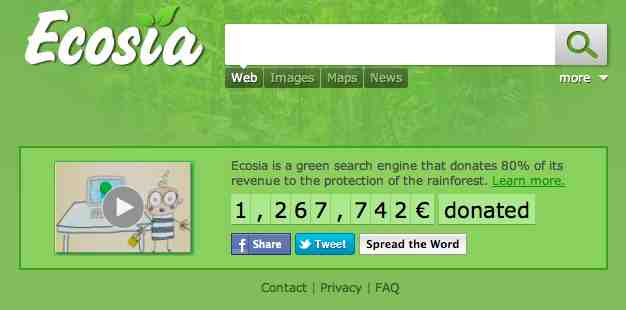
I have not tested it yet, but there is a new, alternative search engine worthy of checking out. Click the image above to go to the Guardian story about would-be giant-killing do-gooders (or is it giant-killing would-be do-gooders?):

A new breed of internet startup is taking on the big guns of the tech world. Seeking to capitalise on consumer disillusionment with the established order in the wake of headlines about tax-dodging, personal data profiteering and poor factory conditions, these startups represent the radical face of the internet.

Unusually for a tech company, however, it is not technological innovation that gives them their unique selling point. Rather it is the promise to do social and environmental good.

“They started with decent values – Google and Apple,” says Christian Kroll, founder of Ecosia, an eco-conscious search engine based in Berlin. “They wanted to build something that improves the world. But as soon as you become a public company, shareholders exert influence.” Continue reading

Conservation Is Sometimes The Story Of Change

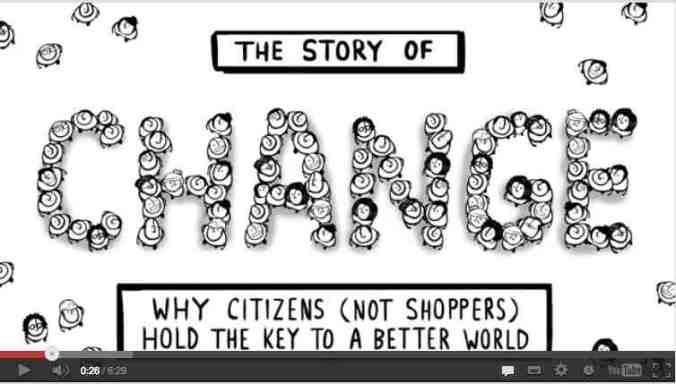
Click above to go to the location where Cornell University is hosting this brief video by a fellow alum of several Raxa Collective contributors:

Can shopping save the world? The Story of Change urges viewers to put down their credit cards and start exercising their citizen muscles to build a more sustainable, just and fulfilling world. Continue reading

WED 2013: Food for Thought

WED 2013 - Raxa Collective

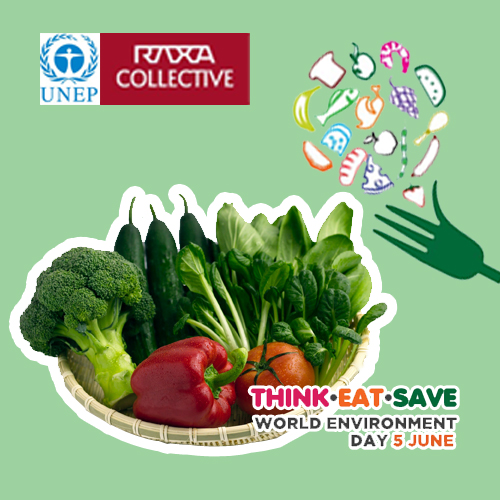
On June 5, we’ll celebrate World Environment Day. This year UNEP focuses on the theme Food waste/Food Loss. At Raxa Collective we’ll be carrying out actions and sharing experience and ideas. Come and join us with your ideas and tips to preserve foods, preserve resources and preserve our planet.

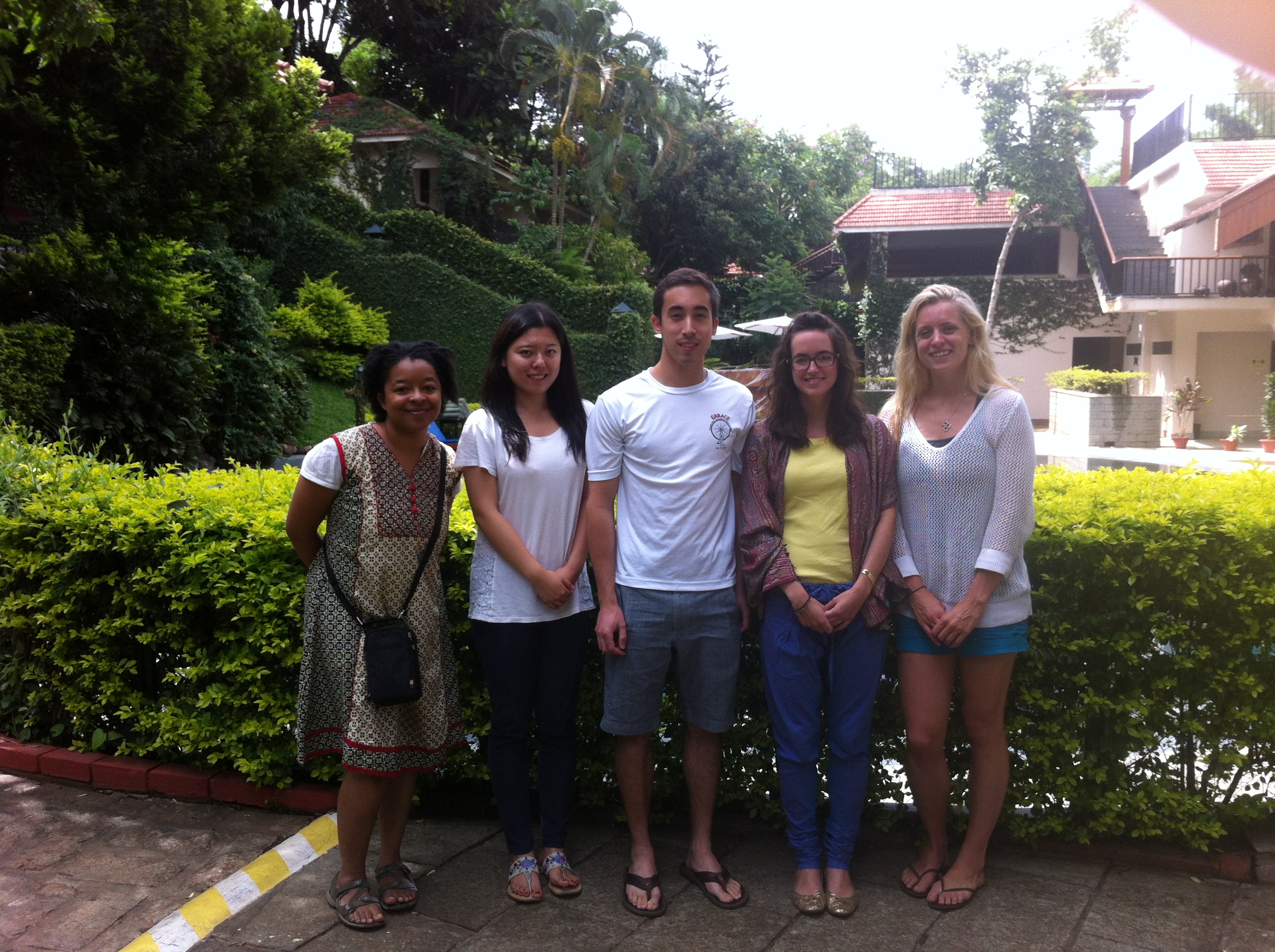
From left: Allegra Marzarte, Lu Li, Martin Bawden,  Raphaëlle De Gagné, Ashley Ostridge

From left: Allegra Marzarte, Lu Li, Martin Bawden, Raphaëlle De Gagné, Ashley Ostridge

Tomorrow is World Environment Day. A United Nations Environmental Programme initiative, WED is annually celebrated on June 5th in an effort to increase environmental awareness and positive environmental action. This year the theme is food wastage, with the motto: Think, Eat, Save. A recent report by the UNEP  concluded that every year, roughly one third of the food produced in the world for human consumption — approximately 1.3 billion tonnes — never makes it to from farm to table.

While one may imagine that most food wasted is a result of the actions of individuals in developed countries, this is not the case. Many developing countries, including India, also have an enormous food waste crisis. Specifically, while India is 2nd in the world in food production, as much as 20 to 40 percent of the food grown spoils before reaching consumers.

Here at Raxa Collective we have several initiatives to both alleviate food wastage and help both the local community and the environment. Continue reading

This object will self-destruct in… Shouldn’t the life span of a product be on the package ?

The adaptor for my very sleek, efficient and trendy computer broke down and I am a thousands of kilometers away from the brand store. It was a second-hand computer, I’m a vintage kind of gal you see, so I was not exactly shocked that after 4 years the computer may need care. I  soon realized though that the local resellers did not have a replacement for the plug, only a newer bigger version for a computer no one has yet. So I tried to have the adaptor fixed. It turned out the white well-rounded adaptor was not made to be fixed.

That’s what planned obsolescence is about : designing objects for the bin, if you want to know more about this industrial method you should watch The Story of Stuff.

Are there solutions to shift to a less wasteful consumption ? Governments, France and the European Union included, are currently at work on laws to implement longer guarantee periods, to encourage companies to offer replacement parts for 10 years after manufacture and to inform consumers on the expected longevity of the product.

And the corporate sector ? A growing number is getting organized in a circular economy :

Coffee and biodiversity

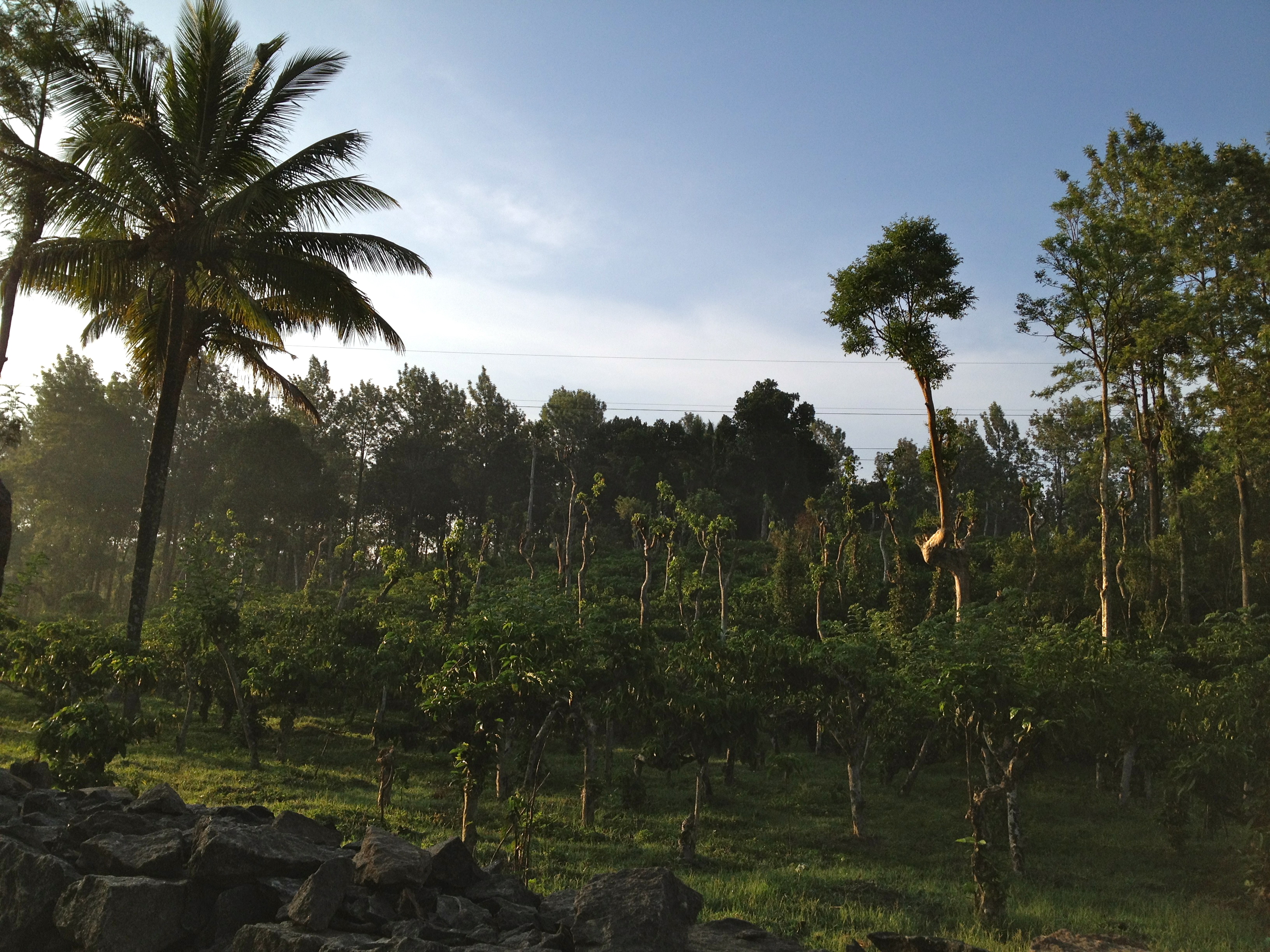
I’ve grown addicted to my colleague Anitha’s cold coffee since I got here (sorry guys but hers is just perfection). Ice cold, 70% arabica/30% robusta, locally grown coffee. India may not be known for its coffee, but in the Western Ghats of Southern India, you’ll find coffee plantations on hills and misty mountains between 800m and 1500m above sea level. One of the challenges here has been to integrate biodiversity conservation and sustainable livelihoods for farmers. Continue reading

The logistics dilemma: double passenger scooter or double-decker lorry ?

Transporting products around the Ghats credit Ea Marzarte My friends and I had been looking for one around town for an aftenoon, and finally I found it a week later driving away towards another town: a coir mat, the ideal support to make my salutations to the sun on. The small motorbike was actually part of a ‘caravan’ carrying people and mats from the neighboring state of Tamil Nadu.  So loaded it was uncanny, this one had either the most efficient engine or the best pilot because it made it to the top of the hill first and stopped there to wait for the others. Continue reading

Midway – a transmedia project by Chris Jordan

imagesThis morning’s post about the Smithsonian Ocean Portal featuring one of Chris Jordan‘s pictures from his exhibit Midway reminded me to check on his current work on the atoll. On one of the remotest islands on our planet, tens of thousands of albatrosses lie on the ground, their bodies filled with plastic from the Pacific Garbage Patch.

Returning to the island over several years, Chris Jordan and his team witness the cycles of life and death of these birds. He will release in late 2013, his first documentary feature Midway, message from the gyre.

See the  trailer after the jump. Continue reading

At the tea factory

This slideshow requires JavaScript.

Tea in India tastes stronger, so I always ask for mine to be mild, just like I do for curry. As I learnt today during a visit at a tea plantation and factory this is due to the processing of tea mostly used here for the Indian market: CTC.  Continue reading