Profile: Chef Pradeep & Indian Cuisine

Yesterday I met and spoke with another longstanding member of the Cardamom Country crew, Executive Chef, Mr. Pradeep. Having been affiliated with this resort since its inauguration  in November, 1999 (in fact starting two months prior to that for training), he serves as a kind of memory box for Cardamom County, not least about its cuisine.  But his  family heritage is intertwined with this location in a fascinating way too.
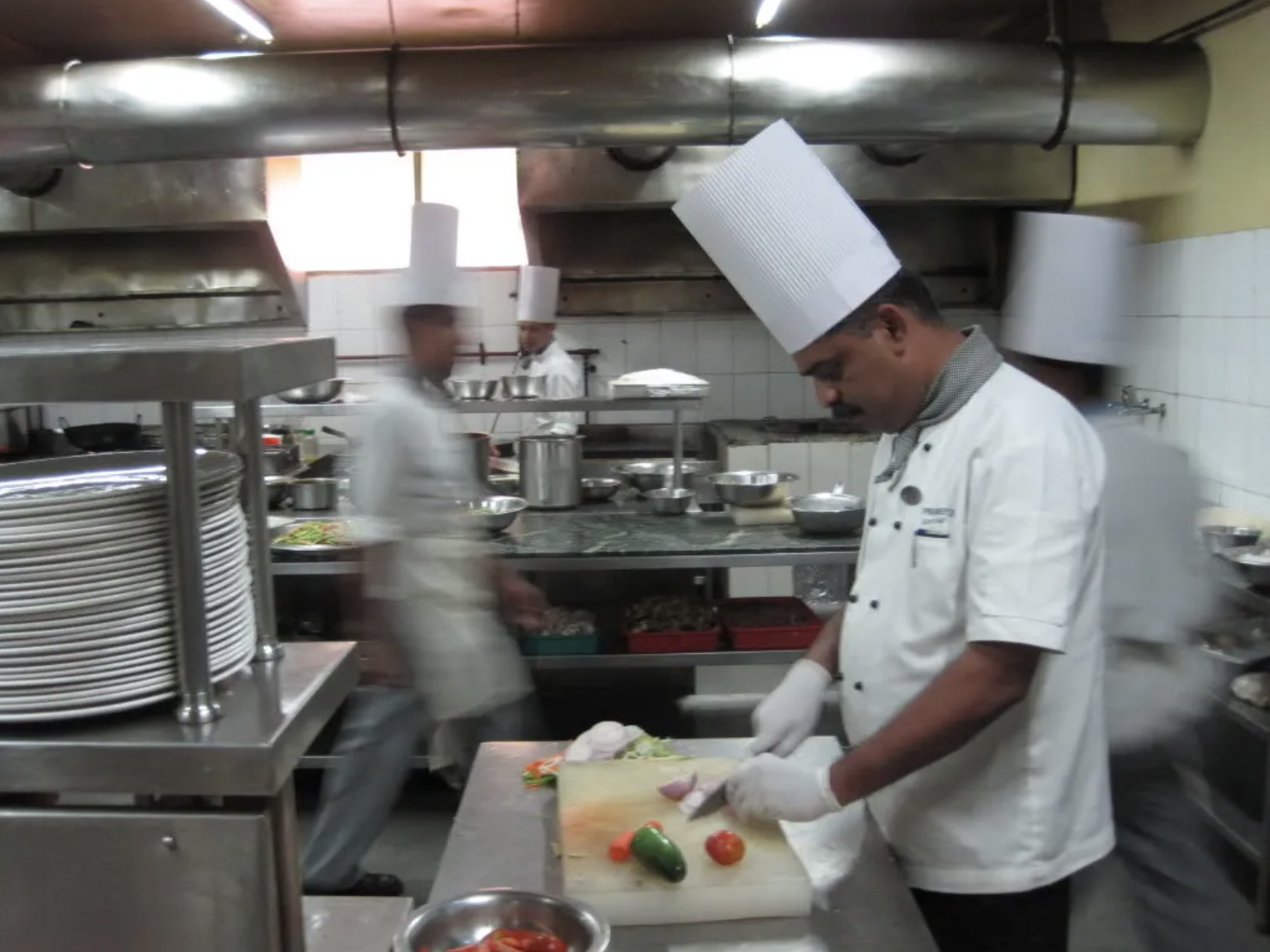
Chef Pradeep explained that his family hails originally from the state of Maharashtra.  His maternal grandfather came down to help construct the Mullaperiyar Dam 120 years ago, mentioned in greater detail in Michael’s post Damn Dams and Macaques. Thus, Chef Pradeep was born in Thekkady very close to where Cardamom County was eventually built, although he spent most of his life up until college in Madurai, Tamil Nadu. He moved back to Thekkady after he married his wife and decided to settle down at his place of birth. His wife had a government job, which is held in especially high regard here in Kerala, namely for its stability and the pension received later in life. Continue reading

Building Blocks of Opportunity

The wooden block is probably one of the simplest and most played with toys.  However, this iconic block did something unexpected: it has been promoted amongst the complex toys of this generation and sure to last for many generations.  With a little entrepreneurial conservation, Tegu has created a block that surpasses most expectations of a toy.  It is educational and stimulates children’s creativity and unscripted play (as I mentioned in one of my previous posts), is heirloom quality, helps the planet and its citizens, and is so much fun that adults sneak off and play with them.

Tegu’s magnetic blocks are built to leave a legacy.  They are complex, yet they don’t require any batteries or instruction manuals, just an imagination.  The uniqueness of this toy is not just the functional (and inaccessible to children) magnet, but the series of events that follow each block purchase, called the Tegu Effect.  Tegu gives every buyer the choice to either donate dozens of trees or donate schooldays for Honduran children.  But it is not only the environment and children that benefit; as Tegu grows, the company creates living wage jobs for the Honduran factory workers, and with 65% of the population living currently below the poverty line Tegu offers the people a great opportunity. Continue reading

Soggy Elysian Dreams

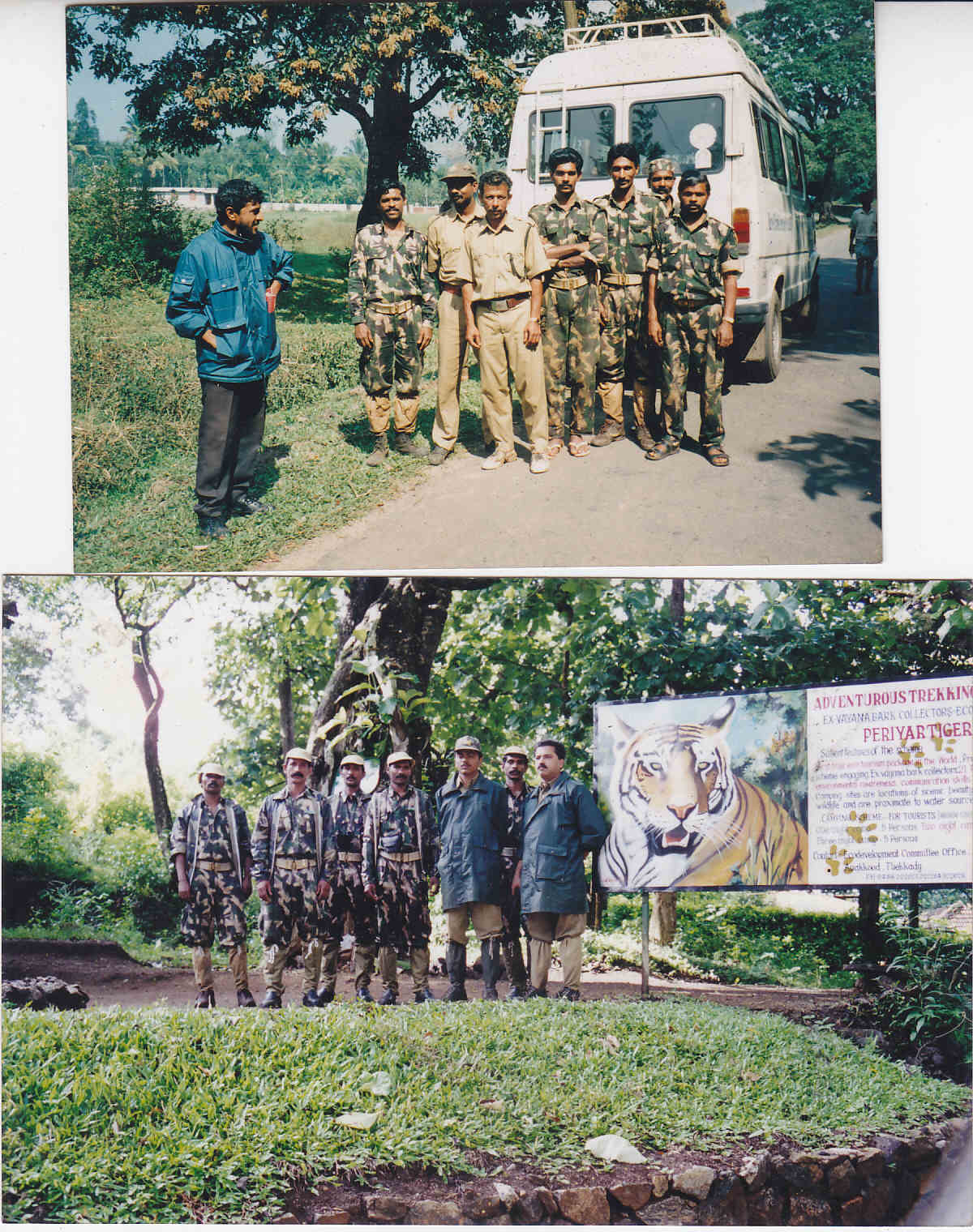
Note: this is Part 2 of what will hopefully be a series of posts on the guides of the Tiger Trail, who are former poachers. Part 1 can be found here. Beware: this post is sorta self-serious.

One of the most familiar, persistent, and pervasive myths in the collective-(un)conscious of the ‘West’ is the myth of the ‘noble savage.’ Writers who perpetuate this myth typically structure it along the lines drawn in Genesis: a formerly Edenic, perfectly-ordered society meets a corrupting influence that sullies irrevocably this society’s purity and harmony to the detriment of our current situation. Whatever the devil, be it private property, human temptation, television, the Federal Reserve, etc., the story has one function: it causes us to pine for the good old days—the beginning—before the advent of all this nastiness, which just stinks in comparison.

But if there’s one thing history teaches us, it’s that origins are rarely pretty. Progressions, regressions, and transgressions can happen all at once, and often they coincide in the same event. After all, we can’t get back to how it was then, not because we don’t have a suitably equipped Delorean, but because there was no then. Pardon the Liberal Arts 101, but I think some of us are more duped by this myth than we know. It is more difficult than is fair to exorcise ‘Eden.’ Continue reading

A Voice from Africa

Jambo! Greetings from Nairobi, Kenya. I am pleased to join the other Raxa Collective contributors and share some wonderful stories of entrepreneurial conservation from here in Eastern Africa! However, before I jump into it, you may be wondering how a little Asian-American girl from New Jersey ended up in Africa. I’ll tell you about myself before jumping into my first blog post!By way of background, I recently graduated from Cornell University’s School of Hotel Administration with a minor in Urban and Regional Studies. I’ve spent most of my academic and professional career in the hospitality industry. However, during my junior year at Cornell, I embarked on an adventure that would find me exploring an atypical “Hotelie” path.
I spent the winter of 2009 externing at the Tribe Village Market Hotel in Nairobi, Kenya, where I was exposed to the dynamic Kenyan culture. Nairobi was my pit stop before studying abroad in Barcelona, Spain. I had always held a keen interest in sustainability, I took a Sustainable Tourism class at Ramon Llull University, Turismo Sant. Ignasi, which raised my interest in this sector. While abroad, I was fortunate enough to do a bit of traveling throughout Spain, Italy, The Netherlands, and Morocco. The travel bug led me to a summer that changed my life and perspective on the meaning of sustainability and conservation.

Last summer, I interned at Panigram Resort, a socially and environmentally responsible boutique resort located in south-western Bangladesh (currently under development). For 60 days, my fellow interns and I were immersed in the beauty of rural Bangladesh’s vibrant culture, community, and natural beauty. As the sustainable hospitality intern, I worked on a host of project during the summer. For example, I helped develop a local community’s recycling business, oversaw the construction of a bamboo mud visitor center, modeled a carbon footprint calculator, and taught English classes to Bangladeshi children. Continue reading

Ramírez, Reading & Responsibility

The presenter introduced Sergio Ramírez with all the formal flourish that the Spanish language provides for; a laudatory salute that seems unique to places where poets serve as public servants.  The presenter mentioned the publications Ramírez has contributed to; the number of his essays, short stories, and novels; told of his political history and his creation of Nicaraguan publications and organizations of reform. The presenter was obviously very proud of having such an influential man in the room, and finally said, “I give you, author, poet, thinker, ex-president Sergio Ramírez!”

(c) Overdue Media LLC, used with permission

The man who has given talks at over forty academic institutions around the world (including Cornell University) took the podium. “Thank you for the very generous introduction,” he started.  And what he said next illustrates the difference between poets and politicians. Continue reading

Nicaraguan 1st Graders Book It to 25wpm

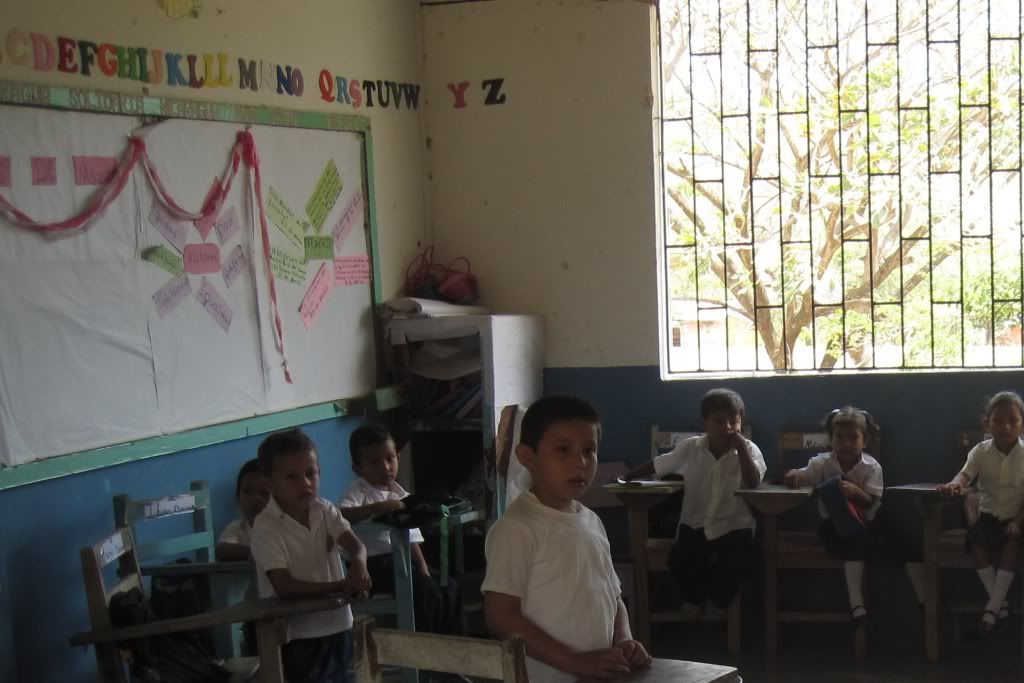
The José Dolores Estrada School, named after one of the military heroes who fought against William Walker’s army in the mid-1800s, is located only five or six kilometers away from Morgan’s Rock. JDE is a small public school with three teachers and around sixty to seventy students (the numbers vary widely each year or even by semester) that sit in mixed-grade classrooms to learn from whatever textbooks become available. On the walls, hand-made posters read, “What is a fable?” or give the definition of “traba-lenguas” (tongue-twisters) along with several examples. Cut-outs of volcanoes, whales, and ducks rest above a student’s project on “The Land of Lakes and Volcanoes.”

The three teachers responsible for the colorful and educational decorations came with José Tomás Gómez Valdivia (Nicafrance Foundation) and other teachers from La Cumplida for three days in Managua to attend the congress. I joined the delegation in their final day of sharing and learning and took notes on the conferences.

“The Situation of Reading in Nicaragua and Initiatives for Improvement” was the title of the first talk that José Tomás and I attended (the teachers went to whatever conference or workshop was most interesting or valuable to them). It was given by Vanessa Castro, a PhD from the Harvard Graduate School of Education. Dr. Castro has worked alongside the World Bank, IADB, UNESCO, and AED, and is now one of the leading investigators for the Nicaraguan group CIASES (Centro de Investigación y Acción Educativa).  Continue reading

From One Training Session to Another

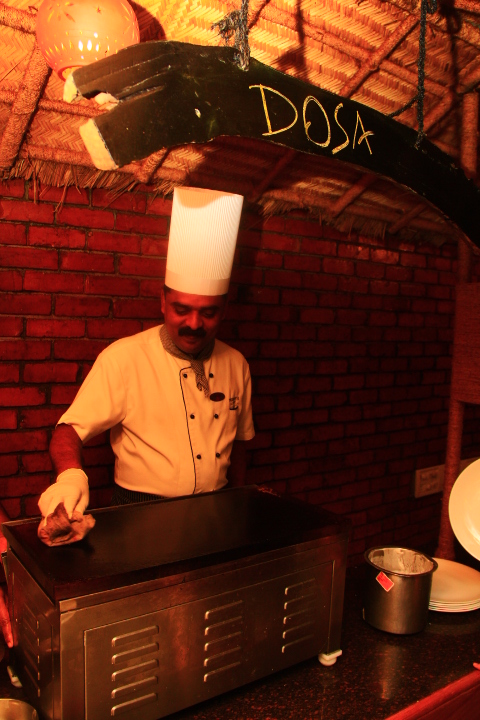
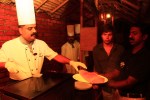
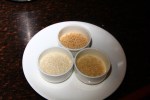
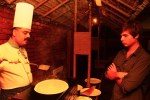
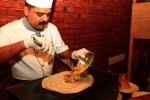
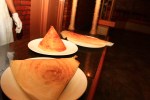
Dosa is a staple of the south Indian’s diet; a crispy cousin of the North American pancake; a usefully and impressively variable rice and dal-based fast-bread that is cooked on a sizzling griddle, and served with savory or sweet side dishes at any meal. Tonight, Sung and I had the pleasure of watching a master at work with the dosa: the head chef at Cardamom County, Chef Pradeep, who put on display several types of dosa for us to try. Per the new usual, Sung took some impressive pics (below). But the highlights were the flavors and the sounds, as wells as the nifty designs grilled into the dosa, the pattern of which is dependent upon how the batter poured onto the griddle (they’re not unlike the swirls in the foam of an artfully made cappuccino). There was Uttapam, which is pizza-like but with ingredients cooked into the batter; mushroom and cheese dosa; house-hold size dosas and restaurant-sized dosas; and masala dosa, which packs in spiced potatoes. We had a lot of fun with the whole experience, and learned a healthy dose about a tasty Indian treat. Check out the photos for a better sense of the dish (for those of you unfamiliar with it).

Profile: Ratheesh & Wellness


Lately I have been speaking and spending time with Ratheesh at the front desk and around the resort. Ratheesh is an ayurvedic therapist and practitioner and also the resident yoga teacher at Cardamom County. It was actually Ratheesh’s grandmother, who he respectfully refers to as Thankamma, who taught him yoga techniques from a young age. We also discussed what inspired Ratheesh to enter the ayurvedic trade and his response was his family on his mom’s side had always been interested in this 5000-year-old medicinal trade. Dr. Leela Kumary, Ratheesh’s aunt, who is an ayurvedic doctor first inspired him to pursue a career in ayurveda from as early an age as ten.

Having grown up in the backwaters of Allepey, Ratheesh talked about bathing in the waters of the half-salty, half-freshwater due to the opening and closing of the floodgates in-between the dry and rainy seasons. He also told me about his one and a half year training in Coimbatore, Tamil Nadu in Ayura and the following one year practical residency at the Nagarjuna Ayurvedic Hospital in Kaladi, Ernakulam, near Cochi. This was followed by a transfer to Nagarjuna Ayurvedic Hospital branch in Mumbai, Maharashtra for one year where he had a great time sightseeing and living in the big city, especially close to Bollywood. However, in the end Ratheesh missed Kerala, especially citing the south Indian cuisine he grew up with, and returned to practice ayurveda and teach yoga within the hospitality industry. Continue reading

Latin America Reads

Several hundred teachers sporting green canvas bags filled an auditorium at the Central American University (UCA) of Managua. The bags bore the Nicaragua Lee (Nicaragua Reads) and International Reading Association logos under the inscription, “Cantar Palabras, Dibujar Textos,” or, “Sing Words, Draw Texts.” A large banner across the top of the stage welcomed teachers to the eleventh Latin American and second National Congresses on Reading. The teachers were mostly from Nicaragua and Central America, but many South American countries, as well as Puerto Rico and USA, were also represented.

I was there accompanying the delegations from schools supported by Fundación Nicafrance. As I mentioned in a previous post, this foundation sponsors schools with other members of its social enterprise network: Morgan’s Rock Hacienda & Ecolodge, La Cumplida/Cafetalera Nicafrance, and Exportadora Atlantic, S.A. These are all intertwined with the Simplemente Madera Group.

The great highlight of the day’s proceedings was the eagerly-awaited arrival of Sergio Ramírez, who was vice-president of Nicaragua just after the revolution (86-90) and is probably the most celebrated poet and author of Central America since Ruben Dario, who still has a historic importance to Nicaraguan culture. Scores of teachers had copies of his latest book, La fugitiva, which they would ask him to sign at the end of his speech about the importance of reading to future generations of Nicaraguan society. This tall man and his deliberating voice, which rang across the auditorium, actually inspired me to wait in line and ask him to sign my shirt. This was the first time I’d ever asked someone for their autograph.

To find out why I had my shirt signed rather than a piece of paper or a Congress program (see the first link for an Excel sheet), stay tuned for the latter of my next two posts about this Congress and what I learned about the state of Nicaraguan literacy today.

Bonds In Theaters

Here on the southern coast of Nicaragua, I have tracked reviews of the latest Harry Potter movie without yet being able to see it for myself.  My parents and brother went to see it in Kerala today.  Their review was less about the movie itself than about the fact that being in a movie theater in India is a kind of spectacle in its own right, apart from whatever may be happening on screen. I’ll describe the Indian experience in more detail later; for now I think back in time.

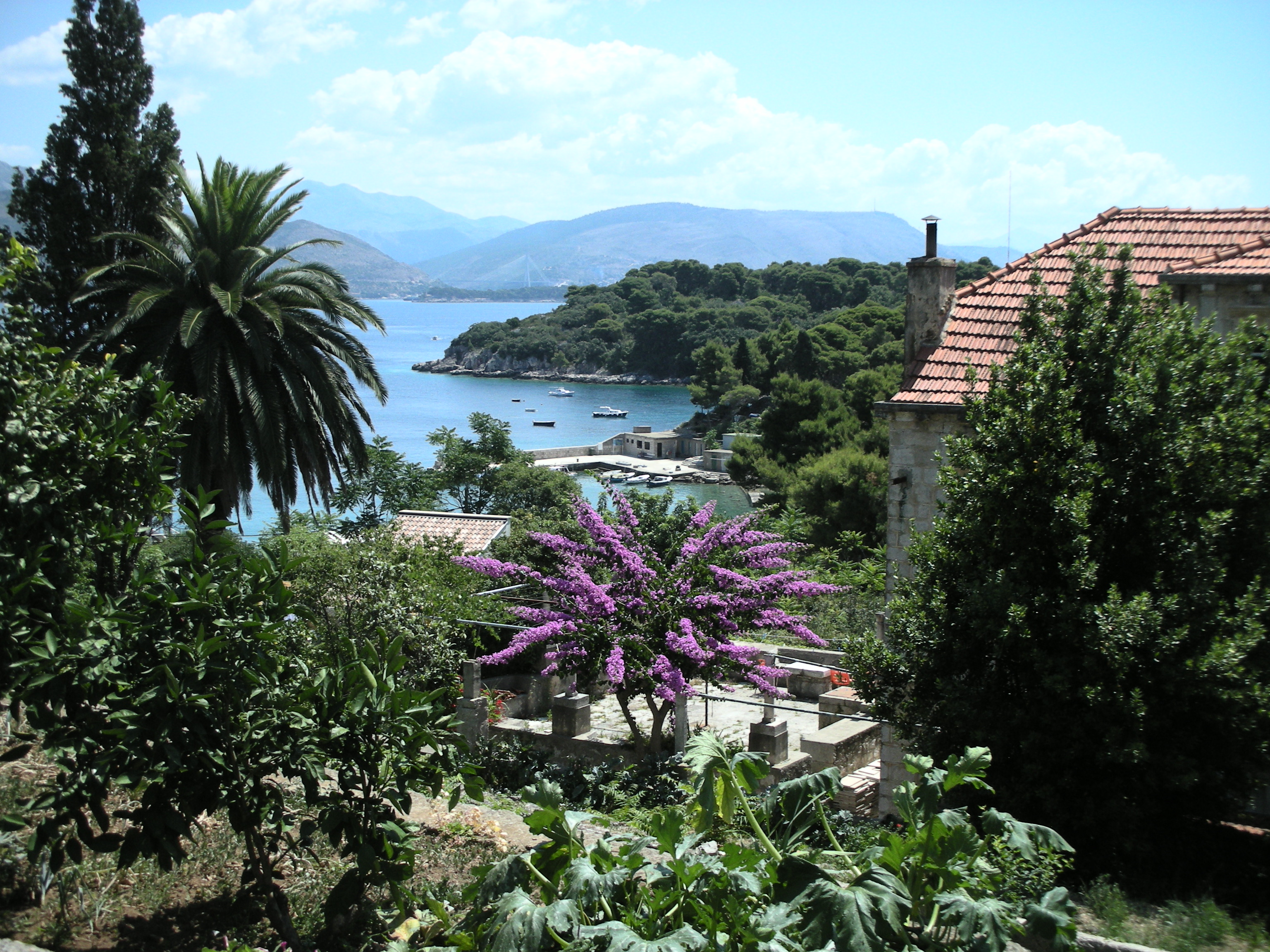
In 2006 my family was living on a small island off the coast of Dubrovnik (that is the view from our home in the photo above). About 150 people lived on the island, mostly the families of fishermen, who only spoke Croatian and maybe a little Italian.  The old city of Dubrovnik had a small cinema that sometimes played movies in English.  I recall when the latest James Bond film, with a new actor whose performance everyone was eager to review, started playing in this theater–in English with Croatian subtitles. “Casino Royale,” the movie was called.

Continue reading

A Campesino Breakfast Revisited

About three weeks ago, I was on the Campesino Breakfast Tour when I had the chance to see a boa sleeping in the chicken barn. This morning, the collection and preparation of breakfast ingredients went by without such an exciting event. But since unlike last time today I had a video camera with me, I can share some of the audiovisual details of the breakfast tour that were lost last time. I still recommend reading the previous post for a more elaborate text description than that which you will find here.


When we left the fowl barn and headed to Doña Candida’s traditional Nicaraguan house,  Continue reading

Profile: Jijo & Night Duty

Over the past few weeks it’s been great getting to know some of the extremely friendly, open, and welcoming members of Cardamom County working with them on a daily basis. One such member is Jijo, who I’ve had the pleasure of spending a few night auditing duties with and even going down to the local gym together with a bright red sign and a muscular fellow plastered to it aptly entitled “Masterpiece”.

Jijo actually started out at Cardamom County just short of a year ago, which means this August will be his first year anniversary as a part of the team. Before this, however, Jijo talked to me about his two years at Club Mahindra’s Tusker Trail, which was an enjoyable stay where he acquired the majority of the English skills he holds today through persistence and practice with guests and colleagues. However, because it was more of an exclusive club atmosphere, there were many regular visitors who were mainly originated only from India. Thus, Jijo came to Cardamom County because he wanted to meet many different kinds of people from all over the world including people of different cultures, religions, ideas, and languages to learn new things every day, which also encompasses what is his favourite part about the hospitality industry.


But Jijo’s real passion was triple jumping, and long jump on the side. The sport as he described it requires extreme physical fitness in conjunction with a high level of technicality and a precise balance and coordination of arms and legs to achieve the longest distance possible. Continue reading
Back to Nature

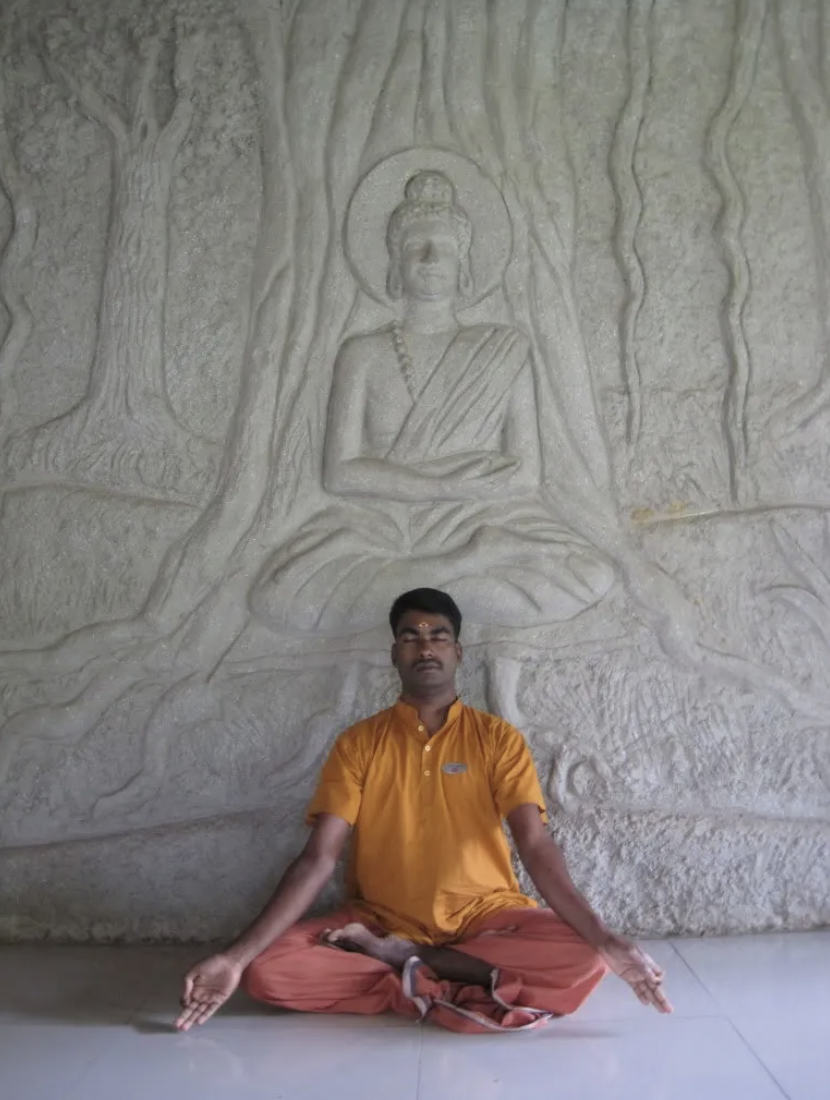
I was recently walking around in a neighborhood park, and I saw birds splashing in a pool of water.  I watched a pair of squirrels play tag up and down a large oak tree, and I admired an elderly couple walking hand-in-hand in a flower garden.  Then, I heard a car door slam and my eyes beheld children entering the park hardly lifting their gaze from their electronic devices as debris flew from their car.  As I raced to retrieve and dispose of the litter, my mind quickly volunteered pieces of itself to give to them and their parents.  How could this world’s future generation be so oblivious to the natural environment?  And especially when global climate issues are so prevalent? Continue reading

Air up There

Yesterday I finally accomplished a minor goal I had set for myself early in my stay at Cardamom County, namely, hiking to a cross set high in the hills that ensconce Kumily and the low-lying areas of the Periyar. Unlike the ‘Cloud Walk,’ which took us into the forest for a view of the town and the Mannan/ Pelleyan settlements, this hike allowed me to pass households and schools, small Pentecostalist parishes and eye-catching Catholic Churches. This hilltop is nestled amidst privately owned plots teeming with cardamom and pepper plants, the variously-sized plots of largely middle-class farmers (for probably the fifth time this summer I thought ironically of the admonitory cliché, ‘money doesn’t grow on trees’).

Continue reading
By the Fire (or, How I Learned to Stop Worrying and Love the Tiger Trail)

We had reached an impasse, and I was becoming frustrated.

“I understand he’s gained a new awareness,” I said. “What I don’t understand is what exactly that awareness is.”

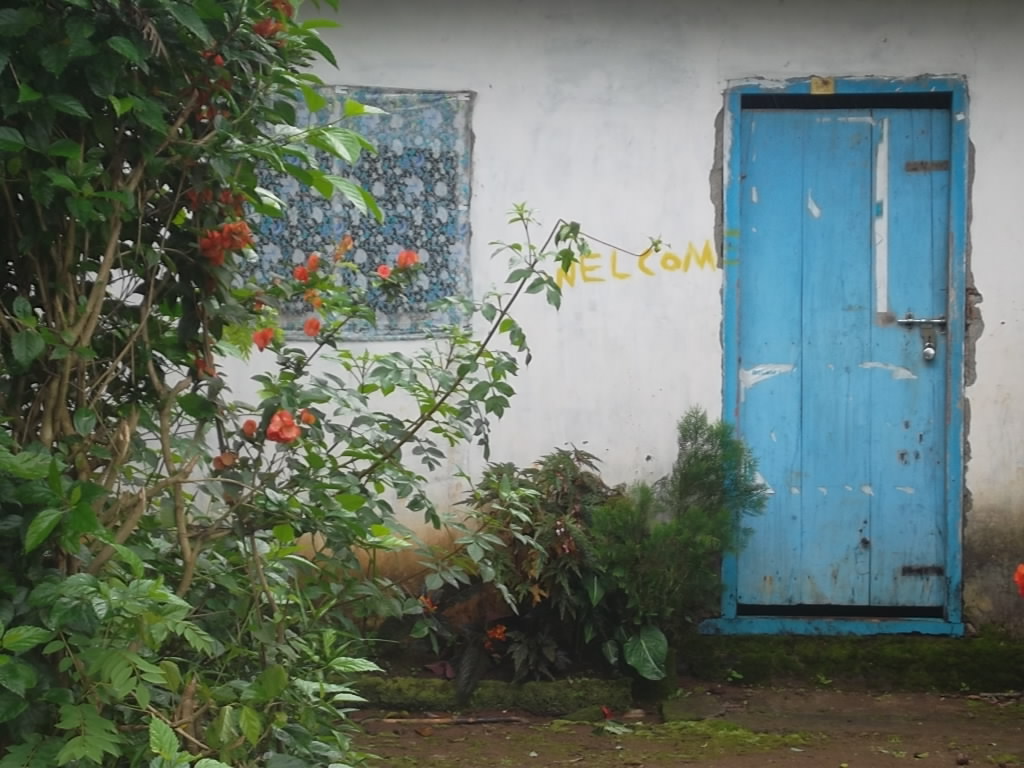
I had slipped into fact-collecting—or, more precisely, ‘attitude-collecting’—mode, a sort-of aggressive pose I sometimes assume when given the attention of a person whose life has been distinctly different from mine. I admit that this happens more often when I’m in the midst of a culture I think I don’t adequately understand. There’s no judgment inherent to this culling, but there is something predatory about it; if I want your words, to add your Weltanschauung to my reserves, I will work hard to procure them. And if I don’t get what I’m looking for, I can get testy. Continue reading
Certification of Sustainability

Unlike most of my other posts, practically all the hyperlinks in this post link to an aptly corresponding webpage instead of a picture I took. Also, please note that my previous post on the reserve at La Cumplida has been corrected. You can find the corrections in bold at the top of the post.

*

La Cumplida’s coffee farm is accredited by UTZ CERTIFIED and Rainforest Alliance. These two organizations are worldwide leaders in assessing and monitoring sustainable practices. UTZ is solely concerned with agriculture—coffee, cacao, and tea farms, mostly. The group states that through their standards, farmers see increases in productivity, efficiency, and quality:

Productivity

“In 2007, before being certified, my farm of 2.1 hectares produced 7,000 pounds of parchment. Now, in 2009, I have a productivity of 11,000 pounds. That represents an income increase.” (Cooperativa San José El Obrero, Guatemala)

Efficiency

“Before certification I fertilized 3 times a year with 80 grammes per plant, now I fertilize two times a year and apply 100 grammes per plant; with this measure I saved labor and fertilizers, while farm productivity has not been affected. Savings have been US $39 / ha”. (Cooperativa Anserma, Colombia)

Quality

The percentage of Class 3 & 4, which fetch better prices, has increased above 80% since certification, unlike 2006/2007 when they only produced 26.1% of class 4. (Rianjagi Coffee Farmers Cooperative Society (RFCS), Kenya)

Continue reading
Official Friend

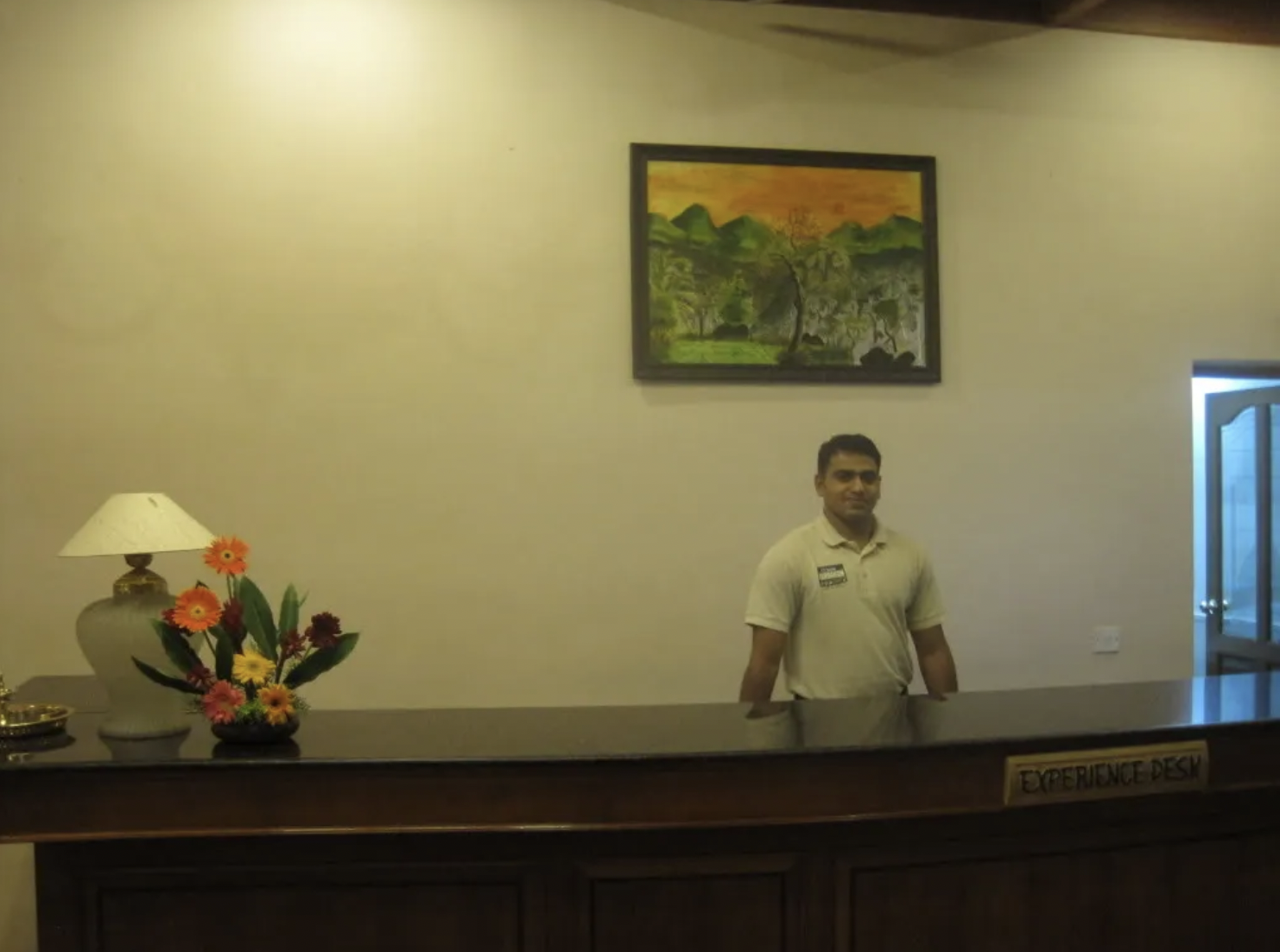
I spend much of my non-operations time at Cinnabar, an open-air café at Cardamom County with a perfect view of the Periyar Reserve, to use wifi.  There are a few locations at the resort with a strong signal, but my preference is here. I feel welcome. The open air and scenery set the scene; Vishnu emanates a sense of welcome the way a friend would.

Ever since I started my internship here, I have been greeted by Vishnu at  Cinnabar the same way most days.  He has a great smile that could only be described as genuinely friendly. He also follows local custom and always greets with “Namaskaram sir.”  The “sir” part of that felt kind of official and formal at first, but I get it now.

Continue reading

Sustainable School Sponsoring

Last week, teachers from schools supported by Morgan’s Rock Hacienda & Ecolodge, Cafetalera Nicafrance, S.A., and Exportadora Atlantic S.A. met at finca La Cumplida to celebrate Teachers’ Day a little late and discuss the importance of education to Nicaragua’s future.

Morgan’s Rock sponsors six schools in the San Juan del Sur area; Cafetalera Nicafrance (essentially La Cumplida) helps eight in the Matagalpa area; and Exportadora Atlantic (EA) just recently picked up a school. In Spanish, the sponsoring is known as “godfathering/godmothering” depending on the name of the school (they are named after national heroes, martyrs, etc.). Each seat at the long tables was supplied with a folder, notepad, pen, and calendar provided by EA , as well as a schedule of the day’s activities and suggested readings printed by José Tomás Gómez Valdivia, who is in charge of the whole school sponsoring program under the Nicafrance Foundation, which all the previously mentioned companies are associated with.

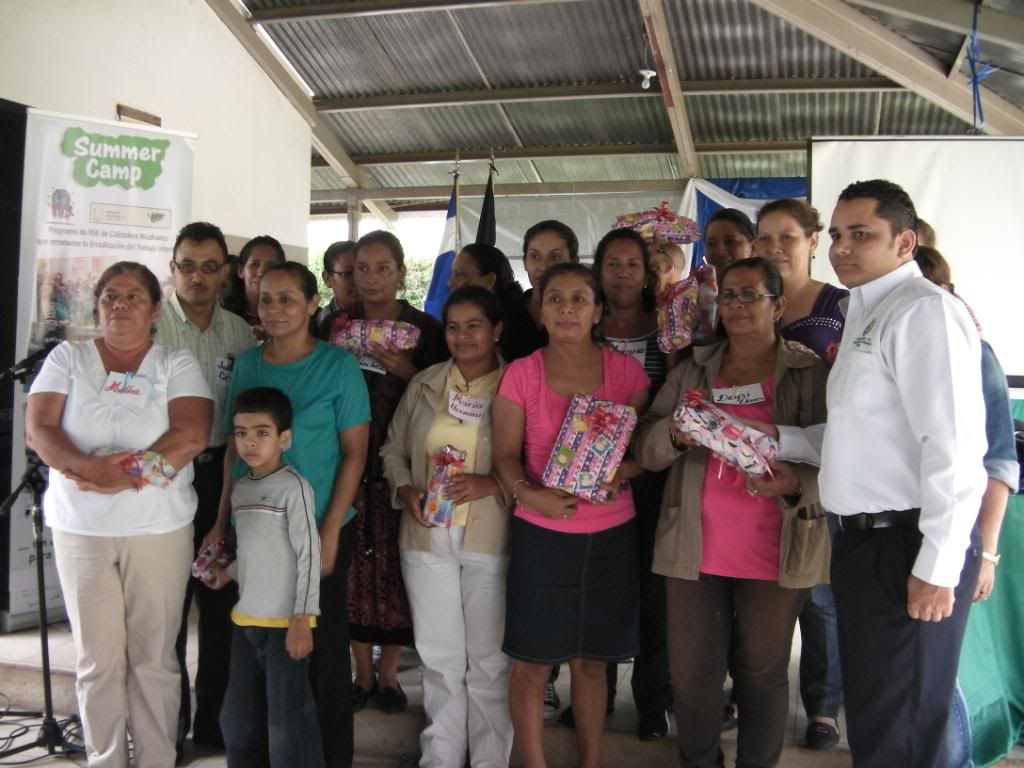
Gift presentation to schoolteachers


Continue reading
Where Your Espresso Might Come From

Pierre and I went on a tour around La Cumplida’s coffee plantation with Wilfredo. La Cumplida is a huge finca of over 1,600 hectares (this includes 700 ha. for coffee and 600 ha. for protected reserve) situated in the region of Matagalpa, which is very well known for its coffee production. First we went to the processing plant, which is under repair because some of the machines were being too rough on the coffee beans. Despite the fact that none of the machines were currently working, he walked us through the bean process: loading, skinning, washing, and reloading the beans. The drying and roasting takes place at another location. If we had been here any time from October through February, the machines would have been whirring and red beans would come by the truckload to be processed, since over 2000 coffee pickers would be hard at work in the hills, collecting beans.

Below is a video of some of the coffee work we watched. Wilfredo’s explanation of the deshijo is translated in brief three paragraphs below.


Continue reading

“To Market, To Market…”

Living abroad has illustrated vast differences in how one procures or purchases their food.  Although U.S. style supermarkets exist outside those borders, there are a world of other options visited on a daily basis elsewhere.

In France for example, one can indeed go to the “Hyper-Marché”, fill up your cart and be on your way.  But it is far more interesting to shop at your neighborhood street marché, where depending on where you live you can fill most of your culinary needs.  Even a small neighborhood would have a temporary agricultural market at least twice a week, and these would usually include cheese makers, and stalls with olives, cured meats and the like as well.  That’s not including the plethora of boulangeries, fromageries, boucheries, pâtisseries….my mouth is watering too much for me to continue!

Costa Rican towns have their weekly Feria de la Agricultura—filled with fruits, vegetables, eggs, cheeses, flowers and baked goods. On the southern tip of Croatia, Dubrovnik had multiple markets, some stationary like the one at the new Gruž Harbor and some  “floating” in the squares of the old city.

All forms of Farmer’s Markets can now be found all across the United States, one needn’t travel abroad to find them.  But I don’t think any of these compare to the sensory experience of an Indian market. Continue reading