The Other Side

When I was 9 my family relocated from Upstate New York to Orlando, Florida, an odd hodgepodge of concrete and drywall that is less a city and more a network, an expanse of strip malls and toll roads stretching for miles with no discernible locus—i.e. a place without place, a harbinger of the New America—both model for and copycat of other American NonCities. At the heart of this network, not in place but in time, is Walt Disney World, Orlando’s reason-to-be and essence, which lies below and hangs around the accretions and habits of Orlando-residents like a living ancestor. As Orlando’s originary purpose, it touches its inhabitants even if they try to avoid it; it shapes you, no matter how far away from it you stand.

I say this not only because I enjoy holding forth on the metaphysics of place (I do), or because I want to suggest I’m some sort of DisneyChild (I don’t), but because a curious circumstance surrounded our ‘Cloud Walk’ on Sunday morning that caused me to think about my relationship to where I grew up, and how these ‘living ancestors’ affect how we experience our environments. Continue reading

Gobar Gas

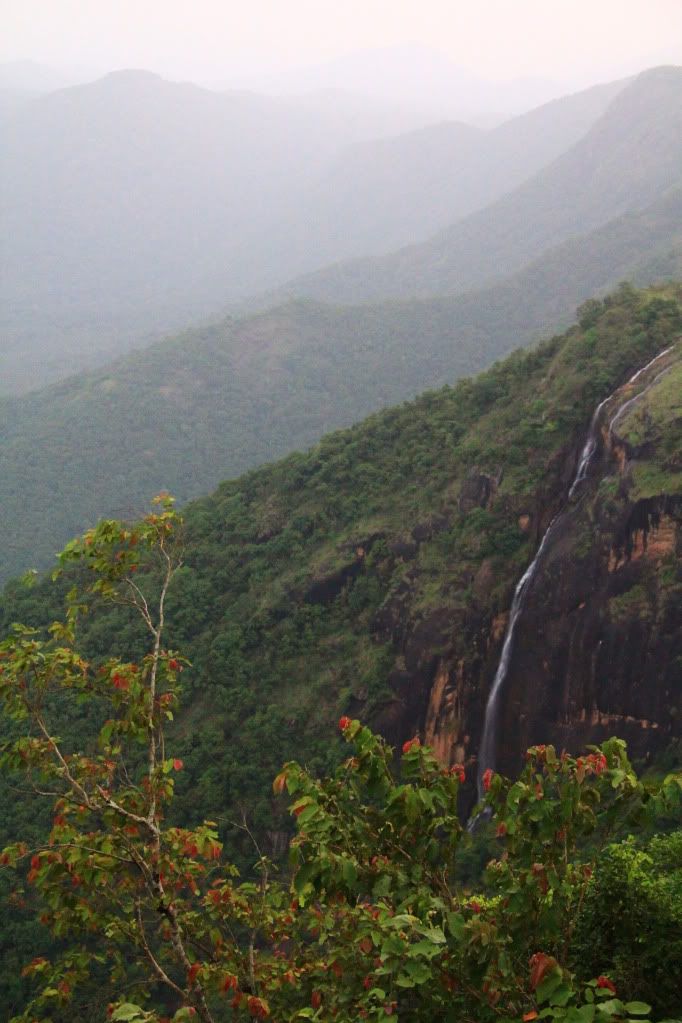
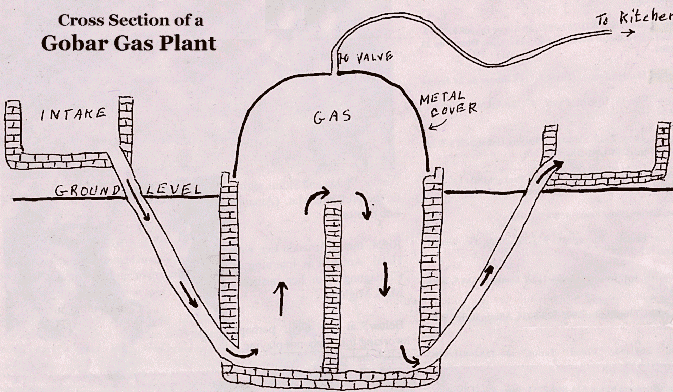
Is it just me, or is there nothing quite like a casual sight-seeing venture yielding a lesson in biogas and anaerobic digestion? I mean, don’t get me wrong; there’s plenty of value in a pretty vista– what was in today’s case a view of Tamil Nadu’s agricultural smorgasbord and a breathtaking, silky and sleek waterfall. But despite the landscape, I was left most impressed by an ingenious contraption we happened upon while passing through the family-owned spice plantation between our parking space and the scenic spot. Continue reading

Colonial History & Volcanic Mystery

We left in the morning with Bismar and the guests, transported by the senior driver Inocencio. Our first stop was about an hour and a half away: a town called San Juan de Oriente but known as La Cuña de los Artesanos, or “Artesans’ Cradle,” because literally everyone in town works with crafts for sale to tourists or hotels. We entered one of the pottery shops and went downstairs into the workshop, where a young man was waiting to give us a short presentation on pottery. He explained about his family’s business slowly in Spanish and Bismar translated for the guests. Then he took his seat at a wheel and started shaping a small bowl, using several homemade tools—a bicycle spoke, for example—to straighten its edges. The expression on his face showed how much he enjoyed the work, which certainly looked fun even should one have to shape clay all day, every day. After a couple minutes, a small and perfectly round pot was on the table in front of us. He talked some more about clay and then said, “At this moment in the process, the clay is still very fragile,” and demonstrated by plunging his fingers into the side of the vessel, leaving a deep impression in it.

Leaving the wheel, he led us to a larger table where wall lampshades were being made. Tools like a polished beach pebble and a child’s plastic spinning top were used to spread and smooth the paint that was applied with a brush made of a hollow pen and the hair of the girls in the family. A small kiln sat smoking in the corner, baking about twenty of the lampshades. Once the guests asked a couple questions, we thanked the young man, whose unbefitting name it turns out was Stalin, and went up to, of course, the pottery store. Continue reading

Newspaper Bags

As I suggested in my last post, I’ve recently spent less time in the Periyar Reserve, i.e. observing and chronicling my encounters with the myriad species of plants and animals there, and more time in and with the local community. Working with resort management and Forestry Dept. officials, I’ve been trying to get off the ground a microbusiness enterprise, operated by residents of Kumily and members of the tribal communities in Periyar East, with the initial goal of producing bags from recycled newspaper. This is related to the bigger goal of eliminating the use of plastic bags.

One such bag, made from recycled newspaper

There are several aspects to this project, and as I delve deeper into them the more complex and intriguing it seems to me. I think the easiest and best way to present the full picture, to identify the difficulties and possibilities inherent to it, is to tell the whole story of my involvement in the project, and in the process to clarify the context of my previous posts.

To set the scene, I offer, in shorthand, a cultural backdrop:

What was only recently a subsistence and agricultural culture and economy, the Cardamom Hills (like all of Kerala) has undergone something of an economic and cultural revolution over the past fifteen to twenty years. Though I’m not an expert in this field, I can say, based on firsthand accounts and observations, that as education levels have risen even among the poorest people in this area (Kerala’s literacy rate is, famously, over 90%), and as the opportunity to pursue non-agricultural employment and consume newfangled products has become commonplace in this area, the demand for disposable income and new ways of attaining it has also increased. Generally, this is true of India as a whole, and as a global phenomenon it really deserves a more nuanced treatment than I’m able to give it (for more information, I suggest you go to your local library or see your neighborhood economist). But, on a microcosmic level, it is perhaps most pronounced, complicated, and—in some ways—easily tackled in the tribal communities of India’s forests. Continue reading

Religion and Conservation

About 80% of the world’s population is religious.  Even though it might not always be apparent, religion often serves as a unifying value of people.  Many religions have traditional and ethical ideals that sanctify the earth and its resources, thus linking mankind’s religious life and the natural system of the world.  With this much of the world professing a faith, religion could play a tremendous role in conservation.

Continue reading

A Staff Tour

On its face, there is nothing remarkable about a company picnic. If what I’ve learned from media representations and other secondhand reports stands up, it seems that they happen just about everyday in some part or another of the world, and that they all involve a bit of hair-letting, whether with ice-cooler beer at the neighborhood park or mini-fridge delectables in Vegas. It is this understood relaxation—or evisceration—of daily norms, of one’s decorum, coupled with the acceptance of its temporality—because of course, work does go on the next day, and you must confront those who yesterday saw you transformed—that gives these professional gatherings their almost sacred quality in the religion of the workplace. Whether mentioned in hushed tones or all too self-consciously laughed off, the company picnic/outing/soiree is, in the daily grind’s cosmology, the potential site of the divine, of the disclosure of truth and the unmasking of custom.

So I don’t think I overstate it when I say that yesterday I bore witness to (and, yes, sometimes partook in) culture. Twenty hours in a bus through the hills of Tamil Nadu is culture, and my inability to draw from my fellow travelers a suitable translation of its subtleties (I mean, who can speak fluently about his own culture?) made it that much more profound. No, this may not have been ‘culture’ in the sense that the Martial Arts show down the street purports to be, nor is it ‘culture’ in the same way that the locally-inspired cuisine at Cardamom County’s All-Spice Restaurant is.

This was culture in the minute, unsalable sense. This is that culture which happens in the infinite, petty moments between friends. Continue reading

Cars for Children

Full disclosure: I feel sort of awkward drawing attention to this story. It describes one of the most unsettling and simply bizarre state initiatives I’ve heard of in a while, and I’m not entirely sure the matter merits space on this site. Alas, my provocative side gets the best of me sometimes and I am compelled to link to it, if only because it’s consistent with the problems I promised to raise yesterday, not to mention it’s pertinent to India and that it points to some of the truly hard questions we as a global population will have to ask ourselves in the coming century. These questions bear spiritual, physical, cultural, and ethical import, and how we answer them…well, that’s just more than I can deal with in this format.  Continue reading

Which God?

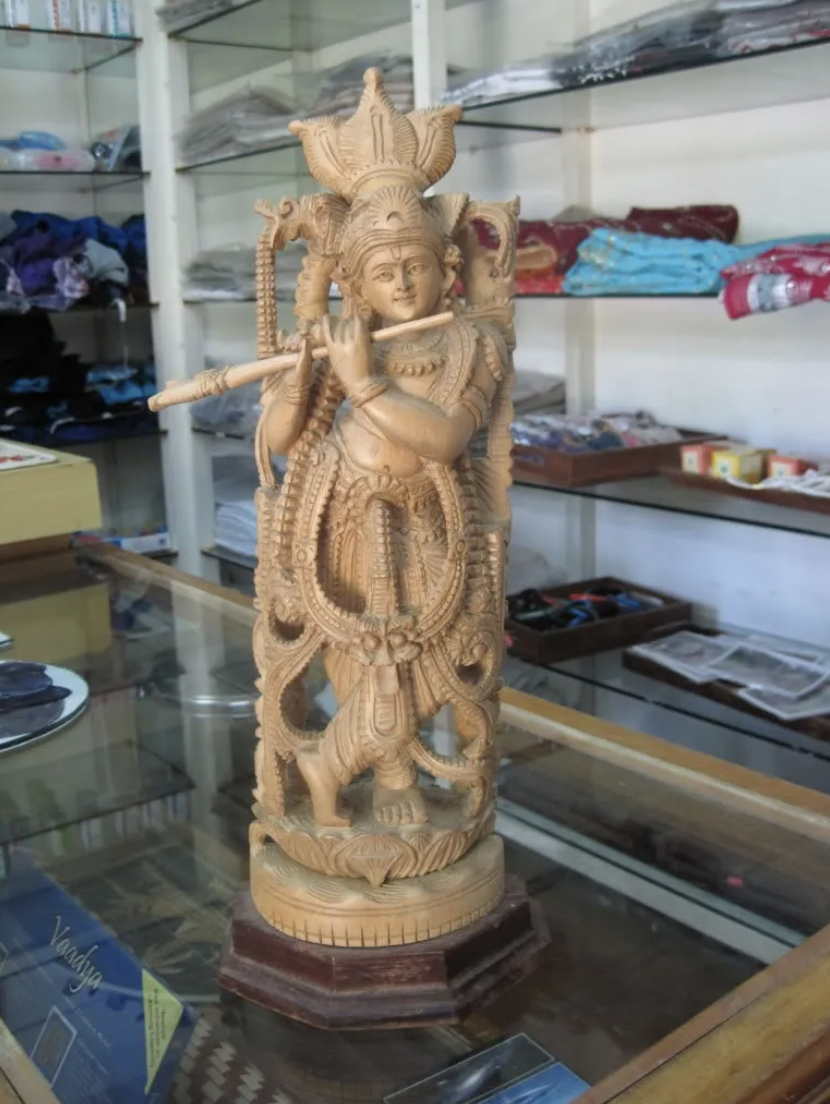
The other day I was working in the Ants gift shop with its manager Manoj, who also represents the helm of the guest relations experience department. When I began asking about the various products offered in the gift shop ranging from vibrant dhotis and saris to spice and herb books as well as delicately carved houseboat models, I noticed two sculptures of what appeared to me to be Hindu gods. It turns out the first god was Krishna, the young boy playing a flute. The second was the well-known elephant headed god, Ganesha.  If you’re not yet aware, Hinduism is a polytheistic religion. And by polytheistic that means there are over a whopping 330 million different gods in Hinduism. Continue reading

Damn Dams and Macaque

A couple of days ago, I hopped on a motorcycle (my first in 21 years!) helmed by Saleem, and headed across the border of Kerala into Tamil Nadu. I hadn’t realized until this trip just how proximate the neighboring state was, and that I had actually walked into it several times without realizing I had done so.

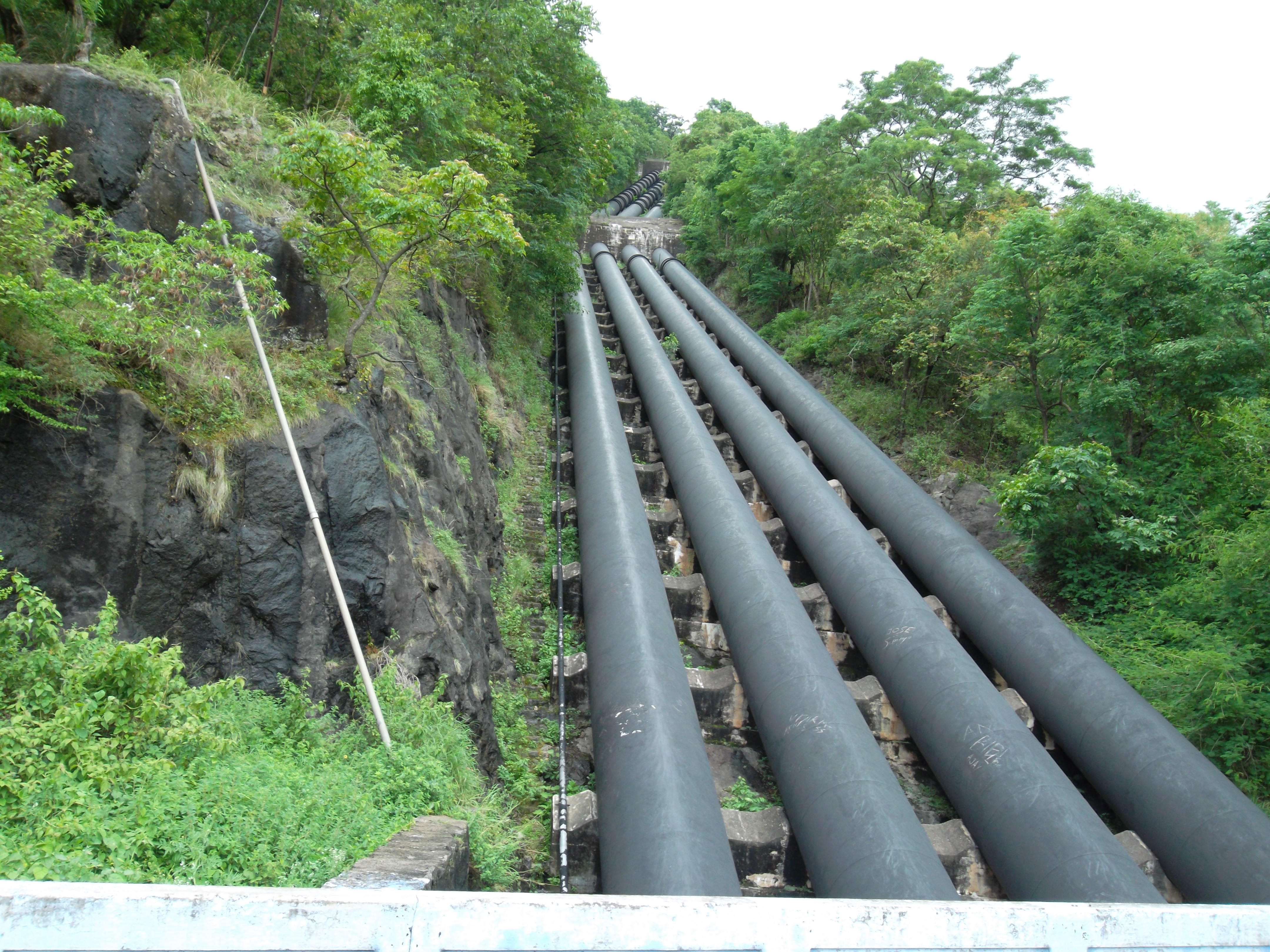
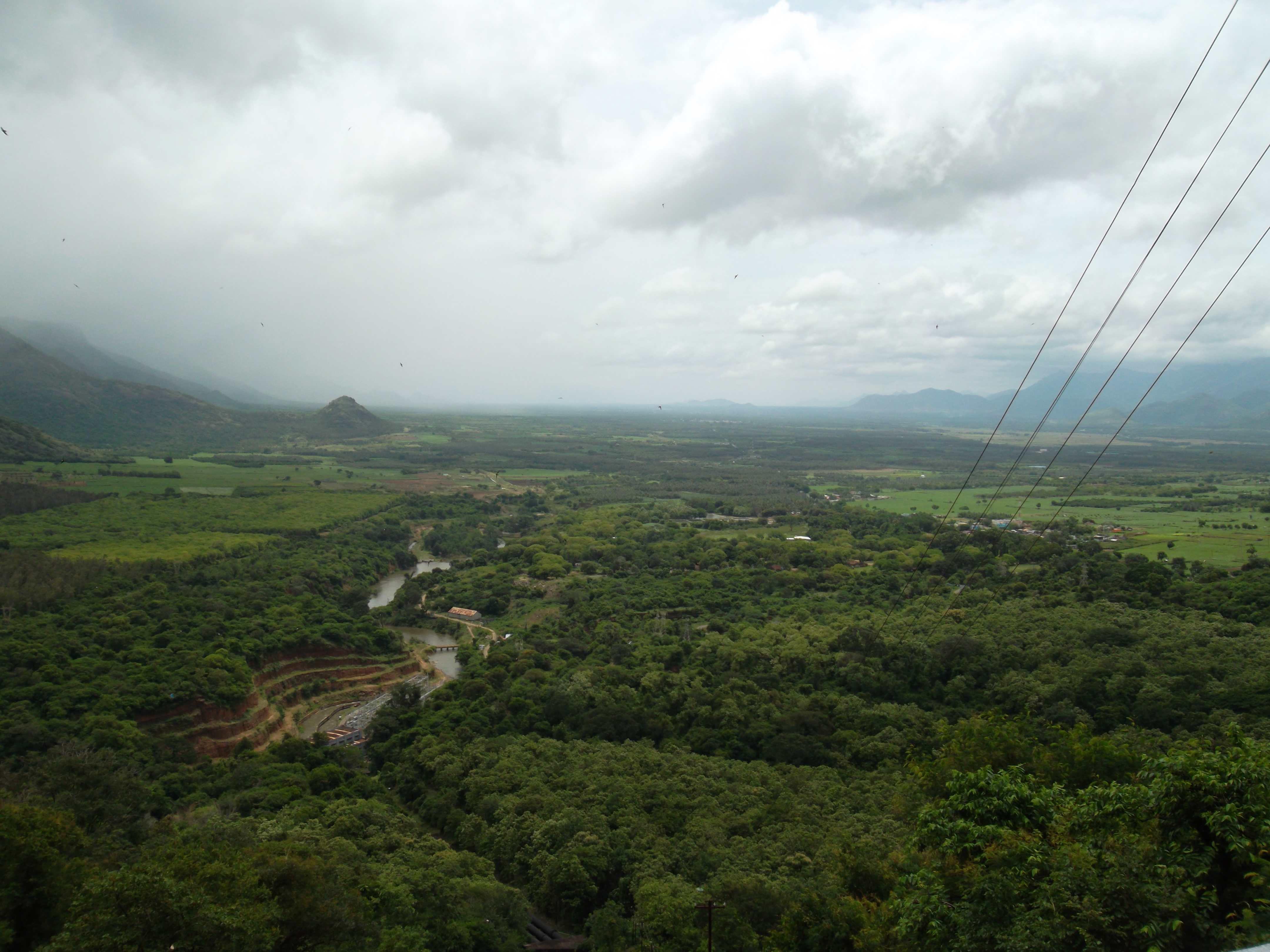
Saleem had plans to take me through the measure of forest that extends beyond Kerala to the penstock pipes that carry water from the Periyar River down to Tamil Nadu and a hydroelectric plant. These pipes are an attraction unto themselves, and looking over the slope down which they run provides a scenic view of the lush farmland of this TN valley.

At that time, I didn’t know– and Saleem only hinted at– how fraught with political tension the very spot we were standing is (and has been) to the Tamilians and Keralans. The provenance of this conflict is a century-old treaty between the Princely State of Travancore (which is now Kerala) and the Secretary of State for India, representing what is now Tamil Nadu. Essentially, this treaty gave to Tamil Nadu, an otherwise arid area, the right to use water from the Periyar River for irrigation– for 999 years. This agreement, for all intents and purposes, created the Tamil Nadu you see in the picture above. Continue reading

A Kipling Character at Morgan’s Rock?

It happened today.

I was on the Campesino Breakfast Tour with guests. We drove through the finca till we got to the Aguacate Farm, where the chickens, ducks, and cows are kept. Don Juan taught us how to milk a cow; the lactating mother was mooing with discomfort, eager to be relieved of her burden. Sitting on a one-legged stool that was tied to his waist, Don Juan expertly sent streams of white into a gray pail, and the guests crouched to do the same with early morning alacrity.

We filled up the pail, thanked Don Juan, and made our way to the chicken barn. Through the dim light and faintly unpleasant smell, about 180 chickens skittered about, clucking indignantly at the disturbance. A rake and shovel leaned against the wall, a wooden stick with little rawhide strings hung from a column, and a leather belt was wound around a rafter in the corner. The man who takes care of the chickens took Harvey aside and whispered something in his ear, then proceeded to lead the guests through the barn to show them the coops and water-troughs. While the guests were distracted, Harvey approached me.

And then it happened.

Continue reading

Sunset Hill

The right arm of the Ocotal cove, the hill directly visible from the restaurant and beach, is just as important a landmark as Morgan’s Rock itself, since it is actually part of the property and is not hidden from view at certain angles. When one looks out at the ocean from the ecolodge, one sees this hill first; the rocks at its base withstand the constant onslaught of thundering waves, and the steep rocky slope is almost completely covered in verdure.

The prominence might be called Sunset Hill, due to its function as the lookout point for guests who wish to watch the sun descend into the ocean from a high vantage point. From most locations on the property, viewing a full sunset is impossible since the Hill is in the way.

I left the ecolodge in the morning today to climb Sunset Hill and see what the trail was like without the dim lighting that would accompany a sunset. Before approaching the hill, I found two low-hanging coconuts and cut them with some stem as handles—I knew it would be a hot and long climb and wanted some refreshment at the top. Despite the additional weight, the climb was not too difficult, but I was left sweating when I reached the first stop: a bench set in the trough of the two wave-like hills with a view of the whole cove and ecolodge. Setting the larger coconut aside, I grabbed the other and used my pocket-knife (Wenger Swiss Army, Patagonian Expedition Race Edition) to cut a channel through to the small orb holding the water. The can-opener proved the perfect tool for this job, since the blade was short enough to present little danger to my fingers in case of a mishap, and I could also apply significant pressure to leverage chunks of husk out of the way without fears of bending or breaking the metal.

After a few minutes I had reached my goal. This fact was drawn to my attention mostly by the popping sound and burst of water that sprayed up to soak my face. Setting my dripping glasses aside (I only wear my old pair while hiking, in preparation for these unforeseeable events) to dry, I widened the hole slightly and titled the large vessel back to drink the refreshing water.

I am used to drinking coconut water from the fruit itself, but in a very different fashion: street-vendors in Central America and India use a machete to hack the top off the coconut and stick a straw in the near-perfect circle they’ve created. Using my tiny tool to pry open the fruit’s tough skin and press my lips to it like a certain Tom Hanks character made me feel much less touristy than I do when I buy a street-coconut. After all, I had not only selected the fruit off the tree myself, but had also carried it up a significant slope and used its water to cool off before continuing the climb to the Sunset Summit.

To reach the summit, one merely has to climb the stairs set into the hill. This is not a great challenge, but in what was now a midday heat, the stairs were unwelcome. However, compared to the tall limestone steps of Tikal temples, or the uneven sandstone tomb-paths of Petra, these simple wooden planks set into the earth were nothing—a mere ten-minute task, if that. When I completed my ascent, it was instantly clear why the hill has been chosen as a sunset lookout. The height of the hill, along with its projection from the mainland by roughly a kilometer, presents a worthy view even without the sun setting over the water. A little lizard, which I later identified as a rose-bellied spiny lizard, was resting in the full sun that fell on the top of a railing post.

I enjoyed my second coconut in a cooler location: the middle of the stairs, where the overhanging branches of bushes and trees create a tunnel blocking the sun. A little more cautious, I avoided getting sprayed, and slowly consumed my drink before descending the hill and returning to the beach. On my way there, I saw a pair of mating butterflies that I believe to be Papilio thoas nealces, and once I got to the beach I found a Draedula phaetusa. As I walked from the beach to the road, a Microtia elva fluttered along the path and rested a while on a nearby bush. It was a lucky day for butterflies, and I look forward to photographing and identifying more of them, especially once I have a camera that can zoom!
Newspaper Products

In the bathrooms at Morgan’s Rock, the trash cans are little green plastic bins covered in what appears to be painted wickerwork. However, closer inspection reveals that the woven material covering the bins and little caps is in fact newspaper that has been twisted into long strands and braided into shape. Despite the paint job, one can still see the letters and broken images on the baskets, and this simple artisanal craft adds a creative and rustic touch to what would otherwise be a banal bathroom fixture.

The bungalows are equipped with the above rectangular variations of newspaper bins for composting, recycling, and trash, and seeing the different colors next to each other convinces me that the unpainted version is the most attractive. Unfortunately, it is also the least common, as all the bathroom trash bins I’ve seen look like this.

I spoke to Alba, the General Manager, about the bins and asked where they were made. She answered that several towns in and around the Rivas area have handicraft shops, and that as part of community support Morgan’s Rock purchased these sorts of things for both utility and decoration. Rivas is a city and a department (sort of like a province, I think), so I will need to find out how widespread this newspaper craft actually is, because there could be an important collaboration between Nicaraguan and Indian newspaper craftspeople (Kerala in particular has been working on an utilitarian recycling over the past few years).

FRA and Periyar

In my last post, I wrote about and linked to some writing about the Forest Rights Act of 2006, legislation which gives added to protection to tribal communities with a traditional claim on protected and preserved land in India. I ended by speculating about the difference between policies and practices regarding human-animal cohabitation at other wildlife sanctuaries and the one where I’m staying, which is in the Periyar Forest.

Well, I’ve spent the past couple days learning firsthand about the tribal community in around Kumily and Thekkady, and I can now with confidence confirm that the tribal heritage development and preservation initiatives in this area are indeed succeeding, and perhaps to a greater degree than at other parks. ‘Success’ is here defined as a community gradually finding sources of income that do not require the extraction of resources from the preserved environment.

To this end, in the Periyar there are four Community Development Committees, as well as numerous agencies designed to regulate and control interactions between the tribal community and the forest, and the tribal community and the market. I guess in the past tribal community members had been treated unfairly by buyers of their agricultural product (which is mostly pepper). Part of the CDCs’ job is to ensure that farmers are made aware of fair market prices and meet only with honest middlemen.

I met with the chairman of one of the CDCs and he told me about the economic and political structure of these relationships. He also told me that, at least within the Mannan community, more young peope are going on to professional schools and receiving advaced degrees, and that close to 50% of the tribal population now makes its primary income from outside the forest.

While these may be informal indicators of change and improvement as the Forestry Dept. defines it, they do point to developments in Kumily and India in general that it seems almost like you watch happening before your eyes on the ground.

Reserves, the FRA, and tigers

I’m at the experience desk at Cardamom County, waiting for my first set of afternoon check-ins as a trainee. While waiting, I found some interestingly related articles about the Forest Rights Act, which is a piece of legislation passed in India in 2006. For all intents and purposes, the FRA allows tribal communities to petition the government for rights to lands they’ve historically dwelt on. The controversy surrounding this legislation is based on questions of anthropogenic cohabitation, deforestation, and the honesty with which the government handles petitions.

Here are a couple articles from India Together addressing certain of these issues.

From India Together,

“Unable to bear the hardships of leading a dignified life living cheek by jowl with wildlife, a large percentage of tribes living in forest areas crave for relocation, provided of course they get livelihood options, and are able to retain their cultural and tribal identity. Yet, anthropologists contend that tribes have been coexisting peacefully for thousands of years in wildlife reserves while the concept of wildlife and biodiversity conservation is nascent. In line with this, they say that relocation of the indigenous people will rob them of their dignity.”

“…the FRA says is that the development projects have to be appropriate; they have to be ecologically right, culturally sensitive and they should benefit people. The kind of projects which are coming up are mindlessly extracting water and forest resources on which people depend; these are not really ‘development’ projects. And if the FRA is coming in the way of such projects then it’s a good stumbling block to have.”

Of course, the Periyar Tiger Reserve (where I happen to be living) stands as a sort of counter-example to these more pessimistic perspectives on the FRA. Here’s a fairly old article (from 2007) about local, former poachers patrolling the park at night, protecting the wildlife from unauthorized exploiters.

I’m interested to find out if these policies still exist at Periyar. I’ll let you know what I find out.