The Estuary Part Two: Update

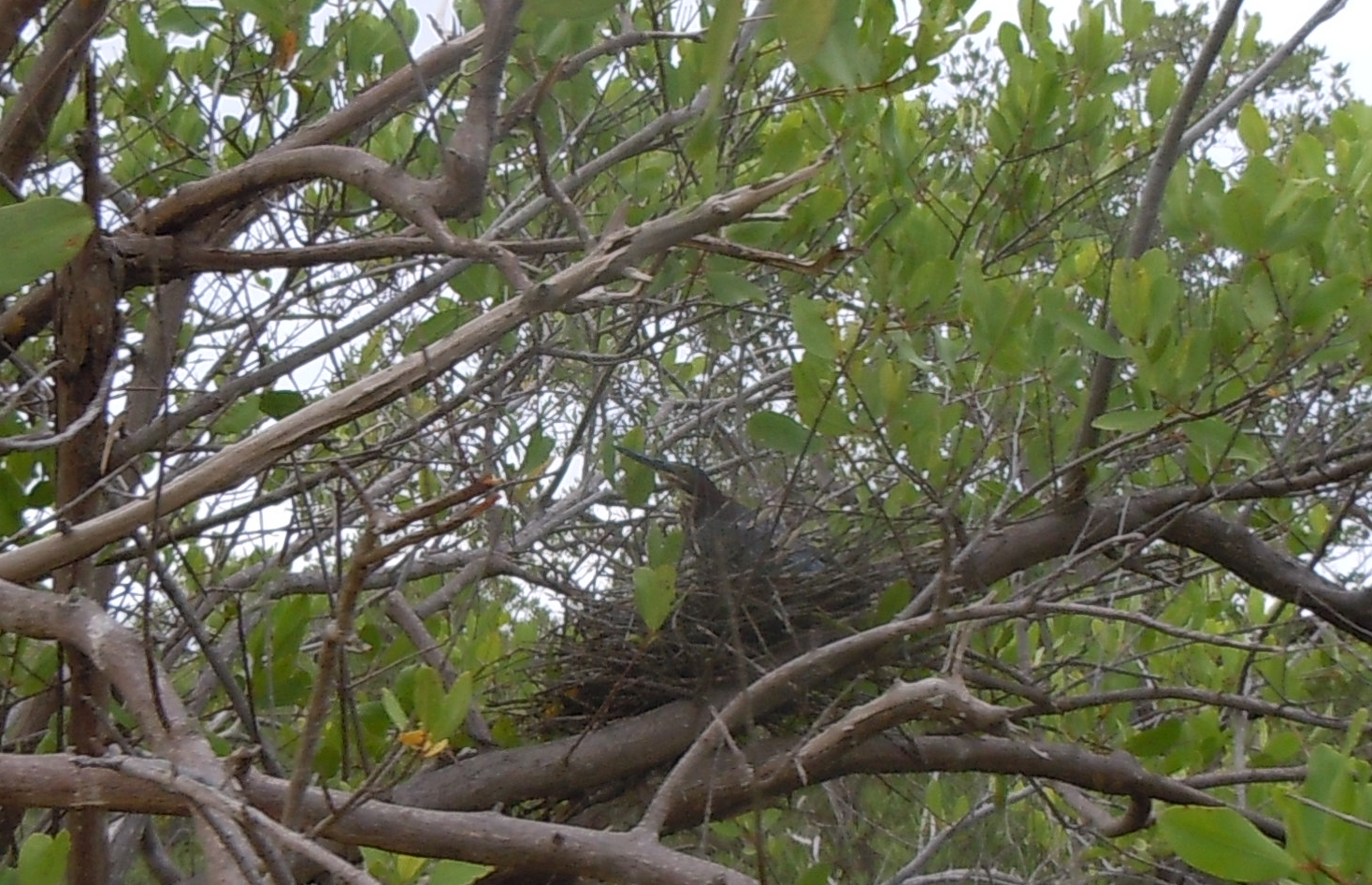
*The nested bird in my last post was a Green-backed Heron, and the woodpeckers were Lineated Woodpeckers. Other birds I’ve encountered are Great Blue Herons, White-tipped Doves, Muscovy Ducks, several hummingbirds and kingfishers, and more.

My kayak trip was the same as usual, with constant bird sightings and several howler monkeys in the trees above me. What changed was the end of the excursion. I decided to try kayaking down the stream of estuary water flowing into the ocean and see if I couldn’t catch a few waves close to shore before calling it a day. The stream of water was fairly shallow, with little piles of sand causing tiny swells of the sort seen over rocks in whitewater rivers. I had fun navigating these “water-bumps” and eventually made it into the ocean after a bit of shimmying past the shallower spots where I got grounded. I immediately set to getting past the already-broken waves so that I could catch one as it rose, like one does while boogie boarding or surfing. After getting buffeted around a bit by the incoming waves, I managed to turn the kayak around just in time to catch a small wave back to shore, paddling as I neared the sand so that momentum would carry me up the beach. Delighted by these first results, I continued to attempt kayak surfing for the next fifteen minutes before it got dark. Once it did, I dragged my kayak in and looked forward to doing the same the next day.

However, the estuary was a completely different place the next day. Very much open to the ocean, the mangrove sanctuary was continuously losing water. Slightly wary, I entered my kayak and paddled forwards. At first, the differences I noticed didn’t seem too grave: the water was shallower, but also very clear – I could actually see the bottom at some points. As I continued into deeper waters, the water darkened again but stayed quite shallow at some points. Once I got to the open area with the mangrove trees dotted around, I was able to distinctly see the effects of an estuary at a different point in its cycle: the mangrove trees had water-markings on them showing that the water levels had descended well over a foot. Here are some before-and-after shots: Black mangrove tree with distinct water markings, and branch before and after.

To read more about estuaries and their cycles, you can visit the National Oceanic and Atmospheric Administration’s educational tutorial. Follow the links on the right-hand column to learn about their importance ecosystem services and more.
 

The Estuary Part One

The estuary waters are always flat and calm, with practically no current apart from what the wind kicks up, and the OceanKayaks’ sensitivity to motion allows you to maneuver very adeptly around mangrove trees or floating logs. All the kayaks are doubles, but I have only gone out alone in the back, and later the middle, seats, joined either by Harvey in another kayak or by the winged microfauna (who tag along even when Harvey is keeping me company).

The estuary runs for over a kilometer and a half in a winding path, but there is also a larger open area with mangrove trees dotted inside it. The trees in this wide space are lower and farther apart, allowing you to get up close to the tree and check out the birds’ nests within. A couple times I have been able to see birds sitting in the nests up close, and it is fun to test how slowly you can approach them without scaring them away.

Paddling the estuary is a great activity because you can choose your pace very easily. If you want to take two strokes and then slowly glide along for a minute while looking for birds in the trees, then you can do so, as long as you make sure not to drift too far to one side and bump into a mangrove. If it is already getting dark and the mosquitoes are taking advantage of this fact, then you can see how much of a wake you can leave as you speed towards the beach and watch fish jump out of the water to get out of your way. I generally use the slow and photograph-friendly method on the way in to the estuary, where I can get shots of caterpillars or woodpeckers, and reserve the faster cardio-workout for the way back. I have been thinking about taking a kayak out onto the cove, where the waters seem pretty calm once you get past the first couple waves. I’ve never been on a sit-on-top kayak in the ocean before, so I’ll let you know how that goes.

First Two Days at Morgan’s Rock

Day 1: After dinner, the rain had stopped and it was now pitch black outside, but the wind coming off the ocean made it feel cooler. The refreshing breeze helped me recollect the day’s highlights: Over a million native hardwood trees have been planted here since my father, my brother and I had been camping on this property a decade earlier; some of the guys I remember from then are now working as naturalist guides or kitchen staff; the organic farm is much more extensive, and hundreds of guests have come and gone from their bungalows.

The mind and breeze’s sweeps finished, and now reading, I heard crunching from the corner. At first I didn’t quite register it, and continued reading. When it continued, the interruption made me curious. I slowly stood and leaned around the large wooden column that was blocking my view of the corner in question.

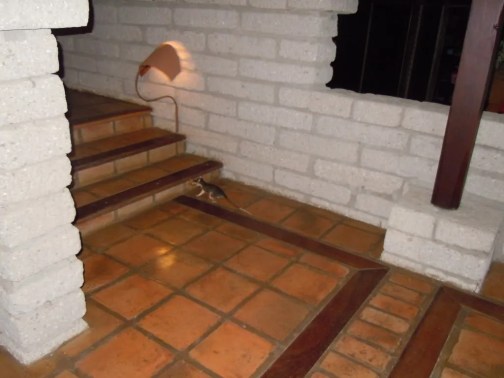
The adolescent opossum and I both froze. It was about the size of a squirrel, and it had a Halloween crab dangling from its mouth. When it looked away I decided that it either couldn’t see me very well or didn’t see me as a threat, so I slowly inched my hand towards the camera that lay on the table up against my knees. Silently cursing the camera’s malfunctions that prevented me from being able to change any settings, including zoom, I turned and took a snapshot. The flash didn’t startle it, so testing my luck further I very slowly stepped over the table and around the column. About six feet away the opossum snapped out of the trance, and ran off with the crab. By chance it ran in a direction where it would have to climb a few steps, slowing it just enough to allow me a last photo as it hurried off.

small possum

Day 2: As a slight drizzle fell through the trees, we sat on wooden benches fixed in the back of a pickup truck on the way to the finca from the lodge. The finca is essentially a farm, of trees and livestock, that is connected to Morgan’s Rock and provides much of its food and maintenance services. After a few minutes it started raining hard, but neither I nor the two guests, a man and woman from Atlanta, minded getting wet after having endured the heat of the past couple days. Bismar, our guide, handed me his radio and cell phone to pass through the rear window to our driver, and I gave up my borrowed camera as well. Just as one of the guests was pulling on her travel poncho, which looked like a translucent red trash bag, Bismar called for a stop. Pointing, he said simply, “sloth,” and we looked up to watch a drenched and sorry-looking two-toed sloth inch its way from one branch to another, fur plastered to its body and spiking up on its head. “They sleep 14 hours a day,” said Bismar, “and only poop once a week.” I added that when they did relieve themselves, they had to do so on the ground. “If I had to climb down my tree every time, I’d probably only do it once a week too,” joked the guest to his wife. A few minutes later we reached the reforestation site, and met the man in charge of equestrian activity, Don Jesus, and started our horseback ride on the road towards the trail. Despite the rain, the horses easily climbed the slope up to the lookout point at the top of the wooded hill.

ocean view