If You Happen To Be In Ithaca

Not sure what to do this upcoming Earth Day?  If you happen to attend Cornell University here’s a suggestion: If “Nature never stands still”, taking an interdisciplinary approach toward her recovery and restoration seems like a logical step.

We especially like the circular nature of choosing Dr. Kareiva to give the 2013 Iscol Distinguished Environmental Lecture. Kareiva received his PhD in Ecology and Evolutionary Biology from Cornell University in 1981 and after serving on the faculties of Brown University and University of Washington he is now the Chief Scientist for The Nature Conservancy. Continue reading

From India to Cornell, We Wish Sush All The Best

TataScholarCornell


One day we hope to replicate Tata Scholarship program’s hard currency support, but for now do our part through internships and volunteer programs (browse through our contributor section to see plenty of examples).  Here is someone we hope to invite to intern with us; for now we invite all our Cornell friends to extend a warm welcome, as we know they will. Hopefully you have followed this whole series, but if not you might want to go back and read Sush’s earlier posts to appreciate this one more:


Sush Krishnamoorthy, a student from New Delhi, is part of “The Choice” class that includes student-bloggers from Nairobi, Kenya; Topeka, Kan.; Seattle; Rogers, Ark.; Las Vegas; New York City; and Hunting Valley, Ohio. Her ninth post is below. — Tanya Abrams

Early in the college application process, I classified colleges as “dream” schools and “reach” schools based on their acceptance rates. It is popular advice to do so. Also, the terms “selectivity” and “acceptance rate” are often used interchangeably, and this indicated to me that the higher the acceptance rate of a college, the easier it is to get in. Continue reading

TED Says Thank You In A Big Way

This slideshow requires JavaScript.

TED’s blog has this description of the man who it awarded $1 million this year:

It’s a question on so many minds: what will the future of education look like?

It’s something Sir Ken Robinson has asked for decades…Robinson got the opportunity to announce the winner of the 2013 TED Prize, someone who has a bold answer.

“So many kids are disengaged from education and there’s a tendency to confuse testing with learning,” says Robinson in his introduction. “What drives learning is curiosity, questioning … What fires people up to learn is having their mind opened up by possibilities.”

And with that, he revealed the winner of the $1 million TED Prize: education innovator Sugata Mitra, who has given two TED Talks over the years and released a TED ebook called Beyond The Hole in The Wall.

Continue reading

Birds-of-Paradise Project

Photo by Tim Laman.

We’ve written about the birds-of-paradise before, mostly to share great images of them. But all that is about to be topped by the same folks who brought us two out of the three links above: Tim Laman and Ed Scholes. On February 19th, a new website was released that contains over two hours of footage never seen before, specifically designed to serve as an educational base for anyone trying to learn more about the whacky birds.

The Cornell Lab of Ornithology was one of the main funders for the project (others include the estate of Madelon G. and Robert Wehner, Conservation International, and the National Geographic Expeditions Council). According to their official press-release, the “website, videos, and interactive features were produced by the Cornell Lab’s Multimedia program with sound and video from the archives of the Lab’s Macaulay Library. Producer Marc Dantzker said the production team sorted through more than 2,500 video clips, almost 40,000 photos, and hundreds of sound recordings to find close-up examples of each adaptation, courtship pose, display feather, and dance move.”

So after eight years of painstaking research by Scholes and Laman, we get to enjoy this unforgettable imagery! Watch the video below of the King-of-Saxony, Continue reading

Shine A Light

chipata-blog480

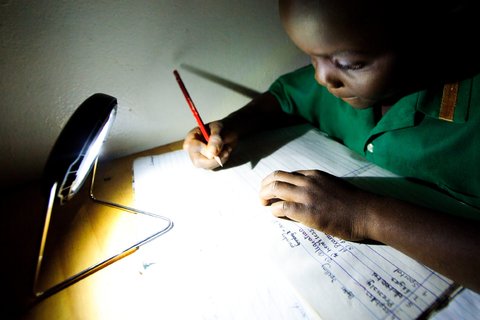
Green Blog shares this news about a significant innovation at the intersection of crowdfunding, renewables and community welfare in Africa and Asia:

By visiting Web sites like Kickstarter and Indiegogo, you can give money to any number of causes. These Web sites collect small amounts from many individuals in what is known as crowdfunding to finance everything from business start-ups to charitable causes to art projects.

While online crowdfunding is still relatively new, it has already demonstrated that many small contributions can add up. Deloitte, the accounting and consulting firm, estimates that the largest 30 crowdfunding sites raised more than $1.5 billion over the last five years, and expects that in 2013 alone the number could be $3 billion.

Continue reading

Plant Physics

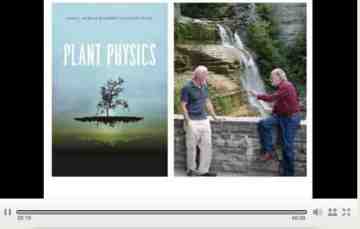
Another in the excellent series of Cornell luminaries sharing their work in informal presentations (i.e. “in the stacks”) for lay folk like us.  Click the image to the right to go to the video of this talk:

Over 90 percent of all visible living matter is plant life. Plants clean the air, provide food and fuel, fibers for clothing, and pharmaceuticals. Interweaving themes that emphasize biology and physics, the book explains how plants cannot be fully understood without examining how physical forces and processes influence growth, development, reproduction, evolution, and the environment. Continue reading

5 Reasons I See India’s Potential to Produce A Stararchitect

Stararchitect” conjures up a cloud of thoughts (Star architecture. Star power. Architecture as a symbol. The North Star for architectural design. Brand. Design. Fame. Architecture prowess. Household name.), but above all, I think of The Pritzker Prize. I feel like the weather channel for  announcing the next “big thing” in architecture is The Pritzker Prize. The weather channel is telling you “you better keep this in mind ’cause you’ll need that umbrella!” The Pritzker Prize is telling you “you better keep this name in mind ’cause you’ll need that knowledge to understand the state of the world you live in.”
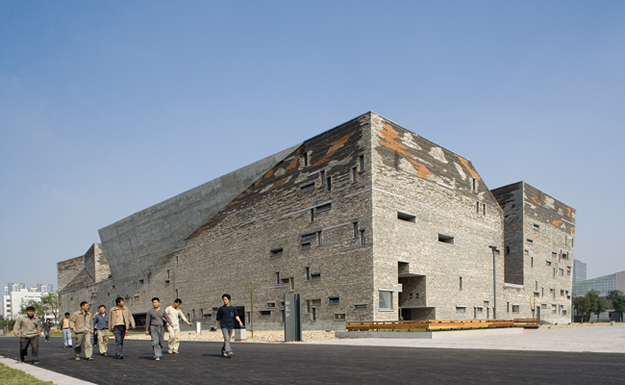
Ningbo History Museum by architect Wang Shu

Ningbo History Museum by architect Wang Shu

2012’s Pritzker Prize Laureate was Wang Shu, a Chinese architect famed for his re-use of building rubble in his designs. Expansive facades feature roof tiles and bricks from the demolished village that previously existed on that very site. The Pritzker Prize choice of Wang Shu tells us:

1.) Sustainability is important. The reappropriated construction refuse reminds us of the Three Four Rs: Refuse, Reduce, Reuse, and Recycle. It also reminds us that sustaining heritage and history is important.

2.) China is a powerful country with a powerful new identity. This is the first time a Chinese architect has been named. The closest the Pritzker has ever gone to a Chinese architect before was when I.M. Pei was recognized as a Chinese-American architect.
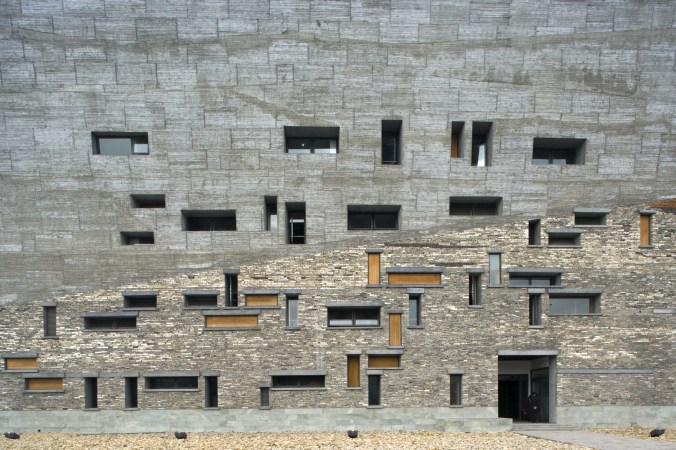
Detail of reused rubble in the facade of the Ningbo History Museum by architect Wang Shu

Detail of reused rubble in the facade of the Ningbo History Museum by architect Wang Shu

It’s rare to see a non-western architect. So I thought, has there been an Indian Pritzker Prize winner before?

The answer is no. (But I wouldn’t be surprised if Indian architecte Charles Correa is a nominee soon!)

While it may still be a long time before we see an Indian Pritzker Prize winner, I feel that India has the potential will definitely produce a stararchitect in the future. Here are 5 reasons why I see India’s potential to produce a starachitect.
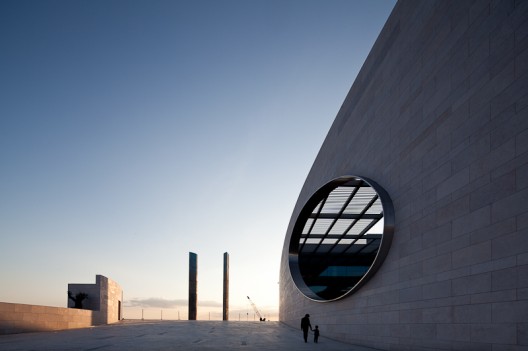
Champalimaud Centre for the Unknown in Lisbon, Portugal by Charles Correa Architects, photographed by José Campos of arqf architectural photography

Champalimaud Centre for the Unknown in Lisbon, Portugal by Charles Correa Architects, photographed by José Campos of arqf architectural photography

5 Reasons I See India’s Potential to Produce A Stararchitect
Continue reading

Can A Billion Viewers Be Wrong?

Large numbers of people have thought and done all kinds of wrong things.  But as TED recently passed the milestone of one billions views, they took count of their most viewed talks.  This was the single most viewed talk (13,344,405 views on the TED website, another 4,004,785 here on Youtube, and then some…).  And for good reason.

Architect As Educator

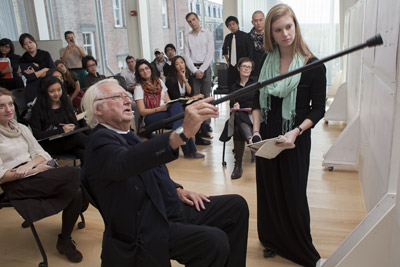
Architect Richard Meier ’56, B.Arch. ’57, visits an architecture studio class Oct. 17 in Milstein Hall, where as an assignment students had prepared drawings interpreting Meier’s designs. Photo credit: Robert Barker/University Photography

We miss our 2012 interns! But we stay attuned to their educational activities. If we squint hard enough looking at the photo to the right, showing one of the most prominent architects in the world speaking to a group of architecture students at Cornell University, we almost think we can see Chi-Chi

Maybe not. But it is worth a quick read to understand the value of the exercise Mr. Meier has engaged his students in:

Meier, whose iconic building designs include the Getty Center in Los Angeles, is the only Cornellian awarded the Pritzker Prize for Architecture, considered the field’s highest honor. Since receiving the prize in 1984, Meier has been recognized with the American Institute of Architects Gold Medal and awards from the Japanese and French governments and the Royal Institute of British Architects. Continue reading

Learning, Thinking, Doing

Cornell University President David Skorton, and his renaissance man colleague Glenn Altschuler co-write a blog called College Pros(e) and today they make an argument about college majors, and what matters in choosing them–a perspective we happen to share in its entirety.  Click their image to go to the post, which is worth more than the three minutes it takes to read it:

…Liberal arts majors actually do just fine, with incomes far in excess of the median in the United States. And many of them, like the Cornell graduates surveyed in 2009 (download here), are as satisfied or more satisfied with their lives as their classmates in other disciplines. For them, to quote an English proverb, enough is as good as a feast.

The liberal arts, moreover, also serves as a preferred pathway to rewarding and remunerative careers…

Read the whole post here.

Cornell’s Silicon Island

From the New Yorker’s website (click the image above to go to the story):

Can photovoltaics ever be romantic? Morphosis Architects’ design for a new academic building for the Cornell NYC Tech campus, scheduled to open on Roosevelt Island in 2017, suggests the answer could be yes. Continue reading

What Makes the Baya Weaver’s Nest a Baya Weaver’s Nest?

“Pick a nest.”

It was the first day of my architectural design studio class and we were told to pick a nest, any nest. I knew this was going to be a great semester: the first assignment was seemingly random, kooky, and just a little ‘out there.’ I was excited! As an architecture student, I love when things are approached in such a non-traditional way.

I know what you must be thinking: aren’t architects supposed to be designing buildings for people? Why are you looking at bird nests?!

I, too, was confused, but I didn’t question it because I had a really cool nest in mind. Because I spent the summer in India with bird-lover and birder extraordinaire, Ben Barkley, the Baya Weaver Bird, who builds its iconic hanging nests around the backwaters of Kerala, was an obvious choice.

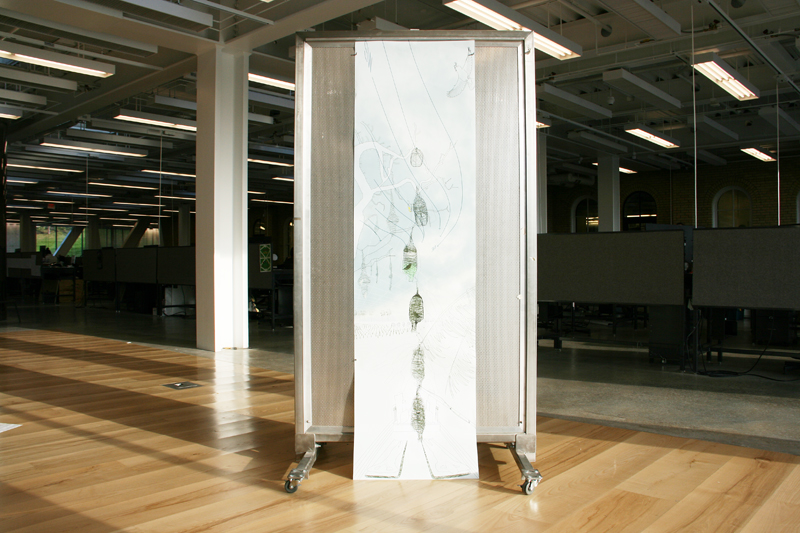
Here are my “comprehensive drawings” of the Baya Weaver Bird that attempt to explain the complex relationships the bird maintains with its surroundings.

2nd Draft of Baya Weaver Nest Comprehensive Drawing (By Karen Chi-Chi Lin)

My 2nd draft of Baya Weaver nest comprehensive drawing (Photograph and drawing by Karen Chi-Chi Lin)

Continue reading

Michael Pollan, Food Activist In Journalism Professor’s Clothing

Thanks to The Edible Schoolyard Project and UC Berkeley, Michael Pollan‘s course about the challenges and opportunities of our food system is offered for all of us to share in.  Course Description:

As the costs of our industrialized food system—to the environment, public health, farmers and food workers, and to our social life—become impossible to ignore, a national debate over the future of food and farming has begun. Telling stories about where food comes from, how it is produced—and how it might be produced differently—plays a critical role in bringing attention to the issue and shifting politics. Each week, a prominent figure in the debate explores: What can be done to make the food system healthier, more equitable, more sustainable? What is the role of storytelling in the process?

The Final Bird Club Meeting

Screen Shot 2020-08-14 at 11.03.31 AM

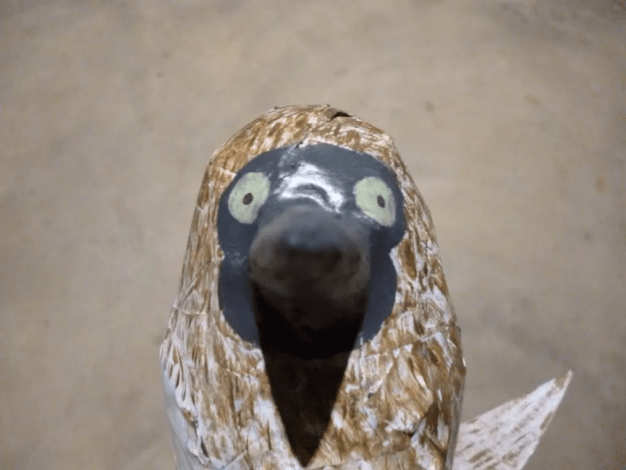
Last Wednesday was the final day the Union Educativa Modelo Tomás de Berlanga Bird Club would be gathering under my supervision. In the end, I was never able to get the papier-mâché project off the ground for most of the kids – two students did end up making penguins, but forgot to bring them to this last day to attach body parts and spray the final product with a protective varnish, and my hosts’ son painted a bird I made (looks like a male frigatebird). The photo above is of the Blue-footed Booby I made for my host family.

Continue reading

A Learning Laboratory (Stop Motion Video!)

Yesterday, Jonathon, Siobhan, Milo, and I moved into one of the new Raxa Collective properties under development. As the four of us huddled silently under our covers, the backwaters of Kerala’s nighttime accompanied Jonathon’s ghost stories…

Instead of spooky tales, though, today I want to share with you another story Jonathon narrates, Raxa Collective presents “A Learning Laboratory.” It’s a short video, Jonathon (narrator), Sunnie (illustrator), Siobhan (director), and I (producer) put together with the help of all the staff and summer interns to highlight some of the best anecdotes of how Raxa Collective’s Cardamom County ecolodge has acted as a “learning laboratory” for its staff, international trainees, and summer interns.

Enjoy!

Gathering to the Bird Club

Last week’s Bird Club sessions saw eight, nine, and one participant(s) in the Wednesday 2th-4th grade group, Thursday 5-6th grade group, and Friday 7th-12th grade group, respectively. My goal had been to start a papier-mâché project, but after forty-five minutes the youngest group was eager to walk through town, so we left the balloons to dry and reviewed the usual crowd at the Fisherman’s Wharf with the addition of a Great Blue Heron and an Elliot’s Storm Petrel. Since some of the eight kids hadn’t come to the first week, it was still a pretty good day, except that most of the students didn’t take their balloons home with them. This week, only three students arrived on Wednesday (it is final examination week), so we made papier-mâché again and this time everyone took their birds home to dry for next week’s wing and beak addition, and perhaps even painting.

Given the younger students’ response to the papier-mâché, I came to the Thursday group last week prepared to put the issue to a vote. Quite a few kids came half an hour late, so we ended up walking to Tortuga Bay, a 45-minute trip through the Park on a path surrounded by cacti and trees that always yields Galápagos Flycatchers, Galápagos Mockingbirds, and a couple species of finch. When we reached the shore a small group of Ruddy Turnstones flew away, and after a couple minutes we had to turn back towards Puerto Ayora. This Thursday, almost the same group of nine students made their balloons and drew their wing-plans on cereal boxes.

Continue reading

The Younger Grades at Tomás de Berlanga


This past week, apart from being the second session of the Bird Club, I was teaching 1st and 2nd graders English, Science, and Art (e.g. bird names, bird biology, bird crafts). I wasn’t quite prepared for the radical change in behavior between 7th-12th graders and 1st-2nd graders in the classroom, though obviously I expected there would be significant differences.

But when on your first day a group of nineteen 6-year-olds spontaneously and simultaneously burst into a song about a little yellow chick in the palm of their hand while you’re trying to teach the basic body parts of a duck you’ve drawn on the whiteboard, you have a good sign that things might get tough. If this song includes mention of a hawk, which scares the chicks into hiding under their desks while the chosen bird of prey stalks the room to catch any straying chick-children, then things are already tough and you have to act accordingly.

Continue reading

Bird Club

For the past two weeks I’ve been planning my bird-related extracurricular activity at Tomás de Berlanga, the school where I’m on my fourth full week of volunteering English substitute teaching for grades 1, 2, and 7-12 (1st and 2nd graders are taught English as a class, and the older students are classified based on skill level—I taught Intermediate for a week and Advanced for two weeks).

I decided on a weekly 2-hour (4-6PM) meeting of what we’d call the “Club de Aves,” the Bird Club, and I sent a small paper invitation and permission sheet home with students of 2nd grade and up. About 50 students brought back responses allowing them to participate, and a dozen or so slips denying permission because the student was otherwise engaged after school (Santa Cruz has a great cycling team that is quite competitive on a national level). Given this unexpectedly high number, I had to supplement my planned Thursday and Friday groups with a Wednesday one: about twenty 2nd, 3rd and 4th graders for Wednesday; thirteen 5th and 6th graders for Thursday; and eighteen 7th-12th graders for Friday.


Continue reading