If You Happen To Be In New York City

Finch.jpg

SPENCER FINCH LOST MAN CREEK

October 1, 2016 – March 11, 2018

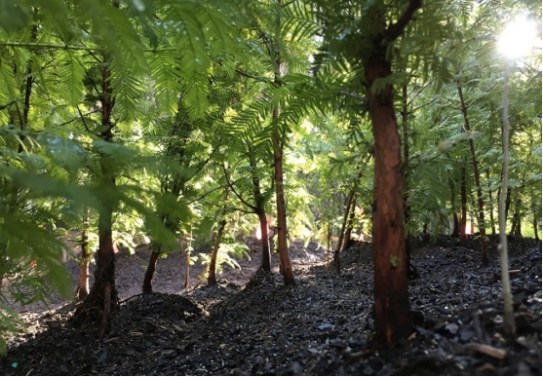
SPENCER FINCH TO CREATE A MINIATURE REDWOOD FOREST IN THE HEART OF DOWNTOWN BROOKLYN

See the website of the exhibit at Public Art Fund for this description and more:

Lost Man Creek is a miniature forest. But rather than growing naturally and of its own accord, this undulating landscape populated by some 4,000 Dawn Redwoods is a recreation. Artist Spencer Finch partnered with the Save the Redwoods League to identify a 790-acre section of the protected Redwood National Park in California. Significantly scaling down the topography and tree canopy heights, he reimagined this corner of the California forest for MetroTech at a 1:100 scale. While the original trees range from 98 to 380 feet – taller than the buildings that surround the plaza – the trees in the installation are just one to four feet in height. Continue reading

Magnificent Ecological Services From Modest Parcels Of Trees

27FOREST1-superJumbo.jpg

Eve Lonnquist examining trees on her property with Logan Sander, a consulting forester. Credit Leah Nash for The New York Times

An excellent article, whose title says it all, in the Science section of the New York Times this week:

How Small Forests Can Help Save the Planet

By

BIRKENFELD, Ore. — Eve Lonnquist’s family has owned a forest in the mountains of northwest Oregon since her grandmother bought the land in 1919. Her 95-year-old father still lives on the 157-acre property. And she and her wife often drive up from their home just outside Portland.

But lately, Ms. Lonnquist, 59 and recently retired, has been thinking about the future of her family’s land. Like many small-forest owners, they draw some income from logging and would like to keep doing so. But they would also like to see the forest, with its stands of Douglas fir, alder and cherry, protected from clear-cutting or being sold off to developers. Continue reading

Bring Back The Green!

allegheny_custom-5d30decc2d7e48cf9bd714983a1d1d5d45b3d014-s1100-c85

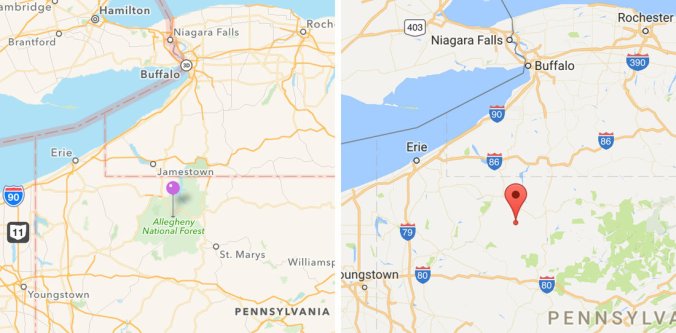
The Allegheny National Forest is absent from Google Maps (right) but displayed on Apple Maps (left). Apple & Google/Screenshots by NPR

We lose more than enough green in the real world, so when the cartographical world starts compounding the problem, we must shout in protest:

Where Did National Forests Go? Green Spaces Disappear From Google Maps

Erin Ross

If you looked at Google Maps this week, you might have noticed something strange: less green. Continue reading

Forest Protection By Any Other Name, For Any Other Purpose, Through Any Other Means, Is Just As Sweet

2000

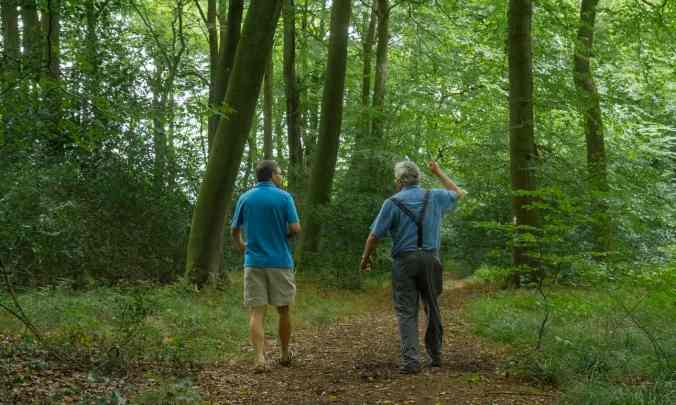
Richard Fortey and Derek Niemann among the beeches in Grim’s Dyke Wood. Photograph: Sarah Niemann

We do not favor private sector conservation efforts over all other options; we favor them over the option of no conservation at all. Governments around the world have rightly done the heaviest lifting on preserving nature, considering their resources, eminent domain, and other factors including the most salient; public lands effectively belong to an entire nation’s citizens. Philanthropies have also done enormous good. We have written plenty on both public and philanthropic conservation schemes. Today, a more modest story, but no less lovely:

A walk in the woods with Richard Fortey

Henley, Oxfordshire The palaeontologist and author offers a tour of Grim’s Dyke Wood, which he bought in 2011

Derek Niemann

Five years after the palaeontologist Richard Fortey bought Grim’s Dyke Wood, a small Chiltern beech wood, he shows no diminution in enthusiasm for his “nature reserve”. He gives me a tour, though in truth we delight in each other’s discoveries. I find him a ring of bright feathers on a pile of rotting pine logs, a raptor’s kill, the buffs and browns speaking of a song thrush forever silenced. He finds bracket fungi that have insinuated themselves into the thin, horizontal lesions on a cherry tree’s trunk. Continue reading

Case for Human Settlement Enhancing Ecosystems

clamshells

Source: conservationmagazine.org

A recent scientific publication in Nature Communications enlightens us to the possibility that human settlement does not always equate to land degradation, and in some cases, improves the local ecology. Here’s the results of the study as shared in Conservation Magazine:

Researchers studied temperate rainforest on Calvert and Hecate islands, off the central coast of British Columbia, Canada. This forest is very wet, receiving an average of 4 meters of rainfall a year, and has acidic, nutrient-poor soils. The dominant tree species is western redcedar (Thuja plicata).

The coastline is also dotted with semi-permanent settlements where First Nations groups, as indigenous people are known in Canada, lived seasonally or year-round. Especially over the past 6,000 years, people intensively harvested shellfish from intertidal areas and built up large shell middens—some up to 5 meters deep—near their settlements.

Continue reading

Restorative Justice, Environmental Case Study

1500.jpg

I am linking to this with a long series of links to rewilding stories in mind. Thanks to the Guardian for occasional environmental rags to riches stories:

How millions of trees brought a broken landscape back to life

After 25 years, the decision to site the National Forest amid derelict coal and quarry workings has borne spectacular fruit

by John Vidal

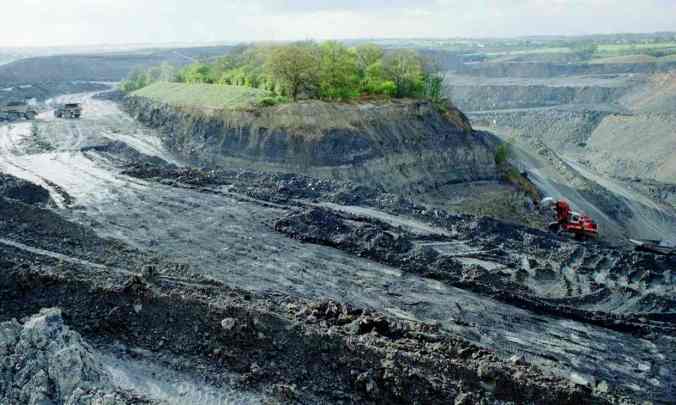
Twenty-five years ago, the Midlands villages of Moira, Donisthorpe and Overseal overlooked a gruesome landscape. The communities were surrounded by opencast mines, old clay quarries, spoil heaps, derelict coal workings, polluted waterways and all the other ecological wreckage of heavy industry.

The air smelt and tasted unpleasant and the land was poisoned. There were next to no trees, not many jobs and little wildlife. Following the closure of the pits, people were deserting the area for Midlands cities such as Birmingham, Derby and Leicester. The future looked bleak.

Today, a pastoral renaissance is taking place. Around dozens of former mining and industrial communities, in what was the broken heart of the old Midlands coalfield, a vast, splendid forest of native oak, ash and birch trees is emerging, attracting cyclists, walkers, birdwatchers, canoeists, campers and horse-riders.

Continue reading

Wood Wide Web

7650980706_652e5ab178_k.jpg

Forests and fungi–words that make me think of Milo circa 2010-2012 in the south of India, especially in the Periyar Tiger Reserve (but also later, writing about fungi in relation to food waste). When I first heard this a week ago, it seemed typical of Radiolab’s attention to quirky outlier science stories:

From Tree to Shining Tree

Saturday, July 30, 2016

A forest can feel like a place of great stillness and quiet. But if you dig a little deeper, there’s a hidden world beneath your feet as busy and complicated as a city at rush hour.

In this story, a dog introduces us to a strange creature that burrows beneath forests, building an underground network where deals are made and lives are saved (and lost) in a complex web of friendships, rivalries, and business relations. It’s a network that scientists are only just beginning to untangle and map, and it’s not only turning our understanding of forests upside down, it’s leading some researchers to rethink what it means to be intelligent.

And it was typical, in that sense. But Milo’s attention to the underworld of fungi, which at the time seemed to me as quirky as this Radiolab story does today, got me to start paying attention to anything in our news network with certain keywords (mushroom, fungi, etc.) and just now I came across a short journalistic account that taps into the same science as the Radiolab piece above, and I am realizing it may not be merely quirky: Continue reading

Ginseng Memories

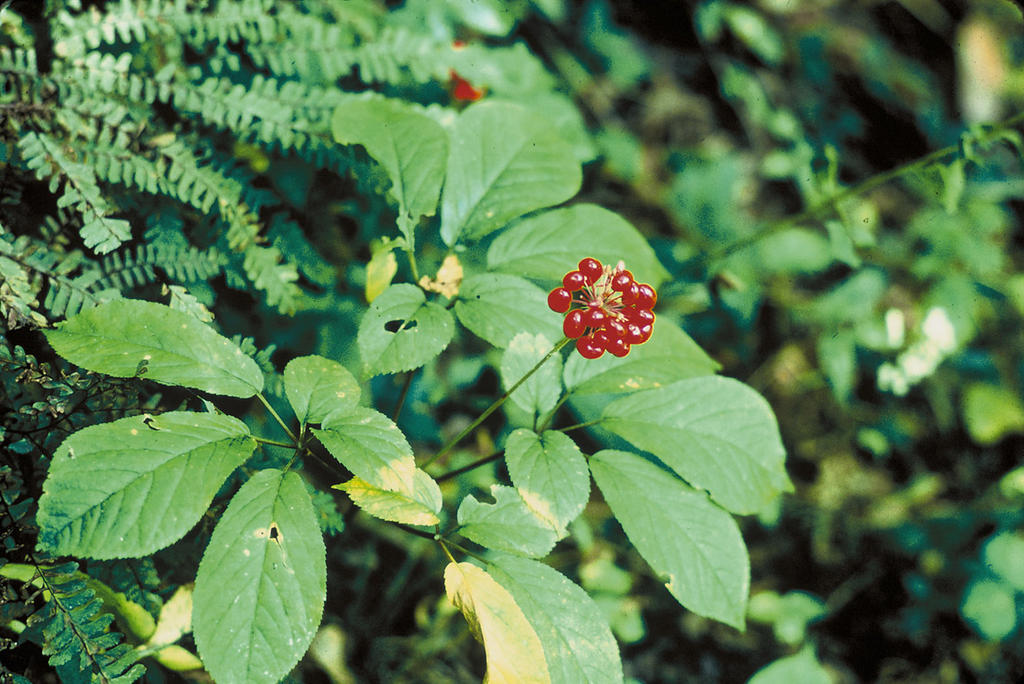
Ginseng with berries. Photo by US FWS via Wikimedia Commons

We first heard of ginseng in the New Yorker, where Burkhard Bilger wrote an article titled “Wild Sang” that explored the history of ginseng hunting and the very modern efforts to protect remaining plants from poaching in the Smoky Mountains. This week in Cool Green Science, the nature writer and conservationist Hal Herring reflects about his own personal experiences hunting ginseng in Alabama, and thinks about the future of the root:

I grew up in the flat-topped foothills of the Cumberland Mountains in north Alabama, and my mother was a student of wild herbs, wildflowers, and native medicinal plants. On my desk right now is a book called Tales of the Ginseng that my parents gave me for my twelfth birthday in 1976. It is a book of collected lore, of Manchurian folktales, of kings who become ginseng roots, of ginseng plants that withdraw, just ahead of the digger, to lure them into a deep-earth spirit-world from which they never return.

Continue reading

Watch Your Wood, Know Its Origin

2000 (1)

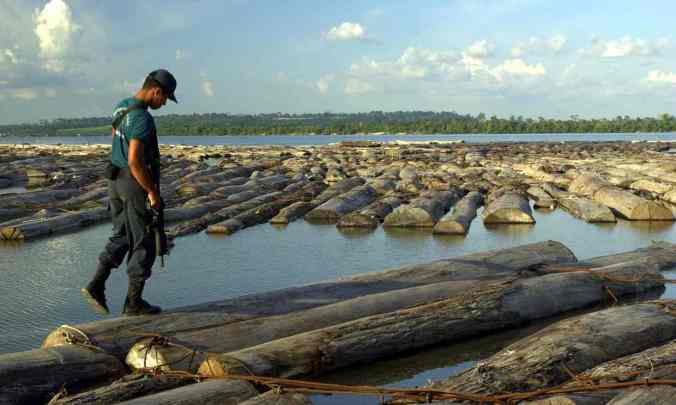
An armed officer inspects a seizure of thousands of illegal mahogany logs in Brazil. Photograph: Dado Galdieri/AP

Thanks to the Guardian for this reminder that we consumers need to do our caveat emptor duties when buying wood products:

Deforestation is rife in the Amazon, Colombia and the Philippines, say environmental groups

British shoppers could be unknowingly buying wooden furniture, flooring and even food items that are byproducts of destructive illegal logging in the Amazon, environmental campaigners are warning.

Friends of the Earth is calling on ministers to make companies reveal the source of their products in order to stop the black market trade. Last week human rights watchdog Global Witness revealed that 185 environmental activists were killed in 2015, many of whom had been trying to stop illegal logging in the Amazon. An estimated 80% of Brazilian hardwood is illegally logged.

Continue reading

John Muir’s Writings About Yosemite

lead_large (3).jpg

Library of Congress

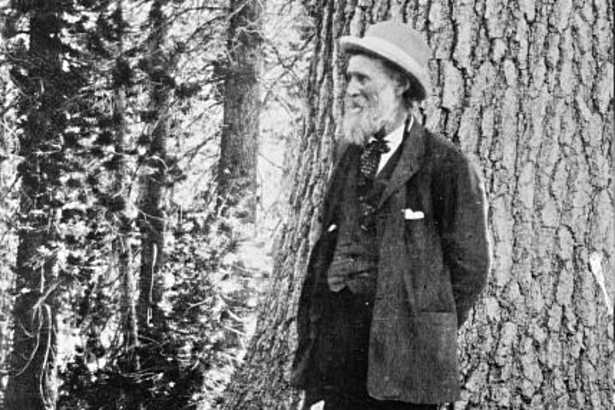
We posted about John Muir’s writings in the Atlantic four years ago, once we realized they were so accessible in that magazine’s archives. In that post, two years into our foray in India, we simply wanted to share our amazement that Muir had written about India as an example relevant to the case for protecting the forests of North America. We have also posted about Muir indirectly, including a lovely photo-documented post about his visit with Teddy Roosevelt to several wilderness areas that would become iconic national parks.

As we prepare for the expansion of our activities in India, and in advance of our announcement of two exciting new conservation initiatives in Mesoamerica that we will embark upon next month, I have been going back through our archives, enjoying some examples of the historical perspective this platform has allowed us to share.

Today, in the spirit of the centenary of the National Parks Service, and considering this past weekend’s visit to Yosemite by the President of the USA, it makes sense to share another of Muir’s several contributions to The Atlantic, this one specifically about the first national park (which predates the creation of the NPS):

The Yosemite National Park

“All the world lies warm in one heart, yet the Sierra seems to get more light than other mountains.”

JOHN MUIR   AUGUST 1899 ISSUE

Of all the mountain ranges I have climbed, I like the Sierra Nevada the best. Though extremely rugged, with its main features on the grandest scale in height and depth, it is nevertheless easy of access and hospitable; and its marvelous beauty, displayed in striking and alluring forms, wooes the admiring wanderer on and on, higher and higher, charmed and enchanted. Benevolent, solemn, fateful, pervaded with divine light, every landscape glows  Continue reading

Reforesting the Amazon

NEW VENTURE: Deniston Mariano Dutra and his son Matheus Correia Dutra harvest cacao seeds. After giving up on cattle, the family replanted their farm with these indigenous trees. © Kevin Arnold via TNC

We care deeply about Amazonia, and Brazil is the country with the most deforestation in the river region, specifically from cattle ranching. But good news is coming from The Nature Conservancy in the April/May issue, where, as the article’s subtitle reads, “After decades of turning forests into pastures and fields, Brazilian landowners have begun reversing the trend.” Julian Smith reports for the TNC Magazine:

Lazir Soares de Castro stands amid white and gray Nelore cattle on his ranch in São Félix do Xingu, a remote and sprawling county on Brazil’s northeastern Amazon frontier. Beyond a wooden fence, high grass and scrub brush fade into sporadic trees in the distance.

Still vital at 70, Soares describes how different this area looked when he arrived in 1984, when it was all virgin rainforest. “It was the poorest area. There was no electricity, no telephone, no TV, no roads, nothing.” The military dictatorship then running the country was encouraging settlers to occupy the Amazon in the name of national security. “There was no organized environmental policy,” Soares says.

Continue reading

Urban Forest


Urban forests play an important role. Not only continuing to act as the Earth’s lungs, but they perform other valuable services – least of all providing the sense of peace and refuge for both humans and wildlife.

Our urban trees in the James River Park System and City of Richmond perform valuable services for us. They anchor the soil on hills and along river and stream edges, which reduces runoff into the river. They provide habitat and food for animals, and moderate the temperatures and rainfall with their canopies. Continue reading

Reimagining Trees

TREES-master675

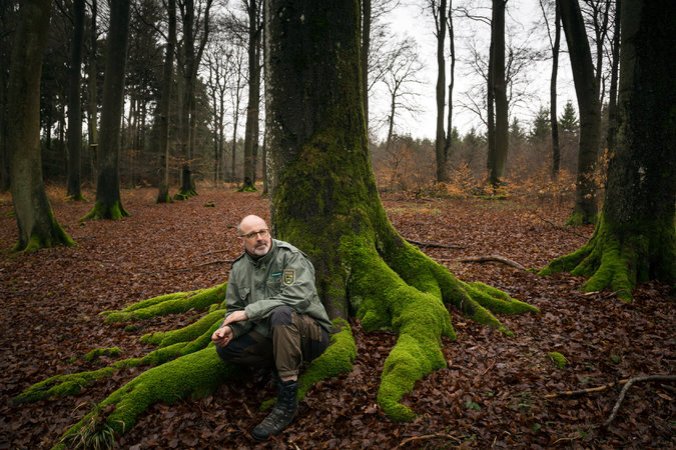
“When I say, ‘Trees suckle their children,’ everyone knows immediately what I mean.” PETER WOHLLEBEN Credit Gordon Welters for The New York Times

There is an article in the Saturday Profile section of the New York Times this weekend that catches my attention for reasons made obvious in these pages since 2011. Thousands of posts about community, collaboration and conservation, many of which have dealt with the importance of forests. But it most importantly reminded me of a conversation I had with a couple who visited Xandari Costa Rica last year. We had trekked together in the forest reserve, all the while discussing our mutual interest in the concept of biophilia, which has been covered plenty in these pages.

Among other things I recall from that strolling conversation was each of us sharing experiences from years earlier that had caused us to rethink the simple pleasure of a walk in the woods, to consider “what a walk in the woods does for us.” Of course, the simple pleasure is still there, but understanding biophilia can intensify the pleasure of a walk in the woods. And then, if we take it a step further, or deeper, it then causes us to consider the importance of forest conservation, and our prospective roles with regard to conservation.

Those conversations with guests are essential components of our work, so (shout out to Andrew and Holly included) I recommend this article for reminding me…:

…After the publication in May of Mr. Wohlleben’s book, a surprise hit titled “The Hidden Life of Trees: What They Feel, How They Communicate — Discoveries From a Secret World,” the German forest is back in the spotlight. Since it first topped best-seller lists last year, Mr. Wohlleben has been spending more time on the media trail and less on the forest variety, making the case for a popular reimagination of trees, which, he says, contemporary society tends to look at as “organic robots” designed to produce oxygen and wood. Continue reading

To Keep The Mountain Gorillas Alive

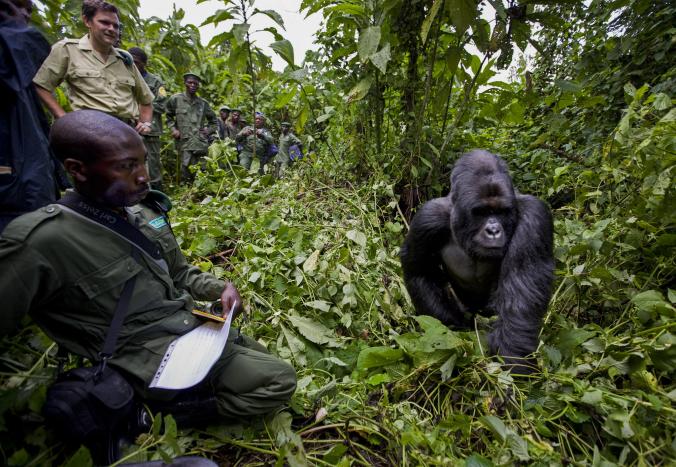
In November 2008, conservation authorities in the DRC had their first sighting of a mountain gorilla in more than 15 months. Because of the commitment and bravery of its rangers, the gorilla population is now estimated to be 880. PHOTO: BRENT STIRTON, GETTY

In November 2008, conservation authorities in the DRC had their first sighting of a mountain gorilla in more than 15 months. Because of the commitment and bravery of its rangers, the gorilla population is now estimated to be 880. PHOTO: BRENT STIRTON, GETTY

The Virunga National Park in the Democratic Republic of Congo is one of the world’s deadliest parks. It’s also home to some 300 mountain gorillas—more than a quarter of those that remain on the planet. Beneath Virunga’s surface lies a wealth of minerals and oil, coveted by multinational companies. Deadliest park because since 1996, more than 150 Virunga rangers have been killed in the line of duty. Emmanuel de Merode, director of Virunga National Park and a National Geographic Society Explorer of the Year, was nearly killed in 2014 for protecting the park and its mountain gorillas.

Continue reading

Where World Heritage Sites Meet

A variety of birds, frogs, and crocodiles can be spotted while cruising the mangrove-lined Daintree River. Photo: David Wall/Dinodia

A variety of birds, frogs, and crocodiles can be spotted while cruising the mangrove-lined Daintree River. Photo: David Wall/Dinodia

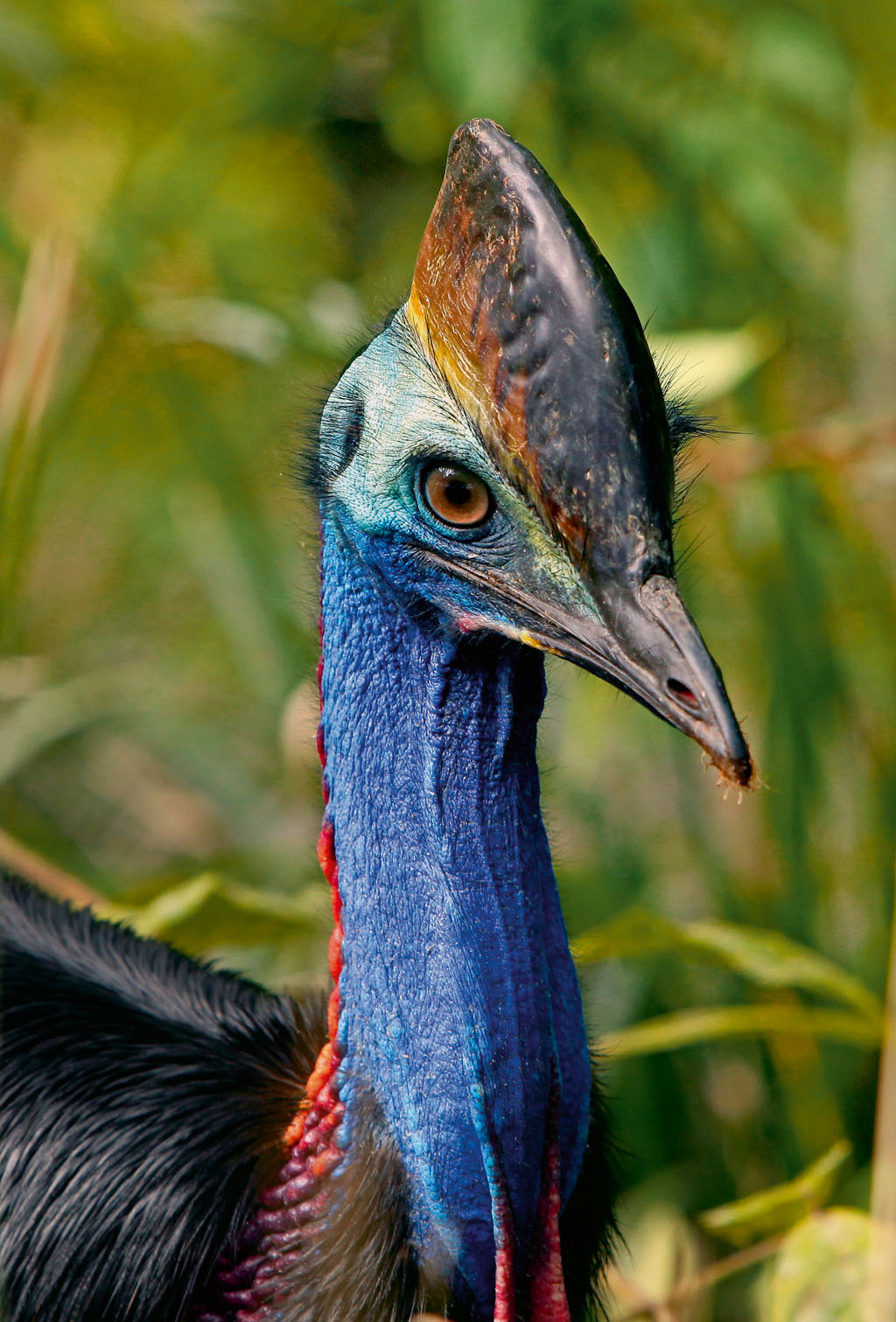
Unique to Australia, the flightless cassowary bird lives a solitary existence for most of its life. It is integral to the survival of many of the plants of this rainforest. Photo: CCOPhotostockBS/Dinodia

Unique to Australia, the flightless cassowary bird lives a solitary existence for most of its life. It is integral to the survival of many of the plants of this rainforest. Photo: CCOPhotostockBS/Dinodia

The list of the World Heritage Sites, as recognized by UNESCO, is a goldmine of history, natural and cultural patrimony. It tells of places and cultures that warrant a second look, an effort to better understand them. And of all the geography the list covers, there’s only one place where two Heritage Sites meet: the Daintree Rainforest and the Great Barrier Reef.

Continue reading

The Man of Mangrove Forests

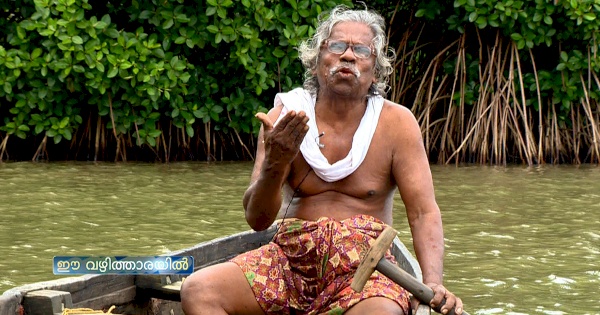
Pokkudan’s pursuit of mangrove conservation started back in the 80s when he started collecting mangrove seeds and planting them in the marshy lands of in Pazhayangadi. PHOTO: Mathrubhumi

Pokkudan’s pursuit of mangrove conservation started back in the 80s when he started collecting mangrove seeds and planting them in the marshy lands of in Pazhayangadi. PHOTO: Mathrubhumi

Kallen Pokkudan, also known as Kandal (mangrove in vernacular) Pokkudan, an Indian environmental activist and writer from Kerala, devoted his life to mangrove forests and planted more than a hundred thousand mangroves over three decades across Kerala.These trees of the tropics offer a lifeline to areas under the threat of natural disasters, prevent soil erosion, form a breeding ground for marine animals, purify water, and sustain coastal livelihoods. Pokkudan’s pursuit of mangrove conservation started back in the 80s when he started collecting mangrove seeds and planting them in the marshy lands of in Pazhayangadi. His work to expand mangrove cover along the Indian coastline has earned him a UNESCO special mention.

As the noon breeze blows Pokkudan’s silver wisps into his eyes shaded by thick glasses, the octogenarian talks with an unvarnished matter-of-factness about the revolution he started in 1989. At a time when most people were ignorant of the many scientific and envi¬ronmental uses of mangroves, Pokkudan—until then a political thinker—saw them as wind-cheaters that, to a great extent, prevented schoolchildren from losing their umbrellas to strong winds blowing from the Ezhimala area. “I started planting mangrove saplings to shield school-going children from the wind,” says Pokkudan humbly. “I also believed they would prevent the sea from eroding the ground and, above all, I wanted to see the beautiful trees growing.”

Continue reading

365 Days in the Wilderness

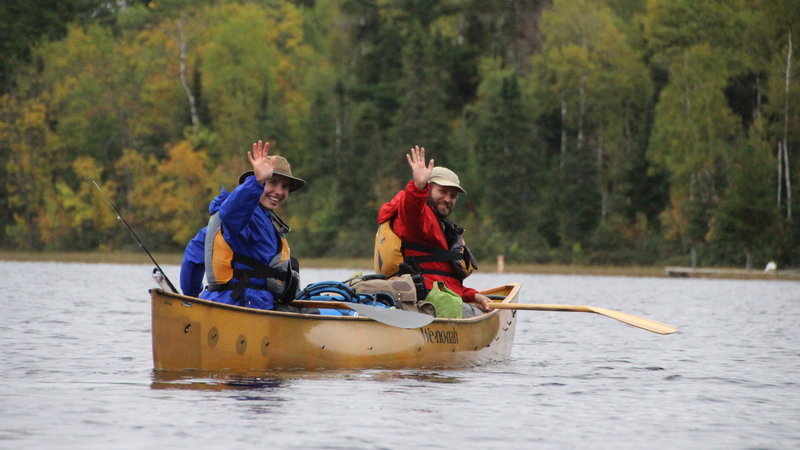
Amy and Dave Freeman paddle into the Boundary Waters, starting their 365 days in the wilderness to raise awareness of mining plans in the region.PHOTO: Alex Chocholousek

Amy and Dave Freeman paddle into the Boundary Waters, starting their 365 days in the wilderness to raise awareness of mining plans in the region.PHOTO: Alex Chocholousek

The Boundary Waters Canoe Area Wilderness is located in the northern third of the Superior National Forest in northeastern Minnesota. Over 1 million acres in size, it extends nearly 150 miles along the International Boundary adjacent to Canada’s Quetico Provincial Park and is bordered on the west by Voyageurs National Park. The BWCAW contains over 1200 miles of canoe routes, 12 hiking trails and over 2000 designated campsites. Wilderness offers freedom to those who wish to pursue an experience of expansive solitude, challenge and personal integration with nature.

And now some, or all of it, may be lost to sulphide mining.

Continue reading

When Temples Teach About Forests

Traditional temple gardens, called Nandavanam, are strewn along the banks of the river Tamaraparani that originates in the Western Ghats, India. Each is attached to one of the 150-odd temples in the region, some as old as 1,000 years. PHOTO: Scroll

Traditional temple gardens, called Nandavanam, are strewn along the banks of the river Tamaraparani that originates in the Western Ghats, India. Each is attached to one of the 150-odd temples in the region, some as old as 1,000 years. PHOTO: Scroll

Sacred texts are guides to living while temples and the religious community teach a thing or two about what has been and what will be. But do temple gardens move beyond their aesthetic value and stand for something greater? Yes, their valuable insights into living ecosystems.

Some of these old surviving forest patches are invaluable when it comes to shining a light on what a forest might have been like in the area several thousand years ago, like a relic to an ancient civilisation. Considering the Indian government’s rapid march towards creating new forests to combat deforestation, sacred groves, their histories and regeneration can be a blueprint to such plans. “In short, one could say sacred groves provide a small window into an ecosystem’s past,” said Osuri. “They might even provide a source population and a reference library.”

Continue reading

What Does It Take to Plant a Forest?

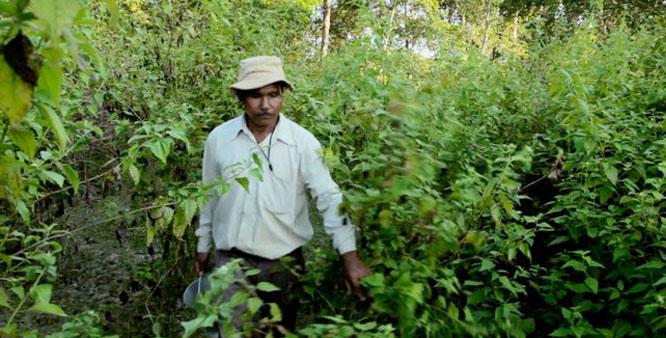
Indian man, Jadav "Molai" Payeng, has single-handedly planted a 1,360 acre forest In Assam. PHOTO: Jagran

Indian man, Jadav “Molai” Payeng, has single-handedly planted a 1,360 acre forest In Assam. PHOTO: Jagran

For many people the sight of a dead snake would be an unpleasant but not tragic image, but for Indian activist Jadav “Molai” Payeng it was a call to action that inspired him to create an entire forest. When Payeng was just a teenager in 1979 he came across a bed of dead snakes on the sun-baked shores of the Brahmaputra river. The limbless beasts had been stranded on the barren banks and perished in the unmitigated heat due to the lack of shade or tree cover. Payeng wept over the corpses but resolved to turn his sadness into action.

Continue reading

The Sound of the Forest

A few years ago the Ministry of Environment included the Sagano Bamboo Forest on its list of "100 Soundscapes of Japan" -- a selection of everyday noises intended to encourage locals to stop and enjoy nature's music. PHOTO: CNN

A few years ago the Ministry of Environment included the Sagano Bamboo Forest on its list of “100 Soundscapes of Japan” — a selection of everyday noises intended to encourage locals to stop and enjoy nature’s music. PHOTO: CNN

What does it take for a government to officially recognize a natural soundscape? The bamboo forests of Kyoto. Growing tall on the edges of Kyoto, the Sagano Bamboo Forest is a once tranquil nature spot that is now a series of tourist-packed pathways, but if one can escape the sounds of camera shutters and boorish visitors, they can hear the rustling, creaking, and swaying of one of Japan’s governmentally recognized soundscapes.

Continue reading