There’s something calming about this piece of animation by Sebastian Ramn that addressed climate change as nature’s SOS, reaching out to creative communities and NGOs who may be in search of ways to get involved in any way possible.
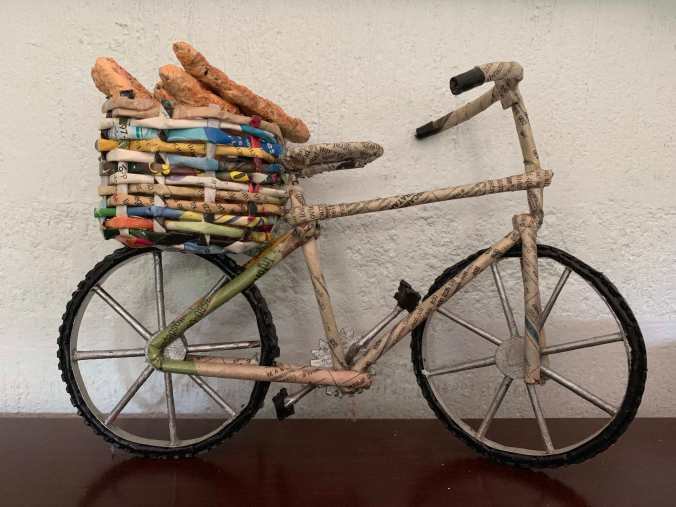
A few years ago, as we were completing work on the final hotel of our work plan in India, we had visitors from Costa Rica. They brought this little thing as a gift. Bicycle as ambassador. Knowing that we had been developing relationships with artisan groups in India, this was a small token of what had been happening in Costa Rica in the many years we had been away. Using recycled materials, one group of artisans were designing and crafting mementos like this for people to take home with them after their vacation in Costa Rica.
During my doctorate years I had mementos from one place in my office. In my office now I have mementos from many different places to inspire the work we will do next. This little thing is in a prized place.
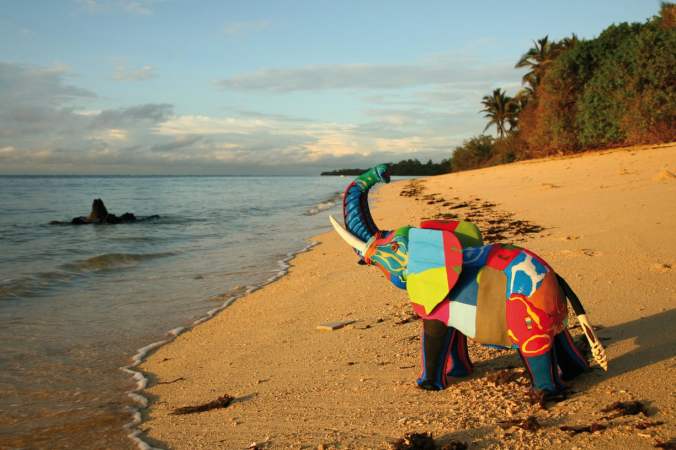
Ocean Sole turns reclaimed flip-flops into colourful, hand-made animal toys and sculptures. Tonnes of flip-flops wash up on the east African coast every year. Photograph: Courtesy of Ocean Sole/Plastic Soup
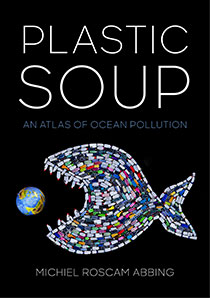
Plastics have transformed every aspect of our lives. Yet the very properties that make them attractive—they are cheap to make, light, and durable—spell disaster when trash makes its way into the environment. Plastic Soup: An Atlas of Ocean Pollution is a beautifully-illustrated survey of the plastics clogging our seas, their impacts on wildlife and people around the world, and inspirational initiatives designed to tackle the problem.
Peter Smith made this floating work, World of Litter, in 2012. Photograph: Courtesy of Jos van Zetten/Plastic Soup
In Plastic Soup, Michiel Roscam Abbing of the Plastic Soup Foundation reveals the scope of the issue: plastic trash now lurks on every corner of the planet. With striking photography and graphics, Plastic Soup brings this challenge to brilliant life for readers. Yet it also sends a message of hope; although the scale of the problem is massive, so is the dedication of activists working to check it. Plastic Soup highlights a diverse array of projects to curb plastic waste and raise awareness, from plastic-free grocery stores to innovative laws and art installations.
According to some estimates, if we continue on our current path, the oceans will contain more plastic than fish by the year 2050. Created to inform and inspire readers, Plastic Soup is a critical tool in the fight to reverse this trend.
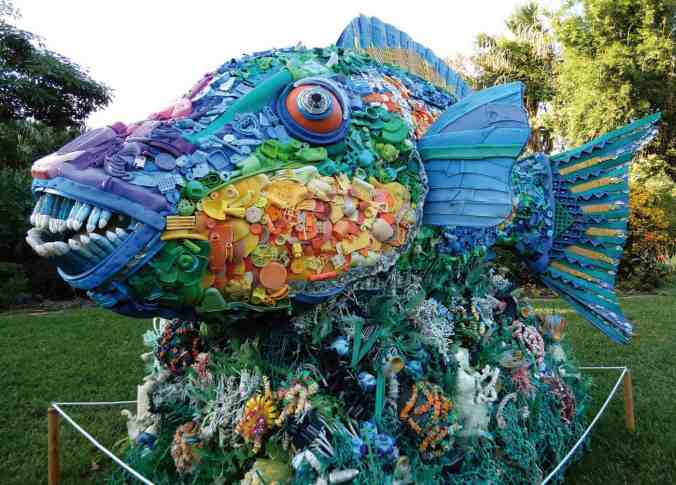
Washed Ashore makes larger-than-life sculptures of marine animals, like this parrotfish, to make people aware of plastic pollution. Photograph: WashedAshore.org/Plastic Soup
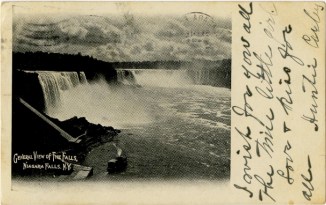
Before moving to Costa Rica in the mid-1990s I was working for a few years at a desk with images like the one above taped to the walls around the desk, and postcards from the previous century, like the one to the right, scattered about for inspiration.
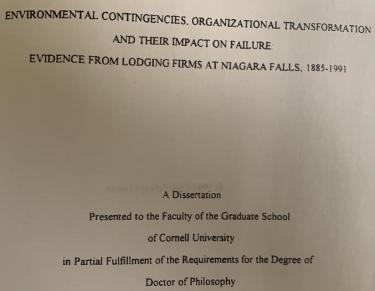
On the desk were drafts of a dissertation whose summary, on page 131, states: “…the results of the first hypothesis suggest that lodging firms in a tourism destination, such as Niagara Falls, should be directly involved with the strengthening and support of the institutional environment in which they operate.”
In other words, if you benefit from nature for your livelihood one of your best investments will be in building and strengthening institutions that protect nature. It may now sound like stating the obvious, but Nobel laureate economists made claims to the contrary that were treated as gospel truth twenty five years ago.
So 132 pages, not including bibliography, were used to make the point. Ever since, members of our team have wondered whether it could be summed up more simply. Meeting recently with graphic designers to discuss how to communicate more effectively about Organikos, we think now maybe the answer is yes.
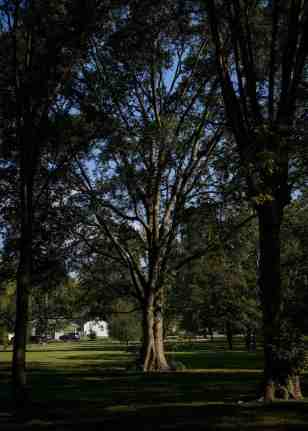
When we saw this hand and tree side by side in that meeting, we had a reaction that was related to what the graphic designer intended, but not exactly.
Whatever his precise intent was, someone’s mouth opened and blurted out: Yes! Nature is in our hands. And so we have come upon a way to say a little more simply what Organikos means in addition to what Organikos does.
In 2015, the Adorers of the Blood of Christ, a congregation of nuns, learned that an energy company planned to build a pipeline on their land. So they started a resistance movement. Photograph by Dave Parry
Thanks to Eliza Griswold, who writes about religion (which does not feature often in our pages) and occasionally finds an overlap with environmental causes:
On a crisp October morning in 2017, Sister Sara Dwyer, a sixty-eight-year-old nun wearing a red T-shirt that read “you will not spoil our land,” led three elderly nuns and seventy other protesters onto an industrial work site in Lancaster County, Pennsylvania. Many carried red banners stencilled with wheat sheaves. They were there to protest Williams, an Oklahoma-based pipeline company that was trying to build the Atlantic Sunrise Pipeline, a two-hundred-mile natural gas pipeline that would carry shale gas from fields in northeastern Pennsylvania to the coast, where the fuel could be shipped abroad. The company was trying to lay the line under a cornfield belonging to the nuns, and the sisters had decided to fight back, hoping that they might draw attention to the issue of climate change. “Just being in resistance is not the goal,” Dwyer told me. “The goal is spiritual conversion.” As the protesters entered the work site, Malinda Clatterbuck, who had helped plan the event with the sisters, reminded the participants, “This is a nonviolent protest in all ways. We’re not going to yell or speak to the workers.” She walked around asking each person to nod in agreement. “If you’re angry today, go home and come back to an action once you’re in a better place,” she said. Continue reading →
How Stephen Mallon captured this unusual voyage to the bottom of the ocean.
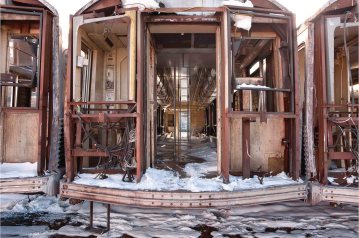
The rooftops of subway cars. “Abbey Road, 2008.” STEPHEN MALLON
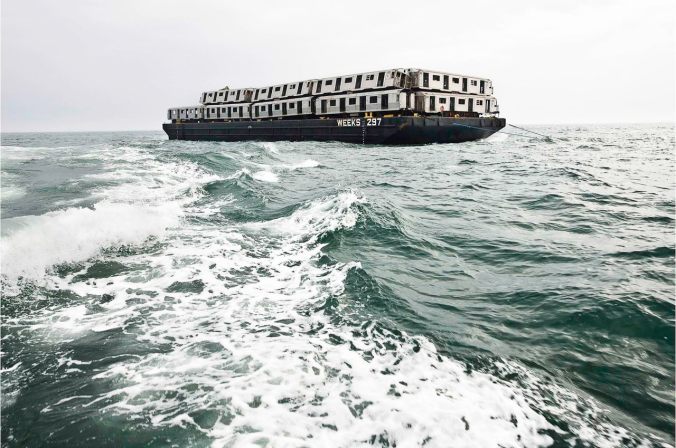
The photographer Stephen Mallon specializes in documenting man’s industrial-scale creations. During his career, he’s focused his lens on the recycling industry, the largest floating structure ever built, and the transportation and installation of a new bridge in New York City. So it wasn’t surprising when, in 2008, he was drawn to an unusual program spearheaded by the MTA New York City Transit system: a multi-phased artificial reefing project that saw the shells of 2,580 decommissioned subway train cars repurposed and dropped into coastal waters off New Jersey, Delaware, Maryland, Virginia, South Carolina, and Georgia, between 2001 and 2010.
The abstract beauty of stripped-down vehicles in “Transfer, 2009.” STEPHEN MALLON
Mallon arranged to follow the outdated subway cars as they were prepared and cleaned, loaded onto barges, and finally plopped into the sea. As he traveled with a crew in a tugboat to get his shots, the photographer developed his sea legs.
Subway cars hoisted in the air in “Mind The Gap, 2008.” STEPHEN MALLON
“I was never underwater, so just needed to keep myself steady on the back of the boat. It’s kind of like surfing or skiing—just keep your balance, keep the horizon line straight, bend your knees, and don’t fall overboard,” Mallon says. Continue reading →
Food waste, a problem whose partial solutions are myriad, has been on my radar since Milo posted about it. Its root seems obviously related to not properly pricing the input resources, like land, water, etc., which paradoxically makes it possible to produce an abundance sufficient to waste. But dealing with the problem at the tail end of the value chain is another partial solution so the video above is worth a few minutes of your time.
If, when you finish that, you want to learn more, click the logo to the left. And if you live in Brooklyn you might want to participate in some manner.
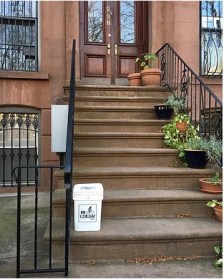
Home Composting. Rabbit Roots is a home food scraps pick up service. For a monthly rate our bikers will collect straight from your door to our compost site.
If you live nearby, get more information about how to subscribe to their home composting program by clicking here. Sandy and her operation tell me that waiting for someone else to solve the collective action problem is wasted time. David Owen brought her and it to my attention in this short profile:
…BK ROT was founded, in 2013, by Sandy Nurse. She was born in Panama, in 1984—both her parents were in the U.S. Navy—and grew up mainly there and in South Korea and Japan. She studied international affairs at the New School and assumed that she was headed for a diplomatic career. But she changed her mind after working on food assistance in Haiti after the big earthquake there in 2010.
This article appears in the print edition of the March 11, 2019, issue, with the headline “Sacred Rot.”
“I came back to New York and got really excited about urban resiliency and food sovereignty and disaster recovery,” she said recently. BK ROT was one of the results. “We have a very specific mission of environmental and social-justice values, and grassroots accountability to the neighborhood, and transparency, and giving our output, the compost, back into food-growing and soil-building operations.” BK ROT is partly a grant-supported jobs program for young people. (Ibarra and his co-workers, most of whom live in the neighborhood, earn fifteen dollars an hour.) Nurse also teaches community activism and basic construction skills, which she studied as a trainee of the New York City District Council of Carpenters.
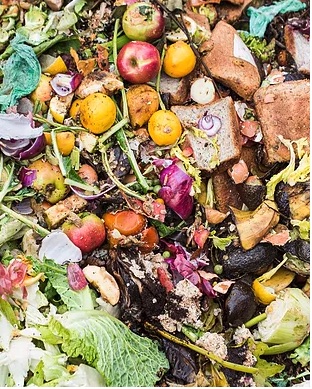
At BK ROT, food waste is mixed with wood chips and sawdust, then moved, over a period of weeks, through a succession of wooden bins the size of washing machines. By the time it reaches the final bin, it’s black and bug-covered and unrecognizable as former food. Then it’s heaped into sloping, loaflike piles, called windrows. “Convection sucks in air from the bottom and pulls it to the top,” Nurse said. “That keeps the microorganisms inside the windrows healthy.” The resulting mass is eventually shovelled into a rotating cylindrical sifter that looks like something you might pull bingo numbers out of; the original version was built by a friend of Nurse’s, who found instructions on YouTube. The compost is sold in local stores and directly to individuals—“Somebody came from Staten Island yesterday and took a bunch,” Nurse said—but most of it goes to nearby urban farms and community gardens, a few of which Nurse herself helped to start.
Sustainability in both concept and practice has a long history in Scandinavian cultures in general, and Sweden in particular. As consumers become more conscious of the finite nature of materials, upcycling has to eventually be considered more mainstream. We applaud this type of public and private sector leadership that is the very definition of entrepreneurial conservation.
Anna Bergstrom had a dilemma. She loved the glitzy world of high fashion, but had also come to feel that it was unsustainable and bad for the planet. She’s now found peace of mind by running a stylish shopping mall in Sweden, where everything is second-hand.
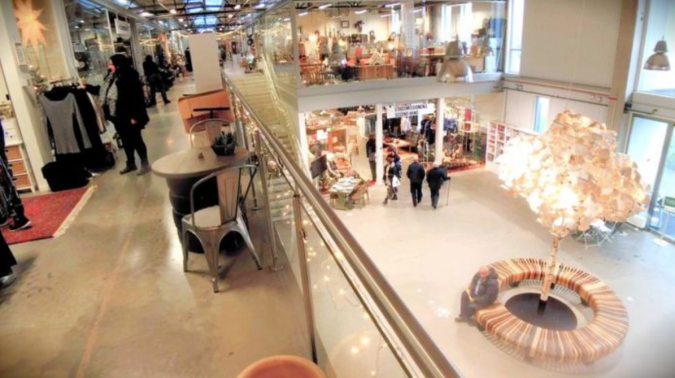
“Do you notice the smell?” Anna Bergstrom says, as she surveys her mall from the mezzanine level. “It smells nice here, doesn’t it?”
It’s very important to Anna that this place is enticing, because she feels it is making a statement. Everything for sale here, in 14 specialist shops covering everything from clothes to DIY tools, is recycled.
She is usually turned off by the smell of second-hand stores, she explains, even though she adores vintage fashion. For most people flea-markets and charity shops carry a stigma, she thinks – a mark left by countless bad experiences. Too often they are worthy but depressing, Anna says. Her mission is to bring second-hand shopping into the mainstream.
The mall itself is spacious and appealing, almost Ikea-like. An art installation – a tree and circular bench all fashioned from recycled materials – greets customers at the entrance. There is even a coffee shop and gift-wrapping service.
The mall is called ReTuna. “Tuna” because that’s the nickname for the city where it is based – Eskilstuna, an hour’s train journey west of Stockholm – and “Re” because the goods on sale have been recycled or repurposed.
It was set up by Eskilstuna’s local government in 2015, in a warehouse which used to house trucks for a logistics company. Continue reading →
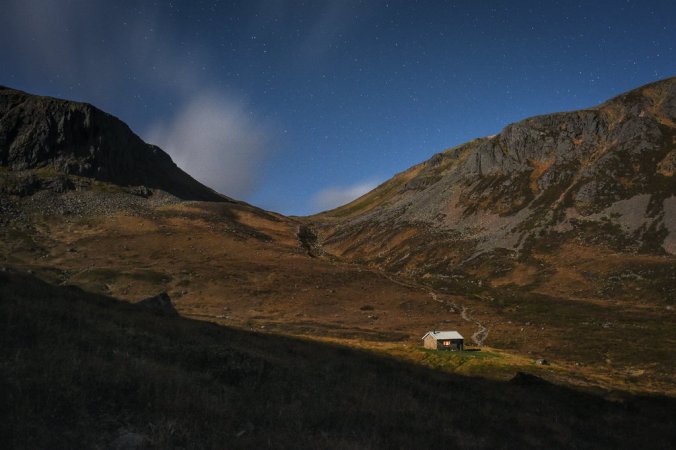
The Hutchison Memorial Hut, colloquially called the Hutchie Hut, illuminated by moonlight in Scotland’s Cairngorms National Park. Stephen Hiltner/The New York Times
How did Stephen Hiltner know? I was just looking through photos from the 2009 edition of the Patagonia Expedition Race, and remembering the huts along the way. They were perfect places to escape the realities of the rest of the world, in order to contemplate more clearly. With perspective. They could come in handy for plenty of folks these days, I am sure. Seems certain to me now that those huts at the southern tip of the South American continent were built by folks from the hills sampled in the story below:
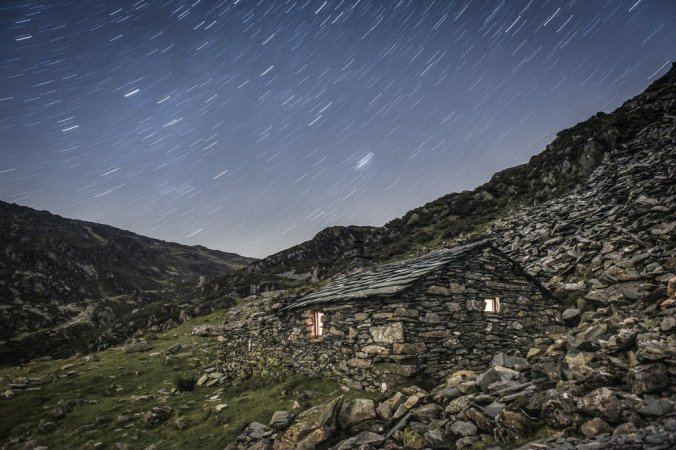
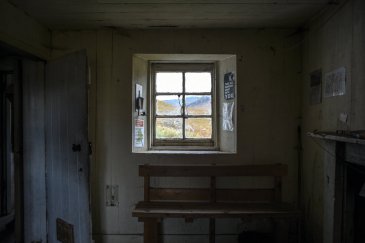
Rustic shelters called bothies — more than 100 of which are scattered throughout England, Wales and Scotland — are an indispensable, if little-known, element of British hill culture.
Warnscale Head at night. Since bothies are often built with local stones, they’re easily camouflaged in their surrounding landscapes. Stephen Hiltner/The New York Times
Shenavall Stephen Hiltner/The New York Times
By the time the tiny hut came into view, nestled high in a corrie in Scotland’s 1,748-square-mile Cairngorms National Park, I’d trekked for nearly nine miles, three of which, regrettably, I’d had to navigate after nightfall. The hike, through a broad valley in the Eastern Highlands called Glen Derry, carried me past groves of Scots pines and over a series of streams, some of which, lined with slick steppingstones, made for precarious crossings. All the while, two rows of smooth, eroded mountain peaks enclosed me in an amphitheater of muted colors: hazel-hued heather, golden grasses. Though much of my walk was solitary, the flickering glow in the hut’s main window, I knew, meant I’d have some company for the night and the warmth of a fire to greet me. Continue reading →
A visitor takes a close look at “Missing Route 4,” a hand-stitched embroidery by Bapi Das.Credit Atul Loke for The New York Times
The history of our work in Kerala, and specifically in Kochi, has long been intertwined with Art, and how the surrounding community interacts with it. Biennales, by nature, often blur the line between street art and gallery space, as multi-dimensional and multi-media installations begin to appear on walls, pop-up spaces, cavernous warehouse buildings, and classic museum halls.
Now in it’s 4th edition, the Kochi-Muziris Biennale, has grown continually in both the breadth of the artists involved, and the depth of its work toward community outreach. This sense of inclusivity extends to gender equality, a longstanding issue that India as a country has battled with; the curator and more than half of the artists are female.
As with the previous editions, the installations are thought provoking and moving, at times asking viewers to acknowledge and honor the difficult history of a colonial past.
The Kochi-Muziris Biennale, South Asia’s biggest art show, uses interactive exhibits and live performances to help Indians connect with contemporary art.
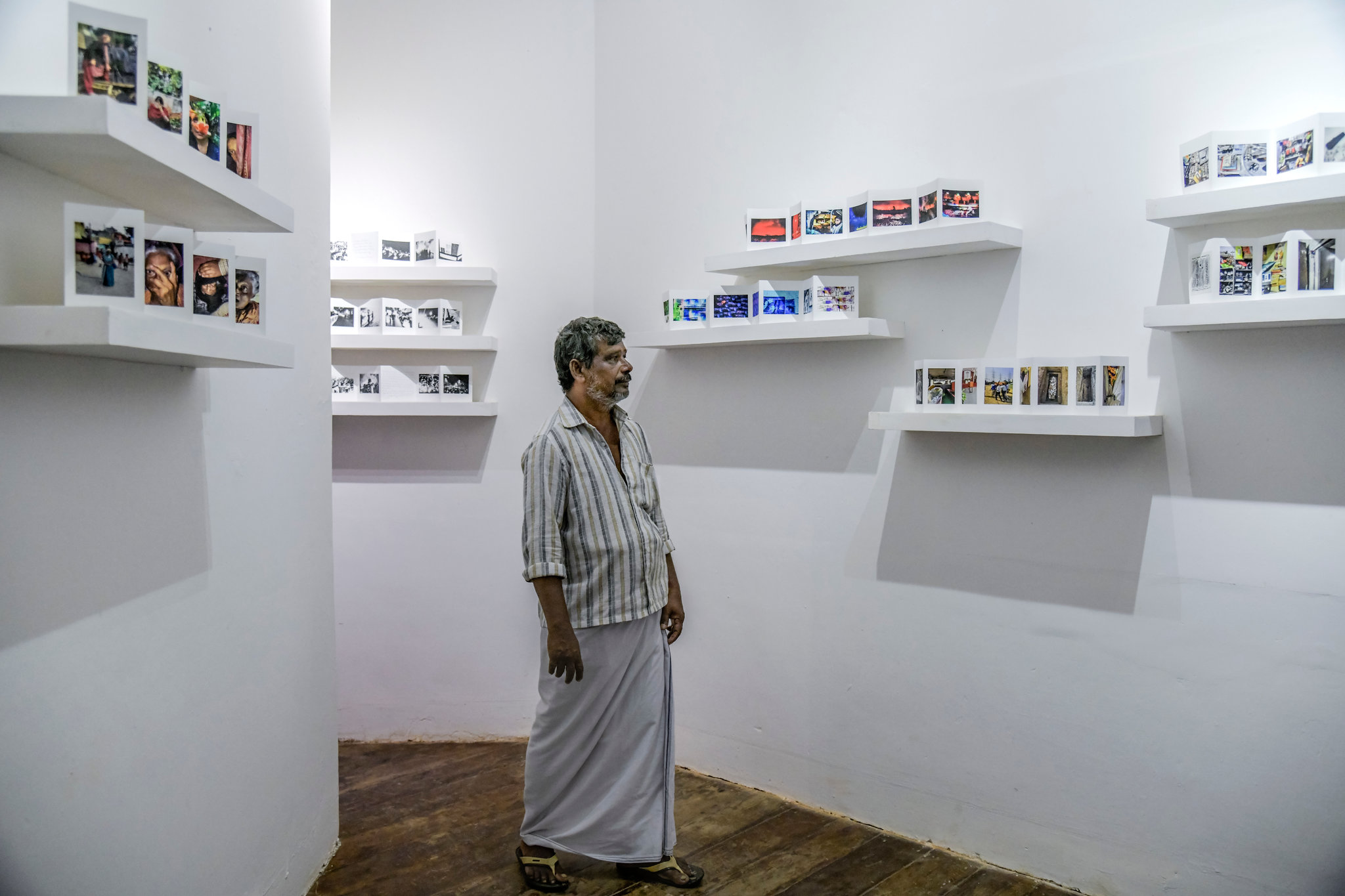
KOCHI, India — Clad in a simple striped shirt and the white mundu of the city’s fishmongers, Bashir stood out from the well-heeled throng at the warehouse galleries and tree-filled courtyards on the first day of India’s biggest contemporary art show, the Kochi-Muziris Biennale.
Bashir, a fishwrapper who works nearby, visited the Kochi-Muziris Biennale on opening day because entry was free. He lingered over the photographs, including these photo essays by Chandan Gomes, a Delhi photographer. Credit: Atul Loke for The New York Times
“I don’t understand the inner meaning of the art,” said Bashir, who uses one name and makes a living wrapping and delivering fish. “I just like to see beautiful things.”
Bashir’s willingness to engage with the artwork, no matter how challenging, was a victory for the show’s organizers. The southern state of Kerala, and India as a whole, have very few public venues to see art. So the organizers of the biennale, which runs until March 29, strove to create an event that would appeal to everyone — from untutored day laborers to veteran museum curators.
“We are making a cultural festival,” said Bose Krishnamachari, a painter from Kerala who co-founded the show eight years ago. “We have tried to penetrate to the people’s minds so that they feel that it is their biennale.”…
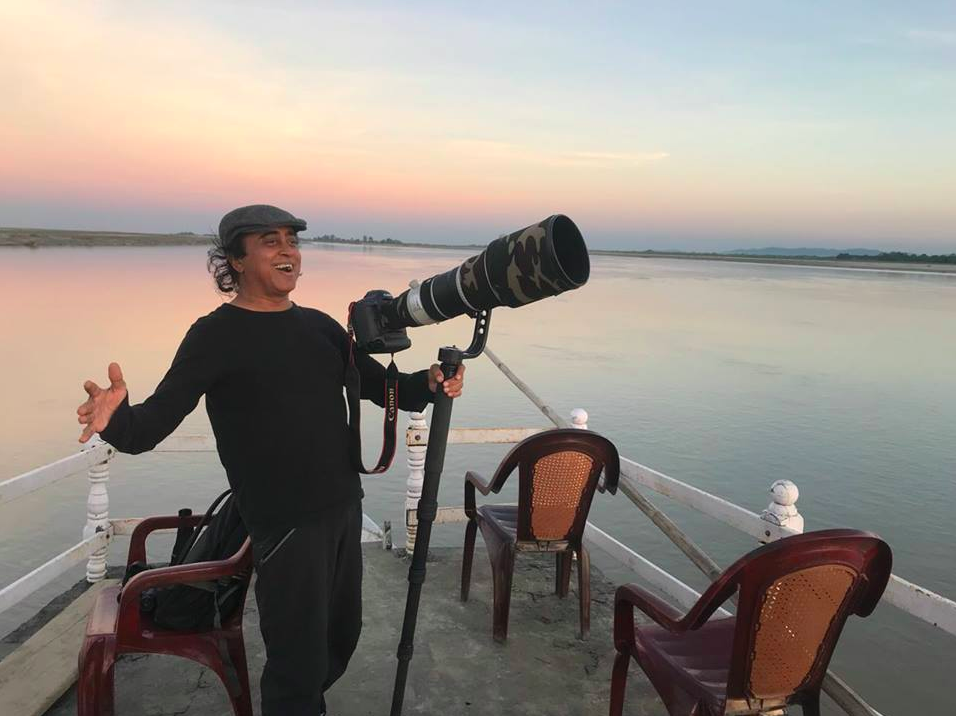
It’s a relatively small world among the birding /photography community in India, and once I saw Gururaj Moorching’s photographs I reached out for an introduction to ask him to contribute to our Bird of the Day series. He started his own birding journey in 2012 after a trip to Kaziranga and another trip to the Rann of Kutch where he came across the two books “Birding on Borrowed Time” and “Lifelist” by the late Phoebe Snetsinger. We’ve been publishing his gorgeous photos for over 3 years, and I was thrilled when he shared his plan for a Photographic Birding Big Year.
In our own way we’ve documented his birding travels within our series, and we applaud this amazing achievement of photo-documenting 951 of India’s 1,317 species of birds in just one year (2018).
Gururaj is currently working on a book expected to be published this spring, but he recently spoke with Deepthi Sanjiv from the Bangalore Mirror about his experience.
“When I had a chance meeting in April 2015 with naturalist Marmot Snetsinger in Eaglenest Wildlife Sanctuary, Arunachal Pradesh, I was elated. Her mother, the late Phoebe Snetsinger, was a legend in birdwatching circles. She was the first person to have crossed 8,000 birds on her Life List in 1995 and watched 8,398 species of birds across the world.”
When Phoebe took up bird watching, she had a rare type of melanoma and the doctors had given her a year to live. She defied death for another 17 years since her diagnosis. I was inspired and I could especially relate to her as I faced a similar health predicament. Phoebe’s book “Birding on Borrowed Time” inspired me to take up birdwatching and photographing birds with intensity and a sense of urgency…
…Ornithologist Shashank Dalvi, India’s first birder to complete one ‘Big Year’ and record 1,128 species of birds in 2015, mentored Gururaj. He helped Gururaj list out travel plans to get maximum results and devised a calendar plan, based on the seasons and locations across India.
“It is not a mean task to chase 1,317 species of bird found in India, including Adaman and Nicobar Islands. My love to travel, food and meeting new people made the journey interesting in this amazing country of huge diversity. Birding community in India is a well-knit family. I received great support from birders, guides and naturalists who were eager to share any information on bird movement and even opened their homes, kitchen and hearts to me. Rofikul Islam, a gifted naturalist from Kaziranga, stood by me throughout the year, and was the inspiration behind my decision to pursue a Photographic Big Year, which was the first of its kind,” said Gururaj.
“A deep sense of contentment comes over me at the end of this sojourn,” he said.
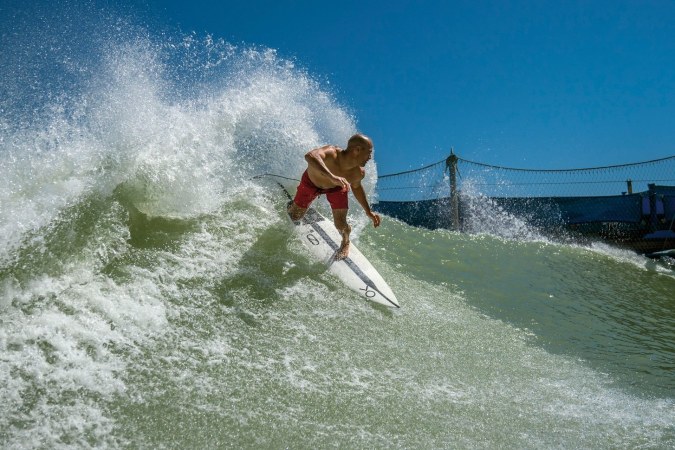
Slater has spent a career searching the world for waves, adapting to tricky conditions with unparalleled intuition. Now his Surf Ranch, in California farm country, can produce a perfect wave on demand. Photograph by Ben Lowy for The New Yorker
I have surfed, but I am not a surfer. I have surfer friends, including some who have travelled the world searching out the waves described in the story below, and family friends of ours have an adult child ranked in the top ten in the world. I do not care about surfing as much as any of them, but because of them I care deeply about surfing. Evidence of that is the fact that surfing is the #1 metaphor I use within my own family to describe the pivots we make from time to time, explaining a move to France, Croatia or India or back to Costa Rica is due to a new wave of opportunity that we might catch. Below is a story I appreciate for other reasons as well, because it is about a man-made replica of the ultimate pleasures of a real-life experience. This is kind of what we do for a living. But it is really about surfing. And even non-surfers can enjoy this. William Finnegan’s story is complemented by two interactive features, the first with the author himself and the second a remarkably clear explanation of the technology.
The best surfer in history made a machine that creates perfect conditions on demand. Will his invention democratize surfing or despoil it?
The first few hours I spent at the W.S.L. Surf Ranch, a wave pool built for surfing in the farmlands south of Fresno, California, were for me a blur. I was fine on arrival, hiking through a little forest of scaffolding, eucalyptus, and white tents with a publicist from the Kelly Slater Wave Company, which built and runs the place. The valley heat was fierce but dry. House music rode on a light northwest breeze. We passed a bright-red antique row-crop tractor parked on wood chips. Then I looked to my right and felt my mind yaw. The wave was probably six hundred yards away, a sparkling emerald wall, with a tiny surfer snapping rhythmic turns off the top. I had come expecting to see this wave, out here in cotton fields a hundred-plus miles from the coast. Still, my reaction to it was involuntary. Kelly’s Wave, as it’s known, seems designed to make someone who surfs, which I do, feel this way: stunned, turned on, needy. Surfers spend much of their lives looking for high-quality waves. Now a machine has been invented that churns out virtually flawless ones on command. “We call it the smile machine,” someone, possibly the publicist, said. I had trouble paying attention. Every four minutes, I had to turn and crane to watch a wave make its way the length of the pool. Continue reading →
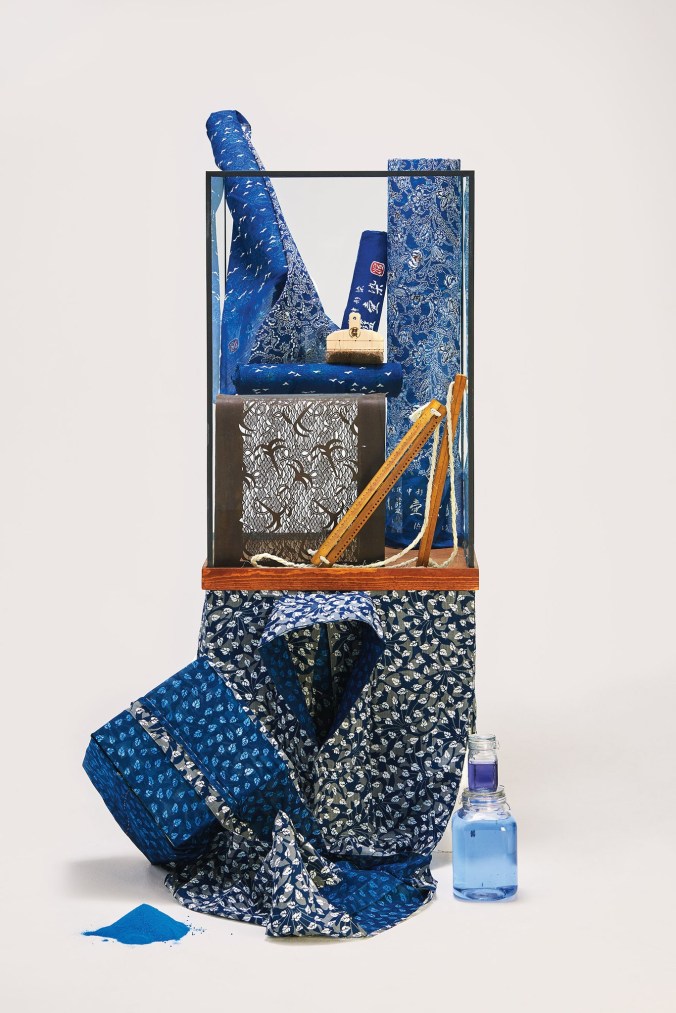
A collection of Kanji Hama’s beautifully hand-patterned and indigo-dyed fabrics along with tools of the craft. Credit Photograph by Kyoko Hamada. Styled by Theresa Rivera. Photographer’s assistant: Garrett Milanovich. Styling assistant: Sarice Olson. Indigo pieces courtesy of Kanji Hama
Two stories today about textile and tradition, the first more in keeping with our norm, but both heavy on the blues:
There are some traditions that are universal. Here, we highlight a single craft — and how it’s being adapted, rethought and remade for the 21st century.
KANJI HAMA, 69, has quietly dedicated his life to maintaining the traditional Japanese craft of katazome: stencil-printed indigo-dyed kimonos made according to the manner and style of the Edo period. He works alone seven days a week from his home in Matsumoto, Nagano, keeping indigo fermentation vats brewing in his backyard and cutting highly detailed patterns into handmade paper hardened with persimmon tannins to create designs for a craft for which there is virtually no market. Nearly identical-looking garments can be had for a pittance at any souvenir store.
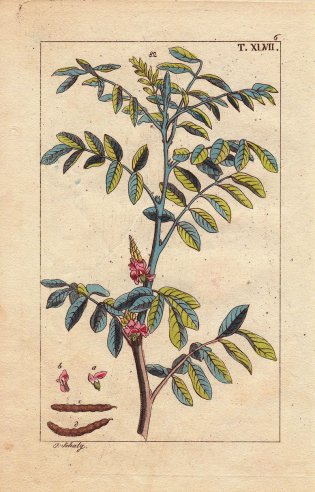
Indigo is one of a handful of blue dyes found in nature, and it’s surprising that it was ever discovered at all, as the plants that yield it reveal no hint of the secret they hold…
The story from Japan is about maintaining traditional craft and the story about flannel is about industrial renaissance.
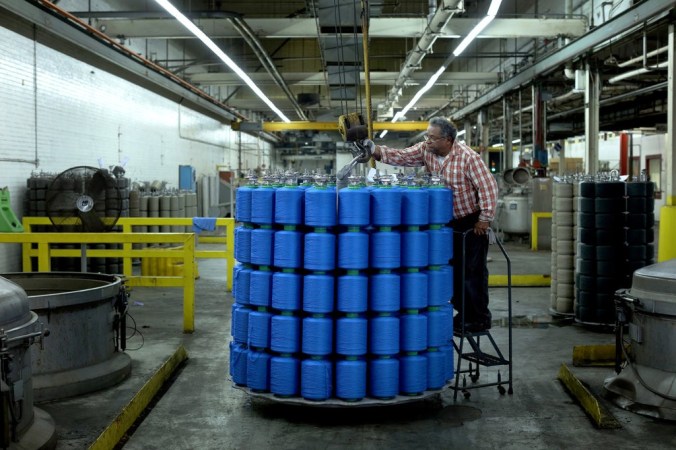
Blue state: Charlie Richmond pulls yarn from a dyeing machine on the floor of the Burlington Manufacturing Services plant in Burlington, N.C. Credit Travis Dove for The New York Times
I am not partial to either story. They make fascinating bookends:
Told that the cozy shirting fabric could no longer be made in America, one man began a yearlong quest.
An American Giant flannel shirt. Credit Travis Dove for The New York Times
Three years ago, Bayard Winthrop, the chief executive and founder of the clothing brand American Giant, started thinking about a flannel shirt he wore as a kid in the 1970s. It was blue plaid and bought for him by his grandmother, probably at Caldor, a discount department store popular in the northeast back then. The flannel was one of the first pieces of clothing Mr. Winthrop owned that suggested a personality.
“I thought it looked great,” he said, “and I thought it said something about me. That I was cool and physical and capable and outdoorsy.”…
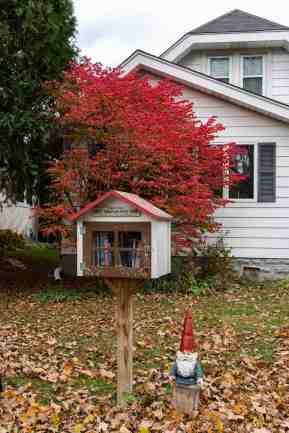
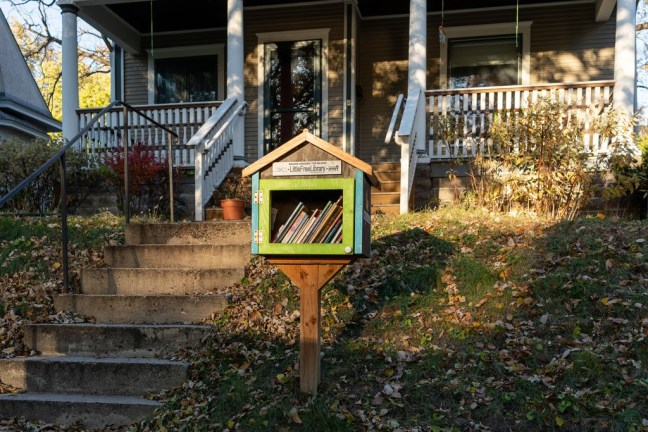
In part it is because we have paid an enormous amount of attention to libraries over the years. Also, this man’s innovation (did we really never feature it in our pages before?) was clearly in the realm of what we call entrepreneurial conservation. And maybe, just a bit, I like the idea that the first little free library (the last one displayed below) was a tribute to the innovator’s mom.
Thanks to the New York Times for getting this story just right:
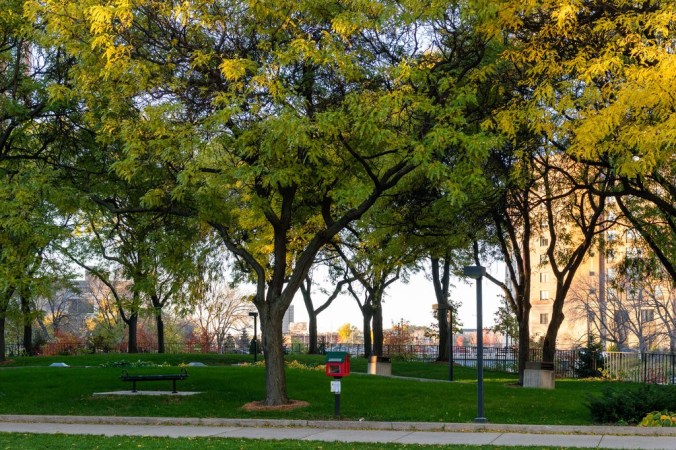
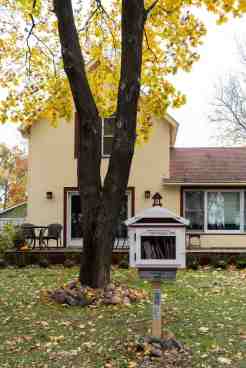
This Little Free Library enjoys the open space of Triangle Park in Minneapolis.
Todd Bol’s Little Free Library boxes, which blend the form of folk art with the function of a community water cooler, have popped up in all 50 states and in 88 countries.
By Katharine Q. Seelye Photographs by Ethan Jones
This Minneapolis library is a classic of the genre, with its Plexiglass front and gable roof, supported on a sturdy post.
Todd Bol was simply paying homage to his mother, a schoolteacher and lover of books. He built a doll-sized schoolhouse, filled it with his mother’s books and put it out for his neighbors in Hudson, Wis., as a book exchange.
Today, just nine years later, more than 75,000 such “Little Free Libraries” dot the globe, from San Diego to Minneapolis, and from Australia to Siberia.
Why did they catch on? For starters, they promote a friendly, sharing economy. No one tracks who took what. There’s no due date. No fines. You might never return a book. You might leave another instead. And, they are inherently cute. As Mr. Bol recalled, his neighbors “talked to it like it was a little puppy.”
This week, many bore a white ribbon in tribute to Mr. Bol, who died Oct. 18, in Minnesota at the age of 62. Here, a photo-essay of some of the little libraries near his hometown.
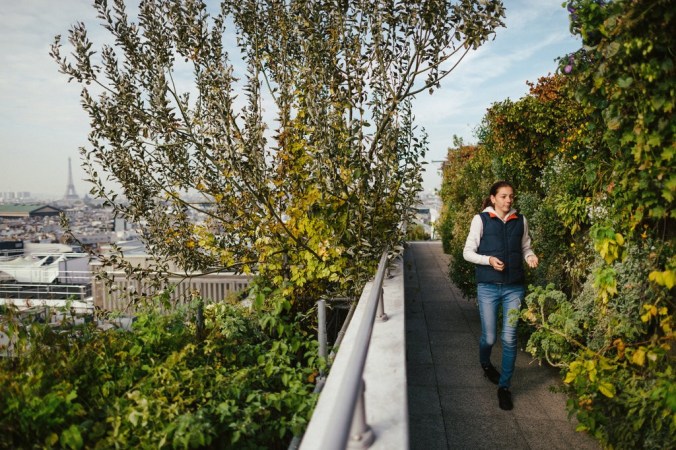
Delia Danciu, 24, a gardener, works at the Galeries Lafayette department store rooftop in Paris. Credit Dmitry Kostyukov for The New York Times
In our quest to brighten up each day with a story, a picture, or personal observation that helps us better understand the world around us, Doreen Carvajal is our source for this story in the New York Times from the former hometown of several of our long-time contributors:
Galeries Lafayette rooftop garden is part of a plan to transform city farming into a deluxe shopping attraction. Credit Dmitry Kostyukov for The New York Times
PARIS — It’s a swift ride by elevator from Galeries Lafayette’s perfume section to the grand department store’s 10th-floor luxury farm with its signature scent of sage, rosemary and compost.
The rooftop garden, lush with climbing plants, tomatoes, marigolds and strawberries, is part of a plan to transform city farming into a deluxe shopping attraction for customers yearning for an exclusive green refuge — and perhaps a taste of beer brewed from the store’s homegrown hops. Continue reading →
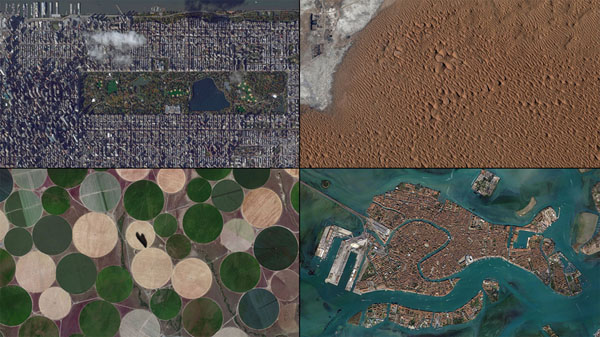
Spending time looking at the varying and beautiful images of our planet from above in Google Earth, zooming in and out at dizzying rates, I thought it would be interesting to compare all of these vistas at a fixed scale—to see what New York City, Venice, or the Grand Canyon would look like from the same virtual height. So, the following images are snapshots from Google Earth, all rectangles of the same size and scale, approximately three and a half miles (5.6 kilometers) wide by two miles (3.2 kilometers) tall—showing seven square miles (18.1 square kilometers, or 4,480 acres) of the surface of our planet in each view.
A carbon-offset project, the first of its kind in the United States, has become the Yurok’s main source of discretionary income, helping the tribe buy back thousands of acres of land. Photograph by Joel Redman
Carbon trading has featured, or at least been mentioned, only rarely on this platform, now that I stop to check. That seems impossible. But the scheme with so much promise has simply not taken off. Indigenous heritage, on the other hand, has featured in dozens of stories here since we started in 2011. Thanks to Carolyn Kormann for bringing this story to my attention, helped by two captivating photos and the fact that it highlights the approach of the Yurok Tribe (a community I had not heard of before):
“I think we did a good thing by saving the trees, but I’m not happy with it,” Jene McCovey, a tribal elder, said. “It’s not viable. It allows polluters to pollute.” Photograph by Joel Redman
When Marty Lamebear is not fighting fires, he is starting them. In the past few years, as a member of the Yurok Tribe Forestry Program’s fire department, he has been helping revive the controversial practice of prescribed burns to protect and restore the coastal redwood forests of northern California. Lamebear is also a hunter, fisherman, and dancer. In his free time, he makes tribal regalia for ceremonial dances from parts of elk, deer, minks, and porcupines, which he shoots or finds already dead, and from frozen eagles that he orders from the U.S. Fish and Wildlife Service. A prescribed burn, what Lamebear calls a culture burn, creates prairies within the forest, which attract those animals. “At first, we couldn’t really tell its effects,” he said. “But, after about six years now, we can honestly start seeing the landscape open up, animals come around.” They also serve another purpose, he said. “It’s insurance for our carbon.” Continue reading →
“Once we start to try to reduce carbon emissions, we’ll be surprised that it wasn’t as hard as we anticipated. The danger with very alarming forecasts is that it will make people feel apathetic and hopeless.
“One problem today is that people think protecting the environment will be so costly and so hard that they want to ignore the problem and pretend it doesn’t exist. Humans are capable of amazing accomplishments if we set our minds to it.”
Let’s decide together to do something, seems to be his message. I learned about this urban tree-planting initiative, news of a president’s abdication of responsibility, and this economist’s optimistic message on the same day I read about a 15-year old climate activist who has decided to do something where she sees her government failing to take action. She has decided at a very young age to do what she can regardless of the daunting odds. So thanks to Margaret Renkl a Nashville-based contributing opinion writer for The New York Times, for bringing this initiative to my attention, as a reminder to do something:
When cities grow, green space dies. Replanting it has been shown to lift the human spirit.
A tale of two trees in Nashville. A mature tree in England Park, left, and a newly planted tree at Wright Middle School.
NASHVILLE — The scene in a tiny pocket park outside Plaza Mariachi here on Nolensville Pike last Wednesday was like a tableau from a Norman Rockwell painting, 21st-century style. Surrounded by signs advertising the Hispanic Family Foundation, Dubai Jewelry, the Dominican Barber Shop and restaurants offering Peruvian, Chinese, Mediterranean and Indian food — as well as a Game Stop franchise and H&R Block — was a small sign that read, “Today: Free trees.”
Photographs by William DeShazer for The New York Times
The arrow on the sign pointed to a pop-up canopy where the Nashville Tree Foundation was hosting its fourth tree giveaway of October. A family standing under the canopy was posing for a photo with the sapling they had just adopted. Carolyn Sorenson, executive director of the foundation, was taking the picture: “Say ‘trees’!” she said.
The tree giveaway at Plaza Mariachi happened to fall on the very day that Nashville’s mayor, David Briley, announced a campaign to restore and enlarge the city’s tree canopy. The effort, called “Root Nashville,” will be overseen by the city and the Cumberland River Compact, an environmental nonprofit, and funded through a combination of public, corporate, foundation and private dollars. Together with several municipal departments and other nonprofit organizations, the initiative aims to plant 500,000 trees in Davidson County by 2050.
Many of these newly planted saplings will replace very large, very old trees that have been lost to Nashville’s meteoric growth — a population increase of more than 45 percent since 2000. As the city has grown, the city’s trees have fallen: deliberately felled by developers to make room for new construction or unintentionally killed as a side effect of nearby building. Just since 2008, the tree canopy in the urban core has dropped from 28 percent to 24 percent, a loss of roughly 9,000 trees a year. Continue reading →
Just this moment, as I started today’s post, I learned I had missed a 50th birthday party. We tend to like round numbers, even if they do not mean much–why should the 50th be any more important than the 49th or 23rd? For whatever reason, a centenary or half-centenary, or bicentennial all seem to have a bigger ring. So, happy birthday to this book (last year) that I searched for after reading Susan Orlean’s essay on her personal history with libraries and books:
…My family was big on the library. We were very much a reading family, but we were more a borrow-a-book-from-the-library family than a bookshelves-full-of-books family. My parents valued books, but they had grown up in the Depression, aware of the quicksilver nature of money, and they had learned the hard way that you shouldn’t buy what you could borrow. Because of that frugality, or perhaps despite it, they also believed that you should read a book for the experience of reading it. You shouldn’t read it in order to have an object that had to be housed and looked after forever, a memento of the purpose for which it was obtained. The reading of the book was a journey. There was no need for souvenirs…
I have just recently finished unpacking from storage a lifetime’s worth of books–actually multiple lifetimes because in addition to my own family of four’s lifetimes there are also books from our parents’ and grandparents’ personal collections. And the essay got me thinking about whether I had a personal favorite book, and if so whether I have a “souvenir” of it.
I had taken a moment after emptying a box to leaf through this book that qualifies as a contender. I remember where I was when I purchased it, and where I first read it. But the essay I just read got me thinking about the importance of libraries to my own history with reading, so I focused my thought on the question what was my first favorite book. And the book above was that book, without question, in part because it was what got me to return to the library for more books. Not much more to say on that, but if you are a bibliophile or a libraryphile, if you consider librarians heroes, or any such thing, the essay may be for you.
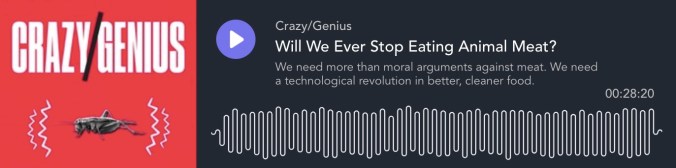
Derek Thomson and his Crazy Genius crew over at the Atlantic’s podcast division have hit on a winning formula, at least for me. They take a big issue question we hear about and think about frequently, like the question of what to do about meat consumption–as in what to do about the extremely obvious problem of meat consumption levels–and they apply some creative pod knowhow. One of the best motivators for going meatless, or at least eating less meat, that I have come upon in ages.
Americans eat more meat now than ever. That’s a problem for the planet’s future. Animal farming takes up 30 percent of the earth’s landmass (the equivalent of Asia), and livestock causes one-sixth of global greenhouse gas emissions. We need more than moral arguments against meat. We need a technological revolution in better, cleaner food.
If you do not have half an our for the podcast, take five minutes to read the summary here:
There are two big truths about eating meat from animals.
First, animal flesh imposes a high moral and ecological price for a tender medallion of food. Factory farming incurs the torturous treatment of millions of chickens, cows, and pigs each year. This constitutes a rolling moral catastrophe. What’s more, one-sixth of the world’s greenhouse gas emissions are directly attributable to raising livestock, and the figure is rising as more countries enter the global middle class. For most Americans, cutting meat out of their diets would reduce global warming more than giving up driving. Continue reading →


 Before moving to Costa Rica in the mid-1990s
 On the desk were drafts of a dissertation whose summary, on page 131, states: “…the results of the first hypothesis suggest that lodging firms in a tourism destination, such as Niagara Falls, should be directly involved with the strengthening and support of the institutional environment in which they operate.”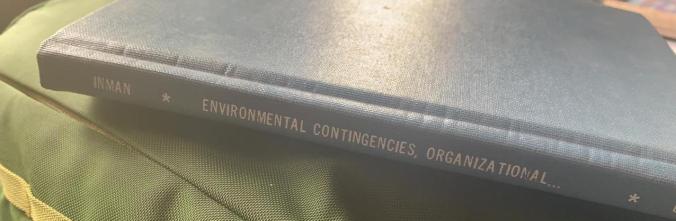
 When we saw this hand and tree side by side in that meeting,
















 Organikos