Farm Innovations From Kampala

1200 (2).jpg

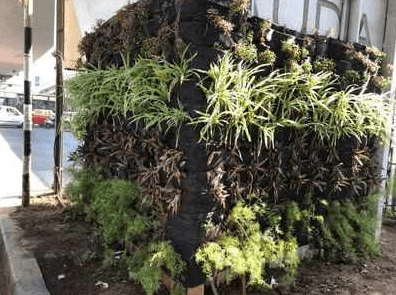
Urban farms in Kampala, Uganda, make the most of their limited space. Photograph: Nils Adler

Vertical farming, urban farming, innovations we have seen mostly from industrialized places, are important in developing countries as well:

Rooftop farming: why vertical gardening is blooming in Kampala

Ugandans are finding creative solutions to the growing challenges of urbanisation

1200 (3).jpg

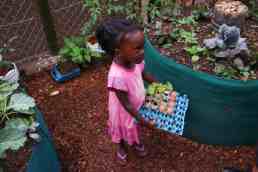
Growth spurt: a child carries a tray of plants in eggshell flowerpots. Photograph: Nils Adler

When Martin Agaba realised his urban farm had run out of space, he decided the solution was not to expand outwards but upwards.

“We realised we had to use the roof,” he says. Of all the innovations that have galvanised people in his district in the Ugandan capital Kampala to grow their own food, these vertical box plantations remain his favourite.

Kwagala farm, located on half an acre of land, is the brainchild of Diana Nambatya, a professor in public health, who began growing vegetables to save money on food in 2010.

After receiving two cows as a dowry, she decided to use their dung to generate biogas for her home. Her burgeoning urban farm soon attracted the attention of the neighbours, and in 2012 she started training women at a small demonstration centre. Continue reading

Protecting Nature & Defying The Odds

23akagera2-jumbo-v2.jpg

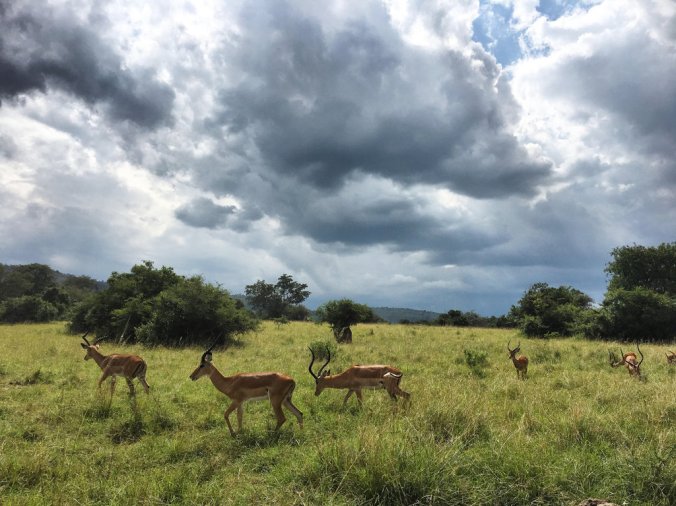
On a game drive in Akagera. Shannon Sims

Thanks to Shannon Sims for this story of a refuge defying the odds:

A Rwandan Game Park Defying the Odds

Despite modest tourism numbers, Akagera National Park is a success story in the making, particularly considering that, like its host country, it survived catastrophe.

23akagera-jumbo-v2

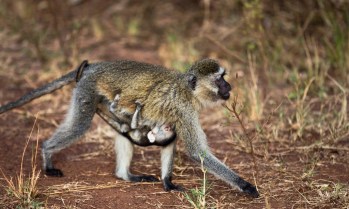
A velvet monkey and her baby in Akagera National Park. The Rwandan park is a success story, despite modest tourism numbers. Credit Ben Curtis/Associated Press

The road through Akagera National Park in eastern Rwanda was blocked. Two giraffes had positioned themselves smack in the middle of the dirt road and were rubbing their necks together. In the car, with a driver and a guide, my cell service was long gone; there was nothing to do but sit back, relax and enjoy the show.

Right around this time of year, to the east of Rwanda’s borders, in Tanzania and Kenya, big packs of tourists are stumbling over each other to get the perfect photo of a scene like this. They’re driving through protected areas like Serengeti National Park and the Maasai Mara National Reserve in caravans of Land Rovers, each packed so tightly that peoples’ binocular straps get tangled up. It makes sense: the animal migrations that occur in this part of the world these months are rightly considered by many to be the greatest natural show on earth. Continue reading

Libraries As Palaces For The People

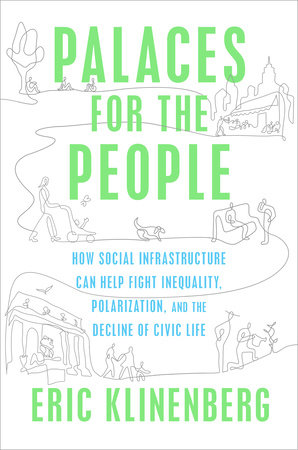
9781524761165We have had more stories in seven years about libraries, and librarians and books than most other topics, so we are pleased to pass along this reference to a book about libraries (among other essential elements of social infrastructure). In 20 minutes on this podcast the ideas in this book are discussed by the author:

Eric Klinenbergprofessor of sociology and director of the Institute for Public Knowledge at New York University and the author of Palaces for the People: How Social Infrastructure Can Help Fight Inequality, Polarization, and the Decline of Civic Life (Crown, 2018), argues that the future of democracy lies in shared spaces, like libraries and parks.

Greening Indian Cities

Another creative commitment to Green Innovation. Thanks to the Times of India for this story about how Ahmedabad embraces green walls, goes vertical:

Aapnu Amdavad has a lot to boast about. From being the first city to have been declared India’s first Unesco World Heritage City to being home to some prime educational institutes, this city has gained prominence on the global map. Having said that, the city has its share of dark spots too. The fast diminishing green cover in the city is one of them. India’s fifth largest city has a tree cover of approximately 35 crores (as per a 2017 census), which although is 13% more than the number of trees in 2013, is still not enough. The ongoing metro project has also led to a lot of felling of trees. Taking into consideration all this, Ahmedabad Municipal Corporation (AMC) has decided to build vertical gardens in the city. It recently set up a small vertical garden along one of the pillars at the flyover at Helmet crossroads.

What are vertical gardens? Essentially vertical gardens are the kind of gardens that grow vertically, along walls or pillars, with the help of trellis (which are wooden frames) or similar support systems. Continue reading

A Story That May Make Your Day

CalleCarrizalView

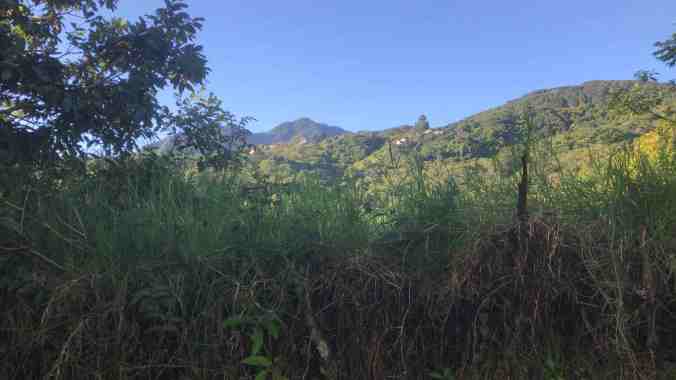
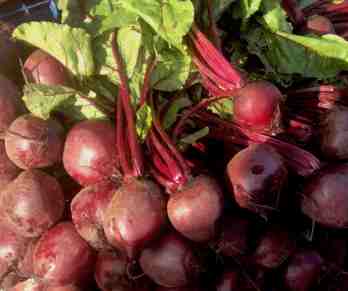
FMBeets.jpgThe view above is a stretch of Continental Divide passing through Costa Rica’s central valley. The snapshot is taken from the road close to our home. I hike these mountains most mornings. On Saturdays I visit the farmer’s market in the town square. Beets were on my shopping list this week. One of the very few culinary banes of my youth, beets are now a favorite. A single shot glass of borscht, served to me in Leeuwarden, Holland solved that problem for me in 2004.

FMPejibaye.jpg

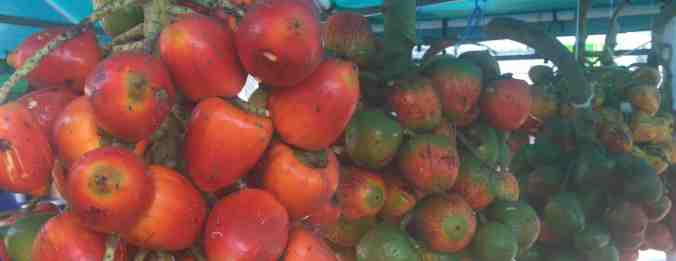
Pejibaye, a fruit from one of the many palm varieties growing in this region, is considered a local staple. We find that it has a resemblance to chestnut, so we use it to prepare stuffing to accompany the roasting of something or other on the fourth Thursday of November.

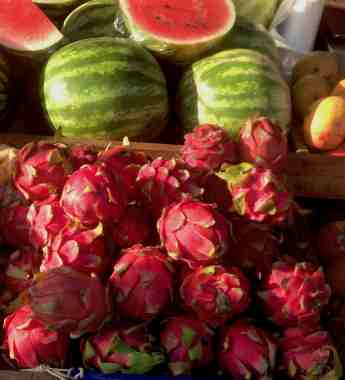
FMDragonFruitThis time of year dragon fruit appears and if it is a sunny morning their color is motivational. That is, I find their color energizing.

But something about the name must explain why, as with beets in my youth, I have not been motivated to eat this fruit.

I am waiting for someone to demonstrate the best way.

AmesTrue.jpg

I listen to a mix of music and podcasts during the mountain walks. Music energizes the steep uphill grinds while podcasts fill the downhills and straightaways, where I can concentrate. I recommend clicking on the My Ames Is True tab here and I also recommend not reading the blurb describing what it is about. Enjoy the surprise. This podcast is best listened to with no introduction, except for the fact that it is told by Michael Lewis on This American Life. It may make your day.

Immigrants Get The Job Done, And Then Some

merlin_138352845_f571bf2c-060d-424c-93b6-afdaa2d56fe8-superJumbo.jpg

Hamdi Ulukaya, the founder and chief executive of Chobani, arrived in the United States 24 years ago with $3,000 to his name. He now runs a company with annual sales of $1.5 billion.CreditCole Wilson for The New York Times

A few contributors on this platform are children of immigrants. Some are immigrants. And we love Greek yogurt. And we love a good shepherd to riches story. So, why not celebrate one of our own, so to speak?

Hamdi Ulukaya of Chobani Talks Greek Yogurt and the American Dream

A Turkish immigrant of Kurdish descent, Mr. Ulukaya brought Greek yogurt to the mainstream. Along the way, he began hiring refugees, a move that drew threats from fringe websites and far-right commentators.

Hamdi Ulukaya arrived in the United States in 1994 with $3,000 in his pocket. He was an immigrant from Turkey, hoping to learn English and find his way in a new country.

Today, Mr. Ulukaya is a billionaire. Chobani, the Greek yogurt maker he founded in 2007, has annual sales of about $1.5 billion, and Mr. Ulukaya owns most of the privately held company. Continue reading

The Mystery of the Lorax: Solved

Dr. Seuss has held an important place in my life, stretching from my own childhood and into parenthood, and connecting the dots between the pure joy of reading and powerful messages keeps him at the top. So what fun to discover the story, species and science behind the inspiration for his most impactful books!

Who Was the Real Lorax? Seeking the Inspiration for Dr. Seuss

What inspired the creature who was “shortish and oldish and brownish and mossy?” The one who spoke in a voice that was “sharpish and bossy?” He spoke for the trees, yet he called them his own. All that he left “in this mess was a small pile of rocks, with the one word … ‘UNLESS.’”

In 1970, millions of people observed Earth Day for the first time, and the Environmental Protection Agency was born. Joni Mitchell’s “Big Yellow Taxi” topped the charts.

And in La Jolla, Calif., Theodor Geisel, also known as Dr. Seuss, was fighting to keep a suburban development project from clearing the Eucalyptus trees around his home. But when he tried to write a book about conservation for children that wasn’t preachy or boring, he got writer’s block.

At his wife’s suggestion to clear his mind, they traveled to the Mount Kenya Safari Club, an exclusive resort where guests watched animals along Kenya’s Laikipia plateau.

And if you haven’t guessed by now, it was there that “The Lorax” took shape — on the blank side of a laundry list, nearly all of its environmental message created in a single afternoon. Continue reading

Latinovegan

gettyimages-932406182-db3ad2e5b465008ac099992638ce546d7e2c4c6a-s1400-c85.jpg

Pesto and pulled jackfruit tacos. In Southern California, working-class Mexican-American chefs are giving traditionally meaty dishes a vegan spin. Evi Oravecz/Green Evi/Picture Press/Getty Images

We are happy to see another story posted by Gustavo Arellano in the salt files at National Public Radio (USA):

Carne Asada, Hold The Meat: Why Latinos Are Embracing Vegan-Mexican Cuisine

vegana_mexicana_family-7ecccab3787805dac706d2b4e23d2b64e8c97b73-s1400-c85.jpg

Loreta Ruiz (center) runs La Vegana Mexicana, a food pop-up based in Southern California, with her children, Loreta Sierra (left) and Luis Sierra. Gustavo Arellano/for NPR

Tall, dreadlocked Josh Scheper knew he was out of place as he surveyed the scene at a Santa Ana, Calif., parking lot on a Sunday morning this past April. And the 46-year-old loved it.

Hundreds of people waited in line at stalls for vegan food, but few people looked like the Los Angeles resident. Nearly everyone in the crowd was young and Latino, as were the chefs. The food on sale was Mexican — but not hippie-dippy cafe standbys like cauliflower tacos, or tempeh-stuffed burritos. Instead, chefs reimagined meaty classics that were honest-to-goodness bueno. Continue reading

Alternative Foodstuffs For Healthier, More Sustainable Meals

cauliflower-superJumbo.jpg

Tony Cenicola/The New York Times

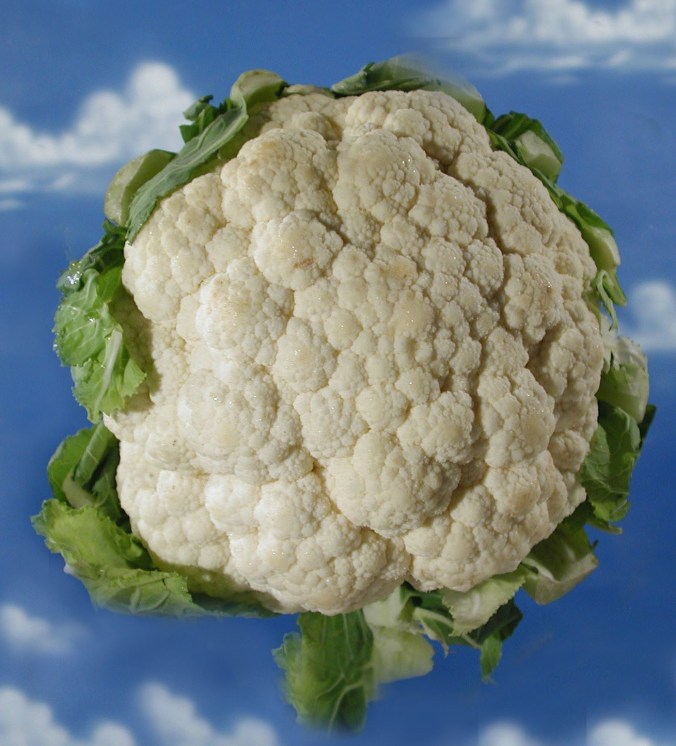
Several of us who contribute here recently tested homemade pizza using the product pictured below, we pass the story along to our foodie friends, vegetarian and otherwise. Our thanks to Anahad O’Connor for this:

The Ascension of Cauliflower

Food companies are capitalizing on the low-carb, gluten-free trend by using vegetables like cauliflower to replace flour, rice and other simple carbs.

12sci_pizza-superJumbo.jpg

Pizza made with a cauliflower crust.

For Gail Becker, a former marketing executive who has two sons with celiac disease, finding gluten-free pizza that her kids could enjoy has long been a challenge.

So a few years ago, Ms. Becker started making her own, using a crust that contains cauliflower instead of white flour. Her sons loved her cauliflower creation so much that in 2016 Ms. Becker quit her job and launched her own company, Caulipower, which sells frozen cauliflower pizzas and cauliflower baking mix.

12sci_pasta-articleLarge.jpg

Cauliflower pasta looks like pasta made from wheat.

What Ms. Becker did not anticipate is how quickly it would catch on. Caulipower is now a multimillion-dollar brand, with cauliflower pizzas sold in 9,000 stores nationwide, including Whole Foods, Walmart, Safeway and Kroger.

“One thing that we were very insistent on when we started our brand is that we reference cauliflower in the name,” said Ms. Becker, who lives in Los Angeles. “We want to celebrate the vegetable. We’re not trying to hide it or sneak it in.” Continue reading

What Is It With Pigeons?

Negativ004.jpg

Photographs courtesy Rorhof / Stadtarchiv Kronberg

Thank you Andrea DenHoed. We did not know how much we should appreciate them:

The Turn-of-the-Century Pigeons That Photographed Earth from Above

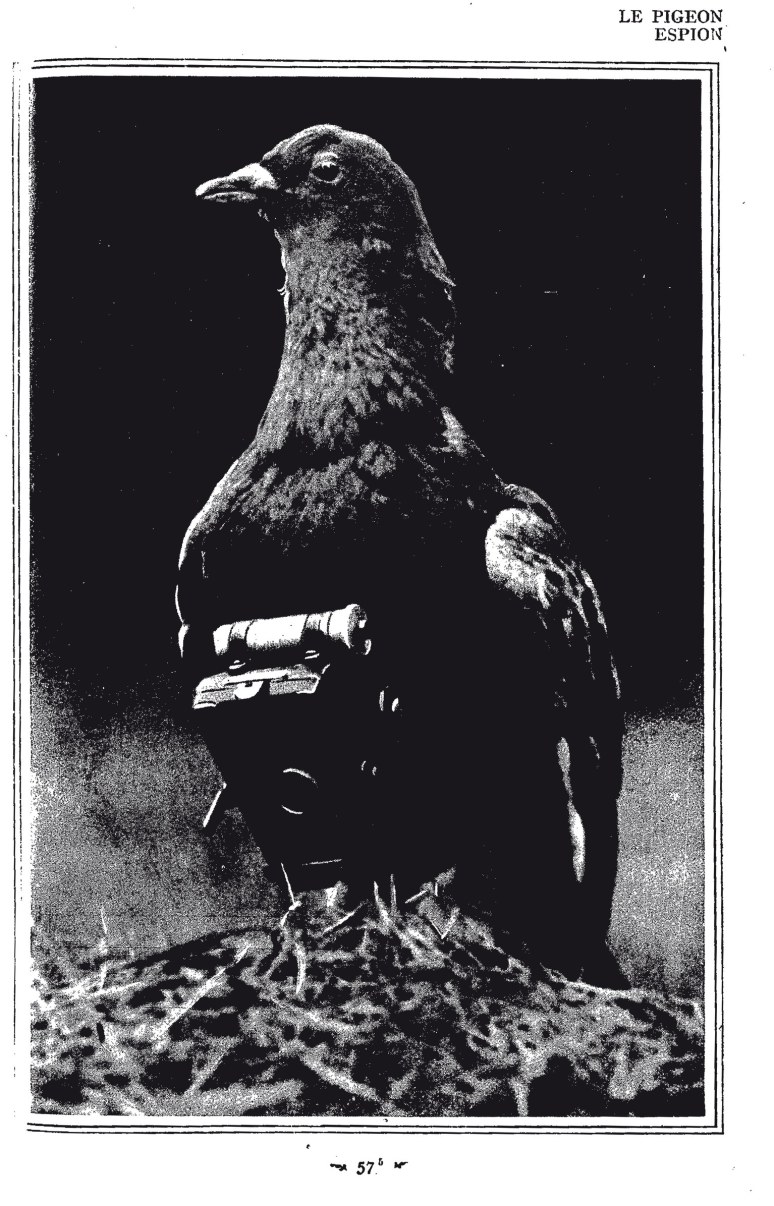
_3.jpgIn 1907, just a few years after the Wright brothers lifted off in Kitty Hawk, and while human flight was still being measured in metres and minutes, Dr. Julius Neubronner, a German apothecary, submitted a patent application for a new invention: the pigeon camera. The device was precisely what it sounds like—a small camera fitted with straps and equipped with a timer so that pigeons could carry it and take photos in flight. Neubronner first used the device on his own flock of homing pigeons, which he sometimes employed to deliver prescriptions. In the following years, he showed his camera at international expositions, where he also sold postcards taken by the birds. Additionally, he developed a portable, horse-drawn dovecote, with a darkroom attached to it, which could be moved into proximity of whatever object or area the photographer hoped to capture from on high. Continue reading

Plastic Reduction Success Story

5150 (1).jpg

A UK levy of 5p per bag introduced in 2015 has already reduced single-use plastic bags by 85%. Photograph: Stuart Kelly/Alamy Stock Photo

We never tire of reporting on efforts at plastic-reduction, so thanks to Juliette Jowit and the Guardian for this update:

Drop in plastic bags littering British seas linked to introduction of 5p charge

Scientists find an estimated 30% drop in plastic bags on the seabed in the same timeframe as charges were introduced in European countries

A big drop in plastic bags found in the seas around Britain has been credited to the introduction of charges for plastic bags across Europe. Continue reading

If You Happen to be In New York: Baya, Pablo & Henri

Femmes attablées (Women at table), 1947. Gouache on board, 19 1⁄2 x 25 7⁄16 in. (49.5 x 64.6 cm). Collection of Adrien Maeght, Saint-Paul-de-Vence, France

How is it possible that we’re just learning of this autodidactic painter who inspired two of the 20th Century’s greatest painters now? If you’re lucky enough to be in New York through the end of March, get yourself to the NYU Grey Art Gallery and bask in color, especially during the current snowy days!

Baya: Woman of Algiers is the first North American exhibition of works by the self-taught Algerian artist Baya Mahieddine (1931–1998). Known as Baya, she was born in Bordj el-Kiffan and orphaned at age five. Encouraged by her adoptive French mother to pursue art, she began as an adolescent to paint gouaches and make ceramics. Her work was soon discovered by fabled gallerist Aimé Maeght who, along with André Breton, organized an exhibition in Paris in 1947. Baya’s colorful depictions of women, rhythmic patterns, and bright palette drew the attention of Henri Matisse and Pablo Picasso, with whom she later collaborated in the renowned Madoura pottery studio in Vallauris. Celebrated in both Algeria and France, Baya has yet to gain international recognition. Woman of Algiersreexamines Baya’s career within contemporary, Surrealist, “outsider,” and Maghreb post-colonial art contexts.  The exhibition features works drawn from the Maeght Family Collection, Paris, as well as several Madoura ceramics by Picasso and a video by London-based French-Algerian artist Zineb Sedira. Baya is curated by Natasha Boas and will be accompanied by an illustrated catalogue with essays by  Boas, André Breton, Assia Djebar, and Menna Ekram.

Enlightenment & Optimism

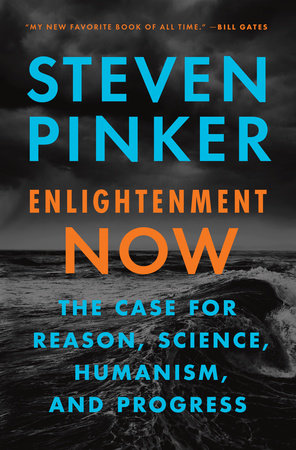
9780525427575.jpegSteven Pinker has featured in these pages plenty of times for the quality of his writing. Recently he was featured in a joint interview with Bill Gates that we meant to link to, but never did. And meanwhile we linked to this story about optimism; now this:

…If you think the world is coming to an end, think again: people are living longer, healthier, freer, and happier lives, and while our problems are formidable, the solutions lie in the Enlightenment ideal of using reason and science.

Is the world really falling apart? Is the ideal of progress obsolete? In this elegant assessment of the human condition in the third millennium, cognitive scientist and public intellectual Steven Pinker urges us to step back from the gory headlines and prophecies of doom, which play to our psychological biases…[continue reading on the book’s website]

The book came to our attention thanks to a smart op-ed:

merlin_132531638_bf5b1cdd-75e4-4b98-96d1-b77255ff8edd-master768

Steven Pinker, a psychology professor at Harvard, calls himself an Enlightenment man. Credit Chona Kasinger for The New York Times

…Pinker’s philosophical lens prevents him from seeing where the real problems lie. He calls himself an Enlightenment man, but he’s really a scientific rationalist. He puts tremendous emphasis on the value of individual reason. The key to progress is information — making ourselves better informed. The key sin in the world is a result either of entropy, the randomness that is built into any system, or faith — dogma clouding reason. Continue reading

Why Optimism Is Not Naive Right Now

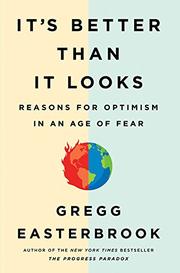
9781610397414If you only have a minute, this will do, courtesy of Kirkus Review (read the remaining couple paragraphs of that review by clicking on the book cover to the left):

Cheer up, world: we’re killing each other less, except in our cars, and living in a boom. Thus this contrarian pep talk by longtime Atlantic contributor Easterbrook (The Game’s Not Over: In Defense of Football, 2015, etc.).

Optimism is out of style, but by the author’s account, it shouldn’t be. When Donald Trump came into office, the unemployment rate was low enough that the number “would have caused economists of the 1970s to fall to their knees and kiss the ground.”…

But in less than half an hour you can get the author’s spoken digest of the book here:

Easterbrook1.jpg

And if that interests you, and you want more but not the whole book, try this, courtesy of Carnegie Council for Ethics in International Affairs:

Rules Of Experiencing Nature, Reconsidered

tnc_76472733_preview_cropped

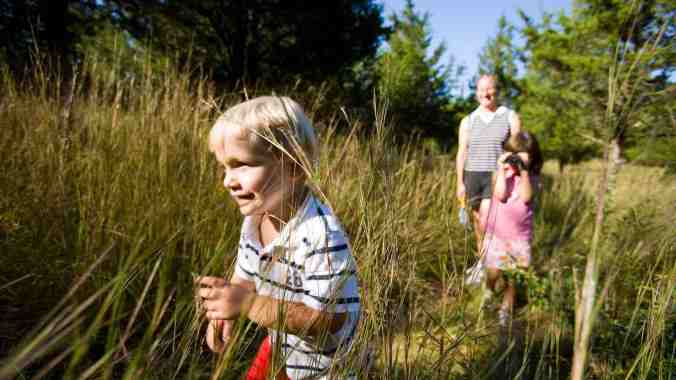
A woman and her young children hike through a grassy field in Pleasant Valley Preserve near the Eightmile River in Lyme, Connecticut. Photo © Jerry Monkman

Just when we thought we knew what we were doing out in nature, this:

Why Staying on the Trail Is Bad for Nature

Stay on the trail. Look, don’t touch. Take only photographs, leave only footprints.

These and similar rules have become a standard component of a refined environmental ethic; any reasonable outdoor education class is going to emphasize them.

I have a confession to make: As a kid I violated every one of those rules, frequently and without guilt. It made me a conservationist. Continue reading

Blue Planet II’s Attenborough Masterpiece

Blue Planet II_EP03_Coral Reefs

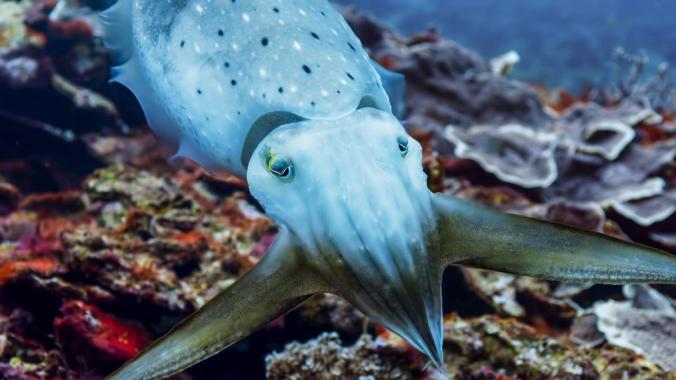
The broadclub cuttlefish is one of the psychedelic creatures featured in “Blue Planet II.” Photograph courtesy BBC

blue_planetWe have not linked to many television reviews, and the reason is simply that we instead mostly promote going and seeing instead of sitting and watching.

But this one seems a perfect exception to the norm because the series narrator is such a frequent guest in these pages, for good reason after many good reasons. This show may be his own sense of a masterpiece, if you consider what he says in a recent interview to a confirmed urbanist, which is worth half an hour of listening to in addition to the review below:

“Blue Planet II” Reviewed: The Ocean Continues to Impress

The seven-episode follow-up to the 2001 series flexes the BBC’s mastery of a genre that it created.

By Troy Patterson

The nature documentary “Blue Planet II” is oceanic in topic, tone, scope, and majesty. A production of the BBC Natural History Unit, the seven-episode series flexes its broadcaster’s mastery of a genre that it created. Over excellent footage shot on a circumglobal photo safari, the venerable narrator David Attenborough orates zoological narratives as if delivering a state-of-nature address. “Blue Planet II” follows the network’s “The Blue Planet,” which dropped in 2001, but it is less a sequel than a subsequent quest, like the second voyage of the H.M.S. Beagle, or Apollo 14. Continue reading

Werner, Syme & Darwin

Nijhuis-The-Book-That-Colored-Charles-Darwins-World-Secondary-Featured

In his nearly five years aboard H.M.S. Beagle, Charles Darwin catalogued a dizzying array of new creatures. But how to show them to the people back home? Illustration by R. Fresson

9781588346216

It is a fine way to start a new week, thinking of a young person setting sail, and to narrow the focus of that thought, consider color.  We appreciate the notice by Michelle Nijhuis in the current issue of the New Yorker magazine about the upcoming re-issuing of this book, and her comment about it is welcome. Less welcome is the fact that if you click on her link to the book, or search on the title of the book with a fresh search, you will be directed to Amazon. At least if you are searching from the USA. Even from a USA-based search you can find alternatives, but from sources in places such as this excellent shop in the UK, or this one in Scandinavia. With that in mind, if the review below makes you think about purchasing the book, please consider clicking the image to the left which will link you to a bookstore in the USA that is offering it for pre-sale. Either way, enjoy this for now:

The Book That Colored Charles Darwin’s World

“I had been struck by the beautiful colour of the sea when seen through the chinks of a straw hat,” Charles Darwin wrote, in late March, 1832, as H.M.S. Beagle threaded its way through the Abrolhos Shoals, off the Brazilian coast. The water, he wrote, was “Indigo with a little Azure blue,” while the sky above was “Berlin with [a] little Ultra marine.”

Nomen1Darwin, then twenty-three, was only three months into the nearly five-year adventure that would transform his life and, eventually, the way that humans saw themselves and other species. As the voyage’s so-called scientific person, he would collect masses of rocks, fossils, animals, and plants, periodically shipping his specimens to Cambridge in containers ranging from barrels to pillboxes. Like other naturalists of his time, though, his primary documentary tool was the written word, and during the voyage he drew many of his words from a slim volume called “Werner’s Nomenclature of Colours,” published in 1814 by the Scottish artist Patrick Syme.

Nomen2Syme’s guide, a facsimile of which will be released in early February by Smithsonian Books, contains samples, names, and descriptions of a hundred and ten colors, ranging from Snow White to Asparagus Green to Arterial Blood Red to, finally, Blackish Brown. Based on a color-naming system developed in the late eighteenth century by the German mineralogist Abraham Werner, the guide is full of geological comparisons: Grayish White is likened to granular limestone, Brownish Orange to Brazilian topaz. Syme, a flower painter and art teacher, added comparisons from the living world. To Werner’s eyes, the Berlin Blue that Darwin saw in the Atlantic sky resembled a sapphire; to Syme, the wing feathers of a jay. Continue reading

Hidden Numbers, Brought Into Daylight

FlatironThe mission of the Flatiron Institute is to advance scientific research through computational methods, including data analysis, modeling and simulation.

The institute, an internal research division of the Simons Foundation, is a community of scientists who are working to use modern computational tools to advance our understanding of science, both through the analysis of large, rich datasets and through the simulations of physical process.

If you are seeing the name above for the first time, so are we. It has come to our attention through this profile below. The questions raised are important. The answers, to the degree there are any, are fascinating. Thanks to longform journalism, which we need now more than ever, we have profiles like this:

Jim Simons, the Numbers King

Algorithms made him a Wall Street billionaire. His new research center helps scientists mine data for the common good.

171218_r31148 (1).jpg

Simons is donating billions of dollars to science. But much of his fortune, long stashed offshore, has never been taxed. Illustration by Oliver Munday; photograph by Tim Sloan / AFP / Getty

By D. T. Max

A visit to a scientific-research center usually begins at a star professor’s laboratory that is abuzz with a dozen postdocs collaborating on various experiments. But when I recently toured the Flatiron Institute, which formally opened in September, in lower Manhattan, I was taken straight to a computer room. The only sound came from a susurrating climate-control system. I was surrounded by rows of black metal cages outfitted, from floor to ceiling, with black metal shelves filled with black server nodes: boxes with small, twinkling lights and protruding multicolored wires. Tags dangled from some of the wires, notes that the tech staff had written to themselves. I realized that I’d seen a facility like this only in movies. Nick Carriero, one of the directors of what the institute calls its “scientific-computing core,” walked me around the space. He pointed to a cage with empty shelves. “We’re waiting for the quantum-physics people to start showing up,” he said. Continue reading

Catching the Entomology Bug

Sophia Spencer and Morgan Jackson co-wrote a scientific paper on Twitter, entomology and women in science, after a tweet about Sophia’s love for bugs went viral

It’s good to find an inspiring story highlighting a child’s interest in scientific exploration and the support of parents and the entomological community to foster that passion. Thanks to NPR for bringing it to our attention.

Once Teased For Her Love Of Bugs, 8-Year-Old Co-Authors Scientific Paper

Sophia Spencer, 8, loves bugs — especially grasshoppers. She’s an expert on insects, and likes to give her littlest friends an occasional ride on her shoulder.

That used to earn her mockery from her peers. But now it’s earned her a massive outpouring of support — and a byline in the Annals of the Entomological Society of America.

Everything changed after Sophia’s mom, Nicole Spencer, reached out to scientists for support last year.

She wrote to the Entomological Society of Canada and explained the dilemma. Her daughter wanted to know if she could learn more about bugs as a job, but her mom wasn’t sure how to encourage her. And she wanted to reassure her that her entomological enthusiasm wasn’t weird.

Mission accomplished. Continue reading

Spaceship Earth

We recently encountered Parley for the Oceans when Doug Aitken’s water pavilion installation came onto our radar.

Both the collaborative ethos and the focus of the cause are dear to our hearts.

Parley is the Space Where Creators, Thinkers, and Leaders come together to raise awareness for the beauty and fragility of our oceans and collaborate on projects that can end their destruction.

Parley for the Oceans addresses major threats towards our oceans, the most important ecosystem of our planet.

We believe the power for change lies in the hands of the consumer – given he has a choice – and the power to shape this new consumer mindset lies in the hands of the creative industries.

Artists, musicians, actors, filmmakers, fashion designers, journalists, architects, product inventors, and scientists have the tools to mold the reality we live in and to develop alternative business models and ecologically sensible products to give us earthlings an alternative choice, an everyday option to change something.

Continue reading