
From Behind the Wheel: Barcelona Fans On the Move
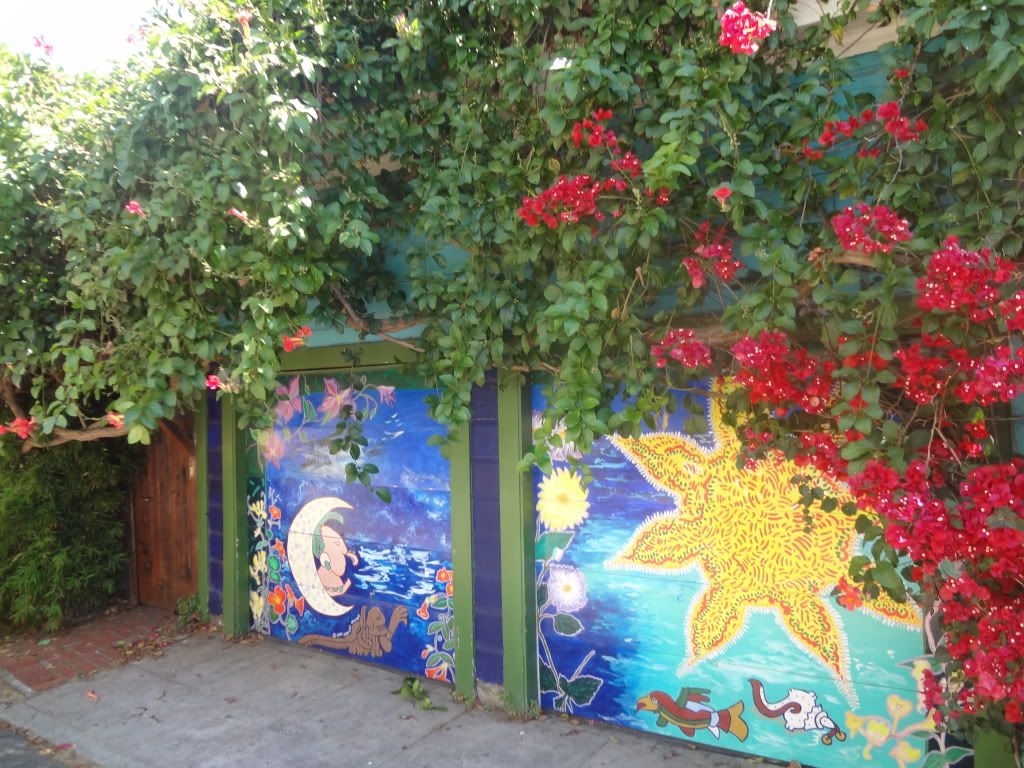 This is the first in a series of posts on a summer trip. Sorry it’s not quite summer anymore; things have been busy, but hopefully I’ll get the rest of these out before too long!
A little bit of background: I spent this summer studying ancient Greek language at the University of Berkeley. In late May, a few days before I was scheduled to catch my plane at Hartsfield-Jackson airport for Berkeley, I invited a few of my best friends over to bid them a fond farewell for the summer. Suffice to say, we ended up on the roof at three a.m. discussing how incredible it would be to do a cross-country road trip after my class was over. Now, we had thrown around this possibility dozens of times before, but this time, everything was a bit different. For one, none of us was a kid anymore; Tyler, my next door neighbor, had just graduated from University of Georgia; my brother, Carl, is going into his senior year at Emory University; and Nick, a good friend from high school, and I are both going into our junior years (Emory for me, Haverford for him). Moreover, all of us were itching to get out of our quiet suburbs and see some of the world before the relentless march of years and responsibility would make it impossible for us to take the trip together. Before we knew it, we were taking solemn oaths that we’d be hitting the road in shortly more than two months. Obviously, we did, or I wouldn’t be writing this now.

Trivandrum

Ernakulam
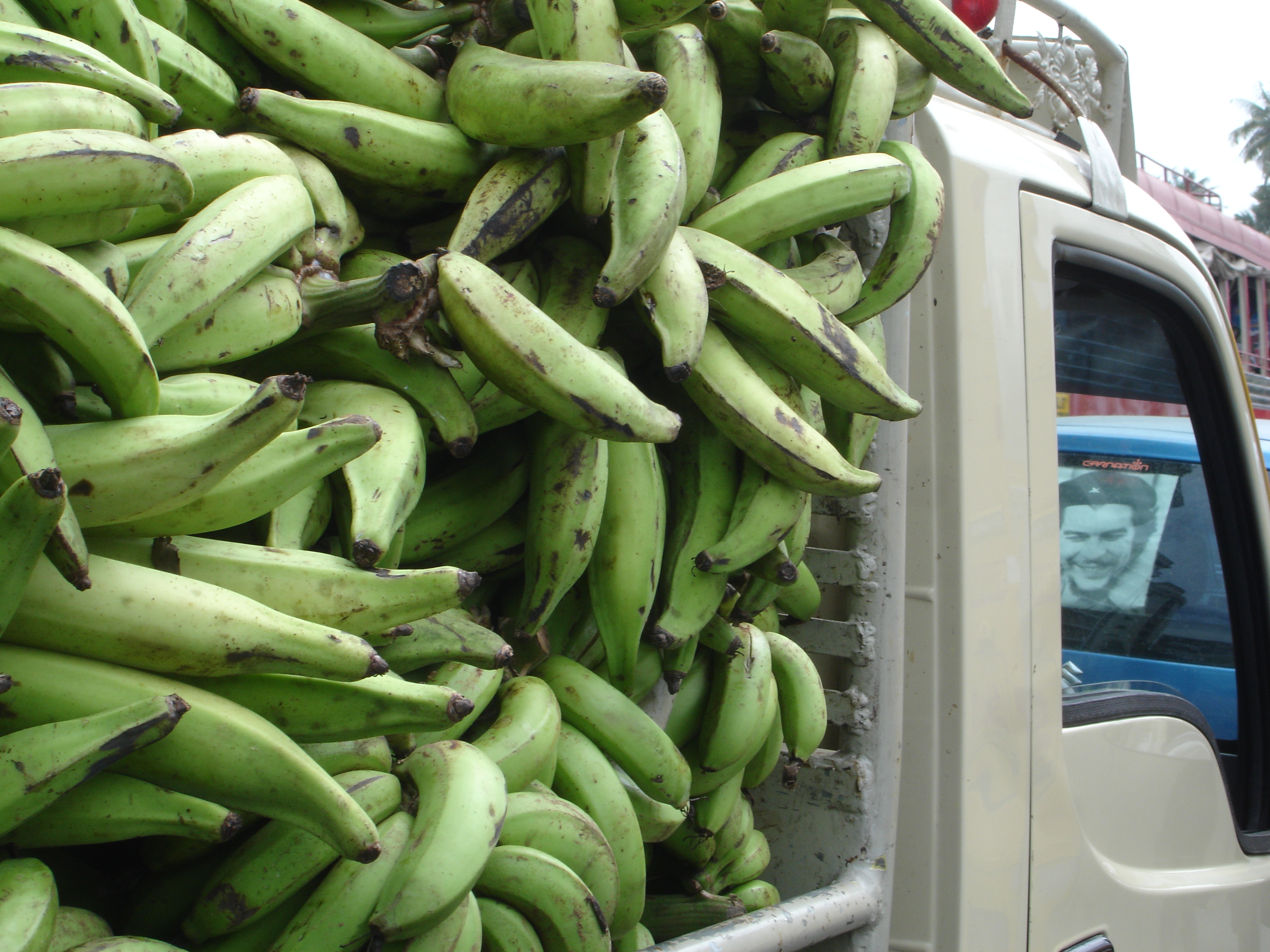
Vytilla Junction, Ernakulam
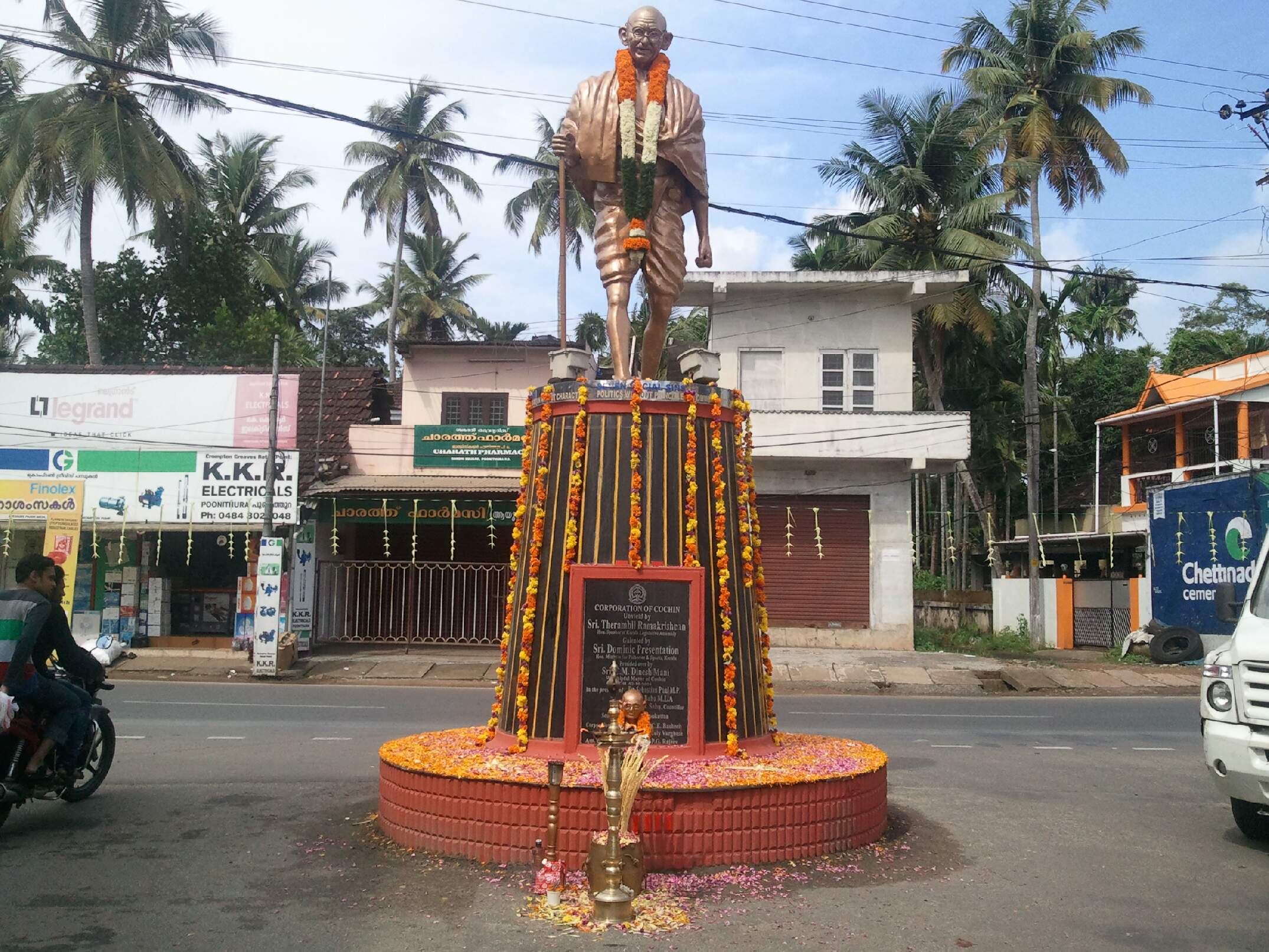
Gandhi Square Junction, Tripunithura

M.G. Road, Ernakulam
Give people options of what to look at. Members of one family will choose non-urban views most of the time (but not all of the time, as we have said more than once after visiting big cities). To each, their own. An article by Ariel Schwartz, a Senior Editor at Co.Exist, titled “The Hidden Beauty Of Suburban Sprawl” is on that magazine’s website: Continue reading

Kadavanthra Junction, Ernakulam

Kundanoor Junction, Ernakulam

Vyttila Junction, Ernakulam
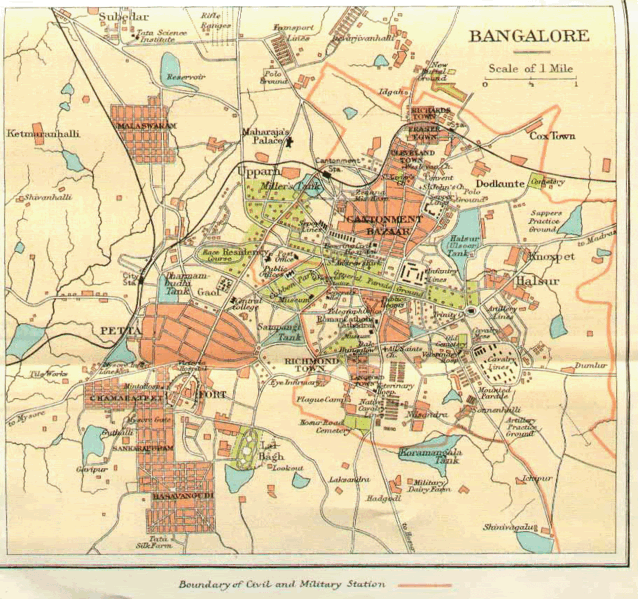
Bangalore city map, circa 1924 from “Murray’s 1924 Handbook”
Before a recent trip to Karnataka I’d asked my Indian friends for advice prior to any urban travels, getting their opinions on the iconic activities in each of the cities on my itinerary. There were pearls and biryani in Hyderabad, palaces and markets in Mysore…but for Bangalore, most friends said things such as, “Oh Bangalore. That’s where people from Cochin go to get their shopping done.”
Well, okay. Considering I actually did need to get some shopping done, I wasn’t terribly distressed about this advice. However, the fact remains that I am not a particularly good shopper, so I’d hoped that there was more to the city than just consumer attraction. Continue reading

Edappally Junction, Ernakulam

Click the banner above for this article in which Rebecca Solnit discusses urban agriculture, aka gardening, as a revolutionary act of enormous import for our modern times:
We are in an era when gardens are front and center for hopes and dreams of a better world or just a better neighborhood, or the fertile space where the two become one. There are farm advocates and food activists, progressive farmers and gardeners, and maybe most particular to this moment, there’s a lot of urban agriculture. Continue reading

Whenever we check in on The Smart Set we find something interesting, and today it was an essay by Stefany Anne Golberg — an artist, writer, musician, and “professional dilettante” who is also a founding member of the arts collective Flux Factory. Click the image above to go to Flux Factory, but be sure to read her interesting take on a recent New York Times article about monkeys in Delhi:
It wasn’t so long ago that monkeys and people cohabitated in Delhi like monkeys and squirrels or people and people. They competed for space and food. They shared the same sky. Their lives were fundamentally commingled. This commingling is still common in less developed countries, such as Sri Lanka, where I am presently living.
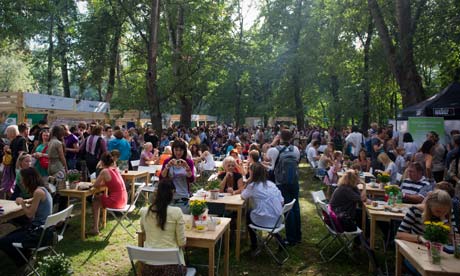
So glad to have the green space, named for one of Russia’s greatest writers, back to its beautiful self. Click the image for the story:
“Many people make money in Moscow, and many people spend money here, but there are very few people who smile at one another,” said Sergey Kapkov, who was promoted to head the city’s culture department after overseeing the renovation of Gorky Park.
Overseeing the renovation of parks across the city has been his most visible achievement, an initiative launched by Sergei Sobyanin, who was appointed mayor in 2010.
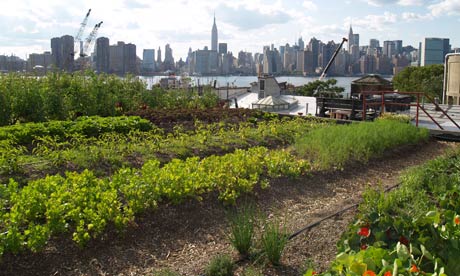
Plants grow on a rooftop farm in Greenpoint, New York. Photo: Mike Di Paola/Getty Images
Click the image above for the story in The Guardian:
Advocates say green infrastructure isn’t just about being green — it makes financial sense, as well. Its cost-effectiveness depends on how benefits are assigned and valued, and over how long a time scale, but green has been shown to be cheaper than gray.
A 2012 study by American Rivers, ECONorthwest, and other groups examined 479 projects around the country. About a quarter of the projects were more expensive, they concluded, and 31 percent cost the same; more than 44 percent brought the costs down, in some cases substantially. New York City, for example, expects to save $1.5 billion over the next 20 years by using green infrastructure.
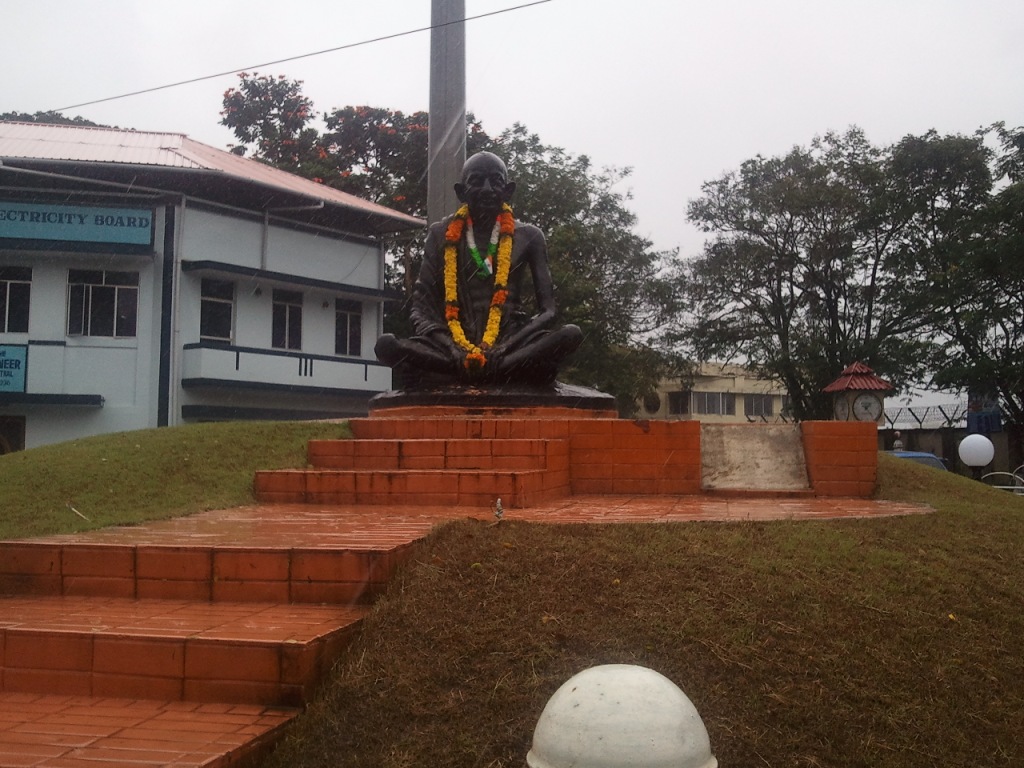
BTH Junction, Ernakulam
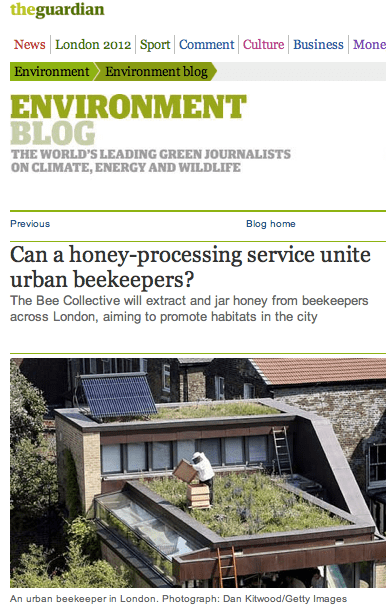
Among the various projects Raxa Collective asked of its Design Team of interns the last few months, one key idea was how to make a rooftop more green. A future post by Rania will show some of the recommendations, but for now this article (click the headline image to the left to go to the source):
Caroline Birchall, founder of the Bee Collective, works at Natural England on landscape ecology in the capital. She says there is a huge amount of green infrastructure such as green roofs and rain gardens, which enable water to be absorbed rather than run off, that is being put in place to combat climate change and which could be made more suitable for bees and other pollinators.
 Organikos